


Review: MOTHER PLAY by Paula Vogel at Q Theatre, Auckland
The show will run until September 20.
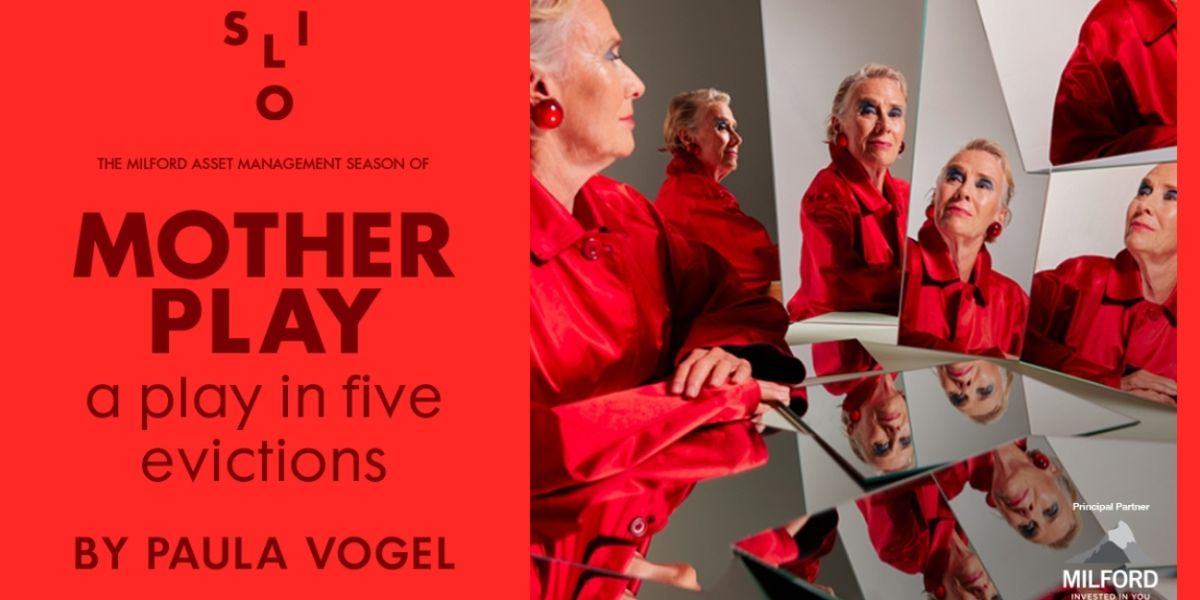
Great drama has rich emotional audience connection. Paula Vogel’s superb script has been described as a modern American classic. It is lean and economical, ensuring that every line, every description, every character development moves the story forward – and respects the audience’s imagination and ability to infer the subtext. The narrative draws deeply on Paula Vogel's own family, in which her brother Carl died in his 30s of an Aids related illness. The intergenerational conflict bridges several decades, starting with the late 60s, moving through the hippy 70s, and into the sexual liberations and prejudices of the 80s.
This play is a consummate example of how compelling dramatic storytelling forges deep emotional bonds with the audience, making them care about the characters, their vulnerabilities, their joy, their experiences. This play resonates with such truth and authenticity that it must hit home at some point with everyone. Mothers – those important first teachers. What power they wield. We crave their love, pride and compassion, with the hope we will be told that we are valued and loved – just as we are.
The script provides a superb vehicle for the talented cast, including legendary Jennifer Ludlam, talented Amanda Tito and Tim Earl. The narrative opens as a flashback, the stage empty apart from one box. When we return to this moment at the end of the play, it will be with entirely new understanding.
The mature (50s) Martha (Amanda Tito) immediately engages our interest with her opening lines about having expertise in being able to pack up life into one box and unpack it again in one day. The set changes are slick and convincing, as is the first rapid transition to the late 1960s. Both Amanda Tito and Tim Earl are entirely credible as adolescents, capturing the ungainly awkwardness and uncertainty of youth as they attempt to navigate the complexities of their changing world. Their efforts to win the approval of their demanding, dominant, and alcohol-dependent mother are portrayed with authenticity and teenage energy revealing the deep desire for acceptance and belonging. Martha is labelled as “unremarkable” while Carl (Tim Earl) is adored and can do no wrong – until he confesses, he is gay. Later Martha also suffers from Mother’s intolerance. Both are thrown out and despised as unnatural and dirty. “Is it too much to ask for one normal child?” As Martha and Carl move through the decades, their “ageing” is convincing, captured with posture, physical and vocal nuance. They are forced to grow up within a harsh dictatorship. “It’s all over isn’t it – our childhood.” Their support of each other never wavers.
Jennifer Ludlam is Phyllis/ Mother – with a capital M. We can laugh at her, laugh with her, and definitely despise her. Ludlam effortlessly embodies the matriarch who transitions through several decades. She is totally credible at every point of the narrative, and we feel her anger and despair as well as her vulnerability. An impressive moment is the “martini sequence” in which Phyllis's alcoholic revelations allow us to see many truths. This bitter and broken woman admits she never wanted to be a mother, was disowned by her parents when she became pregnant out of wedlock, and has been abandoned by her cheating husband.
At this point, we are reminded that we must be careful of our natural tendency to take what people do and say at face value. When they seem to criticise you or act against your interest, this might stem from some earlier pain they are reliving. You have become the convenient target of their frustrations and resentments that have been accumulating over the years. It is hard for Phyllis – she’s broken, dealing with her own pain and hurt as well as articulating the prejudices of the period.
Thoughtfully directed by Sophie Roberts, the narrative is conveyed with subtlety in movement, costumes, minimalistic set, nuances, well-shaped dialogue and clever employment of stage space. Light and shade ensures laughter at domestic situations, as well as powerful silences that speak to the heart. Subtle touches point out how this family is constantly on the move – their furniture is never fully unpacked, retaining its plastic protective coverings, so that you are always reminded that their domestic safety is always at threat. Life is transient and everything transparent. We can see through the layers to the truth. Placement of that furniture (Daniel Williams, Talia Pua), lighting and sound (Sean Lynch) all serve to imbed the decades and convey the tension, the inner workings of the mind and various tones of emotional atmosphere. Costumes (Tautahi Subritzky) work effectively to convey the changes of time. Totally loved that pink Chanel suit! The result was a cohesive creative vision.
Rich and resonant in emotional experience throughout, sometimes sad and cruel, the narrative ends in redemption, with pathos rather than despair. Tears are shed. “I don’t remember what I did to my children. Whatever I did, I’m sorry.” The closing speeches remind us, that when we've gained more information and can see more of the truth, what is invisible to us in the present now becomes visible in retrospect. Time is the greatest teacher of them all, the revealer of reality. Sadly, it might come too late.
Auckland is currently privileged to host theatre of exceptional calibre. This is great drama, without a doubt, which offers significant entertainment, and intellectual and emotional engagement for its audience. It provokes thought, resonates deeply, and may indeed touch a nerve or two. Don’t miss it! On until September 20.

|
Chris Parker - Take a Good Hard Look at Me James Hay Theatre, Town Hall (9/05-9/05) |
|
Jesus Christ Superstar The Civic, Auckland (10/21-11/08) |

|
Chris Parker - Take a Good Hard Look at Me St James Theatre Wellington (9/04-9/04) |
|
Fletch, Vaughan and Hayley LIVE - The Genuine Friends Tour The Opera House Wellington (10/09-10/09) |
|
5 Seconds of Summer Spark Arena (10/24-10/24) |
|
Bug Songs Not Love Songs BATS (8/25-8/29) |
|
Les Liaisons Dangereuses The Rose Centre (8/15-8/29) |
|
Jesus Christ Superstar St James Theatre Wellington (11/18-11/28) |

|
Jersey Boys Isaac Theatre Royal (9/18-10/03) |
|
Fletch, Vaughan and Hayley LIVE - The Genuine Friends Tour James Hay Theatre, Town Hall (10/16-10/16) |
Reader Reviews
To post a comment, you must register and login.