


Irene Collective Brings a Fresh Female Gaze to A STREETCAR NAMED DESIRE
Co-directors Jaclyn Bethany and Hanna Hall bring Williams back to New Orleans with a production that centers the sisters at the heart of the story.
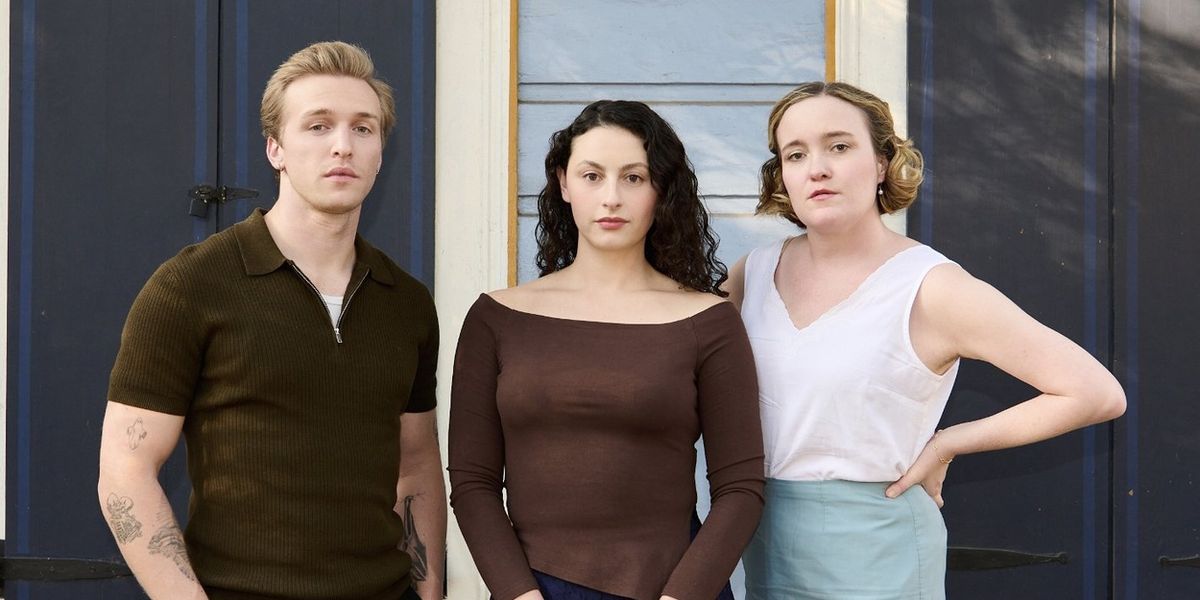
A STREETCAR NAMED DESIRE has rarely been seen through a woman’s eyes, but The Irene Collective aims to change that with a New Orleans production centering on sisters Blanche and Stella. Co-directors Jaclyn Bethany and Hanna Hall invite audiences into the cramped, electric atmosphere of the French Quarter as though they’re living there themselves.
“This play has always been in my orbit,” said Bethany, who grew up in Mississippi and first encountered Williams in high school. “I remember reading his women even as a teenager and feeling seen.”
That personal connection deepened through years of research, panel discussions in New York, London and New Orleans, and her own staging of Interior Panic, a proto-STREETCAR draft in which Blanche’s psychosis is more overt and Stanley has barely five lines. What struck her most in that material was what would carry into the finished play.
“The strongest portions of those early drafts were between the sisters," Bethany said. "And I think that’s what our production is really leaning into.”
Women at the Center
The production commits to exploring Blanche and Stella not as Williams stereotypes (the fragile hysteric and the passive enabler), but as fully realized women shaped by the same Southern upbringing, struggling with conflicting desires and the consequences of their choices in radically different lives. The emotional cost for each sister, losing family, belonging and even sanity, hangs over their every interaction.
On Blanche, both directors are emphatic about resisting martyrdom.
“She has all this confidence and sexuality in her character, but she’s also so delicate and so broken,” Hall said. “Ultimately, she just doesn’t perform femininity in the correct way for society, and that’s kind of what ends up breaking her.”
One of their boldest choices is flipping the traditional confidence of Blanche’s entrance entirely.
“We’re interested in looking at her from a vulnerable place from the very beginning,” Bethany said, “And the masking of that.”
Hall adds: “It's interesting for the audience to see that initial brokenness in her, and then watch her try to hide it.”
Stella, too, gets a more active interior life.
“It’s not just one tone,” Hall said. “We want to really see those moments where she does struggle. Stella is living in the modern era, having left home and become independent, while Blanche remains stuck in the old world South. That dichotomy is really interesting.”
On Stanley, and the Question of Sympathy
The production is guided by a letter Williams wrote when Elia Kazan was considered to direct the original staging. As Bethany paraphrases: “None of these people are good or bad. They just can’t understand each other.”
That doesn’t mean excusing Stanley’s violence.
“You have to approach it in a way where you do see his humaneness, without excusing this horrible act,” Hall said. “He’s a product of toxic masculinity, driven to be in control because that’s what men have been taught is the correct way to be.”
New Orleans as Living Character
Doing STREETCAR in New Orleans is not merely a geographical choice; it’s a dramaturgical one. Live musicians will be woven into the staging, conjuring the sense that the city seeps through the walls of the Kowalski apartment.
“Whether it’s hearing a horn down the street, you don’t really know where it’s coming from,” Hall said. “The city is just so alive with music everywhere you go.”
Set within the intimate venue of Big Couch, the production builds a house-frame structure that draws the audience into the play's world rather than leaving them watching from a distance.
Costume Designer Natalie Crawford has been given a precise brief: honor the period while making each character’s wardrobe a map of their psychological state.
“Blanche is sort of this moth in white and pastels,” Bethany said, with Hall noting how it visually represents just how out of place she is from the moment she arrives.
What They Want You to Feel
The production closes, as the play does, with Blanche being taken away while the poker game resumes.
“I want their hearts to break for Blanche,” Hall said. “The horror that women, for so long, if you don’t fit in, if you don’t do things correctly, there aren’t many options for you. And it’s so common.”
Bethany sees the play’s resonance extending into the present.
“Blanche represents the past," Bethany said. "Stanley is the brutality, what we’re kind of coming up against now in the world. It’s a reading that feels neither forced nor anachronistic. It feels like what the play was always saying, to anyone listening closely enough.”
A STREETCAR NAMED DESIRE runs March 19-April 3
Sign up for all the news on the Fall season, discounts & more...

|
Les Miserables Jefferson Perf Arts Center (2/26-3/07) |

|
Argentina's Tango After Dark Mahalia Jackson Theater (2/20-2/20) |

|
The 39 Steps Westwego Perf Arts Theatre (3/05-3/21) |
|
Anastasia The Musical Jefferson Perf Arts Center (4/09-4/18) |

|
Disney's The Little Mermaid Rivertown Theaters (7/15-7/25) |
|
Summer Surprise Show Westwego Perf Arts Theatre (7/09-7/18) |
|
A Mardi Gras Carol Westwego Perf Arts Theatre (12/04-12/13) |

|
Steel Magnolias Rivertown Theaters (11/06-11/22) |

|
42nd Street Rivertown Theaters (3/05-3/21) |
|
|
Tootsie Westwego Perf Arts Theatre (5/07-5/23) |

