


Review: THE WITCH OF NOVEMBER at Abbey Theater Of Dublin
Play commerates the sinking of the Edmund Fitzgerald
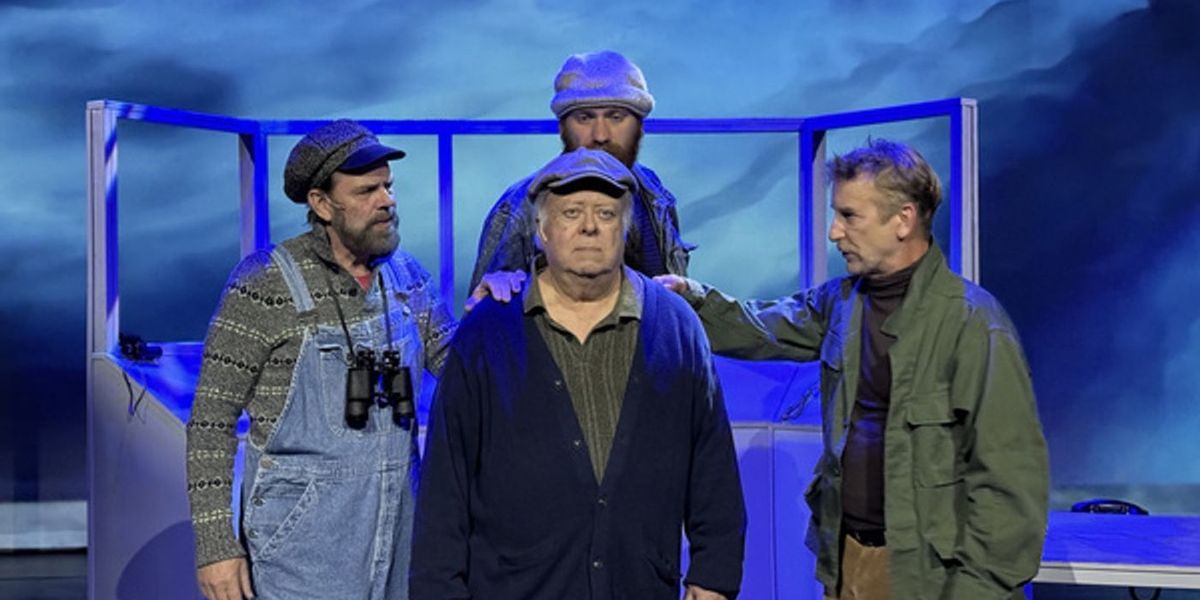
The Nov. 10, 1975, sinking of the Edmund Fitzgerald — a freighter that went down in a winter squall on Lake Superior, killing all 29 crew members — didn’t just leave its mark on Canadian folk singer Gordon Lightfoot. The story, immortalized in Lightfoot’s moving but historically inaccurate ballad “The Wreck of the Edmund Fitzgerald,” also captivated playwright Vidas Barzdukas, who grew up near the shores of Lake Erie
The Abbey Theater of Dublin’s production of Barzdukas’ THE WITCH OF NOVEMBER coincides with the 50th anniversary of the tragedy. Barzdukas knew the Abbey Theater of Dublin was facing a major challenge. How do you recreate the wreck of the 728 foot Fitzgerald in a 85-foot by 55 foot performance space?
Judging by the reaction of the sold-out audience at its world premiere Nov. 7, Barzdukas shouldn’t have worried.
Director Joe Bishara and co-director Daniel Rodriguez-Hijo and a brilliant six-person cast finds a way to bring the one-act play to life. THE WITCH OF NOVEMBER is tightly written, beautifully staged, and wonderfully acted and the combination of those ingredients creates an engaging 80-minute play.
While it is a work of fiction, the playwright took accounts, interviews, and descriptions of the event to create a moving script that examines the life of Captain Ernest McSorley (played by Tom Holliday) who tries to balance a tug of war between his love of his wife Nellie (Josie Merkle) and his passion for his job and his crew. The script is sentimental without becoming schmaltzy.
When he was writing the show, Barzdukas said he had no idea how to present it on stage. A friend of his said, “Don’t worry about that. Just write it and let the director figure that out.”
Bishara and Rodriguez-Hijo produced a creative way to stage the action, dividing the stage into three parts. At the center stage is the pilothouse of the Fitzgerald. To its left is a screened area where McSorley revisits his life with Nellie while to the right is Jessie “Bernie” Cooper (Dave Morgan), the captain of the Arthur M. Anderson, a second freighter who tries to navigate the Fitzgerald through its current crisis. When they are not being used, scenic and video designer C.G. Ryan and video and sound engineer David Crone turn the two side stages into projection screens showing maps of the area as well as the turbulent waters of the storm, creating a feel of a boat being tossed about by the waves.
While it is a visual stroke of genius, THE WITCH OF NOVEMBER would have been lost at sea without standout performances of the six person cast. The centerpiece in the production is Holliday, whose character is torn between his two loves – the one for his wife and the one for his crew. The interactions between Merkle and Holliday have a sense of magic, yet believability. During their first date. the extroverted Nellie keeps trying to draw conversation out of quiet Ernest, who is tight-lipped until his future wife hits on the topic of sailing. After Ernest expounds on his plans, his climb up the ladder and his love for the water, Nellie asks him bluntly, “So do you want kids?” Her boldness induces a spit take from Ernest. When she is asked the same question, Nellie responds, “I have three of them, so I should hope I want them.”
Holliday handles the curves of the script masterfully as he transitions between an in-control sea captain who is cluelessly lost on dry land. When he is with his crew, he longs to be home with his wife; when he’s at home with his wife, he wants nothing more than to be back on the boat.
Merkle, on the other hand, goes from being understanding and even supportive of her husband to a lonely spouse longing for her husband to return and stay at home. Her strength in THE WITCH OF NOVEMBER is not only her dialogue but in her pauses, her sighs when her husband retreats back into his obsession with his “other woman.”
In this case, “the other woman” is three men – John “Jack” McCarthy (Rusty Wummel), Eugene “Red” O’Brien (Sean Taylor), and Ransom “Ray” Cundy (Todd Covert). Each of the actors seem to represent a different emotion. O’Brien is passion, a gambling spirit steering the ship through the storm and then pleading with the captain to find shelter. McCarthy is fear. Having wrecked one boat, he has a sense of foreboding about The Edmund Fitzgerald and that fear intensifies as the waves grow bigger. Cundy rests somewhere between the two as the voice of reason. He sees the size of the waves but has confidence in his leader.
Cooper plays a vital role as a captain and a narrator used to flesh out the descriptions of the stormy conditions.
After lacing together all of these elements, the Abbey Theater presents a moving experience that will stay with its audience for much longer than its 80-minute run time. The play is not just an exercise in revisiting a tragedy; it puts flesh and blood on it. It makes the shipwreck feel real, haunting, and much fresher than an event that happened 50 years ago. Missing out on this production would also be a tragedy.
Photo credit: Joe Bishara

|
MTP Presents: Sister Act John, James and Clara Knight Stage (7/31-8/16) |

|
Screamers: A Nightmare-Fueled Sketch Comedy and Music Experience Shadowbox Live (9/20-11/14) |

|
The Jungle Book Kids Hilliard Civic and Cultural Arts Center (9/18-9/27) |
|
The Lightning Thief - The Percy Jackson Musical Abbey Theater of Dublin (8/07-8/16) |
|
Wicked Ohio Theatre (7/28-8/15) |

|
The Dinner Detective Murder Mystery Dinner Show The Dinner Detective Columbus (8/22-8/22) |

|
Caamp Value City Arena at The Schottenstein Center (8/29-8/29) |
|
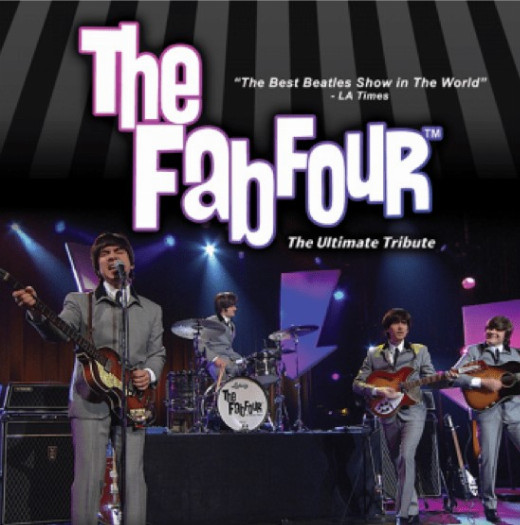
The Fab Four: The Ultimate Tribute LIVE in Concert in Columbus, OH Hollywood Casino Columbus (8/21-8/21) |
|
Sombr Nationwide Arena (11/08-11/08) |

|
Liverpool Legends "The Complete Beatles Experience!" Marathon Center for The Performing Arts (8/15-8/15) |
Reader Reviews
To post a comment, you must register and login.