Interview: Saheem Ali on TWELFTH NIGHT and the Importance of Accessible Arts
Great Performances: Twelfth Night premieres this Friday, November 14 at 9/8c on PBS.
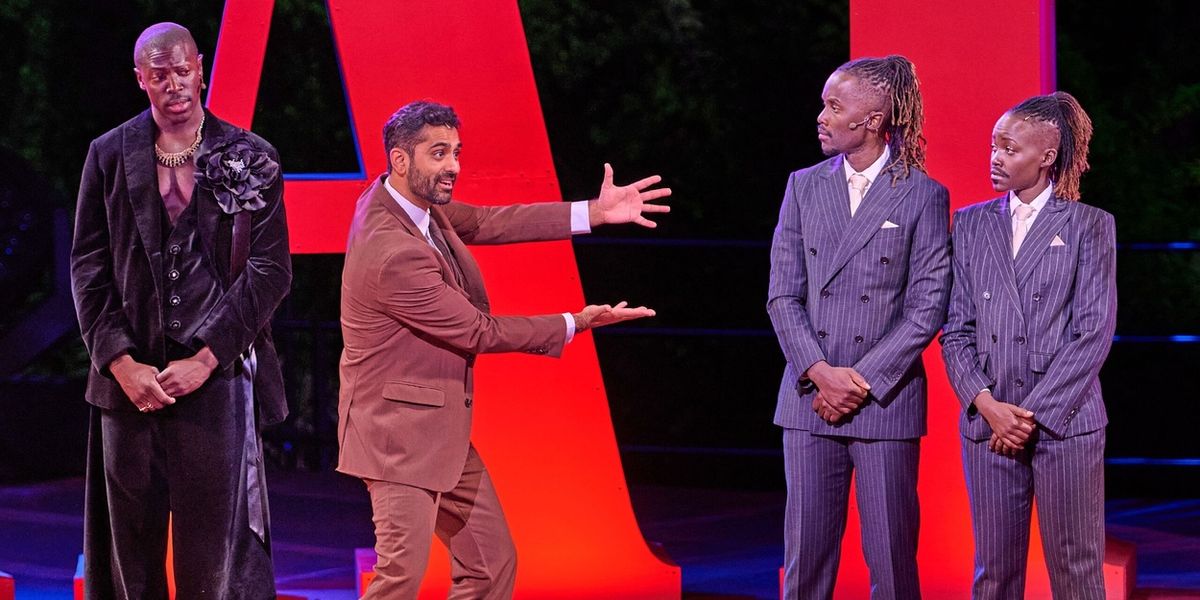
For Saheem Ali, helming a production of Twelfth Night at the Delacorte Theatre was a full-circle moment. Shakespeare's tale of mistaken identity holds a special place for the acclaimed director, having been the first show he ever saw in New York City as a college student.
"It was one of the most magical things," the Tony-nominee recalled of that experience during a recent interview with BroadwayWorld. "[It] kind of grabbed my spirit and said, "You've got to move to this city. You've got to do a show in this theater."
Ali's production, staged at the Central Park venue this summer, came amid an exceedingly busy season for the director. Throughout 2025, he has had multiple shows running or in rehearsal at nearly every moment, including the hit musical Buena Vista Social Club on Broadway, as well as those at New York’s Public Theater, where he serves as Associate Artistic Director.

With Twelfth Night, there was also an added significance: the production served as the official opening show of the revitalized and updated Delacorte Theatre. To mark the occasion, Ali assembled an all-star cast led by Lupita Nyong’o, Junior Nyong’o, Peter Dinklage, Sandra Oh, Jesse Tyler Ferguson, and Daphne Rubin-Vega. Running at the newly renovated space this summer, the show was recorded by Great Performances, continuing a tradition of bringing Free Shakespeare in the Park productions to the arts channel.
Ahead of the PBS airing, we caught up with the director to discuss the experience, how his immigrant identity informed his approach to the story, and the value and necessity of making the arts accessible to all. Great Performances: Twelfth Night premieres this Friday, November 14 at 9/8c on PBS.
This interview has been condensed for clarity and length.
How did the updated space of the Delacorte influence your staging and storytelling choices?
I wanted to celebrate the kind of rebirth of the space by creating a design that was going to be open and inviting. So the set was very spare with the text elevated behind it, because that's what the park does. We elevate the text, we center the text. The text was a backdrop to the play, so it was all very intentional to kind of lean into this rebirth of this theater by embracing the beauty of the trees around us and the fact that we're in this park. I wanted to see as much of the park as possible to remind us that we're in this glorious civic space.
Can you talk about the decision to have it filmed for PBS?
It's been an extraordinary partnership. We're public theater. This is public television, so there's this mission to get great quality work out to as many people as possible. It's been a fantastic relationship with WNET to film our productions. It's such high-quality, multi-camera filming. They're there for three nights. They spend a lot of time, so it's not slapdash at all. It's so intentional and rich. We get to reach as many New Yorkers as we can who can actually make it to the Delacorte, and this just exponentially increases our reach so that people all across the country and the world can get to see the Great Performances, quite literally, that happen in our city.
What adjustments were made for the camera and what was your involvement in the editing or shot choices for the film?
What you get is, of course, proximity that you don't really get in the theater. You get a quintessential close-up where there is none when you're in live theater. But, because the Delacorte is a thrust space, you are able to then have a vantage point of different seats. Unlike a proscenium, where you're all seeing the same thing in front of you, the thrust has a really more dynamic perspective. So even if you've seen it live, you get to see it from different angles in a way that you would have to sit at different seats on different nights to experience.
There's an incredible team there, and all I did was watch their sketch drafts and then respond to things, because when I'm sitting in the audience, I know what's important for me for the audience to see. So I weigh in on those moments to ensure that they're capturing a look or a relationship or a certain perspective that, to me, is a key moment in the scene. But they're already so proficient at digital filming that I really just bring my theatrical eye to what they've already done.
Your cast was made up of incredible actors. I believe most of the cast had performed Shakespeare before, but how do you balance different levels of familiarity and comfort with Shakespeare's text within the same ensemble?
I kicked off our first rehearsal just talking about everyone's relationship to Shakespeare. Everyone comes at it with a different history— both in terms of what they were taught of it, [or] having been in it. We had some folks who had done a lot of Shakespeare, and, one actor, at least, who not only had not done Shakespeare, but he'd never been on stage before. So that's a huge gap. But that performer, Moses Sumney, is an incredible singer, so he was bringing a musicianship that is at the heart of the play with Feste that was on par with Peter Dinklage, who's done multiple Shakespeare plays, or Jesse Tyler Ferguson. We just created a company where everyone was bringing the best of their abilities and supporting each other, and it was an extraordinary company. You not only see their talent on stage, but you feel the camaraderie and the relationship that they had together as actors. It was really remarkable.

You previously directed Twelfth Night for The Public’s Mobile Unit, which was your first production at The Public. How was your experience different directing these two productions of the same show? Was there anything that landed differently for you this time?
Twelfth Night has a really special place in my life because it is the first show that I ever saw in New York City, and it is the first show that I ever saw at the Delacorte. In 2006, I think. I saw a production there. I was a college student in Boston. I took a Chinatown bus down to New York and I couldn't afford to see a play, so I got the Village Voice and I read about this free play in Central Park. I stood in line and I saw Twelfth Night. It was one of the most magical things that just kind of grabbed my spirit and said, "You've got to move to this city. You've got to do a show in this theater." So, fast forward to the Mobile Unit, [that] was the first time I directed the play. It was nine actors, and it's a carpet, no fancy set, no lights— just costumes and actors. It was a remarkable experience because there's a reason these plays have lasted for 400 years. You can do them with nothing, and you can do them with everything.
Returning to it this year, I had a slightly different frame for it because my friend Lupita [Nyong'o] was playing the lead, and so the cultural lens on the piece was different. For me, Viola is an immigrant in this world, and I always bring this immigrant perspective to it. Because of who Lupita is, this production was going to be different, and that made it quite unique compared to the Mobile Unit.
While Twelfth Night was running, you also had Buena Vista Social Club on Broadway. What was it like to have two shows running at the same time? What does your day-to-day role look like with Buena Vista Social Club at this point?
It's such an extraordinary gift, this summer especially, because I had Buena Vista on Broadway, and my production of Fat Ham was at the Royal Shakespeare Company. The day before Twelfth Night opened, I was in London for the opening of that production, which is also a Shakespeare adaptation. It was glorious. With Buena Vista, I'm very much involved in recasting. I go and watch the show and note the actors. It's the first time I've had a long-running show; we're about to have 300 performances there, which is extraordinary. So I see the show every couple of weeks, check in with the folks there, and then if I'm in a different rehearsal room, that takes priority over my time. But I do go back and forth.
PBS has always been a champion of making the arts accessible to everyone. What does it mean to you personally and artistically to have your Twelfth Night preserved and shared through this platform?
Accessibility is crucial for me. I mean that, both in the sense of the invitation for people to come and experience theater, but also how they feel when they watch it. Shakespeare, for me, has to feel like it speaks to the current moment, and I can do that in a way that makes sense to me. I'm an immigrant to America, so a lot of my work is informed by my being an immigrant. Buena Vista is the same thing. That's a story about emigration, someone who's leaving and someone who's staying. So these themes always come back to me in my work.
Theater really exists primarily in time and space. You are sharing an event with a performer that only exists in that moment, and this is as great a way as possible to replicate that experience. The impermanence of it is part of the magic of it. So the approach that PBS takes is to come in with an entire crew. They study the show, they film it three times. It's like a control station because they take it so seriously. They really want to capture the substance of it and replicate what it would feel like to be in the audience. So you get the best possible manifestation of that, and you get people to see it and be inspired by it. I was inspired by Twelfth Night when I saw it because I was able to sit in the Delacorte and experience that. Had I seen a capture, I might've experienced the same way. I'm excited for this to hopefully go out and move people, but also inspire an artist out there who might feel like they have a place making Shakespeare because it spoke to them.
And this may be the first time some viewers have seen Shakespeare, and so that's exciting as well.
Yes, which is why we need PBS. We need public television. We need organizations that are mission-based, that are not about anything else, but to reach as many people as possible who can't afford it. Because there are people who can't afford the luxury of theater, they can't afford the luxury of entertainment. We can't forget those people. We have to invite them into the work and take the work to them.
Watch a clip from the PBS broadcast below:
Photo Credit: Joseph Sinnott