Interview: Amelia Rose Griffin and Liz Winkelaar of Propeller Dance's Discuss SO IT TURNS, WE BLOOM
We spoke about the show's themes and received advice for how theatres can make their shows more accessible
Did you know that the second oldest inclusive dance company in Canada is based right here in Ottawa? The promotion of inclusive dance may be lagging behind other areas, such as the U.K., but Propeller Dance aims to change that with the help of its latest show, So it turns, we bloom, opening at Meridian Theatres @Centrepointe this week. The show presents a beautiful theme that is not only a metaphor for nurturing the Earth and the community, but is also symbolic of the company’s own journey from its infancy to its new beginnings.
I met with Amelia Rose Griffin, Artistic Director, and Liz Winkelaar, a founding company dancer with Propeller Dance, and they discussed some of what audience members will experience, the available accessibility features, and themes of the show.
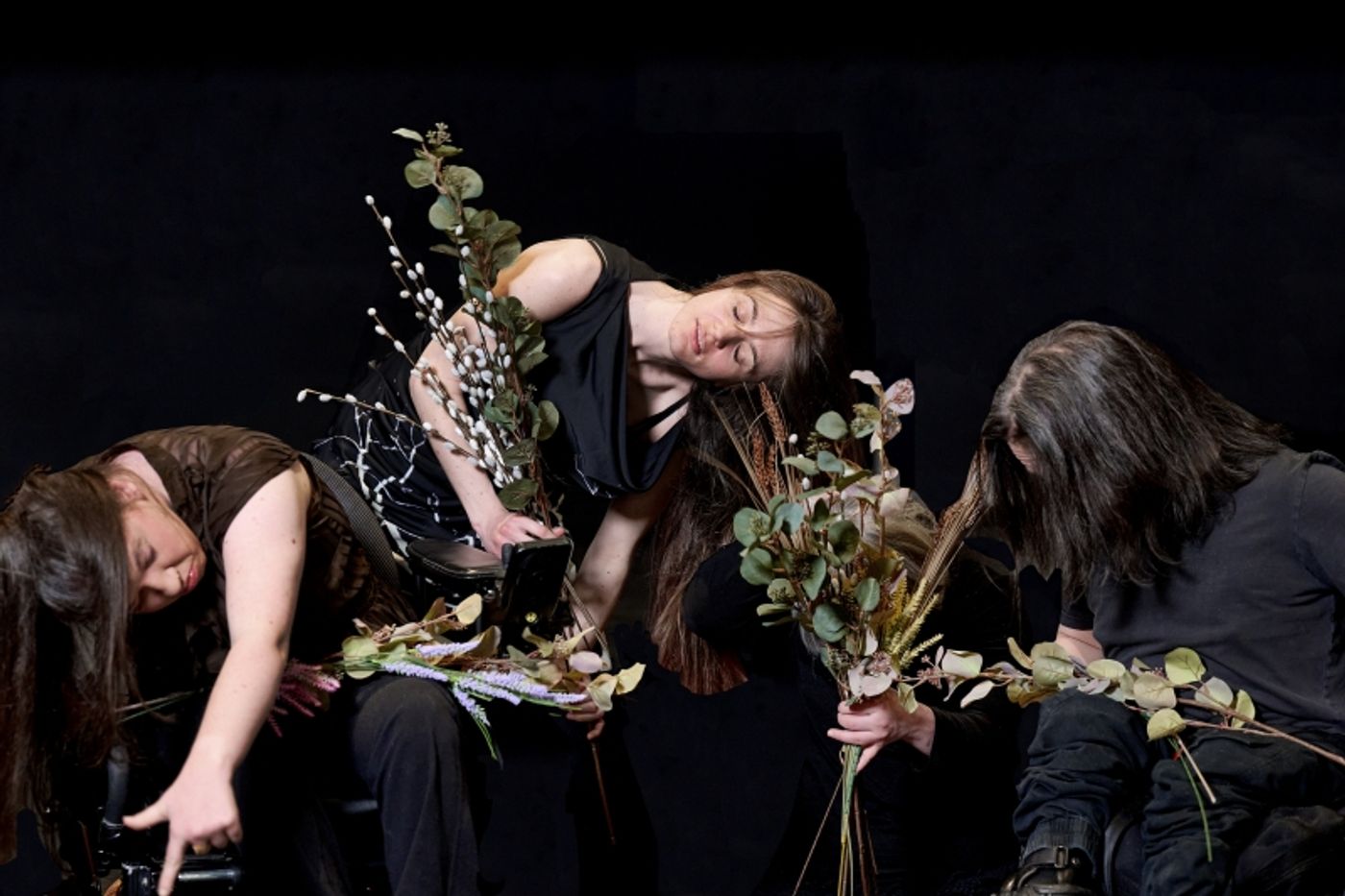
Propeller Dance, July 2024.
Photographer Strast Media.
Liz, can you tell me how you were introduced to dance and your journey with Propeller Dance?
This has been a lifelong journey for me. It started when I saw an ad for Propeller Dance – it wasn’t called Propeller Dance at the time, it was called Dance Ability, with Shara Weaver. I did it not for any great love of dance, really, but just through a need to be in my own body. Then, I fell in love with all of the people that were involved and all the stuff we were learning, like contemporary dance. I became dedicated to it and now I’m one of the people who have been there since the very beginning. This particular show is very meaningful for me, as it feels like I have come full circle.
Amelia, can you tell me a little bit about your background and how you became Artistic Director of Propeller Dance?
I was professionally trained in ballet and contemporary dance locally at the School of Dance. I had an almost twenty-year career working as a performer and choreographer. I auditioned for Propeller Dance in December 2011, and I became a company dancer in January 2012. I felt like I had found my dance home; it was amazing, and it turned a lot of my dance knowledge on its head. In the ballet world, we are always trying to achieve perfect unison. I was struck with how each person in this company has unique ways of moving that are inherent to them.
In this part of my career, I have switched roles a few times, from assistant to company manager. I then took a sabbatical to explore inclusive dance in the U.K. The inclusive dance and disability arts world has been around longer there than in Canada, so it has more development, audience value, and a bigger support system. Last June, we said goodbye to our Co-Artistic and Executive Director emeritus, and then we had a rigorous process after which I was named as Artistic Director, and I am very grateful that I was chosen by the search committee and the Board for this role.
Can you tell me about So it turns, we bloom?
Amelia: The show is about growth, cycles, transformation, and blooming together. The concept came because to me because of those organization changes. We are in such a huge point of transformation: the people who founded the organization only left last year – so that is seventeen years of dedication. This is a shift in leadership for the first time ever, so I felt like it was important to mark this moment. “So it turns” refers to the Earth’s movement and we, as an organization, get to bloom because of these seeds that were planted and have grown. We are now at the point of blooming and planting the seeds for the next phase of our growth. Our education classes are representing the life cycle of a plant. Our youngest performer is four years old, and our eldest performer is sixty-five, so it is truly multi-generational. The children are the seeds and the sprouts; older performers are the blooms which then recede. We also have a digital class – because we recognize that, in our community, a lot of people have disabilities that prevent them from leaving their home – and they are projected on a screen on the stage, representing the sky. Some dancers also represent the elements – rain, wind, etc., so everyone has their own track. Each performance takes you from night to day, and then back to night.
We also have a guest artist, Velvet Wells, who weaves in and out of the show, adding poetry and language to the piece; they are absolutely incredible.
There is also so much about nature and being mindful about who has nurtured the Earth and the environment. On that note, all of our costumes have been repurposed from donated and recycled costumes to lessen the environmental impact of the show.
Liz: We have been thinking so much about the earth and the environment over the course of the year and in all the classes; it has been such a beautiful theme to work with.
So it tuns, we bloom’s synopsis indicates that the saga unfolds over two nights. Does this mean that audience members must attend both nights to fully understand the show?
Amelia: It is one show that is slightly different on each night. The two nights complement each other and provide the full picture of the lifecycle of the plant, but you do not need to attend both shows. During the Friday performance, the seeds and the sprouts, and the buds and leaves come from the recreational classes. The company does their regular elements, and the digital sky is the same. On Saturday, we see the plant bloom and then it recedes as its life cycle is completed. The company elements and the sky remain the same, but the recreational class’s part is what changes. If I may say so, both shows are beautiful.
Propeller Dance’s web site says that it believes in the power of possibility through radical dance practices. What can audience members expect to see during So it turns, we bloom?
Amelia: It will be unique for the audience to experience a huge cast of people with diverse abilities. Since almost everyone in the company has a disability, it shows the diversity of the community, and that disability comes in many shapes and forms. The audience will see the power and impact of the cast together and how uniquely beautiful each individual is. This is displayed in many ways – for example, in contemporary dance practice, we use different levels. Here, depending on whether you use a mobility device or how your body functions, the low may not be the same low for everyone, but it is still low. Most of the time, we prioritize contact with bodies, but you may see people stepping up on someone’s wheelchair to add another dimension of height or shape. So, we lean into our experience and move with it in a creative way.
Liz: Audiences will also see our lead musicians on stage with us; we have ongoing creative collaboration with them. Our ASL interpreter will also be on stage with Velvet. We have audio description for blind and low-vision audience members – it may be a surprise to people to not only see all these features, but also how they are part of the team and of the process.
So it turns, we bloom uses the symbolism of a plant growing and being nurtured to individuals’ uniqueness and growth. How does being a student with Propeller Dance Education benefit from this nurturing and growth process?
Amelia: What is important to note is within the context of Canada and inclusive dance; this art form has not been in existence and/or been celebrated for very long. With the five founding company members, including Liz, we can see the crucial element of their leadership in Canadian inclusive dance in what they give back to the next generation. Kids see disabled professional dancers on stage and see the possibilities showing how far they can go with this career; just one generation ago, that didn’t exist. The students inform our process too. Seeing them practice of stage, it reminds me that the possibilities in everyone’s bodies are infinite.
Liz: I get invited sometimes to be a teacher at community classes and I am able to witness what Amelia is talking about firsthand. I also see how tremendously important Propeller Dance classes are to people; socially and being connected with people and with the community. There are so many possibilities for any student joining Propeller Dance classes. There is also a pathway to becoming a leader and a teacher, if that’s what you want. Your desires are respected; the teachers and students are collaborative, and people’s creativity and imaginations are engaged.
Amelia: It cannot be understated that not everyone wants a professional dance career, so there is also a pedagogical track towards teaching. If you look at the dance industry, there are so many important roles - from performer, to choreographer, to tech people (so highly valued and important!), to teacher, and artistic director. We feel like we have a responsibility to build the support network, bring knowledge, and to ensure that inclusive dance in Canada continues to grow.
We are really grateful for the over 100 people who are supporting show in different ways, as well as to the audience to coming to see the show. The audience is like the final creator of the work because the dance sparks ideas in your head, and each audience member carries a version of the work in their mind based on their own imagination.
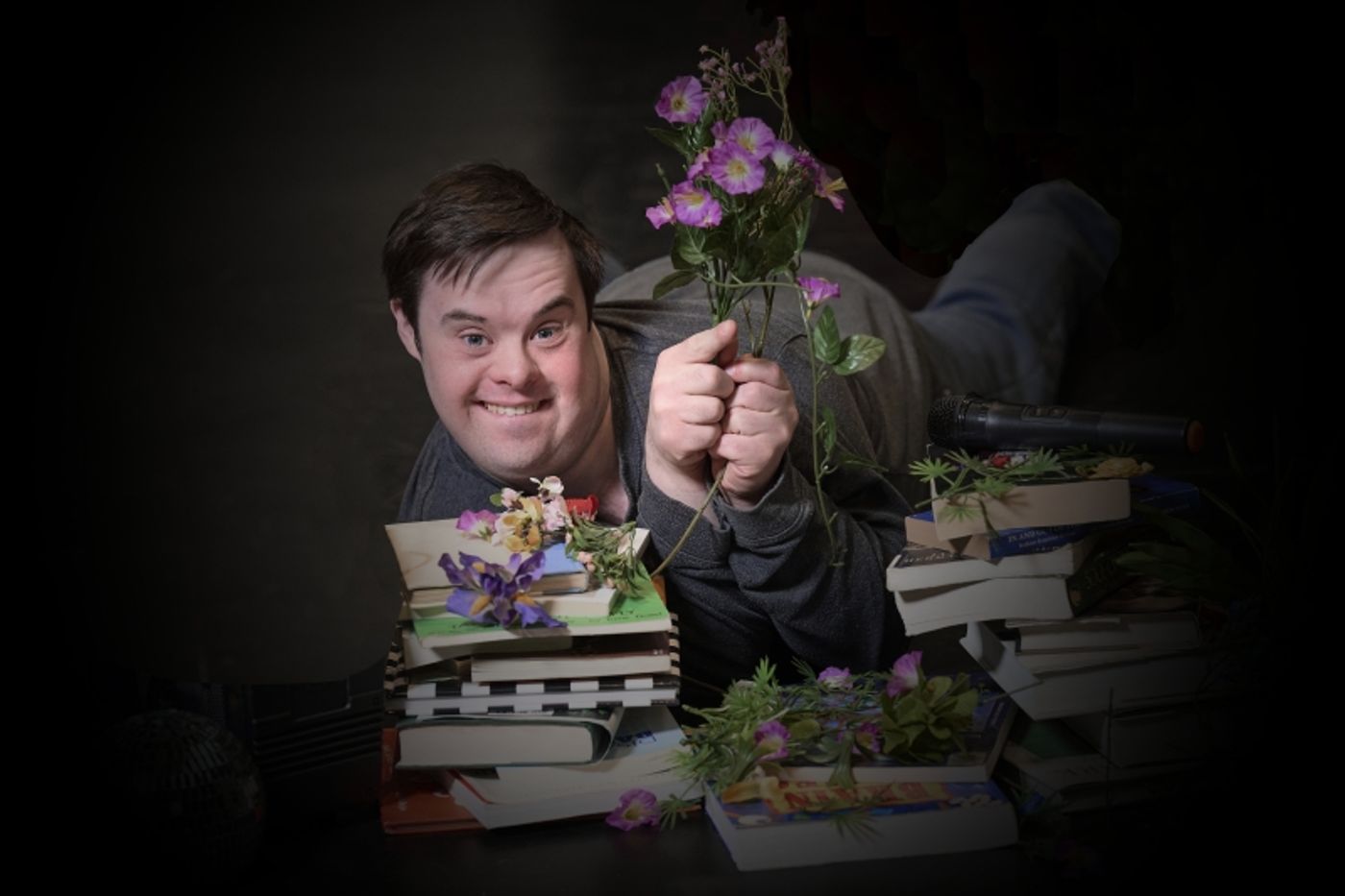
Photographer: Strast Media.
If someone wanted to sign up for a Propeller Dance class or learn more, where would they go?
Amelia: There is information on our web site at www.propellerdance.com and that is also where people can sign up for classes. If people have general questions, they can email us at info@propellerdance.com. It should also be noted that, although there is a certain price point for classes, subsidies are available.
Liz: Sometimes there are also barriers for people to get to classes, but we have people who can help with transportation. That extends to our company as well; we always have a company support worker available. For people who cannot get out in the evenings, we have our virtual class offering.
Propeller Dance is offering many accessibility features for patrons attending the show, including simultaneous in-person ASL interpretation, audio description devices, relaxed performances, and a touch tour for blind and low-vision audience members. We are seeing increased accessibility at more theatre venues, but there is always room for improvement. What are things that other companies can do to easily increase accessibility for their patrons?
Amelia: Always assume that there are going to be disabled people at your show. Twenty-five percent of the population has a disability, so it is clear that there will be accessibility needs at every show. If nothing has been done to welcome disabled people or make sure they are taken care of, it can be a really tough experience.
Something we have done is to use access as a creative prompt to become a part of everything that we set up for the show. This makes sure it is incorporated from the start, and not merely an afterthought. Folks in the cast and crew may have disabilities that they haven’t disclosed. It is good practice to ask if there are any needs that you may be unaware of – but then make sure you take it seriously and follow-though.
It is helpful to build relationships within the community. If you don’t already know someone in the community, get in touch with us; we have twenty years or knowledge and experience! When you have knowledge, it is your responsibility to share it with the community in the hopes that access measures become the norm. We can help you develop a relationship with an interpreter or an audio access person who can become your go-to, so you don’t have to always restart the process.
If you want to include an ASL interpretation, touch base with interpreters well in advance so they have enough time to properly prepare. If they do, they will likely ask you about various artistic elements that are important to the show and can make sure that their interpretive performance matches the tone of the show.
In terms of programs, try to lean towards plain language, so that things are simple and clear. Also, consider your audience, create trust with your patrons, and welcome feedback. If adopting accessibility measures is new for you, ask your audience to let you know how the experience was for them. Infuse the accessibility along the way so that it becomes part of the experience rather than being tacked on at the end.
Liz: I’ll also add that lighting can often be an issue, making it hard to see and causing tripping hazards. Relaxed performances are part of our norm, but they can be a really good idea for everyone. You don’t need to have everyone in pitch darkness.
Can you expand on the availability of inclusive dance and audience reception in the U.K. versus where we are at in Canada?
Inclusive dance in the U.K. set a lot of groundwork for this practice. Comparing Canada to the U.K. is not a direct comparison because, even though it flourished in the U.K. in a relatively short span of time, Canada has a geographical challenge because of its vastness. It is much easier to go to a theatre and connect with other companies in the U.K. It is harder to develop a community here because of the space. Also, arts councils in the U.K. and even in certain parts of the U.S., have a more equitable approach to programming, where they will book inclusive dance programming alongside able-bodied or traditional dance programming. Canada is now at a point where there are enough inclusive dance companies, but the space issue is a major constraint to building community and sharing practices. For us, Covid was actually great in the sense that we could connect digitally and build more community spirit. Our organization, along with others in Canada, are trying to advocate for more equity in programming. We now have this opportunity with Meridian Theatres @ Centrepointe, which is one of the bigger theatres in Ottawa, and can put seventy performers on stage, of whom 99% have disabilities, so that the audience can see for themselves that what we are doing is of value and beautiful – the power of possibility!
What do you want audience members to take away from the show?
Liz: I want them to enjoy the show, have a great time and come away with an appreciation of our work. And I am pretty confident that is exactly what is going to happen!
Amelia: I hope that the audience senses that this is a big moment of community for us, and that we have an enormous sense of joy and pride. I also hope that people reflect on and become more informed about inclusive dance as an art form. And I hope that they have the opportunity to reflect upon their own interpretation the theme – of planting and nurturing of a seed until it grows and blooms and then ends. Since everything has an end, what do you plant next? How does that relate to your life?
But really, I want people to see the force and the beauty of the dancers.
So it turns, we bloom will be on stage at Meridian Theatres @ Centrepointe on April 25th and 26th. Click here for more information or purchase tickets at the link below.
* Note that this interview has been edited for conciseness and clarity.