


Interview: Alexandra LoBianco Returns to Center Stage in Boston Lyric Opera's MACBETH
Opera will be performed October 10 and 12 at Emerson Colonial Theatre
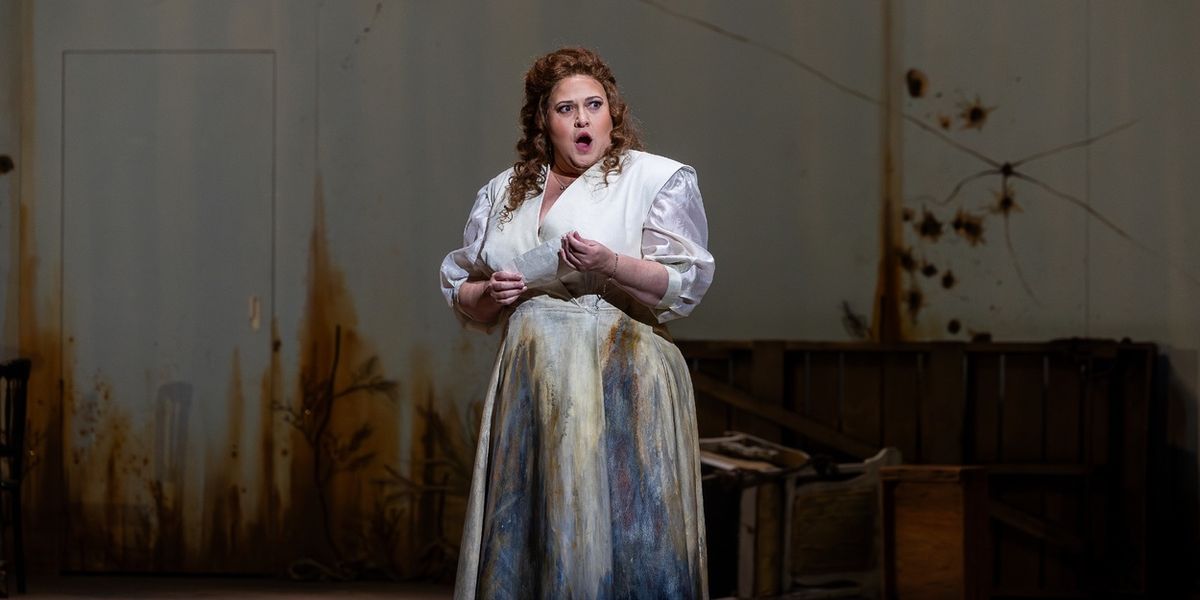
As an internationally known dramatic soprano, Alexandra LoBianco has performed some of the most challenging roles in the repertoire, including Leonore in “Fidelio,” with the Vienna State Opera and North Carolina Opera, Brünnhilde in “Die Walküre,” Minnie in “La fanciulla del West,” with Des Moines Metro Opera, and the title roles in “Turandot,” with Des Moines Metro Opera, Palm Beach Opera, and Maryland Lyric Opera, and “Aida” at Seattle Opera, to name but a few.
For the past few years, however, the challenges in LoBianco’s life have been offstage, including the passing of her mentor – the soprano Carol Kirkpatrick – the end of a longtime romantic relationship, and the development of serious health issues.
First-prize wins at the Liederkranz Vocal Competition and the Irene Dalis Competition in 2011, and the Altamura International Vocal Competition and the William Sullivan Foundation Awards in 2013, had propelled LoBianco – who grew up playing the clarinet – to a distinguished career on the international stage.
But in 2022, during the Santa Fe Summer Festival, LoBianco suffered a vocal cord hemorrhage while giving an afternoon concert in nearby Creede, Colorado. For the next couple of years, with her career in limbo and facing an uncertain future, the singer recovered from the hemorrhage while working with a voice therapist. Over time, she resumed performing, taking on some demanding roles while striving to return to her prior career level.
On October 10 and 12 in Boston, LoBianco will perform her first major role in a staged opera since the injury to her voice – Lady Macbeth in Giuseppe Verdi’s Shakespeare-inspired “Macbeth,” with Boston Lyric Opera at the Emerson Colonial Theatre.
With Norman Garrett in the tyrannical title role opposite LoBianco as his scheming wife, the production is being helmed by Commonwealth Shakespeare Company artistic director Steven Maler, with BLO music director David Angus conducting the BLO Orchestra, and BLO head of music Brett Hodgdon conducting the BLO Chorus.
By Zoom recently from Boston, the Saint Petersburg, Florida, native who now makes her home in Chicago, spoke about her career, her life today, and making her BLO debut.
What made you decide to share your personal and health challenges with the public?
Because someone needs to set a precedent –someone needs to take a stand, be open, be vulnerable, and make it a more accepting space. I have been through trauma on multiple levels in my life, and I have spent the last few years healing and recovering from those traumas.
What, in addition to the vocal hemorrhage, were some of the other health issues you faced?
A myriad of things, really. My body was basically shutting down. To be very candid, I was dealing with horrific bleeding. What I have come to understand is that the tissue that is part of the female reproductive organ is the same tissue as our vocal apparatus.
So, as a woman, if you’re going through something involving your reproductive system, it’s likely going to affect your vocal cords. I found all this out as it went along. Unfortunately, there’s not a lot of research around that specific connection. The only person who has talked to me about this has been my speech pathologist, not my ENT and not my OB-GYN.
How has all this affected you?
Over the last few years, my life has changed a lot. The reason I’ve begun speaking out publicly and sharing my story so boldly is that I am a teacher. I have been teaching for more than 20 years, and over that time, some of my students have come to me for help to recover from injuries. Some have had issues with technique that I wasn’t previously able to help with. Now I’ve had to utilize ENTs and speech pathologists, and as I sat in those appointments, I was reflecting on what I could do to help my students recover from these kinds of things.
What form does helping your students in these ways take?
I now share very, very much. Every time I do a masterclass, every time I do a talkback with students, every time I’m in front of young singers, I talk about all of this.
Do you believe that your candor will also benefit your peers?
Absolutely. And, because I have been so public, I’ve had colleagues who have run into these kinds of issues come to me and say, “How do I handle this? Who do I go to?”
How does it feel to be fully resuming your own career?
It feels great. I came really close to full retirement last year. I was just so very tired, tired of fighting to feel better, and tired of the jump-ins, too. They’ve been a constant in my career. I’ve always been able to jump in and be a last-minute replacement. I’ve always been that person who gets that call. It’s who I’ve always been, the go-to person.
The thing is, now I don’t want that part of my career back. I just want to do good work with wonderful, beautiful people, as I am with this production. And, of course, I love being able to do these crazy, weird, superhuman things with my throat. During my recovery process, I fell back in love with what I do, and that’s a gift.
How did Verdi’s “Macbeth” first come to your attention?
It has been an earworm since the very beginning of my career. I was a chorister at Opera Carolina in Charlotte, N.C., for many years, and then the artistic director at the time asked me if I would sing the Lady in Waiting in “Macbeth.” That was 2004 and it was my first comprimario. I was fresh out of college and that was my first solo contract.
What led to your BLO debut in this production?
I’m very lucky. I have a champion at BLO in the form of their new artistic director, Nina Yoshida Nelsen. We did a production of Gian Carloe Manotti’s “The Consul” together years ago in Santa Barbara, California. And we became very, very good friends at that point in time. I’ve been around while she was having her children. I’ve been in Nina’s life for a very long time.
When the BLO decided to do “Macbeth,” Nina came to me and said, “I’m putting you up for this. I’m recusing myself, however, from the final decision, because you’re my friend.” I think that says so much about Nina as an artistic director, and it says so much to me about the value we have for each other.
Then you agree with Nina’s decision to recuse herself from final casting for “Lady Macbeth”?
One thousand percent. I would not have wanted her to decide to cast me. I would have felt like I’d been done a favor. I don’t want her ever to do that kind of favor for me. The question of whether I could sing this role or not was never in my mind. I’m good at what I do. My greatest fear, however, was that I might disappoint Nina when I came to do this – that I would let her down somehow. I wanted to make sure I was prepared enough to never let my friend – or as she is here, my boss – down.
What’s this opera like for a performer?
I love this type of repertoire and, having spent my 30s and early 40s really doing Wagner and Strauss, which is kind of backwards, to come back in this extraordinarily quick, light opera is really intense. I have to float and use my chest voice to almost belt and growl at the same time. And, in this production, to climb across tables, and lie down and sing on my back, and do all sorts of other things.
Did you have any reservations taking such a rigorous project on?
Absolutely, but ultimately I thought, “I can do all this.” My knees questioned it, but my body didn’t. I’ve been doing yoga almost every day since I’ve been here, and I have ice packs, and knee braces, and knee pads, and all sorts of things going on for myself.
What do you think of your role?
I think playing the character of Lady Macbeth is an extraordinary journey for any woman to take on. What I love most about her is her humanity. And I look at my own life, and the drive and desire to get to that top point of a career is the same type of drive she has to get to the top of her own life. That drive destroyed her, of course, but it is not going to destroy me. What it is doing is allowing me to find myself again.
I re-read the play multiple times over the summer, and I watched different filmed versions, too. Then I studied the score from the perspective of why it was written as it was. What was the connection of the text to why each note was written?
Have you performed previously in Boston?
Yes, with the Boston Symphony Orchestra last year actually. It was a small role as part of the ensemble of convicts at the end of this huge Shostakovich opera, “Lady Macbeth of Mtsenk.” So Lady Macbeth has become kind of a theme for me and Boston. Singing with the BSO was great, but my mental health was a wreck at that time because I had just started perimenopause and my brain fog was horrific.
How are you feeling these days?
Honestly, I feel really, really good both emotionally and physically, and I’m delighted to be performing with the BLO. And this is not only because of Nina, but because the BLO is doing things right.
How do you mean that?
At the BLO, they take a different approach from many other opera companies. They care about their artists. They look at our time to make sure it’s managed wisely. They even provide mental health counseling for anybody who wants it while on a gig. That almost never happens – this is the first or maybe second time in my experience that that’s ever happened. So they are caring. The team that they have is truly exceptional.
The BLO has earned a fabulous reputation, too, because of the changes that Nina, as artistic director, and Brad Vernatter, the general director and chief executive officer, have been making over the past couple of years.
I hear that you’ve made some positive changes in your personal life in the last couple of years. Anything you would like to share?
I eloped with my Best Friend, Joshua Benevento, last year, and we got married while I was doing the Verdi “Requiem” in Madison, Wisconsin.
Is Joshua also an opera singer?
He is. He was in the chorus at the Metropolitan Opera for 15 years, and now, for the last couple of years, he’s been with Chicago Lyric Opera. He has multiple recordings out as well including one of Lee Hoiby’s “The Tempest.”
How did your marriage come about?
We’d been friends for years while we were each going through whatever we were going through, and finally, we came back together when we were both in better places. Before long, we decided we’d never let go of each other ever again. We eloped, on purpose, during the Verdi “Requiem,” so I could actually say goodbye to my past and hello to my future.
Photo caption: At top, Alexandra LoBianco as Lady Macbeth in a scene from Boston Lyric Opera’s “Macbeth.” Photo by Nile Scott Studios. .

|
The Norwegians Elayne P. Bernstein Theatre (9/04-10/04) |
|
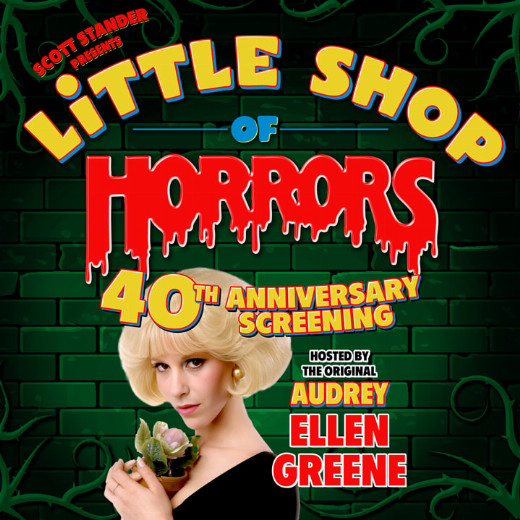
Little Shop of Horrors 40th Anniversary Tour with Ellen Greene (the Original Audrey) Emerson Colonial Theatre (8/28-8/28) |
|
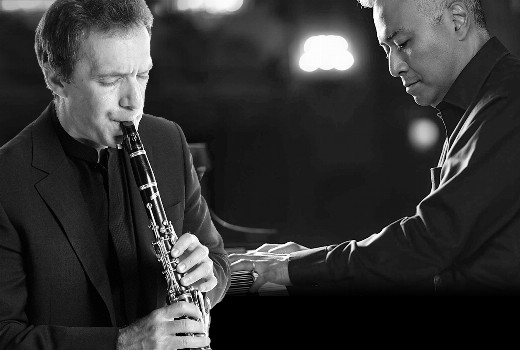
Manasse/Nakamatsu Duo: Celebrate! Cape Cod Chamber Music Festival (8/17-8/17) |

|
Meet the Cartozians Boston Center for the Arts (2/18-3/21) |

|
Jagged Little Pill The Company Theatre (7/24-8/16) |
|
|
Dirty Dancing Emerson Colonial Theatre (11/18-11/22) |
|
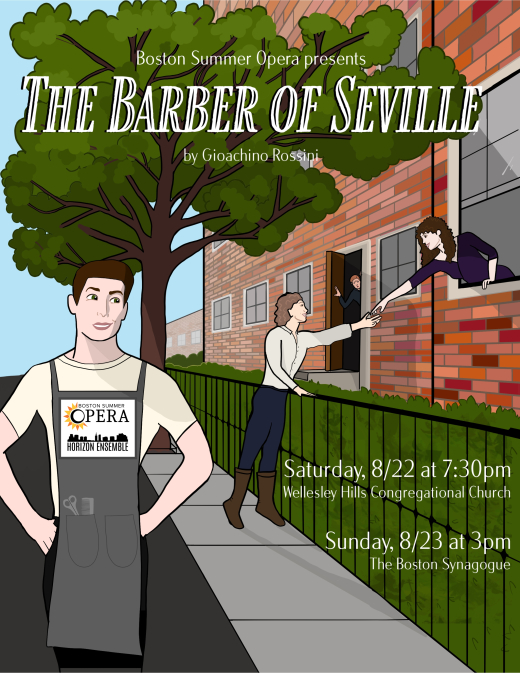
The Barber of Seville Boston Synagogue (8/23-8/23) |
|
Covenant SpeakEasy Stage Company (9/25-10/17) |

|
The Who's Tommy Emerson Colonial Theatre (5/04-5/16) |

|
Mamma Mia! Boston Opera House (4/13-4/25) |