


Interview: Will Conard talks WE HAD A WORLD
The production runs through March 15 at the Calderwood Pavilion, Boston Center for the Arts
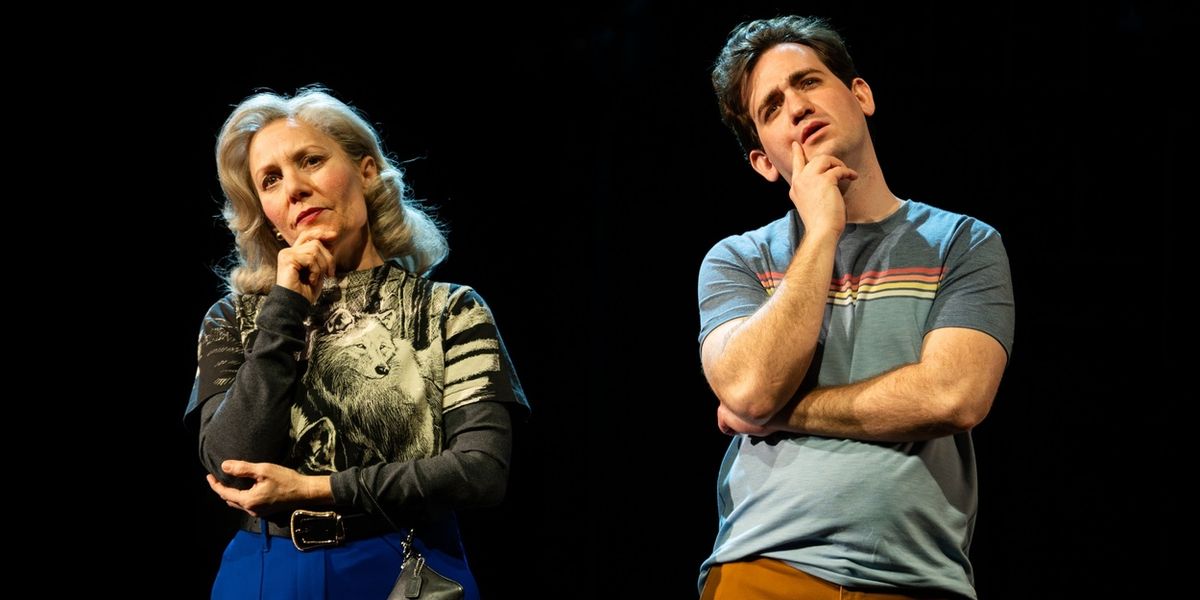
In the new play “We Had a World” – being given a first-rate regional premiere by The Huntington at the Calderwood Pavilion, Boston Center for the Arts, through March 15 – a dying woman asks her grandson to write a play about their family. “But I want you to promise me something,” she says. “Make it as bitter and vitriolic as possible.”
Playwright Joshua Harmon has done just that while also blending humor and warmth into a deeply personal story of his relationships with his mother and his untraditional grandmother, who shaped his early life by taking him to Broadway shows, classical music concerts, and some very adult art exhibits.
The writer’s relationship with Boston audiences has developed over the past dozen years with plays like “Bad Jews,” “Significant Other,” and “Admissions,” all presented by SpeakEasy Stage Company. His “Prayer for the French Republic” was presented by The Huntington in 2023, before moving to Broadway where it was nominated for the 2024 Tony Award for Best Play.
Harmon’s latest play – which premiered off-Broadway last year in a Manhattan Theatre Club production featuring Andrew Barth Feldman, Joanna Gleason, and Jeanine Serralles – is being directed in Boston by Keira Fromm, with Amy Resnick (The Huntington’s “Prayer for the French Republic”) as grandmother Renee, Eva Kaminsky as mother Ellen, and Will Conard as the torn-between-two-powerful-women son and grandson, Joshua.
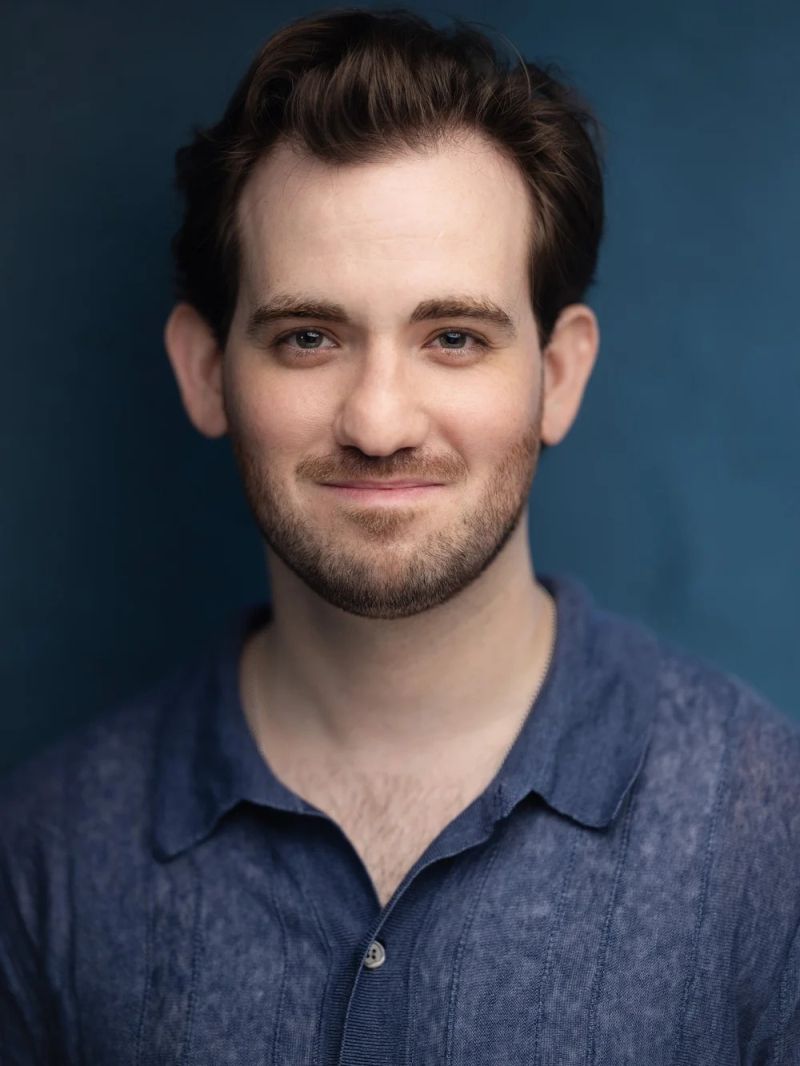 On Zoom recently from Boston, Conard – a native New Yorker who recently completed his MFA in Acting at NYU – spoke about what’s it like playing the Joshua Harmon character in “We Had a World,” and more.
What kind of research into Harmon, the person, did you do for this role?
Josh isn’t reclusive but he is a fairly private person, and he definitely values that facet of his life. There are interviews with him online, and so I had the opportunity to watch those. And I think, for me, my goal was not in transforming into Joshua Harmon, but was kind of finding where Joshua, the character, sits within me, and what it means to me to play something like that. I hope he knows I’m not attempting to mimic or transform into him in any kind of way.
When you think about transformative actors, even someone like Daniel Day-Lewis, no matter whether he’s playing Abraham Lincoln or another real-life character, it’s definitely still him on the screen. The most recent biopic that comes to mind is “A Complete Unknown,” with Timothée Chalamet playing Bob Dylan. It’s not like, “Whoa, that’s Bob Dylan.” It’s still Chalamet playing Dylan, no matter how much you invest in that sort of thing.
That said, I kind of clocked the certain ways that the real Josh sits, the way he touches his face, and things like that. Tiny little things. But for the most part, it’s just been, how do I enter and relate to this character, and what’s my relationship with the characters of Renee and Ellen and how do our relationships work as three people?
Have you had the opportunity to meet Harmon in person?
Yes, he came in a few weeks ago, for two rehearsals, and a bunch of us from the cast, crew, and creatives had dinner with him. And then he came in for two previews before we officially opened.
What was it like having him at rehearsals and previews?
In the rehearsal room, he offered a lot of insight into the specifics of the actual events depicted in the play. He also helped me with some of the ways that he says things, or what certain things meant to him. And then he shared pieces of advice about how he liked certain moments to go, things that were tested out in New York, which he likes. And he also offered insight into certain moments that he thought maybe were not exactly what he wanted them to be.
This is such a personal play for him that in rehearsals, he gave notes directly to us on all kinds of things. And he gave me a diction note – I mean he literally gave me a diction note on one line. He was incredibly generous, both in terms of what he offered and his willingness to just be there and witness and experience.
Are there particular challenges that you’ve encountered playing a real-life character?
There are challenges, but the way I see it, different projects call for different entry points. Because we’re all playing real characters, the two other actors and I had a lot of discussions. We talked about how much we felt like we had to embody the true, actual person, and how much of ourselves we wanted to bring to these characters.
For me that comes from something that I find interesting about acting, which is that when I walk onto the stage, before I’ve said a word, even before I’ve really made any physical choices, the audience has already made about a thousand assumptions about me. We’re really good at that as people. We see somebody, and we make instant observations about a million things – sometimes not consciously, but unconsciously.
Were you familiar with Harmon’s work before being cast in this play?
I definitely was because I’ve read them all, with the exception of “Admissions” and a Medea adaptation he did. Interestingly, I had been told by just about everyone and their mother that I should look at his work when I was in grad school because they thought that it sort of aligned for a thousand reasons, primarily, I think it was the givens of my own reality. I’m from New York City and he’s from Westchester. I think people felt like the way I talk made a lot of sense in the context of his work.
Did you ever do any scenes from Harmon’s plays when you were at NYU?
No. I just finished graduate school in May and everybody was telling me that I should do a scene from one of his plays for showcase, but unfortunately, for that particular exercise, many of his plays, like this one I’m doing now, involve intergenerational relationships and there was no one in my program who was in their 40s or 50s, as is required by so many of his plays. So I wasn’t able to do anything of his as part of my graduate acting work.
But your interest in his plays only grew, correct?
Absolutely. And as I became increasingly familiar with them I came to realize is that it all made a ton of sense to me. That’s something that I love so much about Josh’s work – that while the plays are all so different, you can recognize his voice in each one of them, and yet none of the writing is repetitive, and the plays never tread the same area.
Has that been helpful to you as an actor doing this new play?
Definitely, because I get clues to my character that way. I think there are clues about this show in his other shows. It’s information that we maybe don’t quite get in full. I read “Skintight,” “Significant Other,” “Bad Jews,” and “Prayer for the French Republic,” and there are things in all four of those plays that explained something that I didn’t quite understand at first in our play.
Do you relate personally to this story?
I do, because I’m very lucky to still have one of my grandmothers. She lives in New York, and I grew up, like Josh, going to a lot of opera at Lincoln Center and musicals on Broadway with her. My earliest theatrical memory on Broadway is of my grandmother taking me and my grandfather, who has since passed away, to see “Beauty and the Beast.”
She will be coming to Boston to see me in this, and while my relationship with her is by no means a one-to-one match with the one in this story, all families are complicated, and intergenerational relationships are complicated, and there’s no way to not see in this play some of the experiences you’ve had. My grandmother did not tell me to write a story about her and leave in all the bad parts – that’s not my relationship with her at all!
What are your thoughts on Joshua Harmon now?
He’s a great writer – a truly fantastic living playwright, both for Jews and for queer folk of a certain generation. His writing is superb, and having gotten to work with him with even just a little bit, I think he’s also a wonderful person.
Photo caption: At top, Amy Resnick and Will Conard in a scene from The Huntington’s regional premiere production of “We Had a World.” Photo by Annielly Camargo. At left, photo of Conard, courtesy of The Huntington.


Sign up for all the news on the Fall season, discounts & more...

|
Bat Boy: The Musical Umbrella Arts (9/25-11/08) |

|
Brian Henson's Puppet Up! Boch Center Shubert Theatre (9/27-9/27) |
|
Covenant SpeakEasy Stage Company (9/25-10/17) |

|
Monty Python's SPAMALOT Boch Center Wang Theatre (10/06-10/11) |
|
The Norwegians Elayne P. Bernstein Theatre (9/04-10/04) |

|
An evening with LaChanze Berklee Performance Center (11/01-11/01) |
|
BOUNCERS by John Godber The Modern Theatre (10/01-10/24) |

|
This Is Your Song: The Elton John Songbook Norton Singers (10/02-10/03) |
|
A Christmas Carol North Shore Music Theatre (12/03-12/23) |
|
The Carpenters Songbook Emerson Colonial Theatre (10/07-10/07) |
