


|
The Cambridge Companion to David Mamet
(1/1/2004) This collection of specially written essays offers both student and theatregoer a guide to one of the most celebrated American dramatists working today. Readers will find the general and accessible descriptions and analyses provide the perfect introduction to Mamet's work. The volume covers the full range of Mamet's writing, including now classic plays such as American Buffalo and Glengarry Glen Ross, and his more recent work, Boston Marriage, among others, as well as his films, such as The Ver... |
 |
|
The Wadsworth Anthology of Drama
(6/25/2003) Known through three editions as the boldest and most distinguished introduction to drama, William Worthen's pace-setting text continues to provide exciting plays usefully situated within their historical and cultural contexts. |
 |
|
The Lyrics of Noel Coward
(1/1/2002) Mad Dogs and Englishmen, Don't Put your Daughter on the Stage, Mrs Worthington and over 250 more lyrics from Coward's musical masterpieces. Noel Coward is one of the greatest lyricists of the twentieth century. Songs such as A Room with a View, The Stately Homes of England, Mad Dogs and Englishmen and Mrs Worthington are known, sung and loved the world over. This edition gathers together over 250 of Coward's lyrics, arranged in chronological order and grouped by show. In addition, these masterp... |
 |
|
Theatre World 1994-1995, Vol. 51
(1/1/2000) Theatre World, the statistical and pictorial record of the Broadway and off-Broadway season, touring companies, and professional regional companies throughout the United States, has become a classic in its field. The book is complete with cast listings, replacement producers, directors, authors, composers, opening and closing dates, song titles, and much, much more. There are special sections with biographical data, obituary information, listings of annual Shakespeare festivals and major drama a... |
 |
|
Theatre World 1993-1994, Vol. 50
(1/1/2000) Theatre World, the statistical and pictorial record of the Broadway and off-Broadway season, touring companies, and professional regional companies throughout the United States, has become a classic in its field. The book is complete with cast listings, replacement producers, directors, authors, composers, opening and closing dates, song titles, and much, much more. There are special sections with biographical data, obituary information, listings of annual Shakespeare festivals and major drama a... |
 |
|
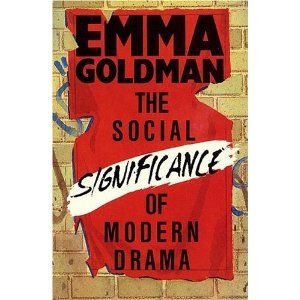
The Social Significance of Modern Drama
(1/1/2000) Out of print virtually since its completion in 1914, Emma Goldman's pioneer work Social Significance in Modern Drama bridges modern drama and political philosophy, pointing out the road that remains to be travelled toward a theatre of social empowerment. Activist, feminist, philosopher and anarchist, Emma Goldman was a passionate thinker about all things modern when the 20th century was still raw and new. The emergence of her treatise on the theatre after years of obscurity is certain to arouse ... |
 |
|
Polaroid Stories
(1/1/1999) Naomi Iizuka’s 1997 play, Polaroid Stories, consciously uses stories, characters and themes from Ovid’s Metamorphoses to tell the stories of street kids living on the edge in a desolate, urban landscape. Because these characters are named after Orpheus and Eurydice, and Echo and Narcissus, or based on stories of Dionysus, and Ariadne and Theseus, and because scenes are entitled “The Story of Semele” or “Theseus in the Labyrinth,” Iizuka creates a world that has two dimensions: the g... |
 |
|
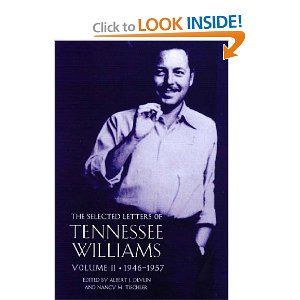
The Selected Letters of Tennessee Williams, Vol. 2: 1945-1957
(2004) This second volume of the playwright's correspondence begins at a time, after the staging of The Glass Menagerie, when Williams had "no interest... in more Broadway productions." It wouldn't be long, though, before he started writing A Streetcar Named Desire, which would become an even greater success and was the first of many collaborations with director Elia Kazan. Williams had plenty of advice for Kazan about the staging of Streetcar and subsequent plays, and the letters reveal the active ro... |
 |
|
Theatre of Tennessee Williams, Vol. 4: Sweet Bird of Youth / Period of Adjustment / The Night of the Iguana
(1972) The Theatre of Tennessee Williams brings together in matching format the plays of one of America's most persistently influential and innovative dramatists. Arranged in chronological order, this ongoing series includes the original cast listings and production notes for all full-length plays. |
 |
|
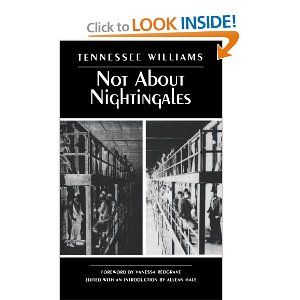
Not About Nightingales
(1998) Written in 1938 when Williams was 27, still living at home and a good six years away from Broadway, Not about Nightingales is as much writing exercise as fully realized drama. It lacks the originality and depth of The Glass Menagerie, written only a few years later, and his later masterworks. Nevertheless, it is of considerable interest, not least because it was inspired by a real occurrence in which several unruly prisoners were cooked alive as punishment. And after all, it is Williams' first f... |
 |
|
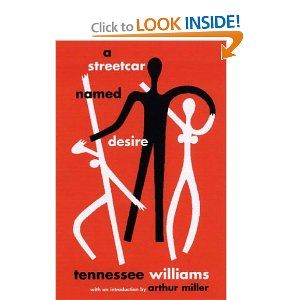
A Streetcar Named Desire
(2004) The Pulitzer Prize and Drama Critics Circle Award winning play—reissued with an introduction by Arthur Miller (Death of a Salesman and The Crucible), and Williams' essay "The World I Live In." It is a very short list of 20th-century American plays that continue to have the same power and impact as when they first appeared—57 years after its Broadway premiere, Tennessee Williams' A Streetcar Named Desire is one of those plays. The story famously recounts how the faded and promiscuous Blanche ... |
 |
|
Tennessee Williams: Plays 1957-1980
(2000) This set collects all of Williams's plays, including the recently rediscovered early efforts Spring Storm and Not About Nightingales up through his most famous works and later lesser-known dramas. These magnificent titles are essential for all academic and public libraries. |
 |
|
Tennessee Williams: Plays 1937-1955
(2000) This set collects all of Williams's plays, including the recently rediscovered early efforts Spring Storm and Not About Nightingales up through his most famous works and later lesser-known dramas. These magnificent titles are essential for all academic and public libraries. |
 |
|
The Spectator: Talk About Movies and Plays With Those Who Made Them
(1999) A collection of interviews with screen and stage actors, directors, playwrights and critics, Terkel's latest richly entertaining oral history is a departure from his bestselling interview books on weightier themes (Working; Hard Times; Race). Here, Terkel offers interviewsAmany of them reading almost like monologues, Terkel says so littleAfirst heard on the Chicago radio program he has hosted for the past 45 years. Many of the exchanges feel dated, and there is an awful lot of chitchat. Neverth... |
 |
|
Rough Magic: Making Theatre at the Royal Shakespeare Company
(2001) Steven Adler examines the dynamic life and workings of the theatre company responsible for some of the world’s most compelling performances and influential productions of the last forty years, including Marat/Sade, A Midsummer Night’s Dream, Les Misérables, Les Liaisons Dangereuses, and Nicholas Nickleby. Rough Magic provides a thorough analysis of the many strands of theatrical activity on both sides of the footlights that coalesce in the artistic vigor of the Royal Shakespeare Company... |
 |
|
Picasso at the Lapin Agile and Other Plays
(1997) Ever wonder what it would have been like if wild and crazy Steve Martin had written an episode of "The Twilight Zone"? Well, wonder no more. The zany actor/comedian made playwright rookie of the year with this, the script of his first comedy, set in a bar in 1904 Paris. Two of the regulars, twentysomethings Pablo Picasso and Albert Einstein, argue about the art of physics and the physics of art as they try to impress and bed a pretty girl. And then the space/time/culture continuum ruptures, and... |
 |
|
Harold Prince and the American Musical Theater
(1989) This book follows the career of the producer/director of such shows as "Pyjama Game", "Damn Yankees", "Fiddler of the Roof" and "West Side Story" and who has collaborated in many productions of Stephen Sondheim's works. |
 |
|
Plays and Stories: Arthur Schnitzler
(1982) Arthur Schnitzler, Viennese playwright, novelist, short story writer, and physician, was a sophisticated writer much in vogue in his time. He chose themes of an erotic, romantic, or social nature, expressed with clarity, irony, and subtle wit. Reigen, a series of ten dialogues linking people of various social classes through their physical desire for one another, has been filmed many times as La Ronde. As a Jew, Schnitzler was sensitive to the problems of anti-Semitism, which he explored in the... |
 |
|
Oedipus at Colonus
(2002) This play forms a bridge between the events in Oedipus the King and Antigone. It begins with the arrival of Oedipus in Colonus after years of wandering; it ends with Antigone setting off toward her own fate in Thebes. |
 |
|
Philoctetes
(2003) Based on the conviction that only translators who write poetry themselves can properly re-create the celebrated and timeless tragedies of Aeschylus, Sophocles, and Euripides, the Greek Tragedy in New Translations series offers new translations that go beyond the literal meaning of the Greek in order to evoke the poetry of the originals. Under the general editorship of Peter Burian and Alan Shapiro, each volume includes a critical introduction, commentary on the text, full stage directions, and a... |
 |
|
Babbitt
(1996) First published in 1922, Babbitt is an authentic modern American classic, a biting satire of middle-American values that retains much of its poignancy today. George F. Babbitt, Lewis's outwardly successful but inwardly unhappy real estate salesman, still seems real. His story makes engrossing reading and is ideal for audio listening. With Babbitt himself at the center of every scene, it is impossible for listeners plagued by frequent interruptions to lose track of the story line. Narrator Wolfr... |
 |
|
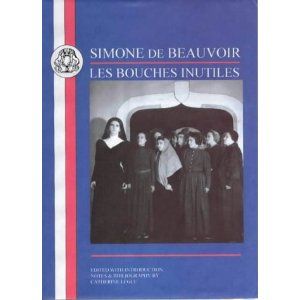
Les Bouches Inutiles
(2002) Simone de Beauvoir is best known for her autobiographical writings, as well as her study of the subordination of women in Western society, "Le Deuxi me Sexe" (1949). Written five years before, her powerful play "Les Bouches Inutiles" (1945) shows Beauvoir's dramatisation of issues to which the later texts would return, as well as a significant stage in her creative and philosophical dialogue with Jean-Paul Sartre. The play describes the decision by the male rulers of a besieged city to kill its... |
 |
|
Stagestruck: Theater, AIDS, and the Marketing of Gay America
(1998) Schulman, a lesbian activist and 1997 winner of the Stonewall Award, joined ACT UP in 1987. Shortly thereafter, she completed her fourth novel, People in Trouble (NAL Dutton, 1991), which featured a group of East Village artists struggling with homelessness and AIDS and was based on her personal experiences. After attending a performance of Rent in February 1996 and writing a review of it, Schulman realized that the storyline of this mega-hit was, in fact, taken directly from her novel. Stagestr... |
 |
|
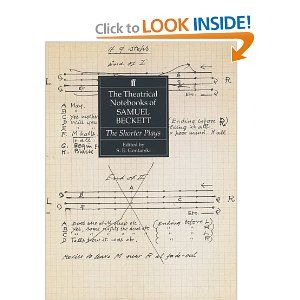
The Theatrical Notebooks of Samuel Beckett: Krapp's Last Tape v. 1
(1993) Samuel Beckett directed "Krapp's Last Tape" on four separate occasions, and this volume offers a facsimile of his 1969 Schiller-Theater notebook. The notebook contains what is probably some of the most explicit analysis by Beckett of his own work ever revealed. The revised text incorporates many of the changes Beckett made in the 1969 Schiller production, as well as subsequent changes in later productions. Professor Knowlson worked closely with Beckett over these revisions - and deviations from... |
 |
|
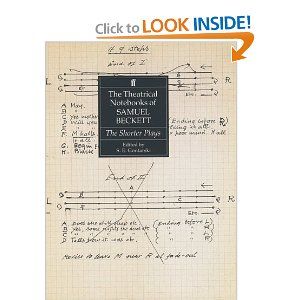
The Theatrical Notebooks of Samuel Beckett: Waiting for Godot v. 3
(1994) Following "Endgame" and "Krapp's Last Tape", this book looks at Beckett's notebook for "Waiting for Godot". The volume is in part a facsimile of the notebook kept by Beckett for Berlin's Schiller-Theater production in 1975. It contains a full set of directional notes and discloses, section-by-section, a total system that works by repitition and analogy, musical rhythm and echo, establishing subtle patterns of sound, movement and gestures. |
 |
|
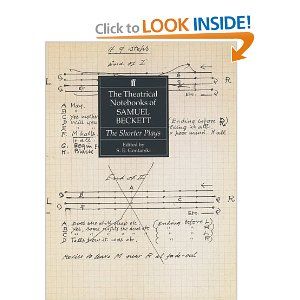
Shorter Plays, Volume 4: The Theatrical Notebooks of Samuel Beckett
(1999) Shorter Plays follows Waiting for Godot, Endgame, and Krapp's Last Tape in this highly praised series of Beckett's notebooks, which show for the first time the extensive revisions made by Beckett during revivals of his plays. From the mid-1960s, Samuel Beckett himself directed all his major plays in Berlin, Paris or London. For most of these productions he meticulously prepared notebooks for his personal use. The Theatrical Notebooks of Beckett that are reproduced in facsimile here offer a rem... |
 |
|
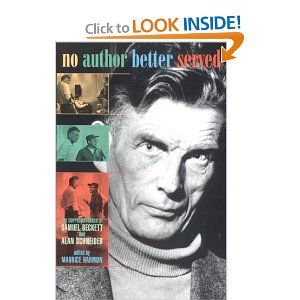
No Author Better Served: The Correspondence of Samuel Beckett and Alan Schneider
(2000) The great playwright exchanges letters with his favorite American stage director. In 1955 Alan Schneider was invited to direct the American production of Beckett's Waiting for Godot. He went to London to meet the playwright beforehand, and a warm, productive relationship soon developed, ending only with Schneider's accidental death in 1984. (He was fatally struck by a car while walking to a mailbox, intending to post a letter to Beckett.) Their correspondence279 letters from Beckett, 209 from Sc... |
 |
|
States of Shock
(1998) The evening begins with a bang. The deceptive calm of a family restaurant, filled with two disgruntled customers and an inept waitress, is disrupted by offstage sounds of war and destruction. The real disruption begins with the entrance of the Colonel, a middle-aged brute of a man wearing the medals and uniform of a commander, who wheels on Stubbs, a mute paraplegic veteran who served with the Colonel's son. According to the Colonel, they have come "to toast the death of my son and have a nice d... |
 |
|
Four Two Act Plays
(2000) Contains: La Turisha, The Tooth of Crime, Geography of a Horse Dreamer, and Operation Sidewinder. |
 |
|
Chicago And Other Plays
(1981) Includes: Chicago, Icarus's Mother, Red Cross, Fourteen Hundred Thousand, Melodrama Play. |
 |
|
Hawk Moon: Short Stories, Poems, and Monologues
(2001) In this collection of more than fifty monologues, short stories and poems—Shepard's first—one of America's most acclaimed writers and actors reflects on growing up in America, rock and roll, the sex of fishes, and other topics. Shepard displays his virtuosic sense of the rhythms of the American landscape. |
 |
|
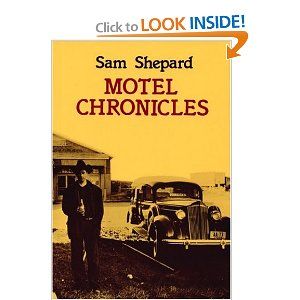
Motel Chronicles
(2001) Motel Chronicles reveals the fast-moving and sometimes surprising world of the man behind the plays that have made Sam Shepard a live legend in the theater. Shepard chronicles his own life birth in Illinois, childhood memories of Guam, Pasadena and rural Southern California, adventures as ranch hand, waiter, rock musician, dramatist, and film actor. Scenes from this book form the basis of his play Superstitions, and of the film (directed by Wim Wenders) Paris, Texas, winner of the Golden Palm Aw... |
 |
|
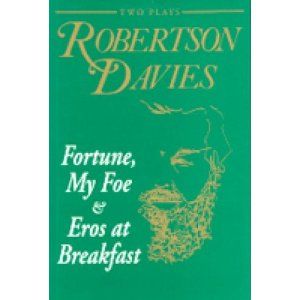
Fortune, My Foe and Eros at Breakfast
(1993) Robertson Davies has been called the most important Canadian playwright of the postwar period. These two plays from the 1940s prove that great writing and important themes never go out of style. |
 |
|
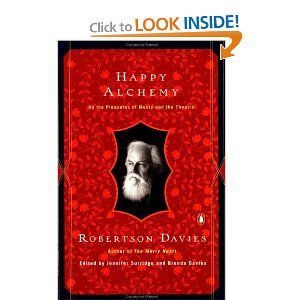
Happy Alchemy: On the Pleasures of Music and the Theatre
(1999) Last year, Davies's widow, Brenda, and their daughter, Jennifer Surridge, worked to compile The Merry Heart, a collection of Davies's speeches and writings on reading, writing and books. Davies had consented to the plans for that book in the last months of his life. This, however, seems to be purely a production of his estate and is, truth to tell, uneven. There are some wonderful pieces: His speech on "The Noble Greeks" wanders convincingly from Greek religion and culture to Jim Jones and Davi... |
 |
|
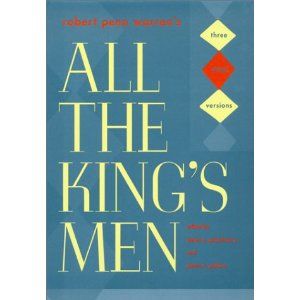
All the King's Men
(2000) Robert Penn Warren's 1946 Pulitzer Prize-winning novel All the King's Men is one of the undisputed classics of American literature. Fifty years after the novel's publication, Warren's characters still stand as powerful representations of the moral dilemmas faced by individuals in positions of power. All the King's Men had its genesis in Warren's stage play Proud Flesh, unpublished in his lifetime. He also wrote a subsequent unpublished play titled Willie Stark: His Rise and Fall and a later dram... |
 |
|
The Old Glory: Endecott and the Red Cross; My Kinsman, Major Molineux; and Benito Cereno
(2000) Winner of Five Obies, now back in print after fifteen years, a stage adaptation of classic stories by Hawthorne and Melville In the three plays in The Old Glory--Endecott and the Red Cross; My Kinsman, Major Molineux; and Benito Cereno--the most powerful figure in postwar American poetry confronts the most haunting American fiction writers of the nineteenth century. The result is a mythical, nightmare history of three centuries in America. In Endecott and the Red Cross, Hawthorne's Puritan go... |
 |
|
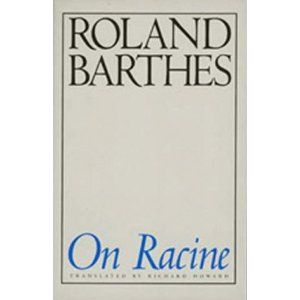
On Racine
(1992) On Racine is a brilliant, personal view of theatre in which Barthes discusses all the major tragedies of Racine as well as the range of critical views of his work. |
 |
|
Persecución
(1986) Cinco piezas de teatro se unen aqui bajo un mismo tema: la persecucion. Cruel, experimental, desenfadado, ironico y poetico, este libro ademas de ser una obra de arte, es tambien una vision profunda de la eterna dualidad que parece caracterizar al ser humano: su condicion tanto sublime como terrible que lo hace victima o victimario perseguido o perseguidor. Pero la obra ademas de ser una satira del actual regimen cubano, trasciende el mismo a traves de una liberacion que, como en el principio d... |
 |
|
Theaetetus
(1987) Set immediately prior to the trial and execution of Socrates in 399 BC, Theaetetus shows the great philosopher considering the nature of knowledge itself, in a debate with the geometrician Theodorus and his young follower Theaetetus. Their dialogue covers many questions, such as: is knowledge purely subjective, composed of the ever-changing flow of impressions we receive from the outside world? Is it better thought of as true belief'? Or is it, as many modern philosophers argue, justified true b... |
 |
|
The Statesman
(2002) Plato's "Politicus" ("Statesman") stands, both in date and in political thought, between the Republic and the Laws. It presents his thoughts at the point when he was chastened by disappointment with his attempts to put theory into practice at Syracuse. The dialogue reflects contemporary controversies on the method of definition; but its logical exercises and the impressive myth of the two cosmic eras serve to bring out its essential political teaching. This volume contains the text in translatio... |
 |
|
Winning Monologs for Young Actors: 65 Honest-To-Life Characterizations to Delight Young Actors and Audiences of All Ages
(1986) A collection of sixty-five monologues providing young performers with a variety of audition pieces reflecting situations both serious and comic. |
 |
|
Every Seventeen Minutes the Crowd Goes Crazy!
(2000) A family of exuberant and startled kids are left to fend for themselves by their mother and father-who have taken off to pursue forever a life of betting at trotter racetracks and playing blackjack in Native American casinos! An expandable chorus punctuates with hilarious and stinging sound bites this highly theatrical and poignant legend of parental abdication. |
 |
|
Backstage Forms
(1995) Over 100 examples of backstage paperwork ready for photocopying--forms like hanging schedules, costume fitting sheets, lighting circuit schedules, prop preset lists, sound cues, to name only a few. |
 |
|
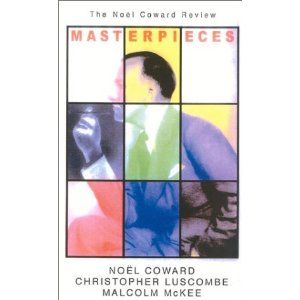
Masterpieces: The Noël Coward Review
(2003) A selection of Noël Coward's most memorable lyrics, quotes, and play-scenes woven seamlessly together into a brillant review by Christopher Luscombe. A unique selection of Coward's most critically acclaimed scenes and lyrics gathered together for the first time. |
 |
|
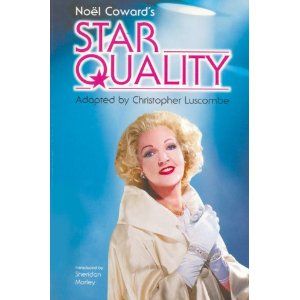
Star Quality
(2003) Coward's 'forgotten' play, published to tie in with its world premiere In his wickedly funny final play, NöeI Coward takes us behind the scenes of a new West End production. Conjuring up an authentic backstage world of talent and treachery, Coward creates a gallery of unforgettable characters; temperamental leading lady, ruthless director, jaded old troupers and, caught somewhere between them all, innocent young playwright. From tentative first rehearsal to triumphant opening night, ... |
 |
|
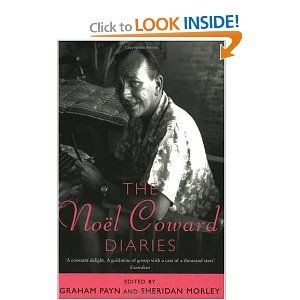
The Phoenix: Noel Coward Diaries
(2000) Coward's diaries from 1941 to 1969 offer an intimate look at the last 30 years of the life of the popular, sophisticated British playwright and author. While some of the entries are of the "Stayed out until 4 at Mrs. B___'s party" variety, more of them give insight into Coward's well-connected life. Coward knew or met hundreds of people working in the theater, the movies, and the government, and encounters with Vivien Leigh, Marilyn Monroe, King George IV, Winston Churchill and the Queen Mother... |
 |
|
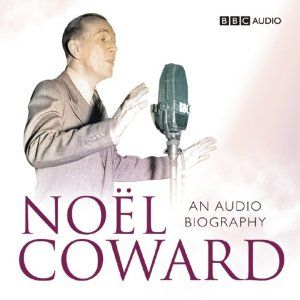
Autobiography: Consisting of Present Indicative, Future Indefinite and The Uncompleted Past Conditional
(1986) This reissue contains all three instalments of Coward's biography. "Present Indicative", published in 1937, deals with Noel's childhood and early life up to "Cavalcade" in 1931; "Future Indefinite", published in 1954, deals with the War years; also included is the opening to a planned third volume. |
 |
|
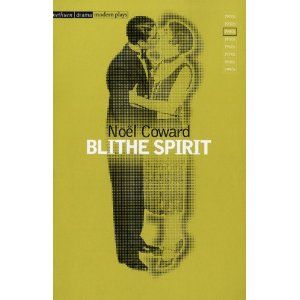
Blithe Spirit
(2002) Written in 1941 this book remians the longest-running comedy in the history of the British theatre for three decades. |
 |
|
Design for Living
(2004) Three stylish friends who share rivalrous affections attempt to uncoil their twisted love triangle in this sexy and scandalous gem. Written in 1932, the play was deemed extremely daring and even by today's standards is considered controversial in its frank and funny take on sex, love and commitment, proving to be one of Coward's greatest successes. Directed by Michael Hackett. |
 |
|
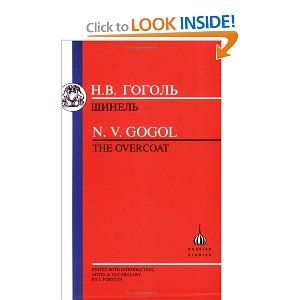
The Overcoat
(1991) The Overcoat which is generally acknowledged as the finest of Gogol's memorable Saint Petersburg stories, is a tale of the absurd and misplaced obsessions. |
 |
Videos