The Geography of Inspiration: How Places, People, and Culture Shape an Artistic Language
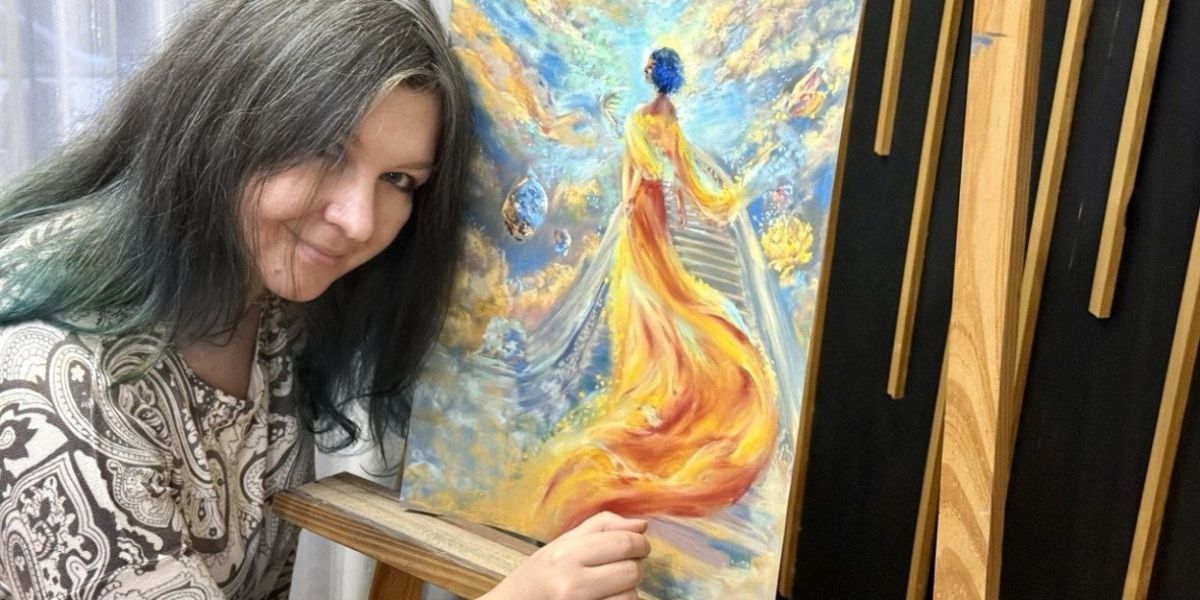
Nadia Bedei is an internationally recognized pastel artist.
Written by Molly Peck
Internationally recognized pastel artist Nadia Bedei has built a career at the intersection of nature’s quiet poetry and the vibrant pulse of urban life. Known for her luminous landscapes that capture both the sweeping grandeur of national parks and the fleeting magic of city streets, Nadia has exhibited across Europe, North America, and Asia, earning prestigious awards and the attention of galleries such as Teravarna in Los Angeles. Now based in Buenos Aires, she continues to expand her artistic language, weaving together light, texture, and emotion into works that resonate with viewers worldwide.
Nadia, tell us how your artistic journey began
If I look back, I feel like I’ve always been an artist — I just stopped postponing it at some point and began to work seriously. Pastel entered my life in 2017, and it was like meeting an old friend: you instantly know that this is yours, and there’s no need to search any further.
My first exhibitions gave me a tremendous boost. It was especially important for me to take part in shows held by the National Pastel Society — there, I felt surrounded by colleagues who valued both technique and personal style equally.
One of the significant moments in my career was working with the Teravarna Gallery. For me, it was a sign that my artistic language was understood and embraced by viewers who had never seen my works in person.
Online galleries such as Saatchi Art and Artmajeur now play a big role in my career. It’s an amazing feeling to know that someone can see your paintings anywhere in the world. Moving to Argentina in 2022 became a new chapter: I felt my palette changing, new shades seeping in — warmer, softer, infused with southern sun and air.
I love to see the imprint of a place in my paintings. Natural parks, mountains, the ocean — all of these give a special depth. But I also love the energy of big cities: their noise, their saturated colors, their contrasts.
How do you find balance between the quiet of nature and the energy of a metropolis?
Every place has its own palette of impressions. For me, no landscape and no city has a monopoly on inspiration. Each environment has its own colors, its own energy, its own rhythm — each resonates differently in the soul.
I am very fond of national parks. They are like the planet’s own breathing — unhurried and deep. They are places for long observation, for slow ripening of ideas. Paintings born from such impressions often turn out layered, both literally and metaphorically. Every line holds the memory of wind, the rustle of leaves, the smell of earth after rain.
But I also love cities — they have an entirely different energy. It’s like jazz after a symphony: sharp rhythms, unexpected pauses, improvisations on the edge of chaos. Inspiration here flares up instantly: an evening sunbeam suddenly reflects in a pane of glass, turning the asphalt copper, and a second later the light is gone. In the city, you learn to catch the moment, to respond right here and now, rather than wait for the “perfect” hour. Here, I see an endless stream of human stories. Every building facade has its own character, every street — its own voice. Sometimes inspiration comes from the simplest things — for example, from an old stained-glass window in a house I’ve passed a hundred times, but which suddenly, on a rainy day, shone with entirely new colors.
In my life, these two worlds are constantly in dialogue. When I’ve spent too long in a metropolis, I begin to long for silence, a place where I can hear myself. But after a long time in nature, I’m drawn back to urban dynamism, to the crowd where you can dissolve and see the world through the eyes of hundreds of other people. These qualities complement each other, and when they merge, paintings are born that couldn’t exist in just one of these worlds alone.
Does it ever happen that a place literally dictates the subject of your painting?
Yes, and most often it’s connected to weather or light. For example, in Patagonia, there was a moment when a cloud broke open above a glacier, and a thin ray of sun illuminated a piece of blue ice — I knew instantly that I had to remember it. In a city, it might be a streetlamp’s glow suddenly turning a wall a soft pink.
What does creative evolution mean to you?
It’s the ability to remain true to yourself while constantly changing. It’s important to me not to freeze in one style or technique, but to search for new ways to express my feelings and observations more deeply.
How do you prepare works for selection in art competitions?
I always approach competition submissions as separate creative projects. It’s important to understand that juries often value not only technique but also clarity of artistic expression, so I select works that fully reflect my direction in pastel and can also be “read” without the context of my entire series.
Selection is not just “choosing the best paintings” but forming a small, yet convincing story about yourself as an artist. I also work thoroughly on the texts — descriptions of the works, a short statement, a biographical note. Everything should feel cohesive.
Why is participating in juries and associations important for an artist’s reputation?
In today’s art world, a reputation is built not only on the quality of your work but also on how you are integrated into the professional community. Serving on a jury or being a member of respected associations is a kind of trust mark from your peers. When you are invited to evaluate other artists’ work, it means your experience and taste are valued, and that you are capable of thinking not only within your own art but also within a broader professional context.
Joining associations, especially such as the Pastel Society of America, also gives you access to a powerful communication network: exchanging experience, participating in competitions, learning from recognized masters. Ultimately, this helps not only in career growth but also in the development of the art form itself.
How do you see your art in five years?
I want it to become even more recognizable while keeping the emotionality that is essential to me. I plan to continue participating in international exhibitions, publishing books, and perhaps open my own studio where meetings and workshops will take place.
Finally, what would you advise artists who have moved to a new country?
Don’t try to completely transplant your old experience to the new place. Look around, breathe in, taste, let new colors and impressions in. This won’t change you as an artist, but it will reveal new sides of your creativity.
Photo Credit: Nadia Bedei