


Student Blog: Remembrance through Dead Man's Cell Phone and The Notebook
A reflection on storytelling and memory

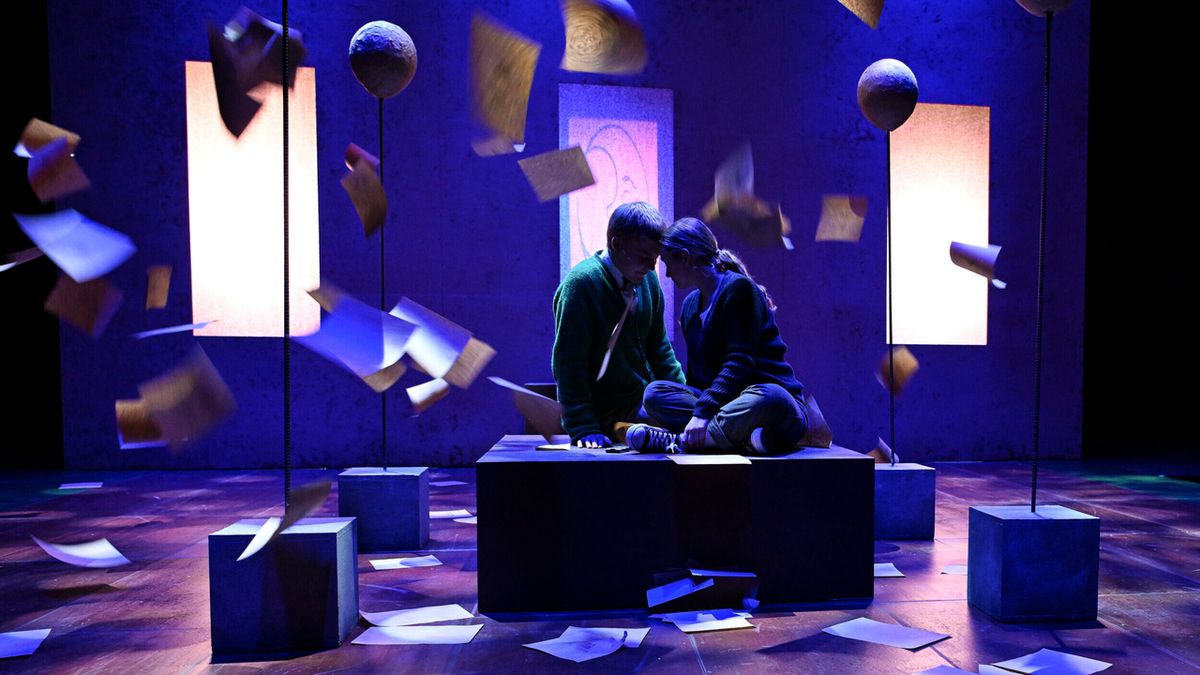
This past weekend, my theatre department opened our first production of the season, Dead Man’s Cell Phone, a surreal comedy by (the incredible!) Sarah Ruhl. The play grapples with loss, love, and connection in a digital age through the journey of a woman who answers a dead man’s cell phone and finds herself on a bizarre adventure as she learns about his less-than-normal life. Funny, dark, and shockingly moving, this play touched me more than I ever expected it to.
A few days before opening, my best friend’s father passed away. While I didn’t personally know him, I have been friends with his son since we were 12 years old. I didn’t know him, but I know his son deeply. I didn’t know him, but I know the people who loved him, those who fought for him, those who remember him. My best friend and I grew up doing theatre together. The first time we met, we sang together (a duet at a 7th grade choir concert - we attended different sections of choir and one soloist was selected from each hour. Forever grateful I chose to audition). Since then, he has always been my counterpart both on and offstage. We did community and school-associated theatre together, cast side by side at every age. Ryan and Sharpay, Harold Hill and Marian, Curly and Laurey, so many of our best memories together are tied to theatre. Because of this, I often think of him when I’m at a show (“What would he think of this moment? Oh my gosh, he would have loved this part! That song reminds me of the time we…”). While distance has separated us in college, theatre always keeps us close. Strangely, the two productions I saw immediately after his father passed have centered on themes of remembrance and love, reminding me of him in this difficult time and the power that theatre has in keeping people's stories alive.
While sitting in the audience of Dead Man’s Cell Phone, immersed in its absurd world, I didn't expect to be deeply struck by an exchange between two characters as they spoke about remembrance:
“It is a sad job. But it’s good – you know – to remember.”
“I can see that. To remember.”
Dead Man’s Cell Phone, Act One, Scene Five
The lines were delivered so earnestly and with such care. The words rang in my ears. “It is a sad job.” “To remember.” On the surface, remembering someone sounds so simple, but most times I’ve found that it is anything but. How do we hold on to those we have lost - not only through death, but through different seasons of life, different versions of ourselves? How do we remember them, honor them, allow them to live on? Ruhl’s play asks these questions and pushes them to the extreme. When someone’s phone continues to ring after they’ve passed, is that how you know they’re still with you? Are the stories that we share about loved ones always hanging in the air, or do they disappear when we do? How do we keep moving forward, doing the “sad job” of remembering over and over again?
I watched my friends perform, sharing this story about death and what happens when you’re gone, and thought of my best friend at home. I thought of him remembering his father, and the pain and joy that comes with these memories. I thought of him carrying a piece of his father every single day just by continuing to live a vibrant life, and how beautiful and sad that sentiment was. Sitting in my home theatre, watching this play as paper fell from the rafters onto the stage like snow, I was reminded how powerful our art is in connecting us to our emotions and reminding us to appreciate life - the beautiful and the sad. Theatre like this reminds us to remember everything, and this sentiment was echoed at the next production I saw, The Notebook national tour in Grand Rapids.
I was lucky enough to see this production twice, once as an audience member and once while shadowing the Stage Management team. I had the incredible opportunity to assist with preshow duties and follow along with a calling script while the show was called. Of course, it was an amazing experience overall, and I learned so much! But as I sat backstage and followed along with the script, I felt the message of The Notebook hit me deeper than it had on my first watch. Centered heavily on memory, The Notebook follows the love story of Allie and Noah, flashing between them when they are young, middle aged, and older. In their old age, Allie has Alzheimer's and can no longer remember Noah, who reads their love story to her each day in an attempt to bring her back. At the end of the musical (spoiler alert!!!), the couple passes peacefully while sleeping next to each other. In the musical’s final song, “Coda”, all versions of Allie and Noah walk off together as the ensemble sings,
“We leave the light on, even though I'm gone / Will you remember inside the sadness there is joy?” “Tell our stories / The sad parts too / It's better when it's true”
The Notebook, “Coda”
Sitting backstage as the song finished and the cast took their bows, I felt myself again almost moved to tears. I imagined how impactful this moment in the musical would be for my friend, or for anyone in the audience who recently lost a loved one. The Notebook recognizes the importance of remembering someone, or the person that they once were, even if that person is no longer here. It encourages us to tell the stories of our lives to one another, to celebrate the good and bad parts of our existence - and in a way, isn’t that what theatre is? This art form allows us to tell stories to each other in a uniquely human way, the same way that humans have shared stories since the beginning of time. Through theatre, we are able to tell stories that live on after we are gone, connecting audiences to one another across eras and lifetimes. We tell these stories, good and bad, real and fictional, beautiful and painful, in an effort to find connection and to understand the feelings and experiences of those around us. Theatre helps us remember, helps us savor the life that we have while we have it. We must remember those who gave us life, who walked this path with us, who taught us what we know. We must continue to share their stories even after they are gone - we must see the joy in this world in spite of the sorrow.
After both of these productions, I’m left with an abundance of emotions. I feel blessed reflecting on how beautiful it is to do this work, this storytelling, this remembering. But at the same time, I feel heavy for those struggling with grief - how difficult it must be to remember a life, to carry someone with you who is gone. As I return home this coming week to attend the Celebration of Life and support my best friend, I will carry a bit of these productions with me, opening my heart to supporting those who remember and understanding that remembrance is both sad and beautiful, hard and healing.
Photo Credit: Ray Nard Imagemaker, Dead Man's Cell Phone Hope College 2026
Weekly top stories - unsubscribe anytime.