Student Blog: Yes, I’m a Theater Kid, but not THAT Kind of Theater Kid
Battling the 'Theater Kid' allegations while still trying to explain my career to people not familiar with theater.

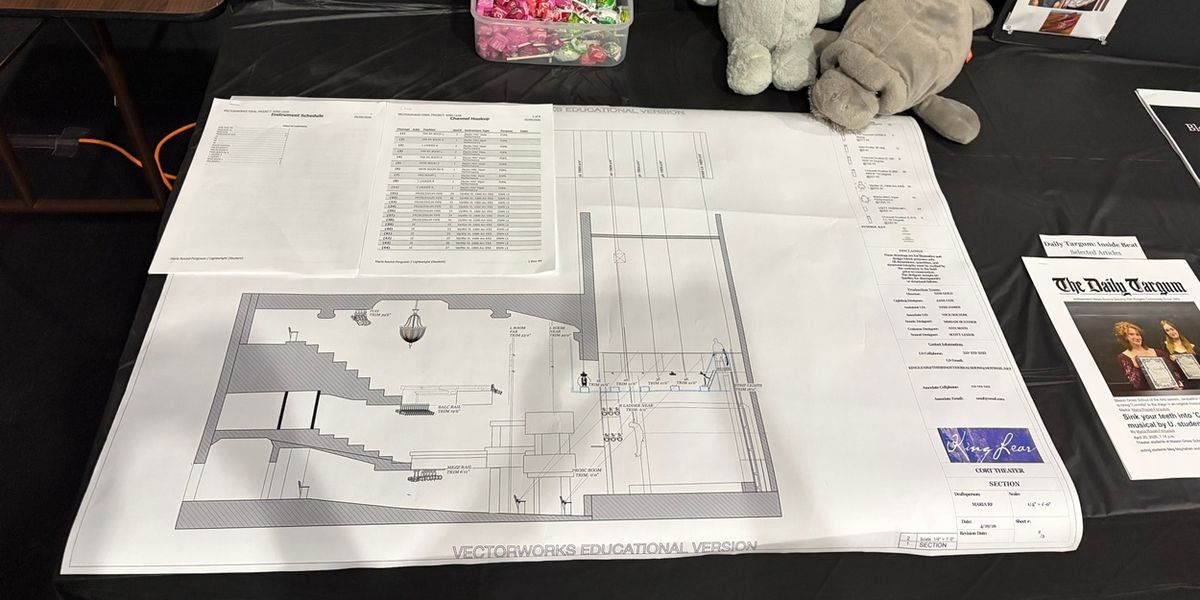
I just finished my first year as a lighting design student in a theater program. Looking back, it was a year full of things I never expected to be doing. I worked on two mainstage productions, a dance concert, and a student show. I spent countless hours in the theater, survived more homework than I thought possible, and pulled the occasional all-nighter when deadlines got a little too close for comfort. For the most part, I loved every second of it.
There was just one problem: I still have no idea how to explain what I do.
Whenever someone asks what my major is, I can practically see the follow-up questions forming before I even answer. If I say "theater," they assume I act. If I say "lighting design," I get a confused look and an awkward pause. Then comes the inevitable conversation: What exactly is lighting design? Do you just turn lights on and off? How do you major in that? Why lights? Before I know it, ten minutes have passed and I've somehow ended up explaining my entire life story to a stranger. People studying psychology, engineering, or biology can usually answer the question in a sentence. Meanwhile, I feel like I need a PowerPoint presentation.
One of the weird things about writing about theater so much lately is that it made me realize that tech and acting aren't actually that different in what their function is. It feels strange to write that, because the line between performers and production teams is usually drawn pretty quickly.
Obviously, acting and design are entirely different in how they come together. When my acting friends tell me they spend class rolling around on the floor, experimenting with movement exercises, I can't help but laugh. I could never picture myself doing that for class. My version of classwork usually involves staring at a Vectorworks drawing, worksheeting a light plot, or programming cues. In fact, throughout our entire first year, designers and actors only shared one class together. From a curriculum standpoint, our worlds barely overlap.
But the more I think about it, the more I believe lighting is just as much about performance as it is about design.
A lighting designer creates the environment the actors live in. We decide what the audience sees, when they see it, and try to anticipate how they feel about it. Light shapes the actors, establishes the temperature of a scene, creates atmosphere, and guides focus.
I like to think of lighting design as building the chessboard rather than moving the pieces. The actors are still the ones making the moves. The director is still calling the game. But without the board, there is no space for those choices to exist. Lighting creates the world where the story happens.
Designers are storytellers. We may not speak any lines, but every cue is a choice. Every blackout, color shift, and spotlight tells the audience something. We direct their attention. We influence pacing. We create tension, relief, intimacy, or spectacle. The audience may not consciously notice those decisions, but they feel them.
Maybe that's the answer I've been looking for all year.
The next time my acting friends tell me their homework is to pretend to be a cat, I’m going to try to be less judgemental, because the more time I spend studying and writing about theater, the more I realize we're all trying to accomplish the same thing. Whether you're standing under the lights or acting in them, the goal is still to tell a story.
Actors do it through movement, emotion, and dialogue. Designers do it through color, composition, timing, and atmosphere. The tools are different, but the purpose isn't. Neither one works particularly well without the other. A beautifully lit stage means nothing without actors to bring it to life, and even the strongest performance can be transformed by the world that surrounds it. We both act, direct, and create the environment for an audience to see.
Maybe that's why it's so hard to explain lighting design to people outside of theater. Most people only notice lighting when something goes wrong. If we've done our job well, the audience isn't thinking about the lights at all—they're thinking about the story. The lighting is simply helping them get there.
So when someone asks me what I do, maybe I don't need the ten-minute explanation anymore. Maybe the answer is much simpler than I've been making it. I'm not just a designer, technician, or programmer. I'm a storyteller. I just happen to tell stories with light.
Sign up for all the news on the Fall season, discounts & more...