


Review: WHAT'S WRONG WITH BENNY HILL?, White Bear Theatre
The maligned comedy superstar gets a tribute and a defence
 You don’t need to be a follower of Freud to know how important transgression is to humour. Comedy may be amongst the most subjective subjects in human experience, but a world tipped upside down is often at the heart of it. I thought this was the funniest thing ever when I was five years old - 57 years on, I still do.
The British TV comedian who blended transgression with charm most successfully (at the global level) was an unlikely middle-aged, portly man who told very few jokes, did no real impressions and played three or four characters who essentially did the same thing in every show. But what Benny Hill understood was that his cheeky schoolboy grin invited us into the mischief, made us complicit in his upending of expectations and allowed us the vicarious thrill of being naughty.
Until, as the 80s alternative conics gained a footing in the mainstream, the murmur of those who did not want to be in on the mischief grew into chatter and then to a cacophony. Hill became a lightning rod for that emerging new comedy - political, anti-racist, feminist - that avowed a new discourse was necessary and, as Thomas Kuhn tells us (and them, most had degrees, so they knew) a paradigm shift only happens if you destroy the previous orthodoxy. None were bigger than Benny, and he was the first to go in a test run for the internet pile-ons of today.
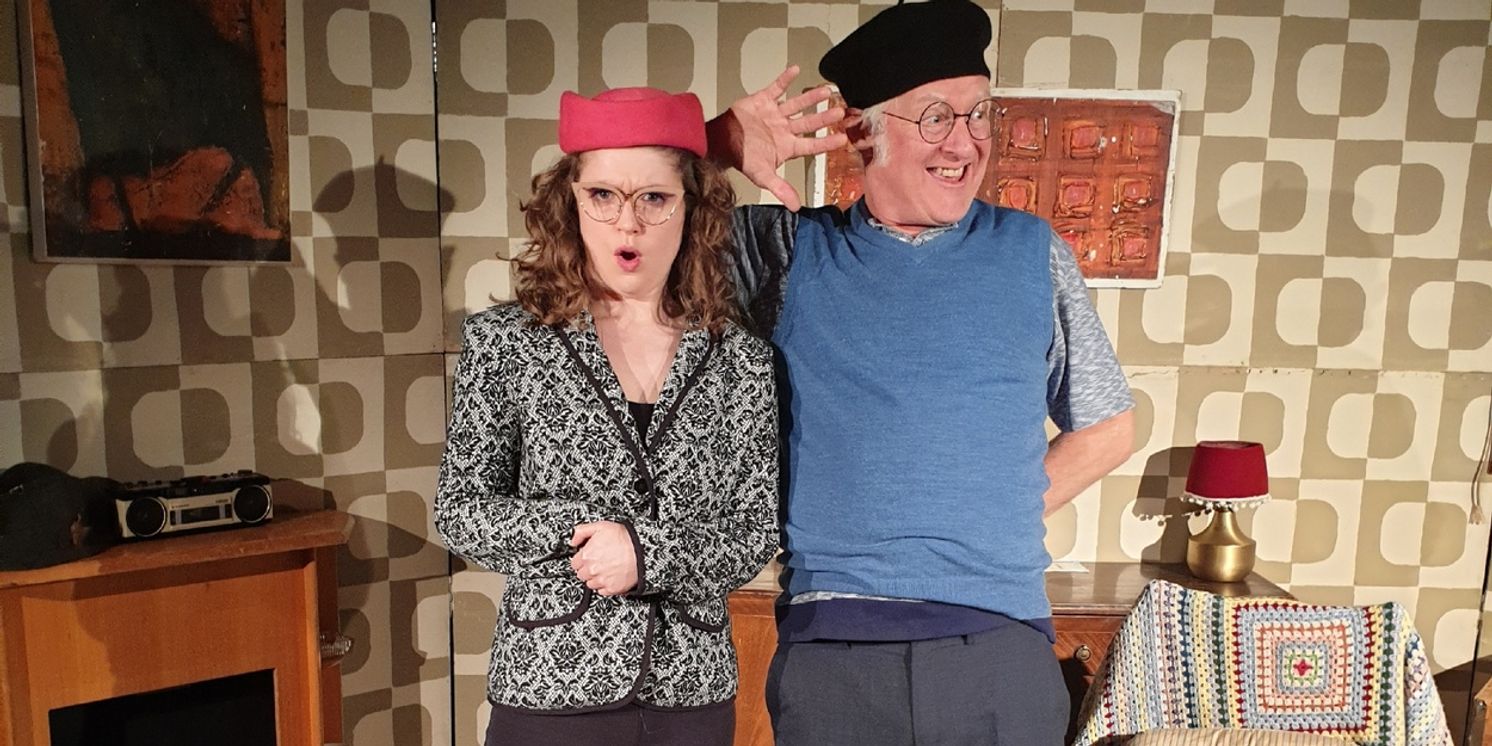
Much of this history is explored in Mark Carey’s amusing, if slightly overly long, two-hander in which he plays our hero, and an energetic Georgie Taylor plays a variety of roles from his harsh father to a solicitor turned confessor to an avatar of Ben Elton and Alexei Sayle ruthlessly burning down the house.
We first meet Carey, bearing an unnerving resemblance to Benny, about to die in his dilapidated flat in front of a television that no longer broadcasts his shows - despite their enduring popularity in Europe, Australia and the USA. We then see Hill growing up in Southampton, learn of his paralysing stage fright in front of live audiences, and on to his great success first on the BBC and then on ITV. If the sad clown trope is a little over-familiar, that was Benny by the time of his death (just two years older than Bob Mortimer is now).
The production doesn’t have the scale to bring in his long-time collaborators, not just Bob Todd, Henry McGee and Jackie Wright, but also Jenny Lee-Wright and Sue Upton amongst many women who worked with him for years. Nor do we catch sight of Benny’s mastery of mime and physical comedy that arrowed straight back to Chaplin and Keaton. And, there are no dolly birds (the mots justes) running around in suspenders, a staple of the show as much as little Jackie getting the slaphead treatment yet again. Without that context, Carey’s beautifully rendered conspiratorial grin loses much of its power.
Not that those omissions matter too much. Surely almost everyone in the house will be familiar with the work (far from being cancelled, Hill is on television continually on the higher numbered British channels, in overseas hotel rooms with minimal subtitling and on Youtube) which means they’ll also be familiar with the backlash. That inevitably makes it a little too laboured in the show, taking pace out of the narrative just when it needs an injection of it.
Kevin Oliver Jones’ songs are fun and there are plenty of laughs too, but the show’s title poses a question on which I suspect most in the house will have settled long ago. And, as we now know beyond doubt, much, much worse things were happening a few miles east from Thames TV's Teddington studios at Broadcasting House.
For what it’s worth, when as aristocratic and sophisticated a man as national treasure, Christopher Lee, (even more of a polyglot than Hill) was playing Fu Manchu FIVE TIMES, was Hill’s Yellowface character only to be expected? Probably. Did he go too far with the objectification of women when Miss World drew one of the biggest TV ratings of the year? Well, definitely, as an example in the play (one that I recall seeing on primetime TV) proves irrefutably.
Was that a price worth paying for the joyous release of laughter he brought to countless millions across decades in the past and now stretching into the future? That’s your decision. But give me Hill’s missteps and naive misreading of changing mores over the cynical punching down of far too many of today’s comics all day, every day.
What's Wrong With Benny Hill at The White Bear Theatre until 24 January
Photo images: Giles Shenton Productions
Reader Reviews

Videos