


Review: THE SEA HORSE, Golden Goose Theatre
Two lost souls hang on to each other where the land meets the sea
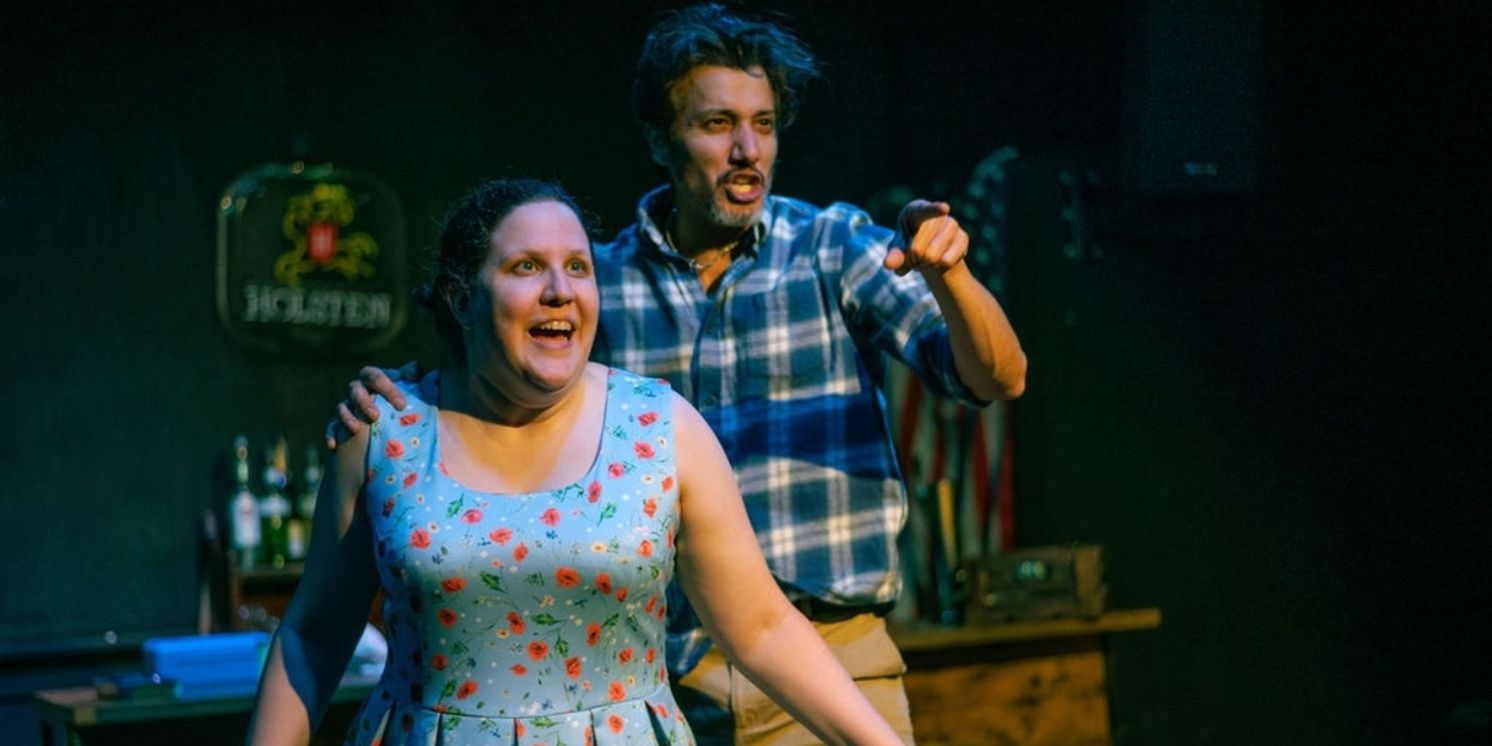
 Recently, on the north coast of Ireland, I had lunch in a seaside bar. Outside, the wind howled, sunshine and rain were locked in a battle for supremacy and the sky was too big. I knew that feeling, as I had grown up by the sea with sandhills at the top of the road. It was ‘other’ to the adult version of me, but familiar to the childhood person. I’ve always understood that these edges are liminal spaces in which things change quickly and much (too much) is contingent.
Those thoughts rushed back watching The Sea Horse, Edward J Moore’s award-winning two-hander from 1974, a year in which I spent a lot of time on those now lost sandhills of my youth - thank you Liverpool City Region Freeport. Shahaf Beer’s set alone jolts that timeslip: rain lashing outside a thick wooden door; windblown sand piling up in corners as if it itself sought refuge; a seamen’s bar, rough and not quite ready.
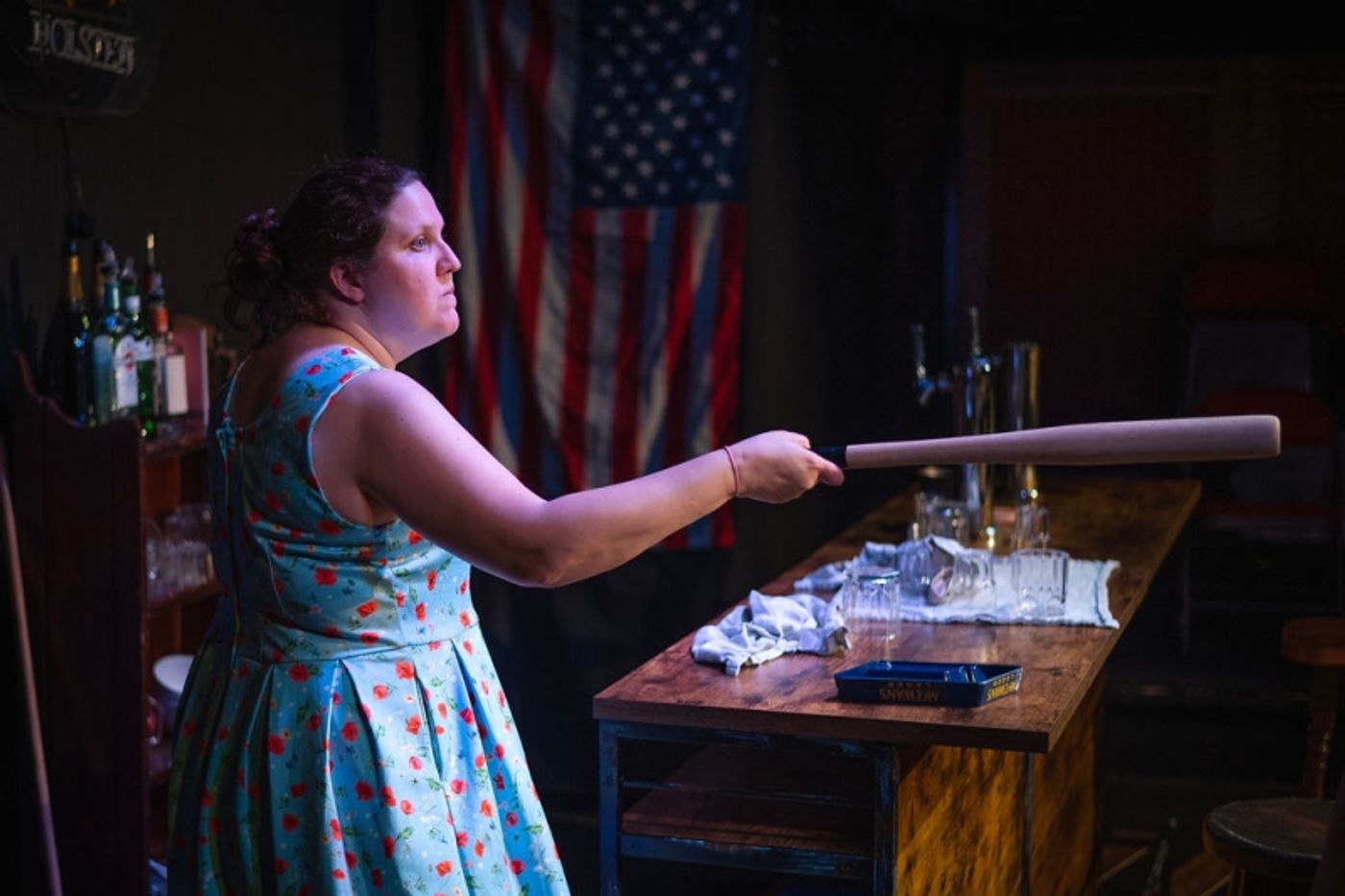
Harry, no beach boy, is back from another stint as a hand on a commercial trawler, pitching up in the eponymous bar, perched on the tip of California, but far from Hollywood. Gertrude is no California Girl either, crucified by low self-esteem, damaged and as quick to anger as she is to forgive.
Harry, even by the standards of 1970s blue collar men, is almost heroic in his ability to say the wrong thing, to wind up Gertrude with his insensitivity and selfishness, to blunder in when just a little empathy would tell him to ease back and give her some space. Gertrude, her reads learned in the tough school of waitressing in the bar she inherited from her father, sees that he’s a good man under all that, his crazy schemes more irritating than dangerous as they ebb and flow with the tides. But she’s wary to trust him beyond a day, a week, perhaps a year - she’s wary to trust any man. Do such people have a future?
It’s impossible not to think of Eddie Carbone in A View From The Bridge in contemplating Harry, but a few years earlier, the sourness and misanthropy not yet embedded. Had Gertrude ever seen Arthur Miller’s play, she’d be even more wary of him! That said, Jay Rincon carves a credible character out of a man more or less trapped in arrested development, running with the boys one minute, dreaming up get-rich-quick schemes the next, but while the eyes flash turning on the charm as he makes his girl laugh, he knows he has to grow up soon.
Getrude grew up too soon, Rachael Bellis building a carapace of emotional defences around the woman, half yearning for the father-figure Harry could be and half terrified of the prospect that he won’t be. She can hurt him and he can hurt her - both inflict pain with words and deeds - but it is as nothing compared to how she hurts herself every time she looks in a mirror or reflects on the bad men who have treated her badly.
Both leads are strong, if both too loud in a small theatre with many hard surfaces, resulting in me losing some key speeches. They get the contradictions of these thirty-somethings, as these two people, ill-suited to extending the rigours of a relationship beyond the comfort of sex, try to steer their way to a workable compromise.
Though the play is relatively short, with director, Mandi Riggi, keeping the pace up and allowing us a welcome interval to decompress a little, its key fault is a common one. Neither Harry nor Gertrude are particularly likeable, both shouldering so many psychological flaws that it’s tough to watch them bicker so relentlessly between the tender moments. We’re also more aware these days of mental conditions and certainly far more attuned to the red flags of domestic violence which are waved strongly and frequently in this play. In those two key elements, the script is dated.
It’s not Miller and it’s not Chekhov, but it has things to say about how trapped people rub along, or don’t, that probably felt more revelatory 50 years ago than they do now.
The Sea Horse at the Golden Goose Theatre until 15 November
Photo images: Jess Blake
Reader Reviews
Videos