


Review: SHEN YUN 2026 at The Kennedy Center
Performances are through January 18.
By: Laurie Sara Oliver Jan. 11, 2026
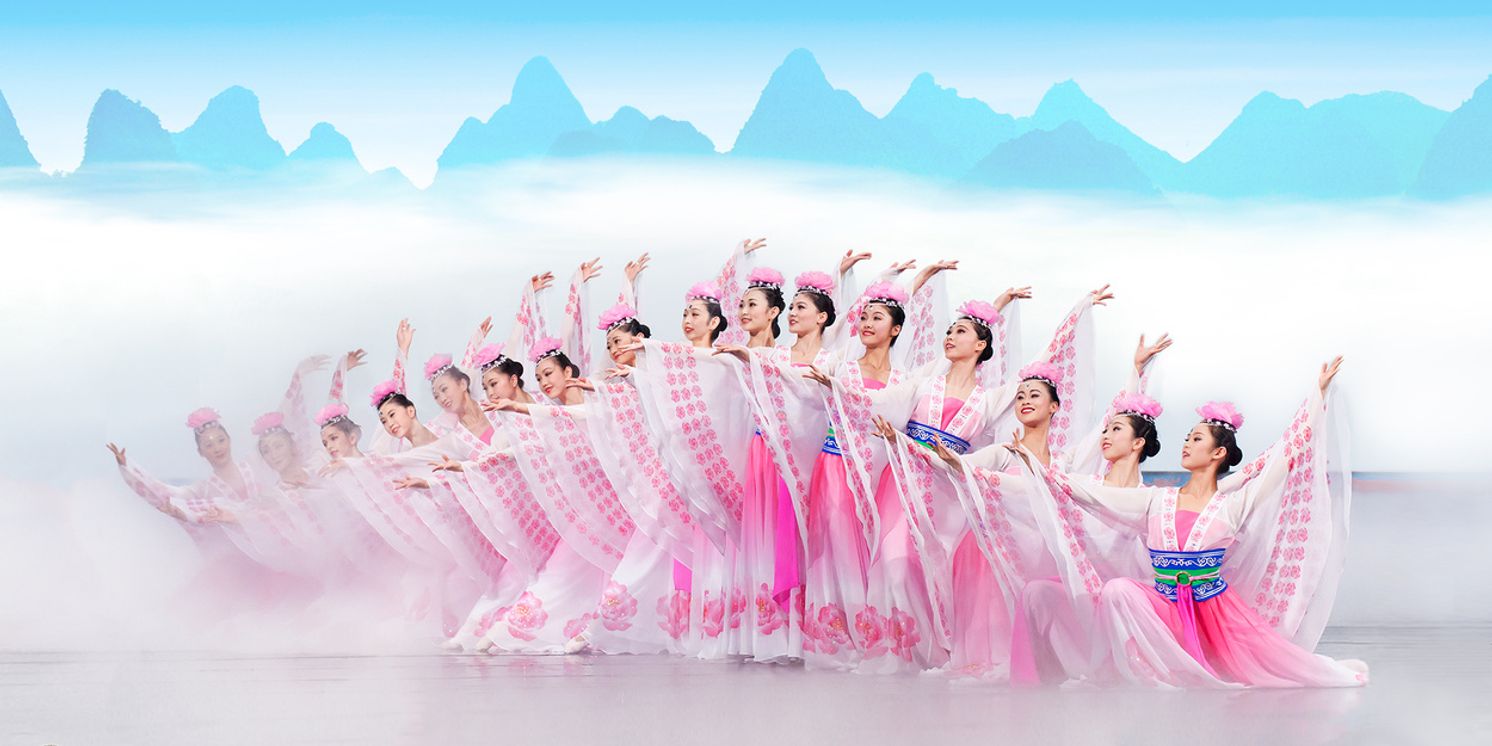
The imagery of Shen Yun, a classical Chinese dance and music company, has become a familiar sight over the last 18 years of their never-ending international tour. If you haven’t seen a show, you’ve probably seen the billboards: China before Communism.
This week I saw Shen Yun perform for the first time. Sitting in the aisle seat of row Y, taking notes in the light between numbers, I was preparing to write a review that dismissed common allegations of propaganda as, though not untrue, unfairly exaggerated. But then the last piece came on, and I find myself unable to be so generous.
The show is blatant propaganda. It is also a truly beautiful production.
The program is made up of nineteen short pieces. Narrators brief you before each begins, which can feel clunky, but once the curtain rises each piece itself is seamless and immersive. This is in large part due to Shen Yun’s patented movie screen style backdrop. It changes scenes like a 4-D amusement park ride, panning and zooming and telling parts of the story. Best of all, animated performers seem to leap off the screen and onto the stage, bursting into the physical world as real dancers.
These dancers are all technically excellent and beyond graceful. Most every piece is a large group ensemble, and there is nary an arm or even a finger out of place. The synchronization is exact, more like one giant centipede than fifteen dancers with their own limbs. It’s a ballet teacher’s fever dream.
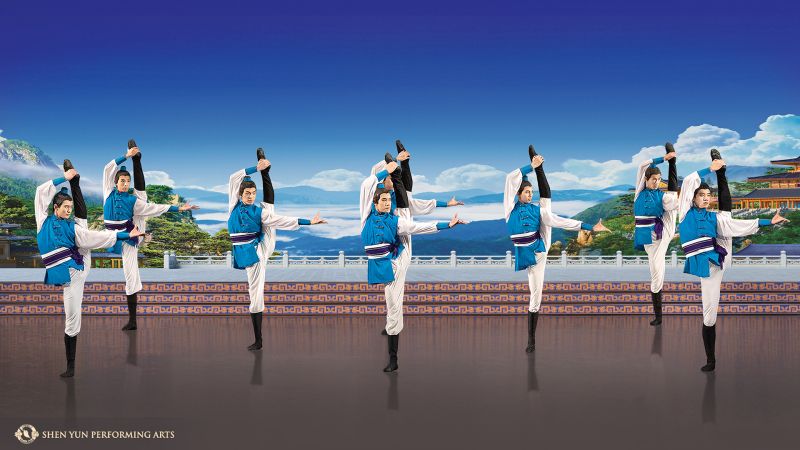
The costumes, and of course the infamous sleeves, are gorgeous. The live music is lovely. The stories are cute. And yet, as the show goes on, all the gorgeous costumes begin to blend together. All the music, though lovely, starts to sound the same. The choreography begins to repeat and you realize every story is really the same story. This is where the propagandistic approach hurts them. The show starts to feel long and flat.
For context, Shen Yun was founded in 2006 by followers of Falun Gong, also called Falun Dafa, which is a religious movement started in China in the 1990s. While the movement may be young, Falun Gong draws heavily on ancient Chinese religions and practices. So, while perhaps a stretch, it’s not exactly unfair for Shen Yun to call their show a revival of traditional Chinese culture. But it’s also not unfair to call it religious propaganda. And this hard-hitting approach might alienate an audience otherwise inclined to be friendly to the message.
Most cultural celebrations understandably tend to emphasize the best parts of a culture and ignore the worst. Go to a luau in Hawaii, or visit a Maori cultural site in New Zealand. They’ll perform the haka but usually won’t mention the cannibalism. It’s certainly natural to want to highlight the best of your culture, especially when faced with oppression or erasure. And Falun Gong, while now strong in the US, is officially banned in China where practitioners have been arrested and abused.
The main tenants of Falun Gong are truthfulness, compassion, and forbearance. The focus is on respect for tradition and virtue. And so, in Shen Yun, we go from an emperor disguised as a commoner, to a magic boy disguised as a beggar, to a deity also disguised as a beggar. Each one out to give the bad, selfish people what they have coming and reward the kind, virtuous people through divine intervention. These lessons would be heavy-handed enough, but then out come dancers holding a sign that says “Falun Dafa is good”... and then another set of dancers, wearing a red hammer and sickle on their backs, who steal the sign and beat them up… Granted, all this is happening within beautifully choreographed and executed fight scenes. The artistry never falters.
Still, dance as an art form enforces some level of subtlety (though Shen Yun pushes that line far beyond what I’d have thought possible). Through two randomly interspersed vocal performances, Shen Yun goes even further, resorting to literal instruction with lyrics like “We see now what drives the world’s decline / Atheism and evolution are the chief culprits / For modern thoughts and ways everyone pays.” It’s even more forthright than your average hymn.
This is what left me most confused. As George Orwell once said, “all art is propaganda.” The authors of Shen Yun clearly have a goal, as all artists do. They aim to inform their audience and make the case for a set of values. But they surely must know that western audiences will not react well to attacks on science, modernity, and progressive values. The same progressive values the show is appealing to for sympathy about their oppression at the hands of the current Chinese regime. Why include this? You’re presenting to an audience inclined to be on your side and inclined to agree with most of your values and it’s almost like you want to alienate them. Who knows if it’s just a big miss or if they intend to take an aggressive stance for some reason. Either way, it’s a shame to stain such a beautiful performance with such unrefined tactics.
Reader Reviews
Videos