Review: MRS PRESIDENT, Charing Cross Theatre
Mary Todd Lincoln seeks to find her perfect image
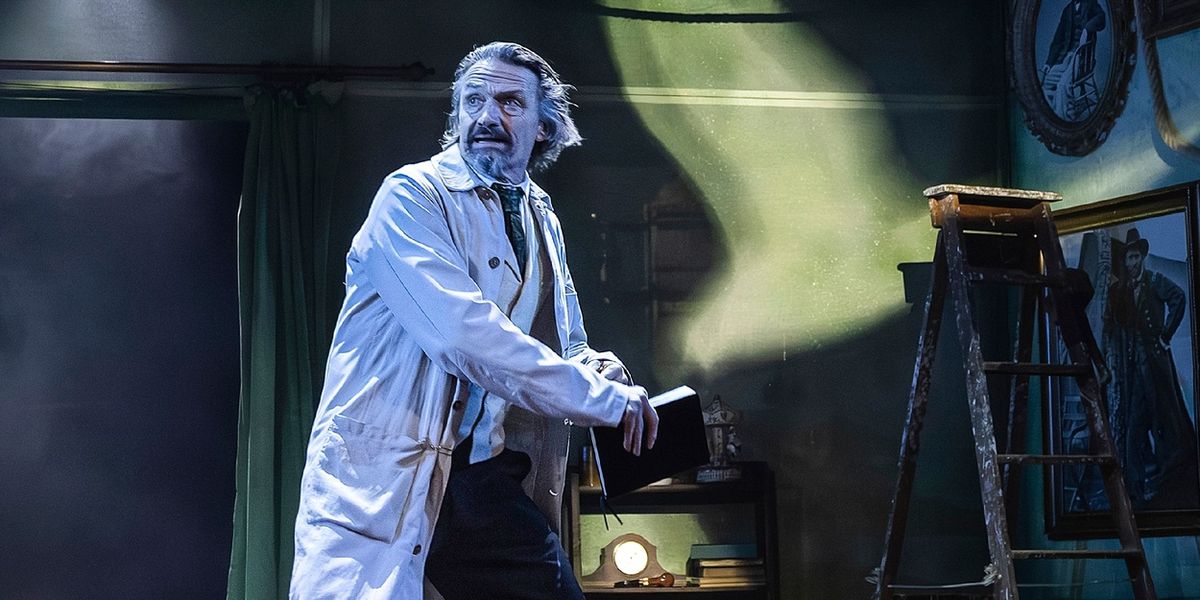

Mary Todd Lincoln is a popular choice for the London theatre at the moment. With Oh, Mary! just round the corner at the Trafalgar Theatre, offering a comedic look at the First Lady and her life, it seems appropriate that a more dramatic treatment has arrived with Mrs President.
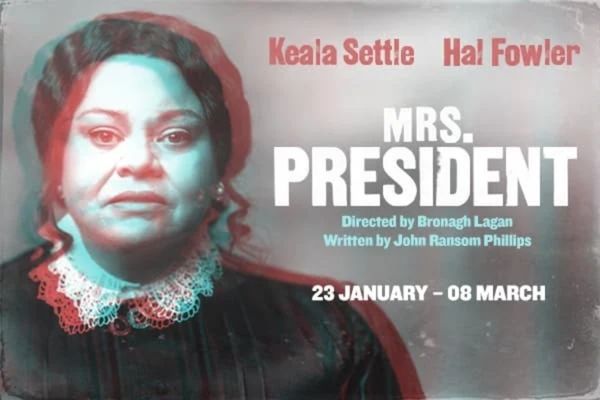
John Ranson Philips wrote this play after seeing a vision of Mary Lincoln asking him to "tell her story." Mrs President first came to the Charing Cross Theatre last year, with a different cast, and has now been reworked. It tells the story of Mary Lincoln (Keala Settle in a rare non-singing role) and photographer Mathew Brady (Hal Fowler).
Brady is determined to delve deep to find out who Mrs President really is, and this is communicated to us through a sequence of photographs, flashbacks, and hallucinations. It is a strange, unsettling drama. The potential is there, but the premise is muddled, and despite director Bronagh Lagan's best efforts, scenes feel devoid of emotion where we should be empathetic to Mary's grief.
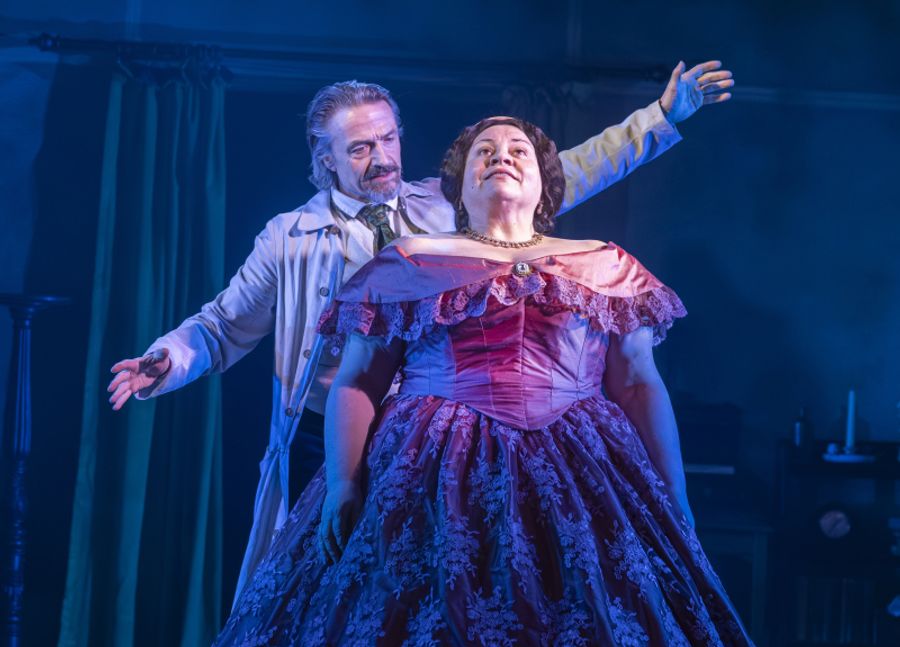
Photo credit: Pamela Raith
Her young son and her husband die (of typhoid and by assassination). She falls into a melancholy that turns into mental instability. It has been well-documented that Mary Lincoln disliked all but one of Brady's images of her and ordered them destroyed—a request that the photographer ignored.
Settle captures something of the woman who enjoys the status of power and wealth, as well as the loving wife and mother who supported Abraham Lincoln throughout his presidency. However, she was roundly despised by the people of the United States for her reckless spending during the American Civil War and vilified in the press for her emotional outbursts.
In Mrs President, an overuse of technical gimmicks reveals the lack of a cohesive, structured script. Some lines fall awkwardly ("It is easier to lose an apple than a son"), and others offer little to the story (a scene with a Chief Justice talking about women, property, and slavery goes nowhere).
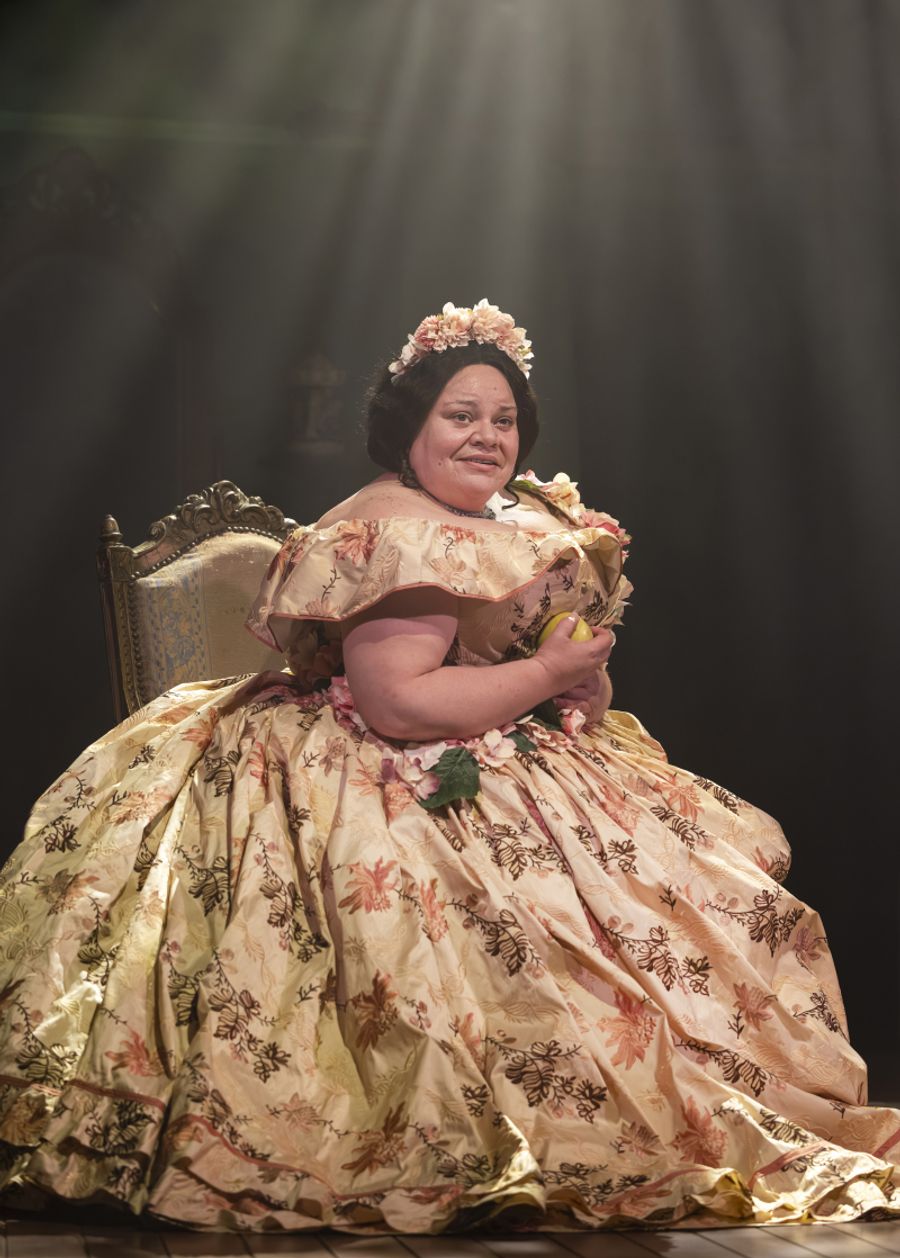
Photo credit: Pamela Raith
The set and costumes by Anna Kelsey offer some interest, as the entire action is framed as if it were a giant photograph, and the photographic studio, the only location, is dotted with portraits of Brady's subjects. A carefully rearranged soldier fallen in battle, the iconic Abraham Lincoln portrait, and the abolitionist John Brown (whose speech on the scaffold forms another bewildering digression).
Fowler's Brady is lightly drawn, with the feeling that the playwright has created him as his own surrogate in the room with Mary. There is little of the brash photojournalist we know him to be, and despite the potential in the character, he has very little of any consequence to say.
Mrs President is ultimately a frustrating and disjointed experience, with little insight into the woman it wishes to rehabilitate. In creating the famous photographs of Mary Lincoln, almost exactly in costume and pose, there is no scope for dramatic licence or invention.
Mrs President continues at Charing Cross Theatre until 8 March
Photo credits: Pamela Raith

Reader Reviews


|
Powered by

|
Videos