


Review: MAN OF LA MANCHA Journeys Back to Musical Theatre West
Directed by James Vásquez, MTW’s return to the musical is a solid production boosted by a winning performance by Richard Bermudez in the title role.
By: Michael Quintos Feb. 17, 2026
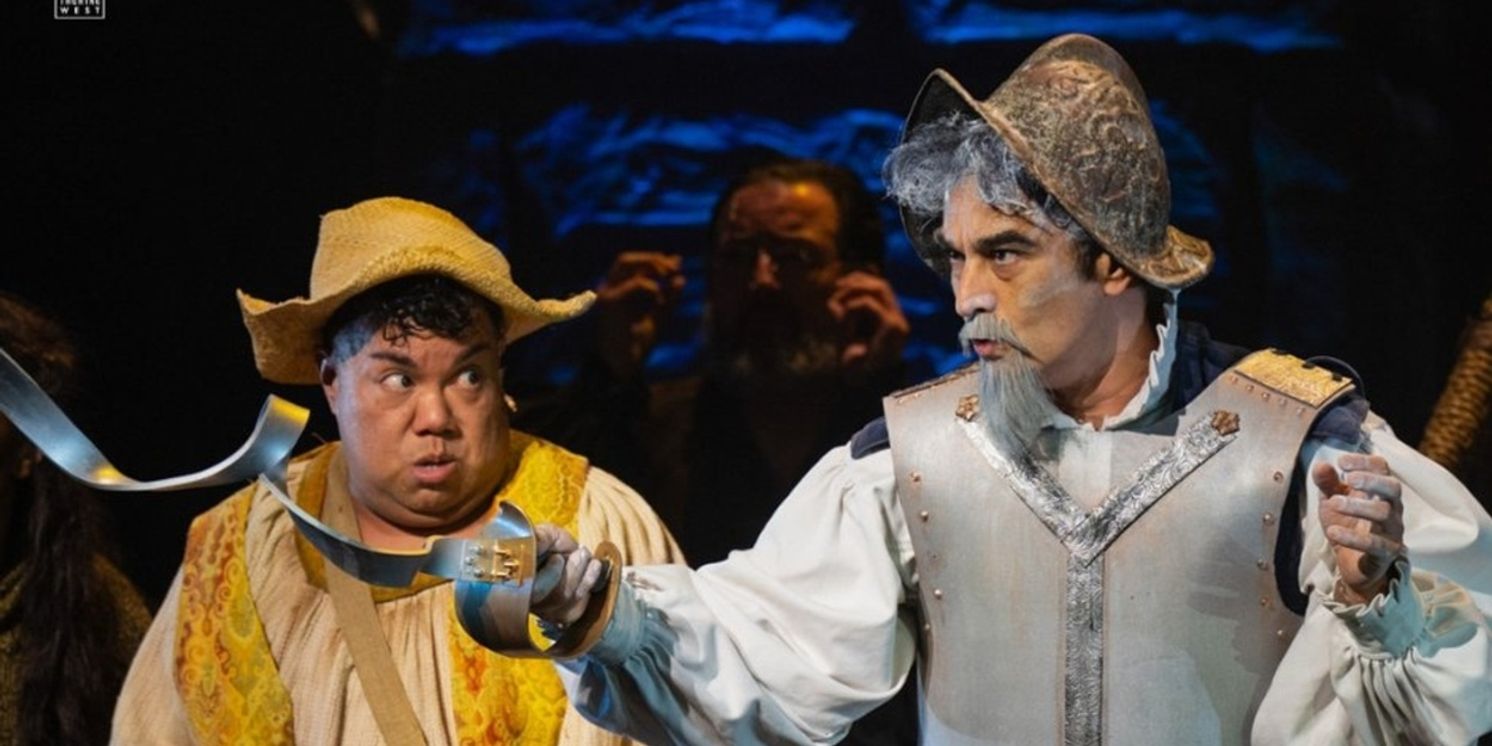

Featuring a book by Dale Wasserman, lyrics by Joe Darion, and a now-immortal score by Mitch Leigh, MAN OF LA MANCHA—the 1965 Tony Award-winning musical meditation on idealism, imagination, and the stubborn persistence of hope—has endured for decades not merely as a period piece but as a resilient theatrical parable that continues to speak to audiences with a timeless, if sometimes overly earnest, sincerity.
Such qualities are certainly retained in a brand new regional revival mounted by Musical Theatre West, which recently opened its latest iteration of the show at the Carpenter Performing Arts Center in Long Beach that continues through March 1, 2026.
Directed by James Vásquez with musical direction by Ryan O'Connell and choreography by Shani Talmor, this remarkably solid new production boasts haunting visuals—courtesy of the combined talents of scenic designer Patric Larson, Costume Designer Sonia Y. Álvarez, and lighting designer Paul Black—and superb performances from its assembled ensemble, led by a trio of excellent leads that offer three distinct portrayals of varying temperaments.
It is certainly not lost on me, coincidentally, that this will be the second of two musicals I have been tasked to review this month that happen to feature a group of prisoners trapped inside a harsh environment, that are then recruited to act out a play. I must say, though, that seeing MAN OF LA MANCHA right after the electric jolt of La Mirada's spectacular SWEENEY TODD feels like a theatrical two-fer that was meant to be.
Of course, while that other musical was set inside a dank insane asylum in 19th Century England, this one in Long Beach unfolds in a dank dungeon during the Spanish Inquisition (also early 19th Century), where prisoners are awaiting trial.
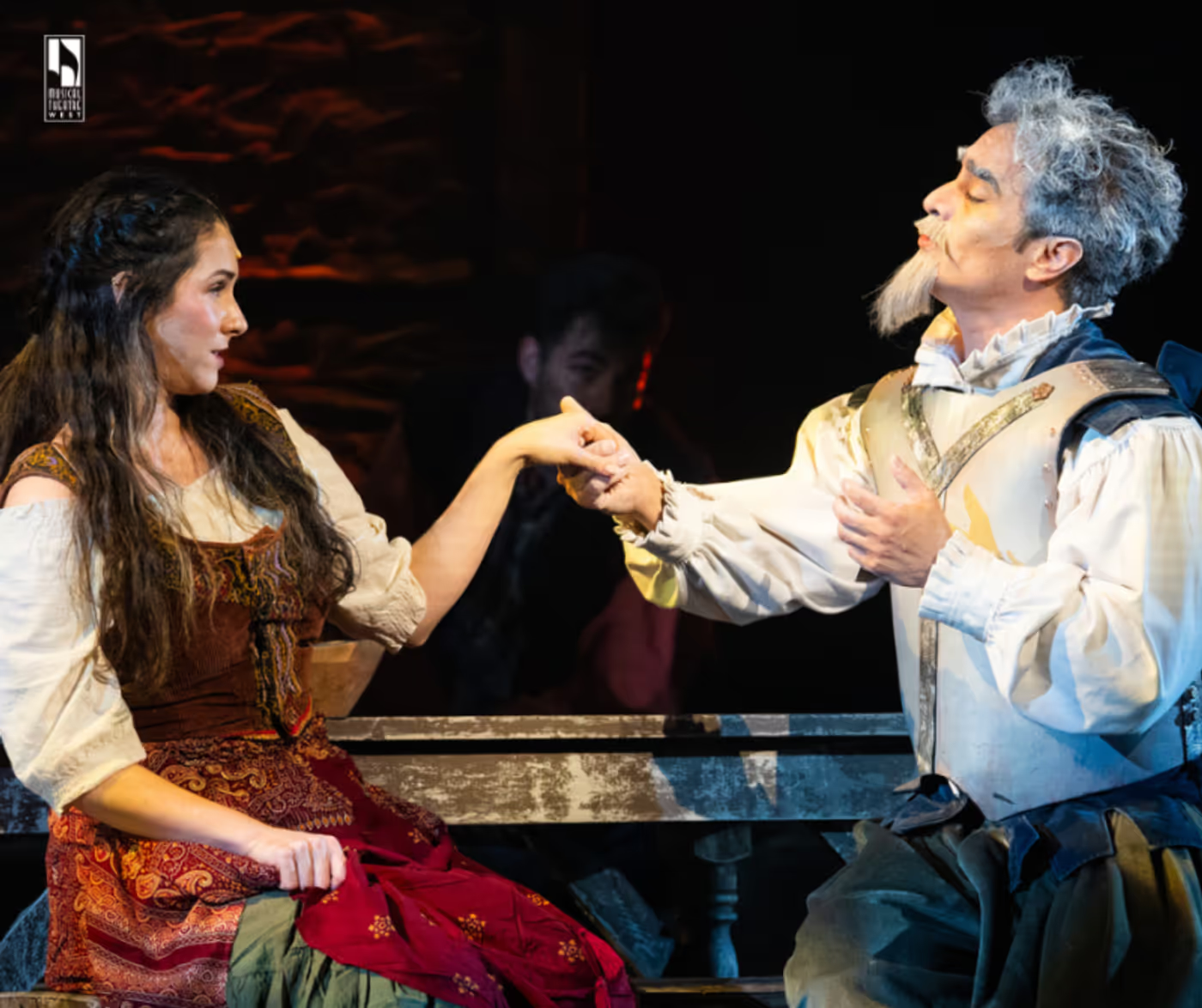
Among the newest arrivals is Miguel de Cervantes (played with strong-voiced conviction by Richard Bermudez), a tax collector and failed playwright, who has been arrested by the Inquisition along with his loyal man-servant (hilarious scene-stealer Reggie De Leon). When the inmates threaten to confiscate his manuscript, Cervantes proposes a theatrical defense: he will present his play—the very one that got him arrested—in its entirety, using the prisoners themselves as performers.
Thus begins a play-within-a-play that transforms the grim prison into the imaginative landscape of La Mancha, the setting for his parable.
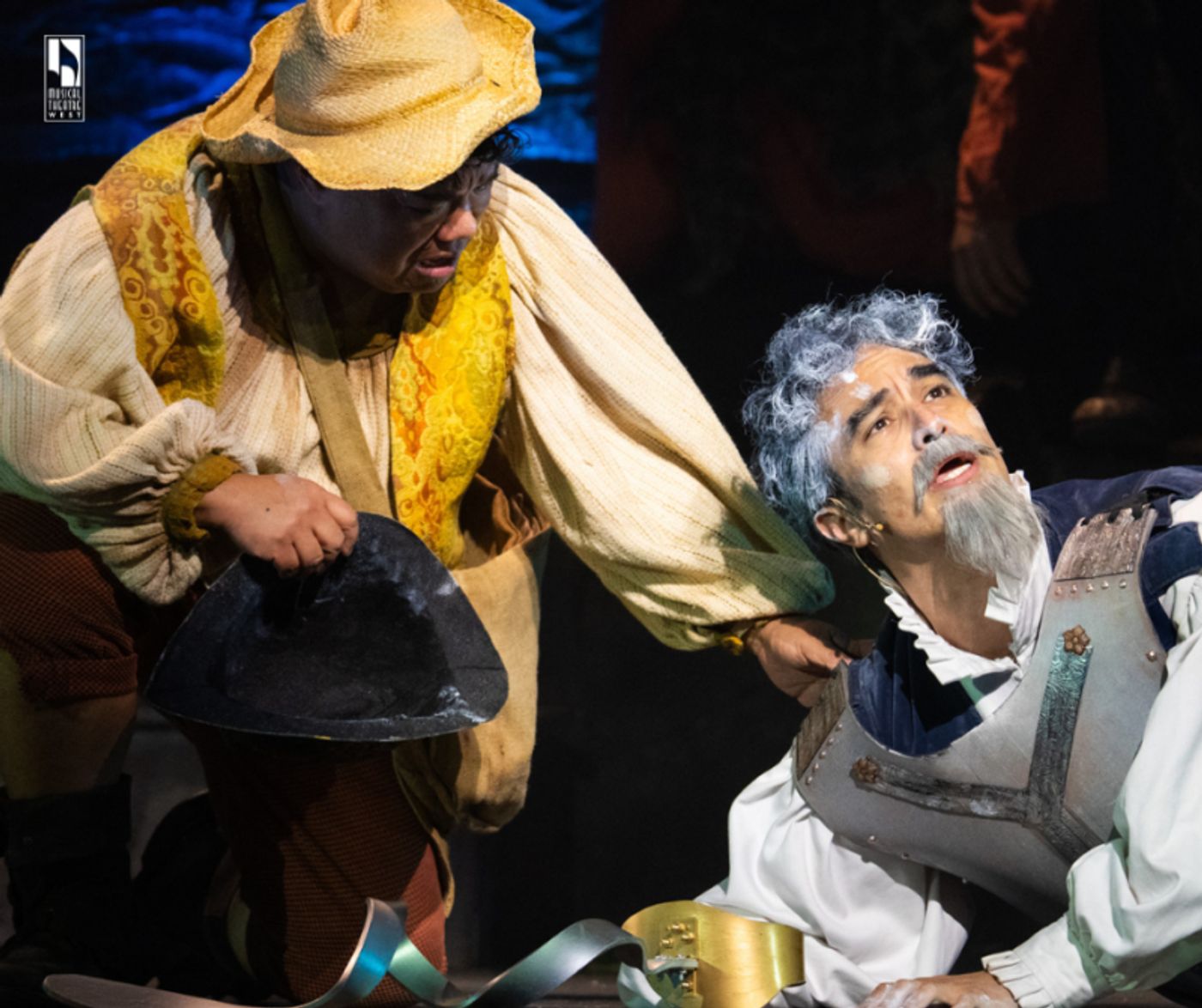
Cervantes himself assumes the central figure of Alonso Quijana, an aging gentleman who has lost himself in tales of chivalry and re-emerges as the valiant Don Quixote, a self-proclaimed knight-errant determined to revive the ancient age of honor, virtue, and heroic deeds. Armed with little more than a rusty suit of armor, a makeshift (hilariously twisted) lance, and an unshakeable belief in justice, Quixote sets out with his pragmatic squire Sancho Panza (played by his man-servant) to right wrongs and pursue noble quests.
Along his journey, Quixote encounters Aldonza (the regal-voiced Monika Peña), a cynical kitchen staffer and part-time sex worker at a roadside inn that Quixote mistakes for a castle. Despite her sharp-edged realism and disdain for his wildly fantastical delusions, Quixote renames her his darling Dulcinea, envisioning her as a virtuous lady worthy of respect and devotion—two things she definitely doesn’t get in her real life. His steadfast insistence on her inherent nobility begins to crack her hardened exterior, though she (initially) resists the transformation.
The musical follows Quixote's episodic adventures: his infamous battle with windmills he imagines to be giants, his misguided efforts to defend the innocent, and his encounters with both ridicule and cruelty from those unable—or unwilling—to see the world through his idealistic delusions—er, imagination. Meanwhile, Aldonza grapples with the unsettling possibility that she might be more than the degraded existence she has long accepted for herself.
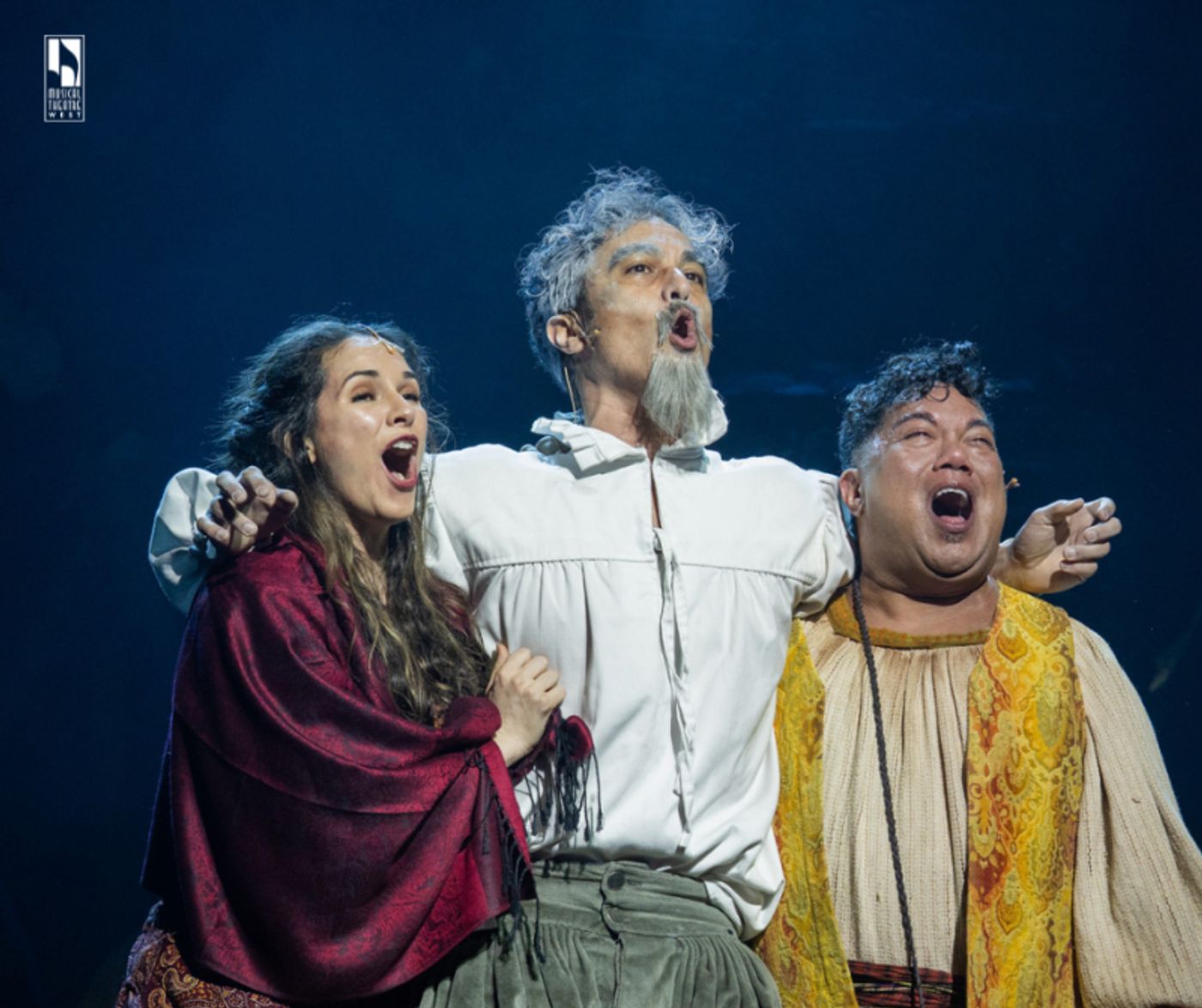
As one could only surmise, Quixote's illusions soon collide with harsh reality. Yet, even as Cervantes is summoned by the Inquisition to face his fate, he leaves behind a group of prisoners subtly transformed by the story he has just shared with them. The musical concludes with a final triumphant reprise of its infamous anthem "The Impossible Dream," affirming the enduring power of aspiration in the face of inevitable defeat.
At its very core, MAN OF LA MANCHA, above anything else it is on the surface, is really a musical about the necessity of dreaming in a world that often punishes dreamers—and is, perhaps, the reason the musical has persisted for over half a century and continues to affect audiences even today. And when this theme is presented with clarity and conviction, its central message—that the pursuit of idealism, however quixotic, is itself a noble endeavor—remains profoundly moving.
For its latest revisit to the show (this was also produced on this very stage exactly 14 years ago), MTW's new production certainly lives up to those prerequisites, offering audiences both familiar and unfamiliar to the property a resoundingly refreshed version of a classic.
Even now, the show's framing device—a play within a play—remains its clever launching pad. By situating Don Quixote's story within the bleak confines of a prison, the work creates a striking theatrical contrast between oppressive reality and liberating imagination. For much of its two acts, the production does a convincing job of showing the transformation of a dungeon into an expansive theatrical playground, which serves as both narrative engine and thematic statement. MTW leans fully into this meta-theatricality, resulting in a show that can feel almost transcendent: a reminder of theatre's own capacity to transform the mundane into the extraordinary.
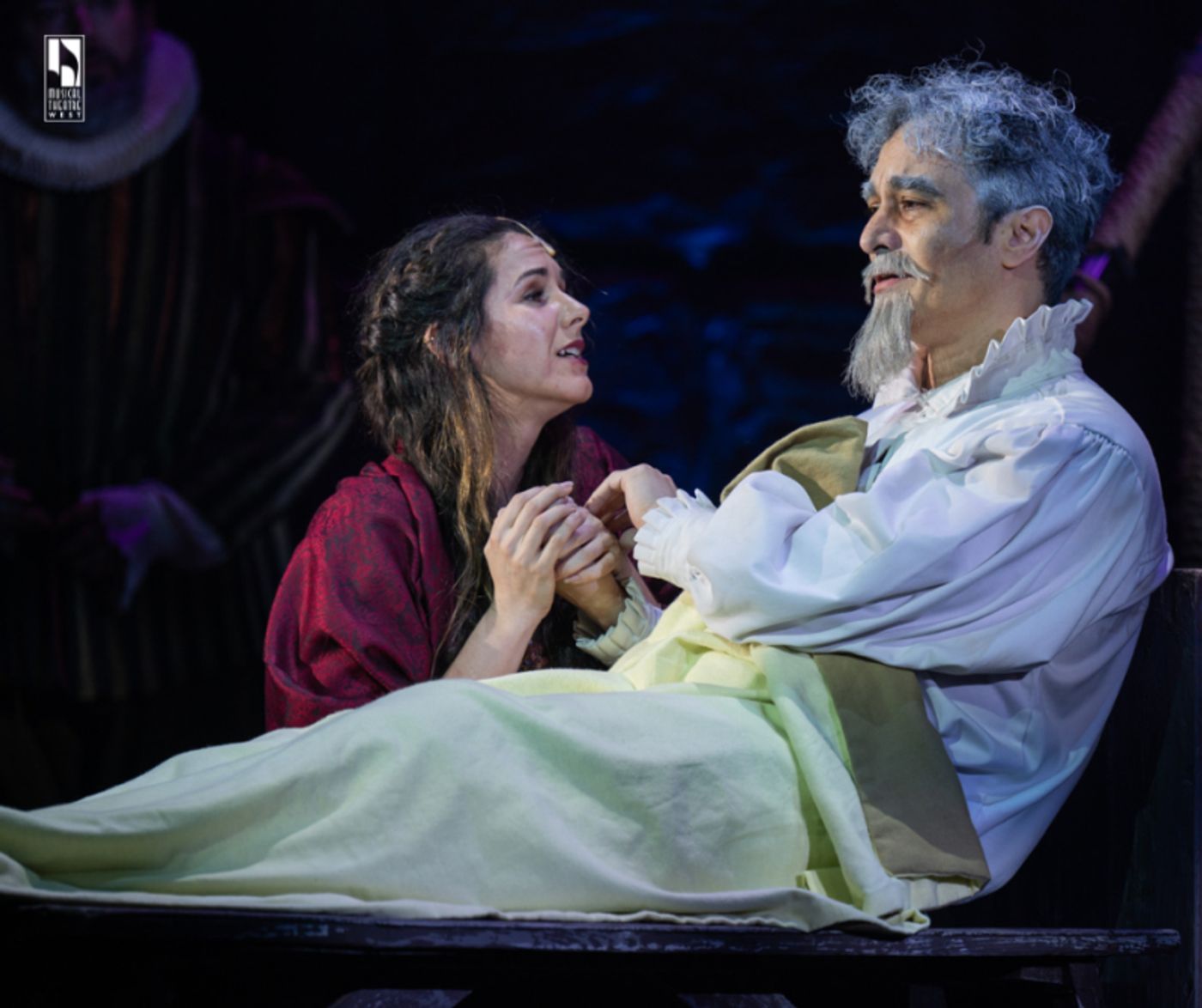
Of course, the musical's emotional impact rests heavily on its central performances, which this production boasts with every member on stage.
As the title character, Bermudez is excellent all-around, creating a vibrant portrait that can elicit both empathy and pride. Don Quixote is less a traditional leading man than a symbolic figure—equal parts fool, philosopher, and fragile dreamer. The role demands not only vocal strength (particularly for the signature anthem "The Impossible Dream") but also a performance that balances earnestness with self-awareness—which Bermudez handily accomplishes. He gives his portrait a grounded sincerity rather than pepper it with too much excessive grandiosity. In his hands, Cervantes/Quijana/Quixote becomes heartbreakingly human and tragically relatable.
Equally crucial is the role of Aldonza/Dulcinea, arguably the musical's most complex character, which Peña takes on with palpable ferocity. Her journey—from hardened survivor to reluctant believer in Quixote's vision—provides the show with its emotional spine. Her performances of "Aldonza" and "What Does He Want of Me?" offered both vocal power and raw vulnerability. Portrayed with notable nuance, Peña winningly showcases Aldonza's gradual transformation, coming off less like a fairy-tale redemption and more like a fragile reclamation of self-worth.
As the show's welcome harbinger of silliness and comic relief, De Leon's portrait of Cervantes' ever-loyal assistant made every appearance worthy of our attention—and receives well-deserved chuckles. Seriously, at some points, I often find my eyes wandering how he is reacting to the action at hand even when he's just observing in the background. That’s a sign of an impactful characterization.
Also notable for some incredible singing: Louis Pardo as The Duke/Dr. Carrasco, Berto Fernández as the Governor/Innkeeper, and Rudy Martinez as Padre. And kudos to Andrew Diego for some deliciously hammy voice work as the mysteriously high-hatted Captain of the Inquisition.
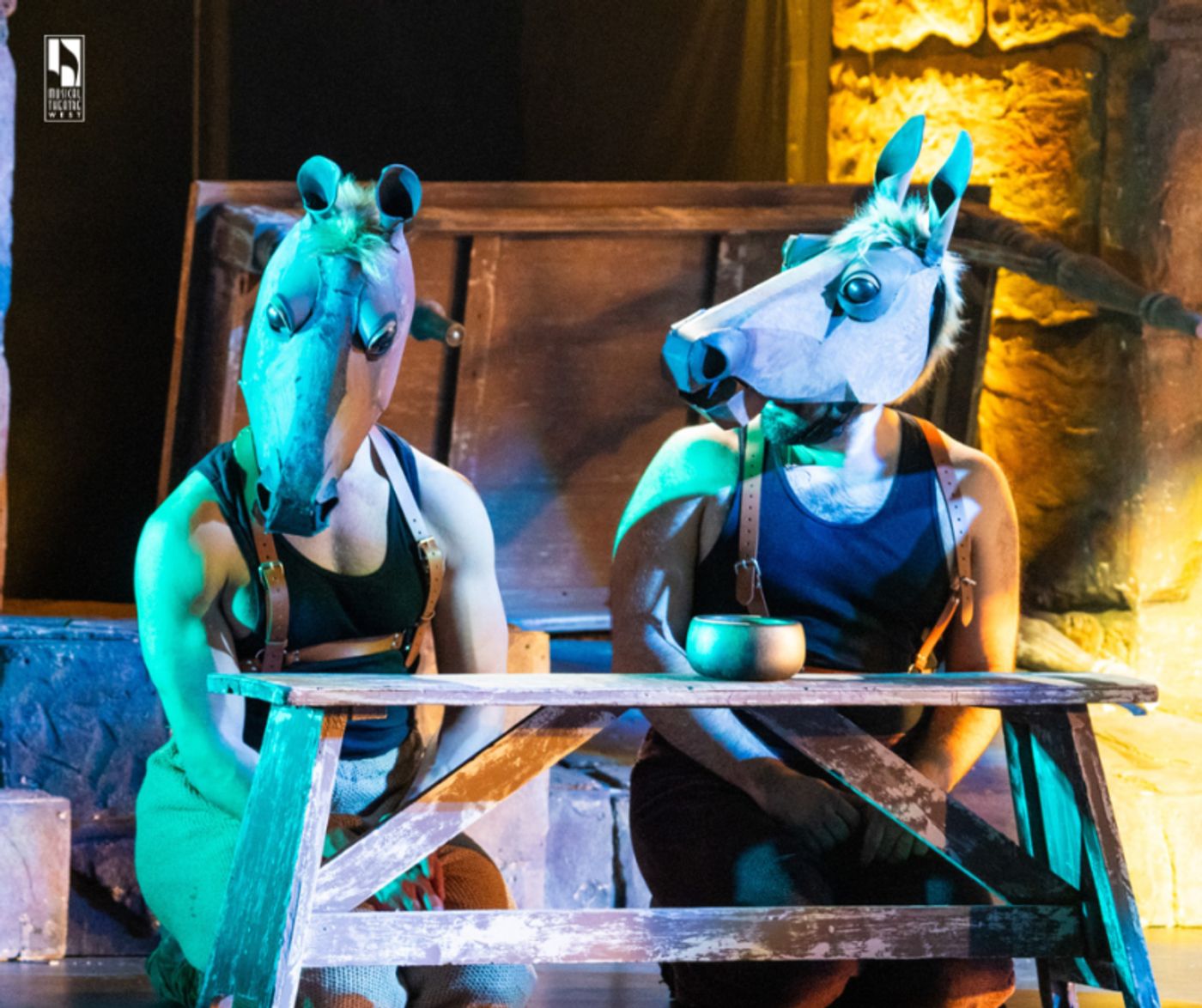
Also, though I'm not sure specifically who played them, but an extra shout-out goes out to the pair of performers who played Quixote's horses, who often pulled hilarious focus in the most satisfying manner throughout the show. At one point, at the end of the show, I even found myself asking… "wait, what happened to his horses?"
Musically, Mitch Leigh's lush-sounding score blends Spanish-influenced motifs with traditional Broadway lyricism, producing a soundscape that is both evocative and accessible which this assembled orchestra under the baton of O'Connell beautifully revives. While only a handful of songs—most notably "The Impossible Dream," "Dulcinea," and "I, Don Quixote"—have achieved standalone fame beyond the show (thanks, Linda Eder), the score as a whole functions cohesively within the narrative. Darion's lyrics, meanwhile, lean unapologetically toward the poetic and philosophical, occasionally veering into sentimentality but more often landing with stirring clarity—that is, as long as it's clearly heard.
And that brings me to possibly my only true gripe with MTW's production—a technical one—one that can possibly be fixed for future performances. For me, as well as others I spoke with at intermission, seem to agree that the sound mix sounded a bit unbalanced during opening night, rendering many of the lyrics sung during the more boisterous numbers just indecipherable. Though the story still manages to come through with some of the words and phrases completely mushed up, it's still quite a hinderance for those wanting to absorb all of it in all its glory. There were also a few isolated moments when the orchestra sounded a bit muffled, as if the sound was suddenly funneled through a dampening filter. Hopefully future performances can address these minor issues.
But with that said, MAN OF LA MANCHA itself as a stand-alone show is not without its challenges for contemporary audiences. Though it was not a huge deal breaker for me, some of the show's pacing can feel slightly choppy and episodic (mostly in the first act), and some of its earnestness may strike modern viewers as overly sincere in our current era when we are likely more accustomed to smarmy irony. This production feels reverently tethered to its classical roots, so such notions do present themselves. And, yet, therein lies both the show's risk and reward. Approached with emotional honesty rather than camp or self-consciousness, this production's combined unabashed idealism and dream-boosting becomes its greatest strength.
Ultimately, MAN OF LA MANCHA endures as an entertaining, thoughtful show because it dares to ask a deceptively simple question: Is it foolish to keep dreaming of a better world? It's certainly a question that many feel is still worth asking these days, particularly as darker times plague our news cycle on a daily basis.
In answering with a resounding, if bittersweet, "no," MAN OF LA MANCHA affirms the value of striving—even when success is uncertain and/or if darkness is looming on the horizon. Like its titular knight-errant "tilting at windmills," the show may seem fantastical and idealistic in its optimism. But in a theatrical landscape often dominated by cynicism, its unwavering belief in the transformative power of imagination feels not only refreshing but still oh so needed in our world today.
Follow this reviewer on Bluesky / Twitter-X / Threads / Instagram: @cre8iveMLQ.
Photos by © Sujan Creative, courtesy of Musical Theatre West.
---
Performances of Musical Theatre West's production of MAN OF LA MANCHA continue through Sunday, March 1, 2026. The Carpenter Performing Arts Center is located at 6200 E. Atherton Street in Long Beach, CA. For tickets or for more information, please call 562-856-1999 x4 or visit online at www.musical.org.
Reader Reviews
Videos