


Interview: Wesley Whitson of ANGELS IN AMERICA at Rec Room Arts
Wesley goes from HAMLET to talking with ANGELS in this timely epic production!
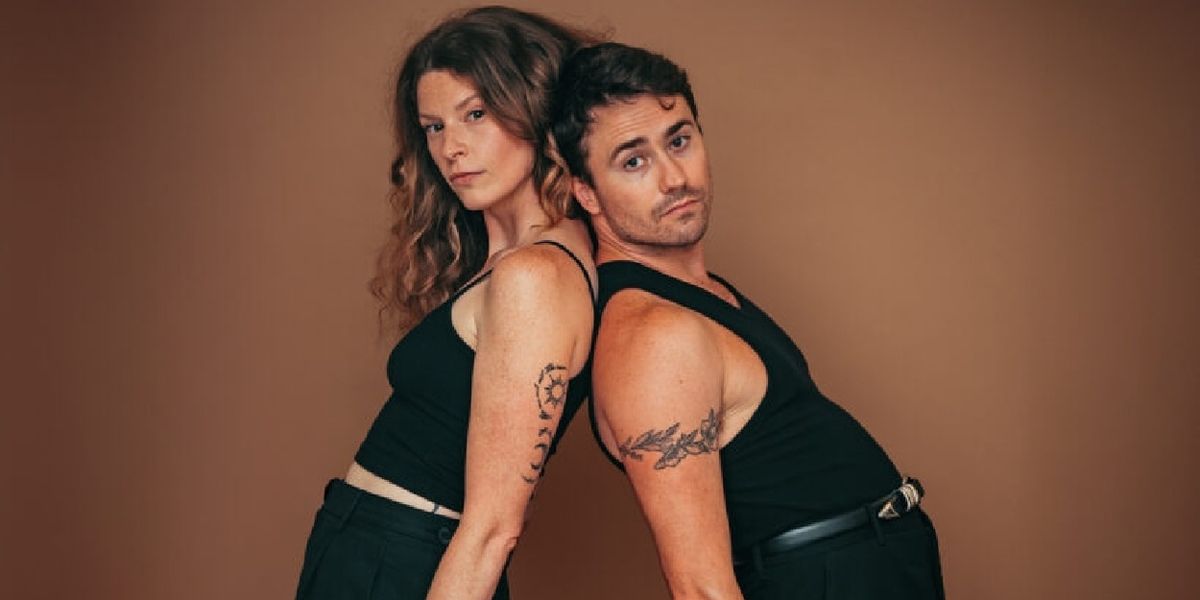
Wesley Whitson is starring as Prior Walter in Rec Room Arts' production of ANGELS IN AMERICA, which they run through December 20th. Wesley is an actor who seems to be everywhere these days. He recently played Hamlet for Fourth Wall Theater. Using a largely uncut version of Shakespeare’s LONGEST play! Then he moved over to Main Street Theater, where he did THE 39 STEPS, playing what felt like 39 characters. Rec Room Arts has decided not to do just Part One: Millennium Approaches or Part Two: Perestroika, but rather to do BOTH shows in repertory! This is over seven hours of theater in which Wesley plays the lead. BROADWAY WORLD writer Brett Cullum sat down with the insane Wesley Whitson and talked all things ANGELS!
Brett Cullum: I'm exhausted just thinking about this. Seven… Hours.
Wesley Whitson: I know it. It's a marathon.
Brett Cullum: It's the biggest marathon. And of course, ANGELS IN AMERICA by Tony Kushner is a landmark epic play, first developed in 1990 at an LA workshop. The two-part play itself is set in New York during the 1980s, the Reagan years. It's an interweaving of several different stories connecting these people. They're all struggling with relationships, their identities, the AIDS crisis, and politics. You're playing Prior Walter, who famously gets diagnosed as HIV+ at the beginning of the show, and journeys on this whole thing, starts having visions, and sees an actual angel. We've got Roy Cohn in the mix, and all of these different things. Yeah, straight guys turning gay, gay guys breaking up, I mean, it's a whole lot of drama. What made you want to audition for ANGELS IN AMERICA?
Wesley Whitson: It's one of those dream shows, you know? From the second that I first encountered it, I saw myself in it, and it became an aspiration to be in that show, to tell that story. It's always had this pull to it. I wasn't alive when it first premiered, but it's important; it can't be overstated. I remember the first time I encountered it was in high school, in the library, and it was just the cover art that pulled me in. The angel crouched over in shadow, and her wings, the red, white, and blue wings, and I remember thinking, “What is this?” I remember being a senior in high school, and the librarian saying, “You need to take this home!” And then there was the HBO miniseries in 2003, and oh my goodness. That's when it clicked for me. This is funny, this is tragic, this is gay, and unapologetically gay, you know? That's one of my favorite parts of the show; it's not pandering in any way. These are real people, and it's a gift to get to work on and a gift to get to play.
Brett Cullum: Back in the 90s, AIDS was the topic of many plays and movies. It was everywhere. But this piece seems to have emerged from that pack, and it seems to have had staying power, and it's still talking to people, and I think that that's what's so wild, but how did you, as somebody who really didn't go through this era, how did you prepare for this role? I mean, good gosh. Reagan’s America? The AIDS crisis?
Wesley Whitson: Right. It was a lot of research. In the same way that I had to research for Hamlet, it was that all over again. It was just providing myself with the necessary context to understand what kind of world I would have been living in. I watched that great documentary, “How to Survive a Plague.” Have you seen that? Oh my goodness. It details ACT UP's fight to be heard, and then to get medication that could help curb the effects of AIDS, you know, hear us, hear us, hear our cry. There's this great book that I also read, it's an oral history of angels in America. It's called THE WORLD ONLY SPINS FORWARD, and it details from its inception until that 2017 National Theatre revival. That was also really helpful, to hear from Tony Kushner himself what was behind the creation of this piece.
Brett Cullum: What was funny was that Tony Kushner even admits it was just a dream. It was a dream that a friend told him about. About him being sick and an angel crashing through the ceiling, and it was the imagery that kicked off this thing. But what's so wild is that it's about AIDS, but it is an American Fantasia. It is taking the gay experience of that time, and looking at our country, and looking at the entrenched history, and the movements of it, and just politics, and the politics of disease, and all of these different things that happen, and just by inserting Roy Cohn, this nasty piece of work, this gay man who worked so hard against us, died of AIDS, and never wanted anyone to know he was a homosexual. And the wild thing is, that for today, he was a mentor and a lawyer for a lot of folks in power now. If that doesn't hit home, I don’t know what will.
Wesley Whitson: I know! Well, I think that's probably a big part of why they programmed this show. With conservatism on the rise again in this country, there are echoes of Reagan America even now. What's funny is that I asked my mom, “Were the Reagan years at all similar to what we're going through right now?” And she was like, “No, they weren't. There's no precedent for what we're going through.”
Brett Cullum: No, but I remember when Angels came out. Clinton was in office, and ANGELS IN AMERICA felt like a rear-view look. I felt like we were looking back. And right now, watching it again on stage, watching you all go through this, I feel like it's a preview of what's to come. I feel like now it's prophecy again, and I'm like, this is just really making me antsy. I just wanted to fly off my seat, almost, because I just thought, “Oh gosh, this has so much to say to today!”
Wesley Whitson: It's a battle cry in a lot of ways. What the great work begins is not so much a declaration as it is, like, act up, get out there, do something about this. Don't just sit, sit and let life pass by.
Brett Cullum: Well, I have to ask you, this cast, Good Lord! It's as if they went and said, “Okay, who's the best person at the Alley? ' Okay, we'll take her. Who's the best person at stages? Okay, we'll take her. Okay, who’s the best person at Catastrophic? We'll take him.”
Wesley Whitson: It's been wonderful working with this cast! You know, the funny part about ANGELS is a lot of it… It is so epic, right? And it's 7 hours, but most of the scenes are little two-hander scenes. It's not like all 8 of us are all on stage at once. Most of it is really intimate, despite its scope. So, a lot of the rehearsal process would involve us working with just the scene partner we were working with at that time. It wasn't until recently that I feel like we've all sort of been in the room with one another, and we've been able to see what other people are doing. And ANGELS is one of those plays where it's like, every single scene you watch, you're like, “Oh my god, that's such a good scene,” and then the next scene will happen, you're like, “Oh my god, like, what an incredible scene.” It just keeps building upon itself. And, yeah, it's been a pleasure to be in the room with all of these people. They're very inspiring actors.
Brett Cullum: Well, it's an interesting thing, because Rec Room Arts is a very ambitious theater, but they only have 60 seats. It's very intimate; we're right on top of you as an audience, and we can see every little flicker of what's going on. So it's a very neat way to experience Angels in America. How did co-directors Matt Hune and Sophia Watts divide this job of directing? Did one do one, and one do the other, or did one work with a certain group?
Wesley Whitson: Matt directed Millennium, and Sophia is directing Perestroika. They’ve been able to watch both throughout the process and give us notes from their own perspective. When you're working on only one show for so long, it's really nice to have this part of Millennium connecting to this part of Perestroika. It can inform the storytelling. This is not typical. What we're doing is not typical. Both at the same time is a real challenge. It would have been a real challenge if we were only doing one of them, you know?
Brett Cullum: The origins of this show were that it was gonna be epic theater. It was gonna be like Bertolt Brecht or Erwin Piscator. Central to the idea that it's always gonna remind you that it's theater, you're gonna see the actors do the scene change, you're gonna see them do some costume changes, you're gonna see them talk about subversive political themes. Those gentlemen back there, when they had that movement, they wanted to upend society. They wanted to talk about politics and other moral topics, and Kushner embraces that, but then he incorporates great human emotion and magical realism. So, we're always reminded that it's a play. Rec Room Arts leans into that.
Wesley Whitson: The script really does lend itself to a screenplay, because a lot of it is split scenes, right? And when you put split screens on camera, it's gonna just look like editing. It's gonna look like cuts from one scene to another, but on stage, there's a real, heightened theatricality to that. One scene is being played downstage while another one is happening upstage. That was something that they did in The National Theatre production that read in THE WORLD ONLY SPINS FORWARD. It was a way that… to kind of keep the flow of the play going, for it to be all one seamless whole, because the scenes are rapid fire. They're kind of short and choppy, and it can stop the flow if there's a scene change after every single blackout. It's like one big pressure cooker, is the way that Matt and Sophia kept on describing it. We're gonna keep on ratcheting up the tension, ratcheting up the tension. It's gotta keep on moving, keep on moving, keep on going.
Brett Cullum: And it's got a lot of things that are scary for actors. I mean, you've got to do a lot of physical things, and you've got to play being ravaged by a disease. And fall apart on stage! I mean, and progressively so, and to do a lot of really vulnerable scenes. I mean, the doctor's exam scene is pretty dang vulnerable. So, did any of that give you any pause? Were you nervous about that?
Wesley Whitson: No. What Tony Kushner is doing is forcing an audience to look at something they were not discussing. We're not having this conversation. For God's sake, Ronald Reagan wasn't saying anything. How many years was it before he even addressed the crisis? Kushner's forcing people to look, this is what it is. How the second act opens, where you see how much Prior has deteriorated. And you see him defecate on stage, he’s forcing an audience to confront the disease in a way that I think they otherwise would not.
Brett Cullum: How long do you guys run for?
Wesley Whitson: We'll run until December 20th.
Brett Cullum: Yes. And you're going to have some days where you do both of them the same day?
Wesley Whitson: That's right, there will be dinner served in between the shows. Those are the marathon days. I'm hopeful that people will come out to see it. It's interesting to consider what the show has meant at different points in time. I wonder what it will mean to audiences in 2025. I'm really curious to see the response to it now.
Brett Cullum: And that's what scares me about ANGELS IN AMERICA today, is that it feels like, “Hey, this is coming to attractions now!” So, definitely get out and support Angels in America and see what it's saying. If you're angry or frustrated, go see ANGELS IN AMERICA at Rec Room Arts from November 8th through December 20th, 2025. Because Millennium has come and gone, and we're still dealing with this crap. What the heck? Tony Kushner knew that this was gonna speak to the ages.
Wesley Whitson: Yeah. I truly believe it is… I think… It's the greatest American play.
Brett Cullum: I know, you did Hamlet, and then you do this. I don't know where you go from here. Where do you go? Next step! You've already… I mean, you might as well retire, Wesley.
Wesley Whitson: I don't know, like I said, this is gonna… I'm gonna be taking a nice long break after this.
Brett Cullum: If anybody deserves it, it's you. My Lord. From four hours of HAMLET to over seven hours of ANGELS! You amaze me, Wesley Whitson!
|
Jesus Christ Superstar Deluxe Theatre (8/14-8/17) |
|
Wicked Hobby Center for the Performing Arts (6/23-7/25) |
|
The 25th Annual Putnam County Spelling Bee Theatre Southwest (1/02-1/23) |
|
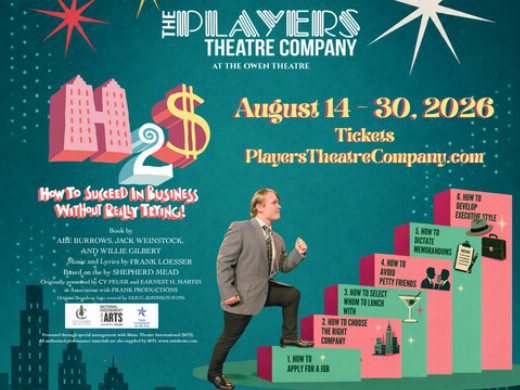
How to Succeed in Business Without Really Trying The Owen Theater (8/14-8/30) |
|
Come from Away Stages (9/18-10/18) |
|
Ride the Cyclone HITS Theatre (8/16-8/16) |
|
An Old-Fashioned Family Murder Theatre Southwest (9/11-10/03) |
|
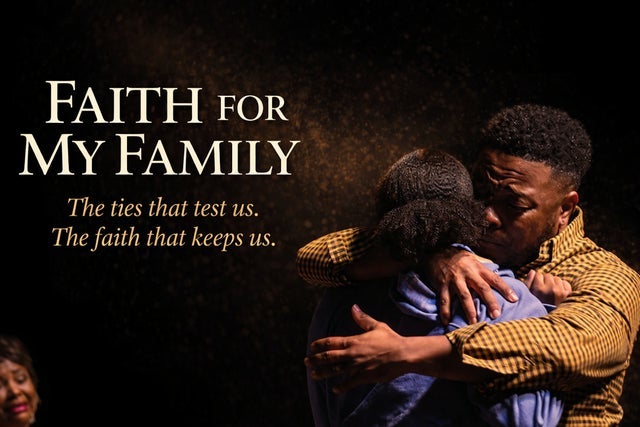
Write The Vision Productions Presents: Faith For My Family Stage Play Jefferson Theatre (9/05-9/05) |
|
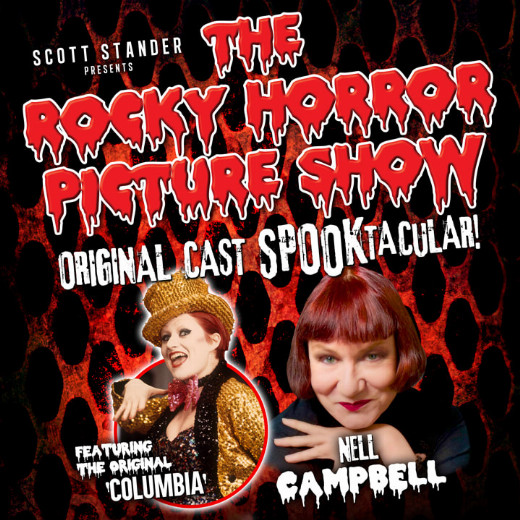
The Rocky Horror Picture Show Spooktacular Tour with Nell Campbell House of Blues (10/23-10/23) |
|
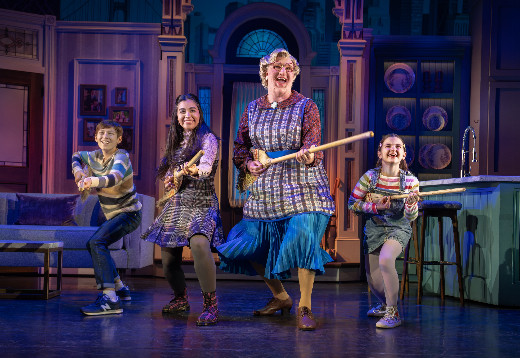
Mrs. Doubtfire The Musical Theatre Under The Stars (10/13-10/25) |