
Interview: Playwright Evelina Fernández on The Storyteller of East LA
world premiere by Latino Theater Company at The Los Angeles Theatre Center
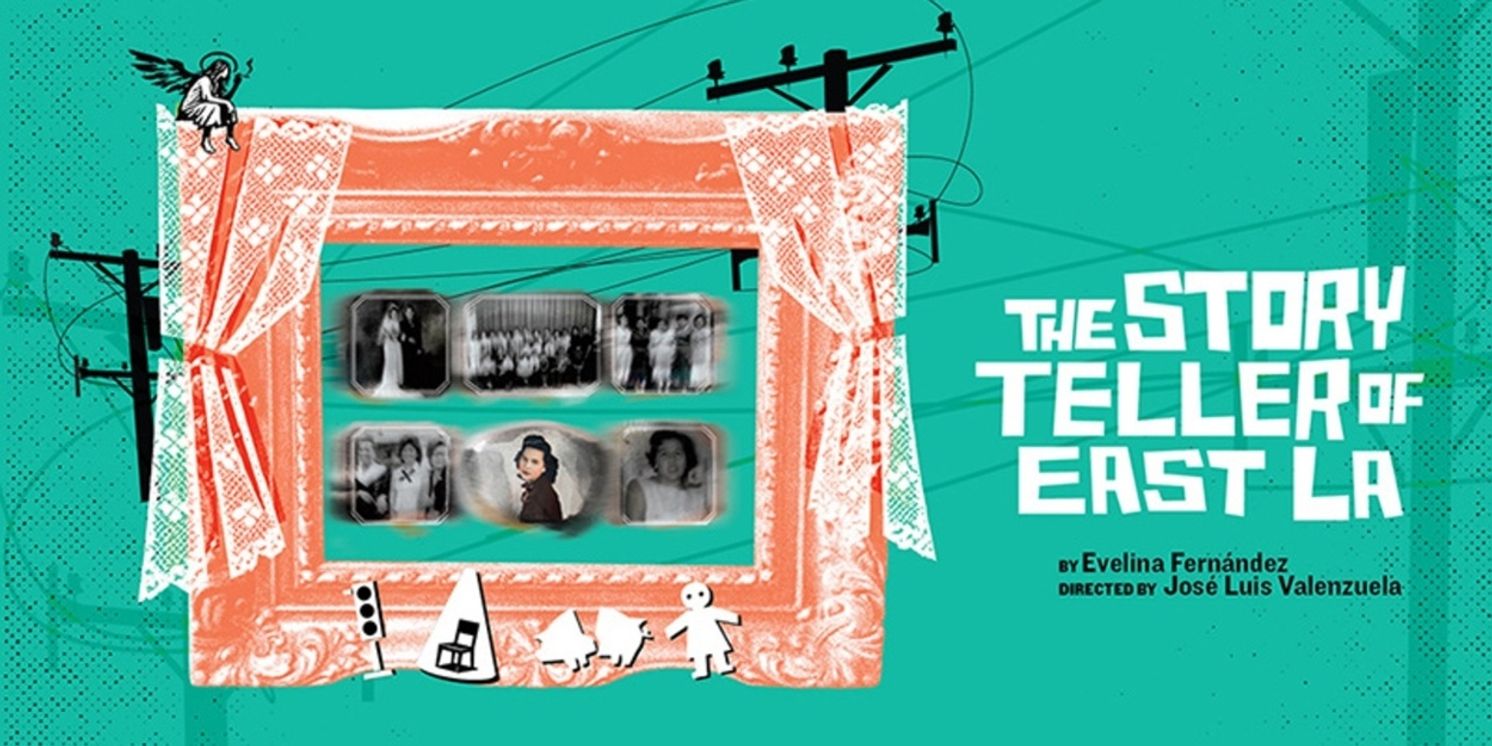
Dedicated to her mother, the newest work by Latino Theater Company resident playwright Evelina Fernández, The Storyteller of East LA, celebrates the sustaining power of love, compassion, storytelling, and the resilience of family. Jose Luis Valenzuela directs its world premiere at The Los Angeles Theatre Center in downtown Los Angeles from April 18 through May 17. A series of six previews began on April 9.
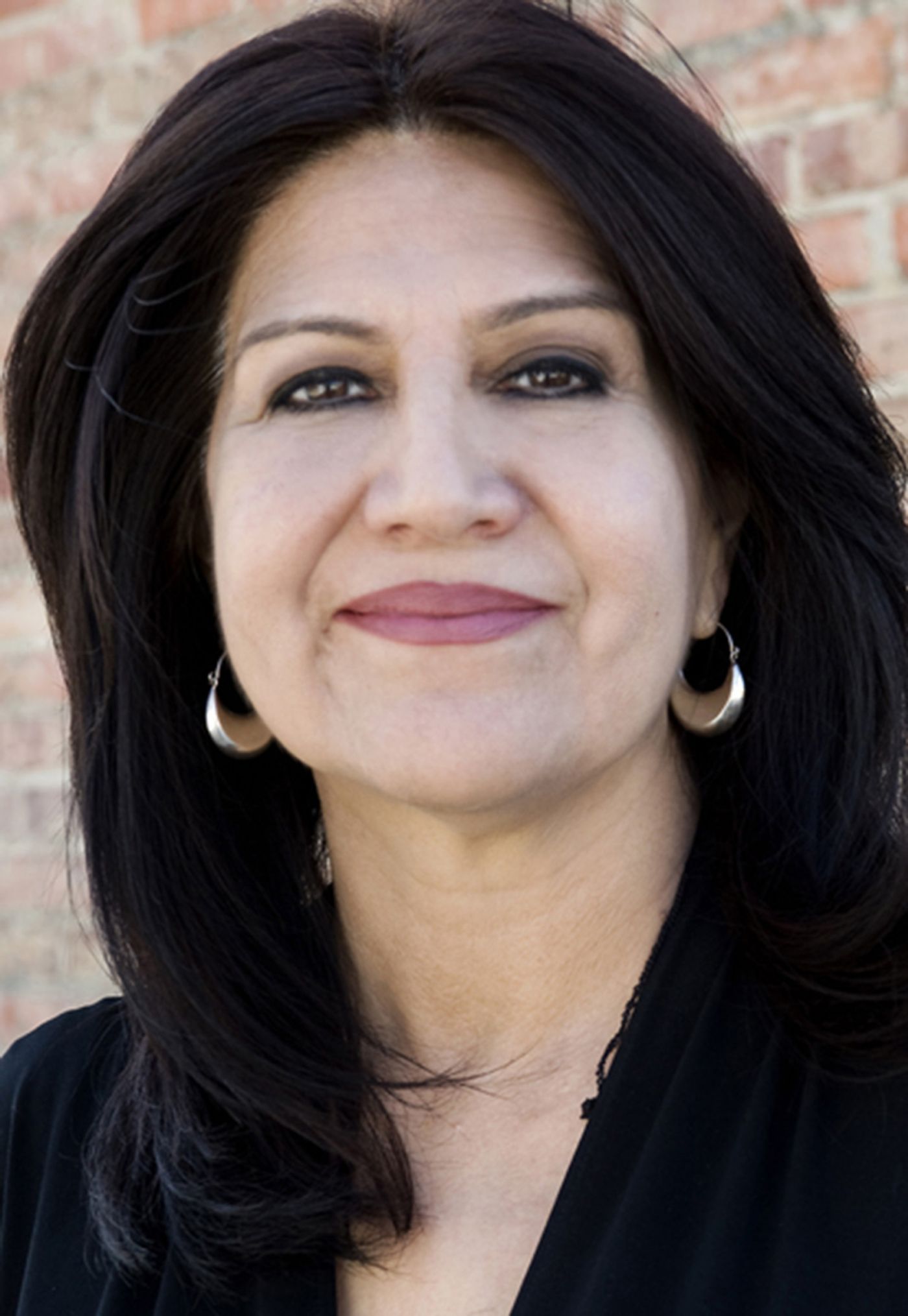
Playwright Evelina Fernández
Photo credit: Chaz Photographics
Developed in the company’s Circle of Imaginistas playwriting group and set in East L.A. where Fernández was born and raised, the play blends intimate family drama with elements of magical realism to explore themes of memory loss, family dynamics, and the complexities of caring for aging loved ones.
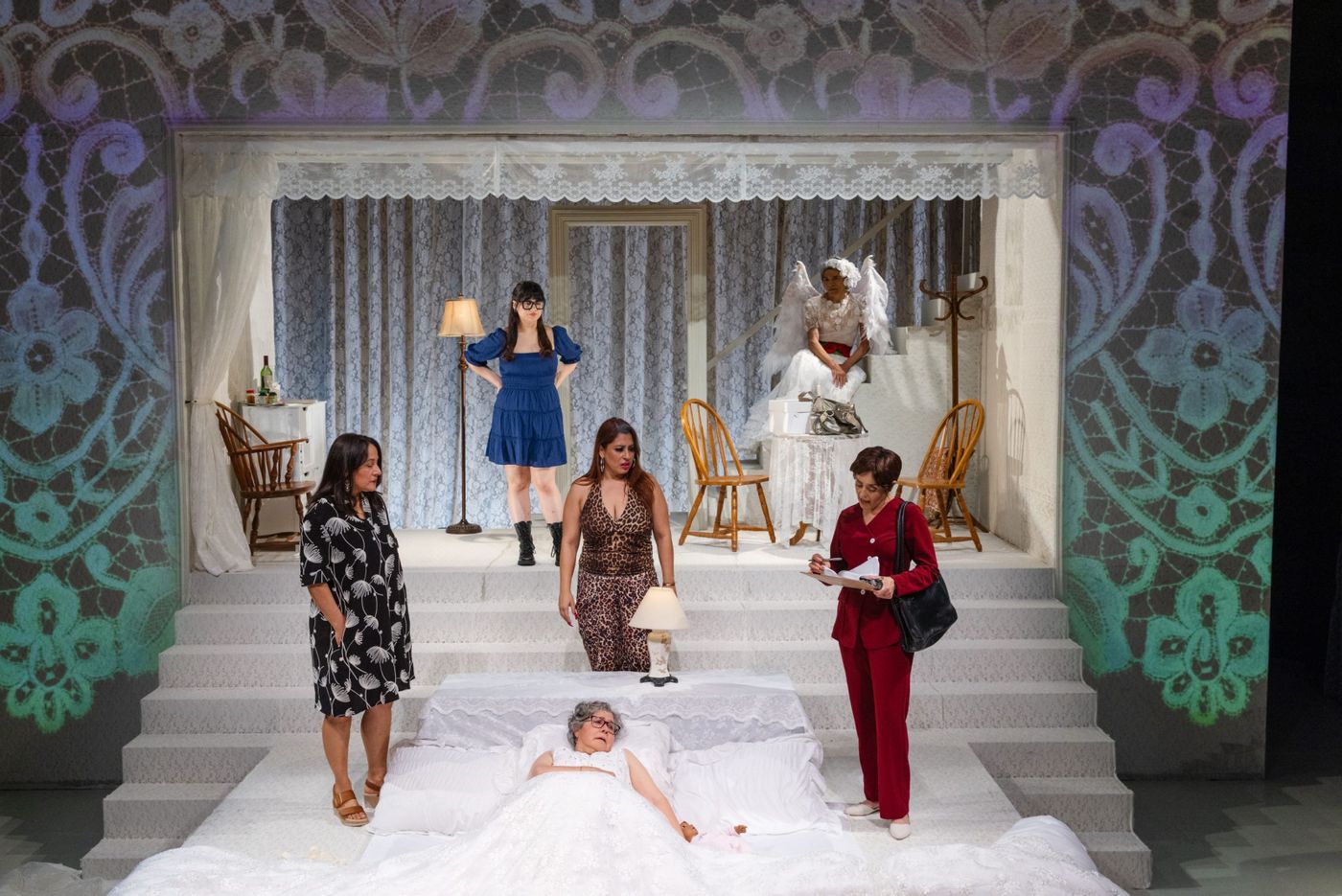
Zilah Mendoza, Blanca Isabella, Lucy Rodriguez, Brenda Banda, Sal Lopez, Ruth Livier
All production photos by Grettel Cortes Photography
I decided to speak with Evelina about her motivation to write The Storyteller of East LA, its plot development, and how the play addresses what’s going on in East L.A. today.
Thanks for speaking with me Evelina. First, tell me about your history as a resident playwright with Latino Theater Company.
The company celebrated our 40th anniversary last year, so we’ve been together longer than most marriages. I’m also an actor, but I started writing for the company early on and we’ve produced several of my plays, Solitude, Premeditation, A Mexican Trilogy, The Mother of Henry, Sleep with the Angels and more. The company has played a role in the development of most of my plays, and if I have an outside commission, I ask them for notes because I value their opinion since they know my voice more than anybody else. They play the role of dramaturg for me.
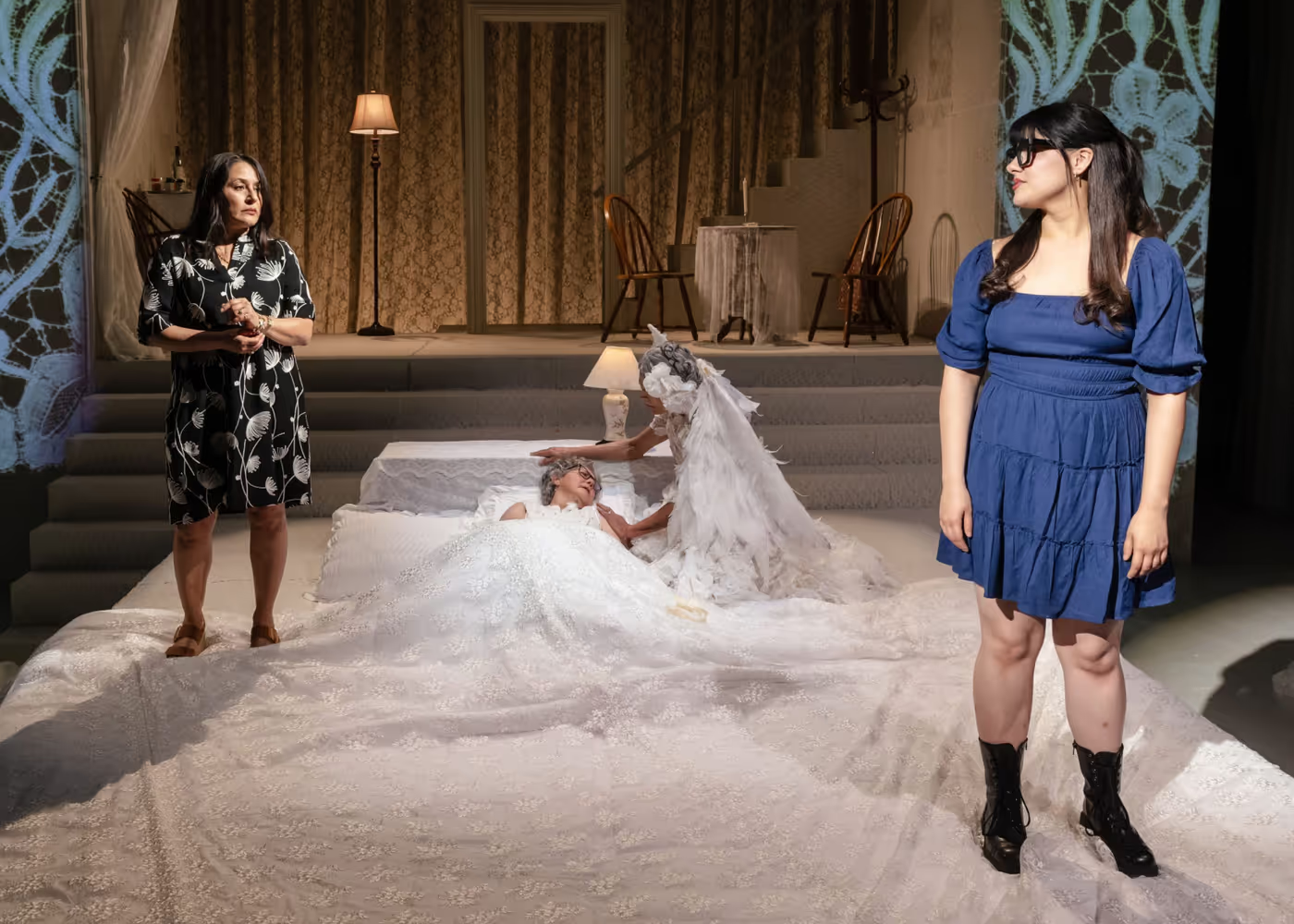
Zilah Mendoza, Lucy Rodriguez, Sal Lopez and Blanca Isabella
This play is dedicated to your mother. How did your personal experiences shape the story and emotional core of The Storyteller of East LA?
I began writing this play before my mother, Esperanza, passed. She suffered from dementia for over 10 years, and I was the daughter in charge of her well-being because I’m the youngest. My mother was a storyteller, and I grew up listening to her stories about our family. This play is about a family whose matriarch has dementia and many of my family’s life experiences are part of it. And, of course, some of Mom’s stories are in the play.
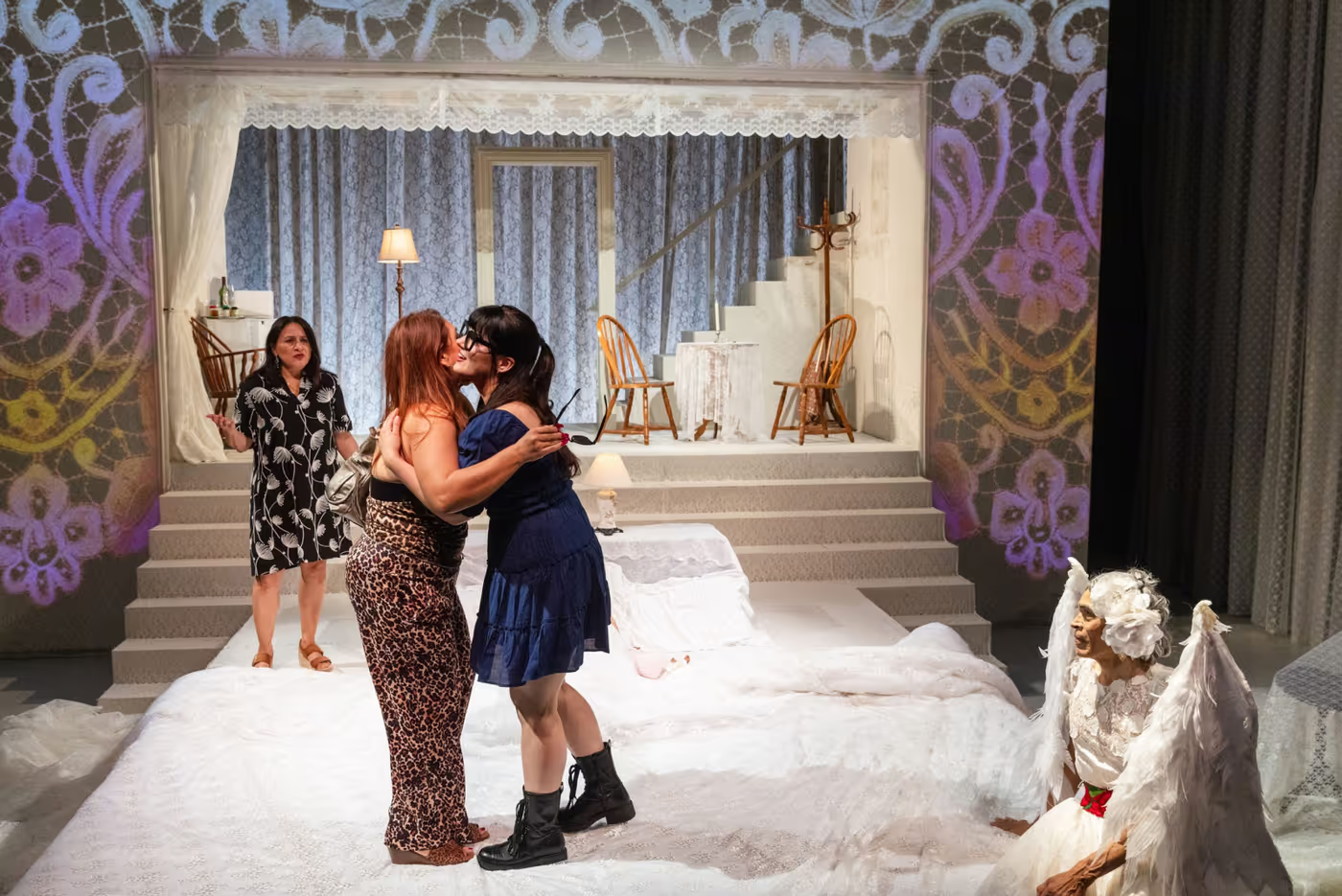
Zilah Mendoza, Brenda Banda, Blanca Isabella and Sal Lopez
The play explores dementia and memory loss. What drew you to tell a story centered on those themes at this moment in your career?
This is a commission from LTC’s Circle of Imaginistas, and the way we approach commissions is by offering topics or stories that our audience would be interested in, and memory loss was one of the topics. I chose it because of what we were experiencing with Mom. It’s interesting, because the play has somehow become part of my grieving journey. Losing your mother is like losing your roots, your balance, your focus, your center, your heart. I’m still trying to learn how to live without my mother.
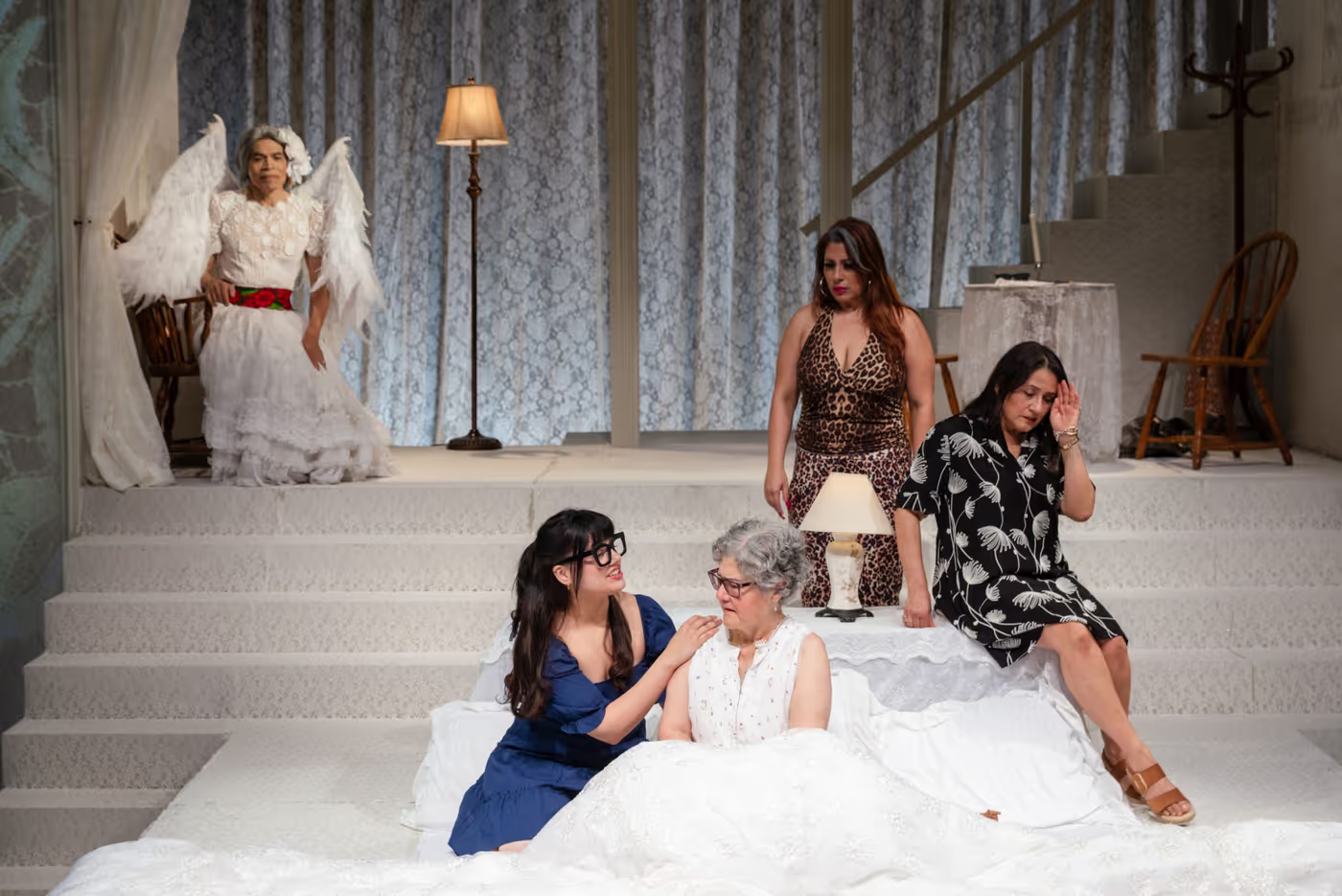
Sal Lopez, Blanca Isabella, Lucy Rodriguez, Brenda Banda and Zilah Mendoza
You blend intimate family drama with magical realism through “The Other Place.” How did you approach balancing realism with the more poetic, otherworldly elements?
The other place has become the “In Between” in the play. Our company uses what we call “heightened realism.” Combined with magical realism, it provides me the freedom to explore in countless ways - humanity, that I am Mexican, that I am a Chicana. It would be difficult to tell our stories otherwise. The intermingling of day-to-day life with our cultural spiritualism, mythology and the surrealism that is part of who we are as Mexicans, is easier to express using magical realism. I am drawn to the magical-ness of my people and culture. When Salvador Dali visited Mexico, he vowed never to return because he refused to be in a land that was more surreal than his work. That’s not a direct quote but he said something like that, and I totally get it.
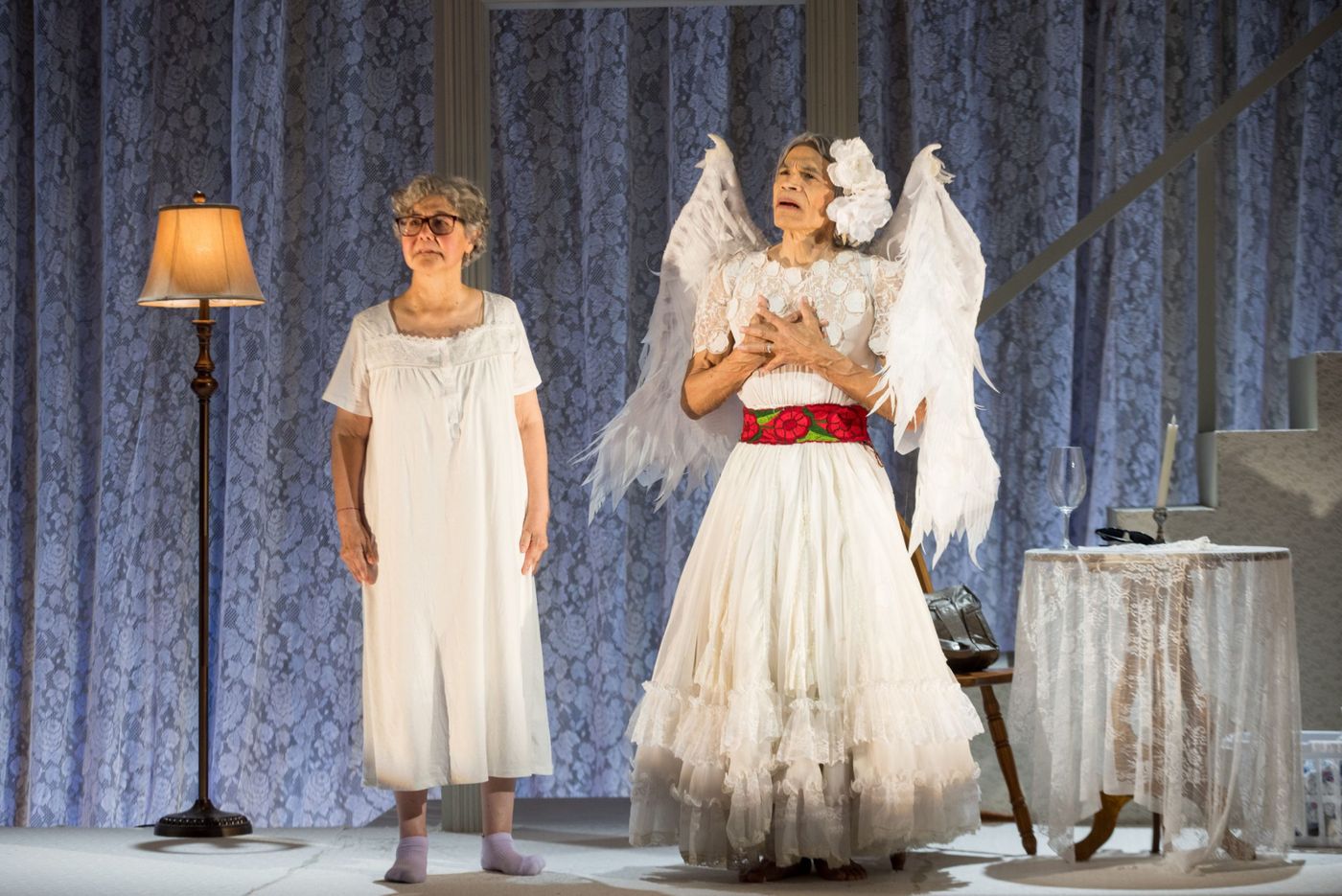
Lucy Rodriguez and Sal Lopez
In the play, Mercy, a 90-year-old woman with dementia, has a relationship with her guardian angel, Serafina, adding a spiritual dimension to the play. What role do you see spirituality or imagination play in how we process aging and loss?
I was raised Catholic and, though I am not a practicing Catholic, it is a huge part of my upbringing and my outlook on life. I grew up believing angels and spirits live amongst us. My mom, and I’ve heard this from several people whose loved ones are approaching death, began to see her dearly departed. My mother saw her parents, her sisters, and little children in her room before she passed. As we age and our own mortality sets in, I think we begin to examine our beliefs, look back at our lives, and settle on something that makes us more comfortable as our time on earth shortens.
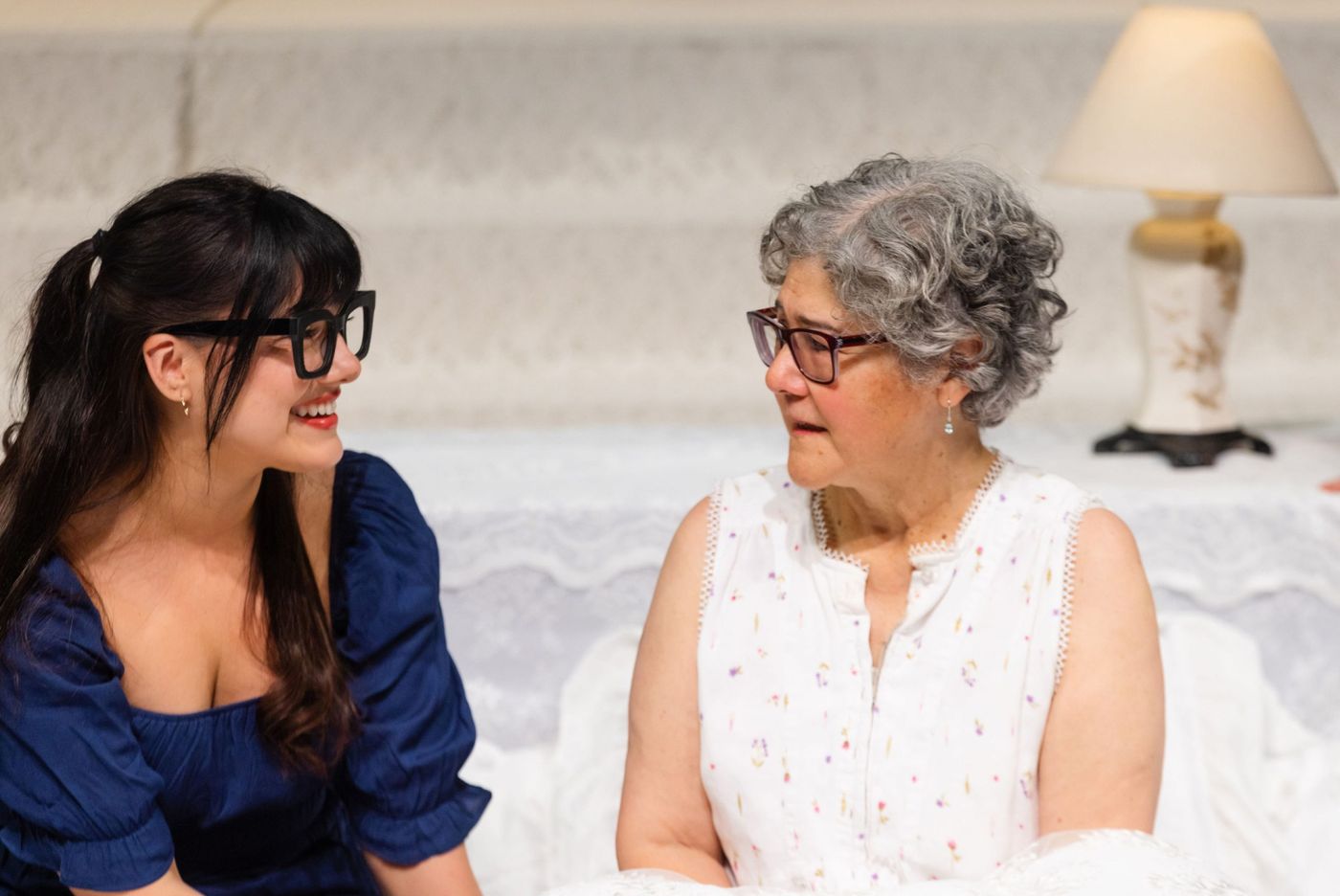
Blanca Isabella and Lucy Rodriguez
The story highlights the complexities of caregiving within a family. What conversations did you hope to spark about responsibility, sacrifice, and care?
That’s one conversation I hope to spark. The other conversation I want to spark is about how the care of a person suffering from dementia affects families and especially families of color who carry the weight of cultural taboos that make us keep our loved ones at home and the shame and guilt we feel when we don’t.
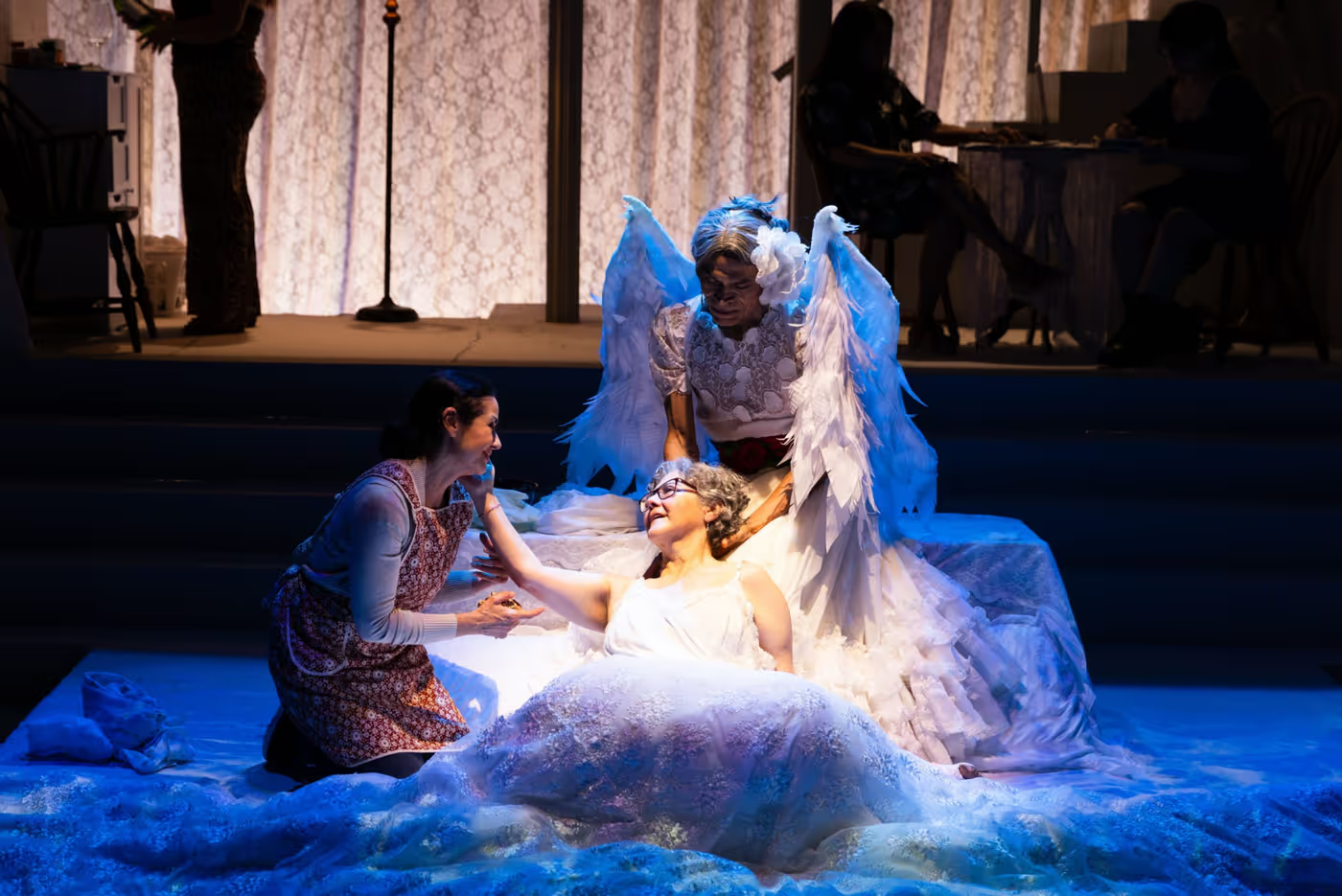
Ruth Livier, Lucy Rodriguez, Sal Lopez
The play also touches on the impact of immigration raids on caregivers. Why was it important to include that social reality in this family story?
It’s important for me to amplify the voice of the undocumented in this play. So many of us in Los Angeles depend on the undocumented workforce either consciously or otherwise. Many people depend on immigrants to care for the children and their aging parents and so that’s an L.A. reality I want to put on stage. So many immigrant caregivers are putting themselves in danger to keep their jobs taking care of our loved ones with dementia out of necessity and a sense of love and responsibility.
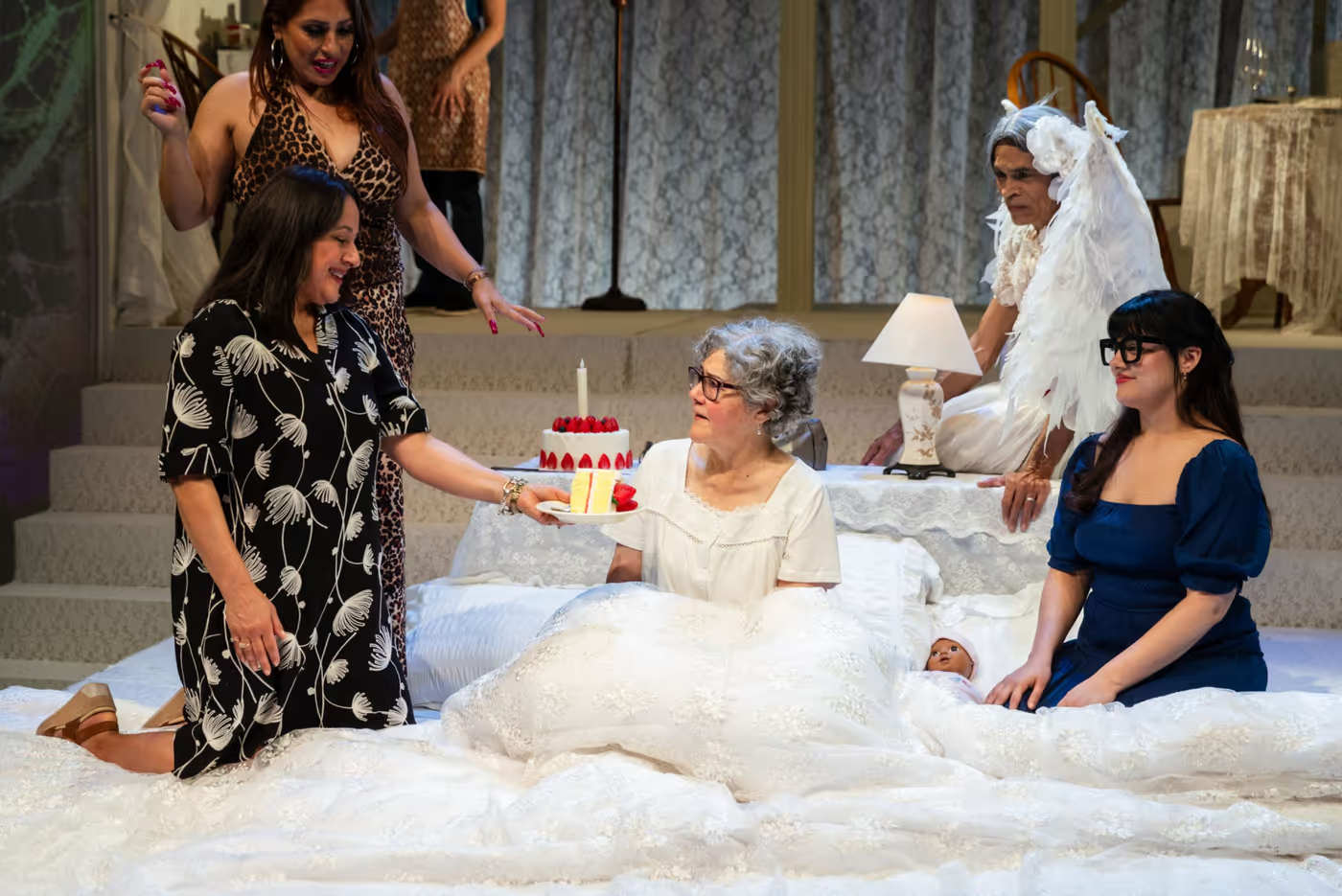
Zilah Mendoza, Brenda Banda, Lucy Rodriguez, Sal Lopez and Blanca Isabella
As someone who grew up in East Los Angeles, how does the setting influence the characters, tone, and authenticity of the play?
The play is bilingual with subtitles in both English and Spanish, and I hope that rings true with my East L.A. community. We’ve been through a couple of previews, and I love when the audience comments, “That’s me and my family,” or “Hey, how did you know my family story?” I use East L.A. humor, sayings, behavior, and I love to hear the laughter. I try to stay true to my roots and that is what is most important to me. I believe the more specific I am, the more universal the play becomes.
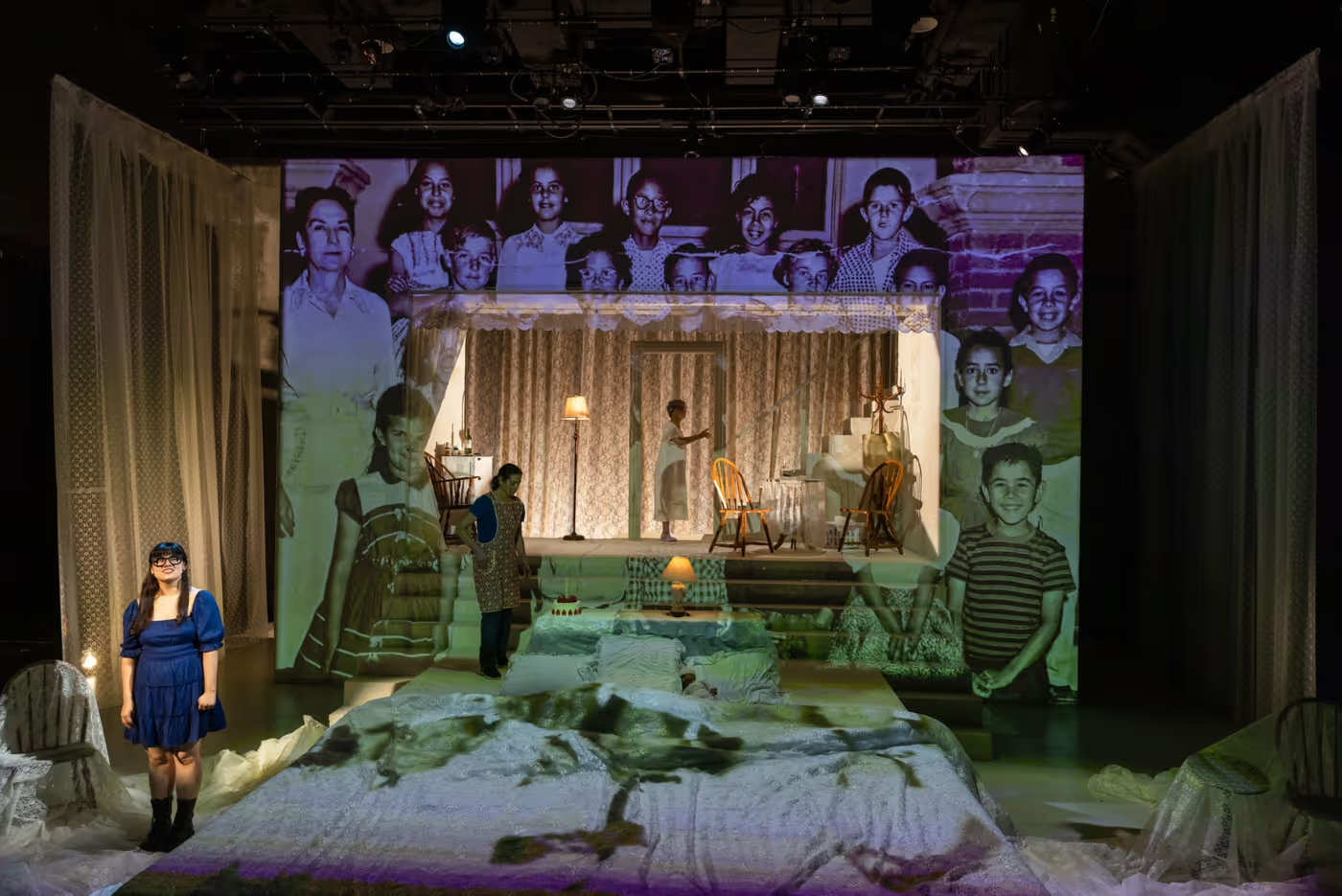
Zilah Mendoza, Brenda Banda, Lucy Rodriguez, Sal Lopez and Blanca Isabella
You developed this work within the Circle of Imaginistas. How did that collaborative process shape the evolution of the script?
The Circle of Imaginistas is my playwriting family. They are all wonderful playwrights; all with a different voice, from different parts of the country. So, we discuss, we share scenes, drafts, we comment, we discuss the plays we are writing and then we listen to the plays and discuss some more. With The Storyteller of East L.A., I shared a dirty draft with COI around a year ago and then had another reading of the first draft last summer, got their feedback and continued writing. I am still making some revisions, and we open this week. Yikes!
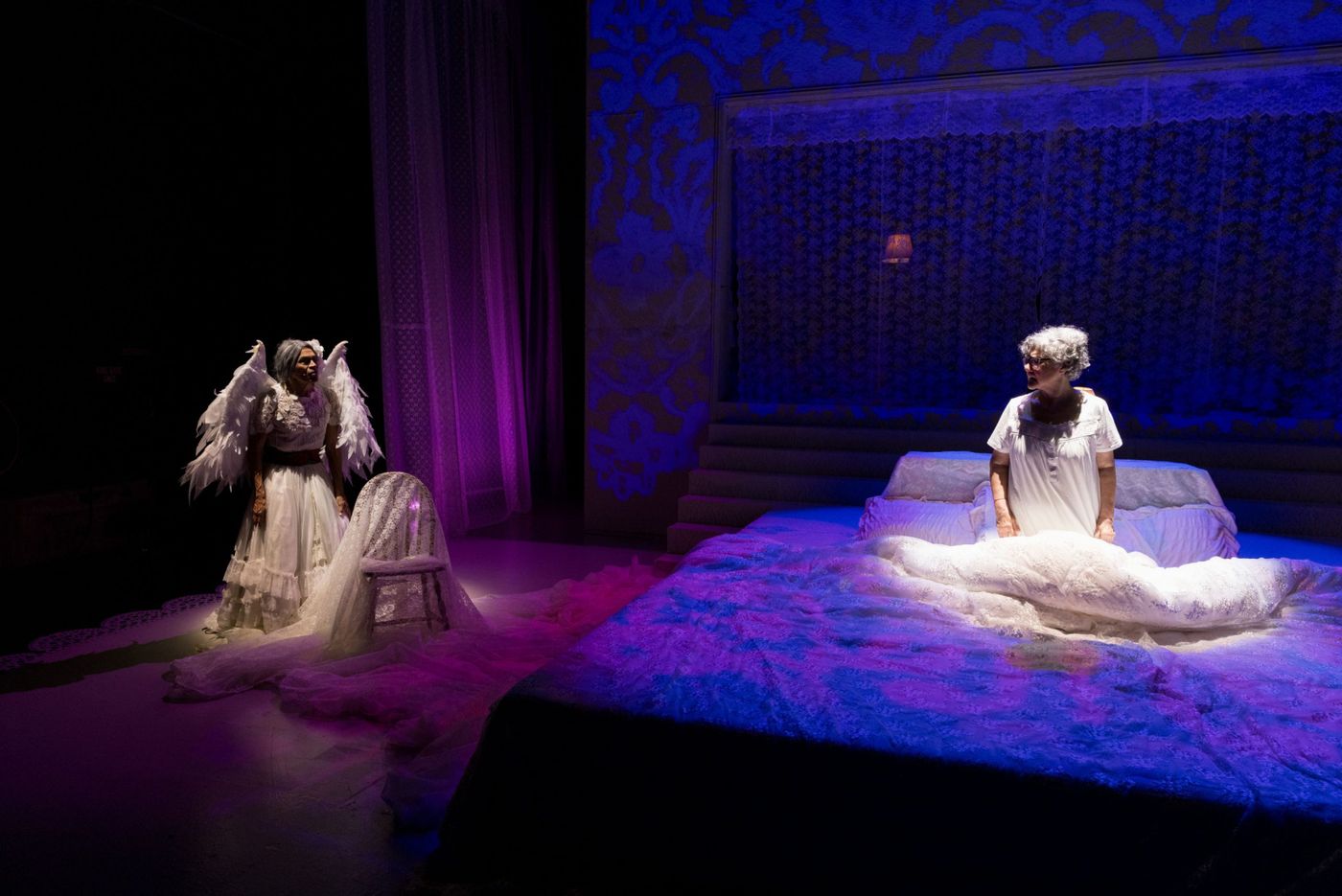
Sal Lopez and Lucy Rodriguez
You have written extensively about the Mexican diaspora. How does The Storyteller of East LA build on or differ from your earlier works?
Most of my previous plays are historical in that they take place in past eras and iconic moments in history; the great depression, Vietnam, The 60s, 90s etc. This play takes place in the present and deals with events as current as ICE in our community and Latinas dealing with dementia and Alzheimers.
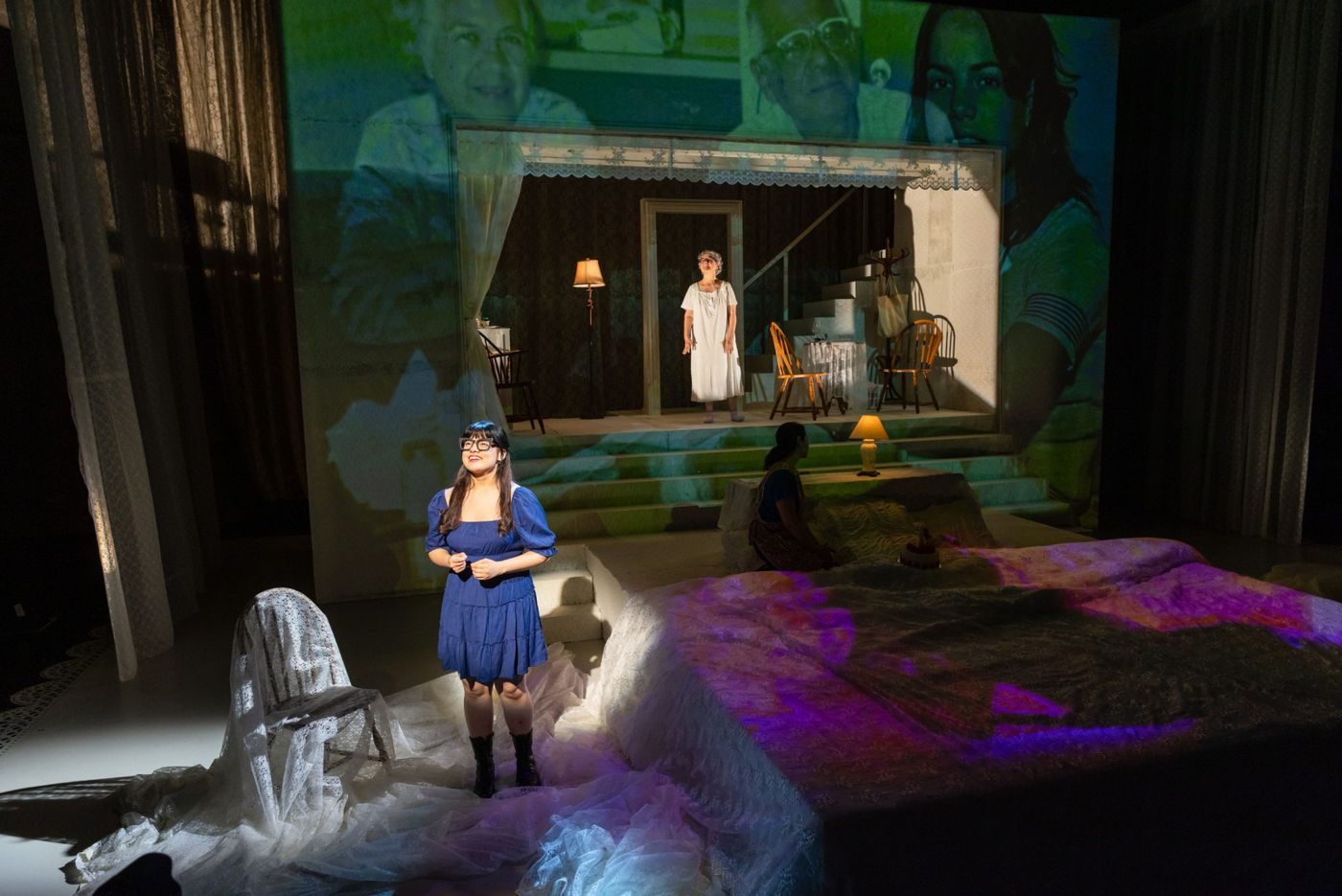
Blanca Isabella and Lucy Rodriguez
The play emphasizes storytelling as a source of resilience. What do you hope audiences take away about the power of stories in difficult times?
So many of our stories go untold because we are not the dominant culture in the U.S. One of the reasons I wrote A Mexican Trilogy was because I wanted to write about iconic eras in history from our perspective, from a Chicana/Mexicana/Latina point of view. We have been part of the fabric of this country throughout its history, but our stories are never told within that history. My family has been in this country for five generations now, and yet, people consider my community “newcomers” when we are totally American. It’s important for me to tell my stories within that American context and point of view. So, the world of this story is about storytelling and the importance of telling our own stories that deserve to be told.
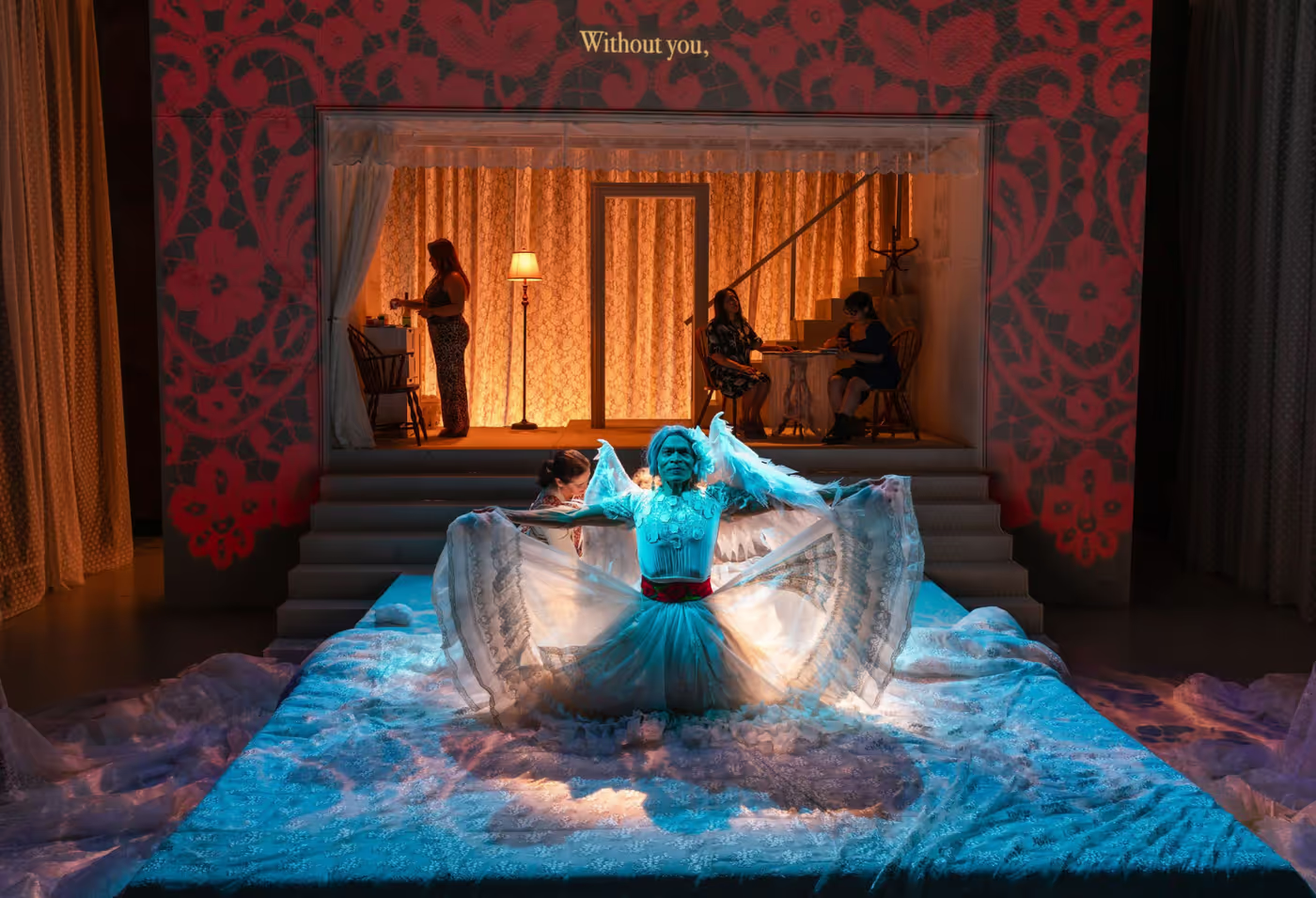
Downstage: Ruth Livier, Sal Lopez
Upstage: Brenda Banda, Zilah Mendoza, and Blanca Isabella
Is there anything else about yourself or the play you would like to share?
I’d love for people to come out to see The Storyteller of East L.A. that runs through May, and my upcoming work: a reading of Blow Away the Clouds at the Pacific Playwrights Festival at South Coast Rep on May 3, and Antigone: In the Language of Kings at the Getty Villa outdoor Theater in September 2026.
Thanks so much!
Thank you!
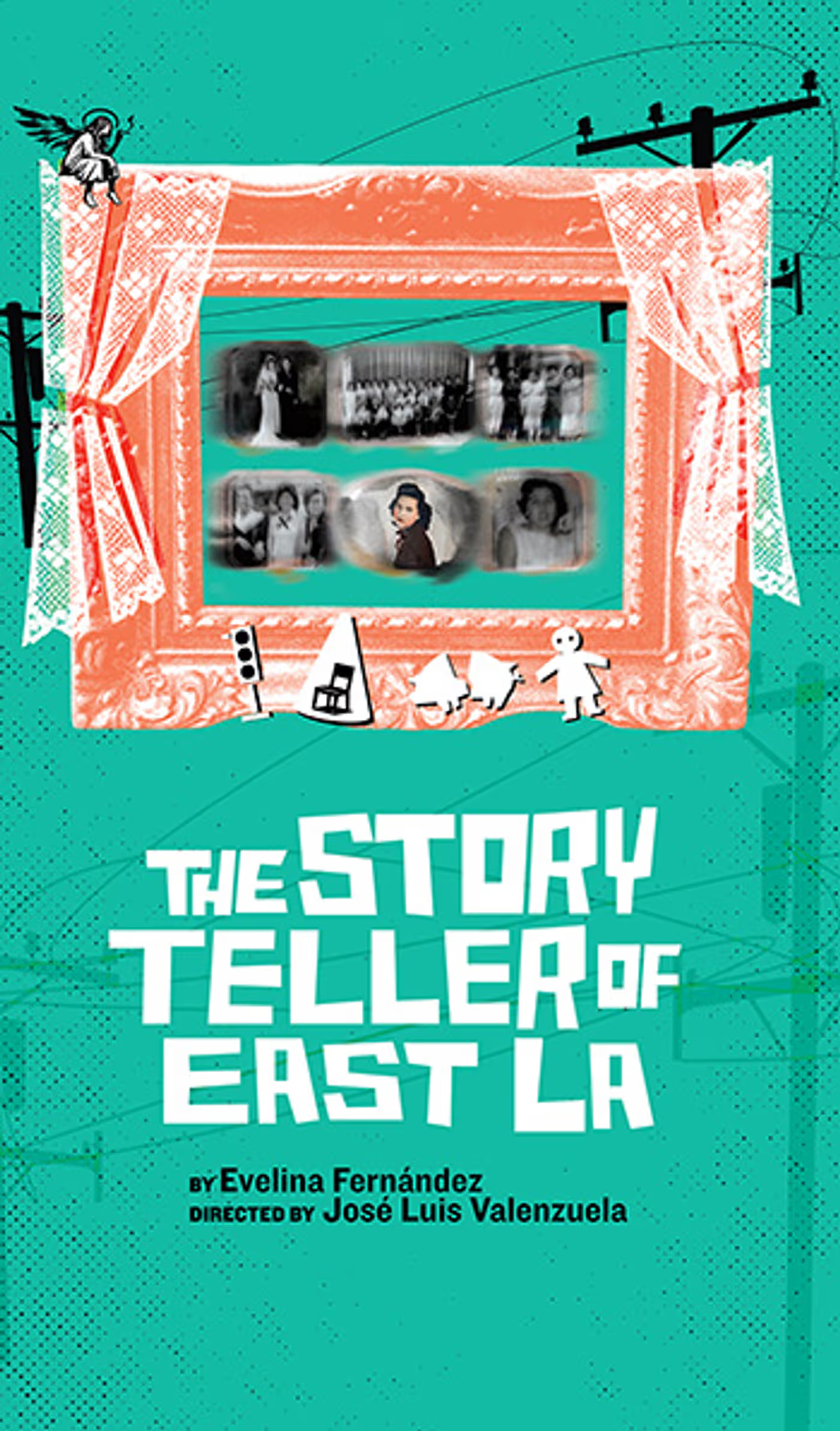
Produced by The Latino Theater Company, written by Evelina Fernández, directed by Jose Luis Valenzuela, and starring Brenda Banda, Blanca Isabella, Ruth Livier, Sal Lopez, Zilah Mendoza, Lucy Rodriguez, The Storyteller of East LA opens on Saturday, April 18 at 8 p.m., with performances thereafter on Thursdays, Fridays, and Saturdays at 8 p.m. and Sundays at 2 p.m. through May 17. Tickets range from $10 for previews and for all Thursday performances to $48 on Fridays, Saturdays and Sundays, except students and seniors, who pay only $24, and opening night (April 18) which is $75 and includes a post-performance reception.
The Los Angeles Theatre Center is located at 514 S. Spring St., Los Angeles, CA 90013. Parking is available for $8 with box office validation at Los Angeles Garage Associate Parking structure, 545 S. Main St., Los Angeles, CA 90013 (between 5th and 6th Streets, just behind the theater).
For more information and to purchase tickets, call (213) 489-0994 or go to latinotheaterco.org.
Videos