Interview: Crystal Finn On Playing Jeanie in the World Premiere of ANON at MCC Theater
The Theatre World Award winner returns to MCC for Anne Washburn’s new thriller, directed by Anne Kauffman, now playing through November 1.
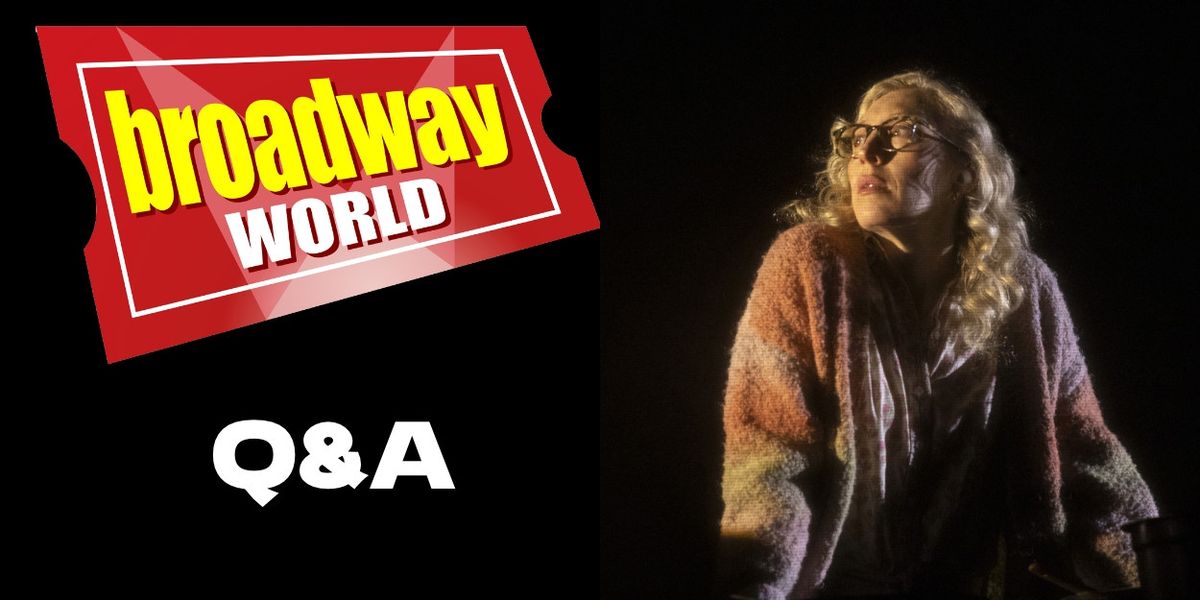
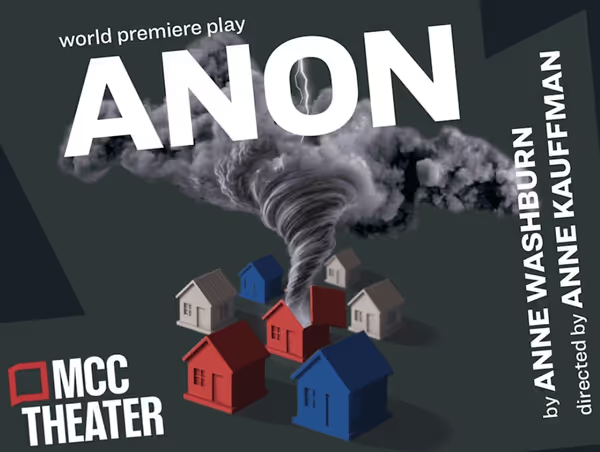
MCC Theater opens its 40th Anniversary Season with the world premiere of ANON, a new play by Anne Washburn (Mr. Burns, A POST-ELECTRIC PLAY) directed by Obie Award winner and Tony Award nominee Anne Kauffman. Now playing through November 1, 2026 at the Newman Mills Theater at The Robert W. Wilson MCC Theater Space, the play follows Jeanie, an increasingly online TikToker in a Texas suburb, whose household and the one across the street freak out when a gay pride flag is unfurled between them. How well do you know the people you live among, and with, in an America where the line between fantasy and reality has become increasingly optional?
Playing Jeanie is Crystal Finn, who returns to MCC after her Lucille Lortel Award-nominated performance in last season’s COLD WAR CHOIR PRACTICE. Finn previously collaborated with Washburn when she originated the role of Bama in the Playwrights Horizons production of ANTLIA PNEUMATICA, and she received a Theatre World Award for her Broadway debut in BIRTHDAY CANDLES. An affiliated artist with Clubbed Thumb, her screen credits include BABES and SUCCESSION, and her own play, THE STAND IN, will have its world premiere this winter in a co-production with WP Theater and Fiasco Theater. The cast of ANON also includes Jeff Biehl, Andrew Garman, Izabel Mar, Jeremy Shamos, and Joel Van Liew.
BroadwayWorld spoke with Finn about following Jeanie’s contradictions, the “ghosts in the commas” of Washburn’s writing, and the tonal genius of working with Anne Kauffman.
What drew you to the role of Jeanie, and how did you begin building her inner world?
Jeanie is a fascinating character full of contradictions. And they are really bone-deep, as opposed to tacked on for expediency or political indicators. My process was just to follow those contradictions. It’s all there in Anne’s writing: the multitudes and oppositions in this one figure.
Jeanie is described as “increasingly online.” How did you think about her relationship to social media and performance of self?
Late in the play Jeanie has a speech where she talks about how impossible it is to express what she believes to be true about the world because language is a really poor delivery system of human knowledge and experience. Which is true! It’s such a human desire, to get beyond language. Social media, algorithmic media, they are the answer to that longing for Jeanie. That space holds out the promise, not just of a veil that can be lifted on the limits of human speech, but a series of veils that never has to end. The self is always just around the corner, behind just one more post. It’s seductive.
What is it like returning to MCC after your Lortel-nominated run in COLD WAR CHOIR PRACTICE, and does that experience inform how you approach this new role?
It’s a total treat. I love that I get to put these two productions in conversation with each other. And they should be! There are all kinds of thematic and formal overlaps between them: their interest in the intersection of politics and domesticity, cults, I could go on! And they are two plays that deserve endless re-angling and reflection, so I’m just so jazzed that MCC put both of these adventurous plays up in back-to-back seasons.
You’ve now worked with Anne Washburn on multiple projects. What is it about her writing that keeps drawing you back?
Okay. Here we go. I think about this one a lot. Anne’s writing is singular in modern playwriting. Why, why, why? There was a day in rehearsal when I was listening to Jeremy (Shamos) and Jeff (Biehl) work on a scene and I heard them, like, reframing their thoughts, inside their lines, which is a very Anne Washburn thing for a character to do, and it kind of gave me the chills because it was so quick and effortless the way she got us (and they got us in performing) from one place in the brain to a totally different place in the brain in the space of one sentence. And I guess what I would call that is the grammar of her drama, the specific grammar of Anne’s writing. Character and meaning and psychology are all revealed in her plays through this grammar, and it’s so specific and precise, even in, or especially in, its messiness. So it’s human grammar, the grammar of the soul. You can read a scene in one of her plays and think, what happened? What’s going on in this scene? But then you keep reading and it emerges in a comma, in a reframing of a thought, like I heard that day in rehearsal. And it’s freaky, it’s spooky, it’s like Henry James. You can never tell if something really normal or really sinister is happening! There’s ghosts everywhere. There’s ghosts in the commas.
How would you describe the world of ANON, and what was your process for tapping into its specific tone and reality?
This is all Anne Kauffman, and it is one of her many pockets of subtle genius, because the question of tone is not separate for her from anything else. It’s all part of the core interrogation, and all pretty workaday. So she’s guiding us through that piece by piece, but also guiding the designers. And this design team is very, very deft. I remember the first day of tech I heard Tei Blow’s first sound cue of the show, and it’s this sweeping soundtrack-like underscoring and I was like: ohhhhh, this is our show. Because the sound cue gives some air for laughter, but it’s also the music probably playing in Jeanie’s head at all times, literally. So that’s an example of tone doing a couple things at once, being really supple, which I think is what Anne is always after.
What is the collaborative dynamic like between you, Anne Washburn, and director Anne Kauffman in the rehearsal room?
Hmmm. The dynamic between The Annes... like two ex-lovers from college reunited at a Quaker picnic? So you know, supremely authentic, supremely rigorous, with just the right amount of electricity.
The play blurs the line between fantasy and reality. How do you as an actor stay grounded in that ambiguity night after night?
I don’t know that I do! There are the scenes on stage, but then there are also segments we are filming live each night, and then also some pre-recorded parts, so it’s all these different time signatures bumping up against each other and that’s destabilizing, but in a great way.
What conversations do you hope audiences have after seeing ANON, especially in MCC’s lobby, as Bernie Telsey mentioned?
There is a version of this play that is just politics. And there is a version of this play that is just psychology. But Anne’s play is both, so that’s messy and complicated and not over-determined. Maybe the conversation in the lobby will reflect that, and be fizzy and scattered (or somber and scared, I don’t know!). I think some of the Washburnian grammar will seep into people’s brains and that will be good and interesting. See, even I am sounding a little like an Anne Washburn character now as I write.
Why must audiences come and see the show?
See above, Anne Washburn as Henry James. No, no, no! It’s a ride. I think it’s a thrilling ride.
ANON runs through Sunday, November 1, 2026 at the Newman Mills Theater at The Robert W. Wilson MCC Theater Space, 511 W 52nd Street, New York, NY. For tickets and information, visit mcctheater.org.

Sign up for all the news on the Fall season, discounts & more...
|
Powered by

|