
Feature: GMU'S HEART AND MUSIC: THE SONGS OF WILLIAM FINN Has It's Cast Learning from The Best
Heart and Music: The Songs of William Finn plays this weekend at GMU's Fairfax VA campus and at Hylton Performing Arts Center on February 6th.

George Mason University (GMU) in Fairfax VA has one of the fastest growing Musical Theater programs in the area. Over the last eight years, the program has grown in leaps and bounds from being a certificate-based program to a degree-based one. One of the biggest reasons for the program’s success is definitely the faculty, including the two who are the subjects of this interview.
You probably know Erin Driscoll Gardiner and James Gardiner as one of the area’s most talented theatre couples. Over the years they have graced the stages of Signature Theatre, Ford’s Theatre, Olney Theatre Center, and more.
James has since stopped performing and is now Signature Theatre’s Deputy Director of Marketing, Director of Creative Content. If you’ve ever seen any of that snazzy looking video content that Signature produces, that’s James’ work. He also recently directed Natasha, Pierre & the Great Comet of 1812 for GMU’s Fall musical.
When not teaching at George Mason University or performing, Erin runs her own voice studio. She will be directing Songs for a New World at GMU in May.
One of the features of the Musical Theater at GMU is a yearly cabaret, appropriately called Mason Cabaret. It generally features the work of a specific composer or songwriting team. This year’s edition will feature the songs of William Finn. Performances of Heart and Music: The Songs of William Finn will take place at GMU’s Harris Theatre on January 30th at 7:30pm, January 31st at 2:00 and 7:30pm, and February 1st at 2:00pm. There will also be a single performance at the Hylton Performing Arts Center in Manassas VA on February 6th at 7:30pm.
Erin and James will once again stage the show as their students show off their incredible talents.
As you will read, Erin and James really enjoy teaching musical theater to the next generation of performer. They have good reason too. Local performers such as Drake Leach (Damn Yankees at Arena Stage), Steven Nicolás Franco (In The Heights at Signature Theatre), and Adelina Mitchell (Elphaba Standby on tour with Wicked, The Music Man at Olney Theatre Center) all started their professional careers at GMU being trained by Erin and James.
When we go to the theatre, we generally support the big professional theatres. Some of the area college theater programs have talent that is just as good as any professional theater in town. If you are a fan of William Finn or enjoy supporting young talent, grab some tickets to Heart and Music: The Songs of William Finn at GMU this weekend and see where the next big stars could be coming from.
With Erin Driscoll Gardiner and James Gardiner’s directorial talents along with musical direction by Joe Walsh, I guarantee that this edition of Mason Cabaret will bring you “Infinite Joy” if you attend.
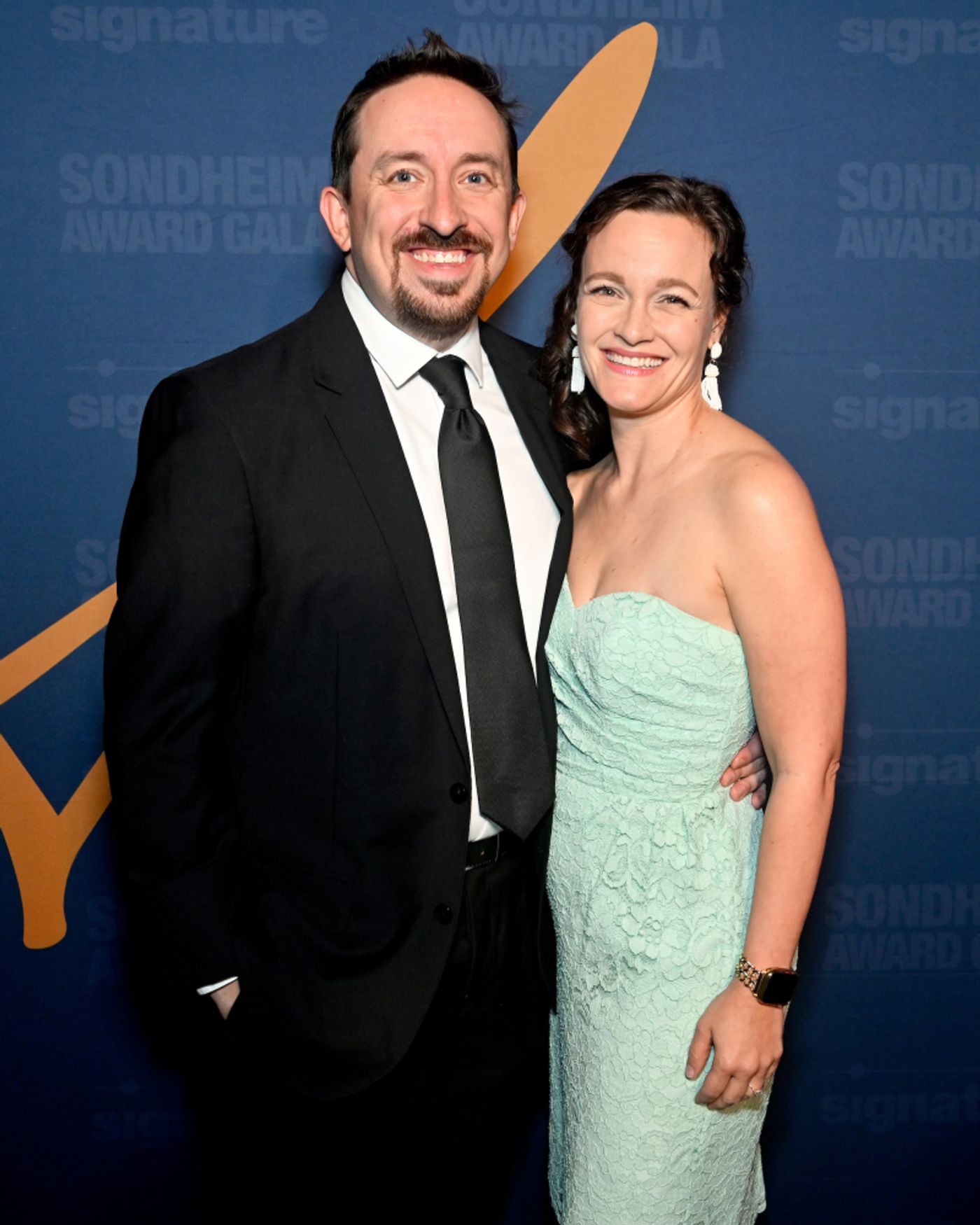
James Gardiner and Erin Driscoll Gardiner.
Photo by Cameron Whitman Photgraphy.
When you were looking to start teaching while still performing, what was the most appealing thing about doing it at George Mason University?
James - I was first approached about joining Mason’s adjunct faculty back in 2012 by Ed Gero. At the time, I was the Associate Director of A Christmas Carol at Ford’s Theatre and working closely with Ed. He saw something in me that I honestly did not see in myself yet. He told me he thought I would be a really good teacher and mentioned that Mason was hoping to start a musical theater class and asked if I would be interested in helping them develop a musical theater concentration.
What immediately appealed to me about George Mason is how deeply the faculty’s professional experience is valued. Many of the professors are actively working in the industry, and that real world perspective is central to how students are trained. Being so close to Washington DC only amplifies that. George Mason is also a beautiful campus with beautiful facilities and a deep connection between all the varied arts departments. That’s a testament to Dean Rick Davis and the culture he has built at Mason.
Erin: I wholeheartedly second James’s high praise for Mason. I hadn’t planned on teaching at all, but James asked me to cover one of his musical theater classes and I was immediately hooked. I remember calling him afterward and emphatically sharing how much I loved working with college-aged students, and especially with George Mason students, who are consistently so supportive of one another.
Erin- You are the main teacher for George Mason University’s Musical Theater Program. How has the program expanded and grown over the years?
When James was first asked to come in and teach a musical theater class, that was the full extent of the program. At the time, George Mason produced one mainstage musical and offered a musical theater cabaret that traveled outside the school to perform. From there, the program grew into a musical theater certificate and eventually into the Bachelor of Fine Arts in Musical Theater we have today. We now have three musical theater voice teachers, multiple musical theater courses, and a degree that collaborates with the School of Music and the School of Dance to provide a true triple-threat education. I couldn’t be any prouder of how far we’ve come and look forward to the program’s continued growth in both professionalism and scope.
Besides GMU’S mainstage productions, you also direct Mason Cabaret which is usually an evening of a particular composer/songwriting team’s work. This year’s choice of composer is William Finn. Why do think William Finn’s songs are conducive to being performed in a cabaret setting?
James - Erin and I believe that musical theater is at its most powerful when it allows itself to be vulnerable and a little messy. Few writers embraced that truth as fully as William Finn. His music is funny, heartbreaking, and full of contradictions, often all at once. There is an incredible range across his body of work, both musically and emotionally. And he was an artist who clearly loved cabaret as an art form. He understood its intimacy and he wrote many songs specifically with cabaret settings in mind. Cabaret is always fueled by something personal, opinionated and deeply human, which feels central to who William Finn was as an artist.
Erin: With his recent passing, we thought it was a fitting time to celebrate his catalogue and style with our audiences and students.
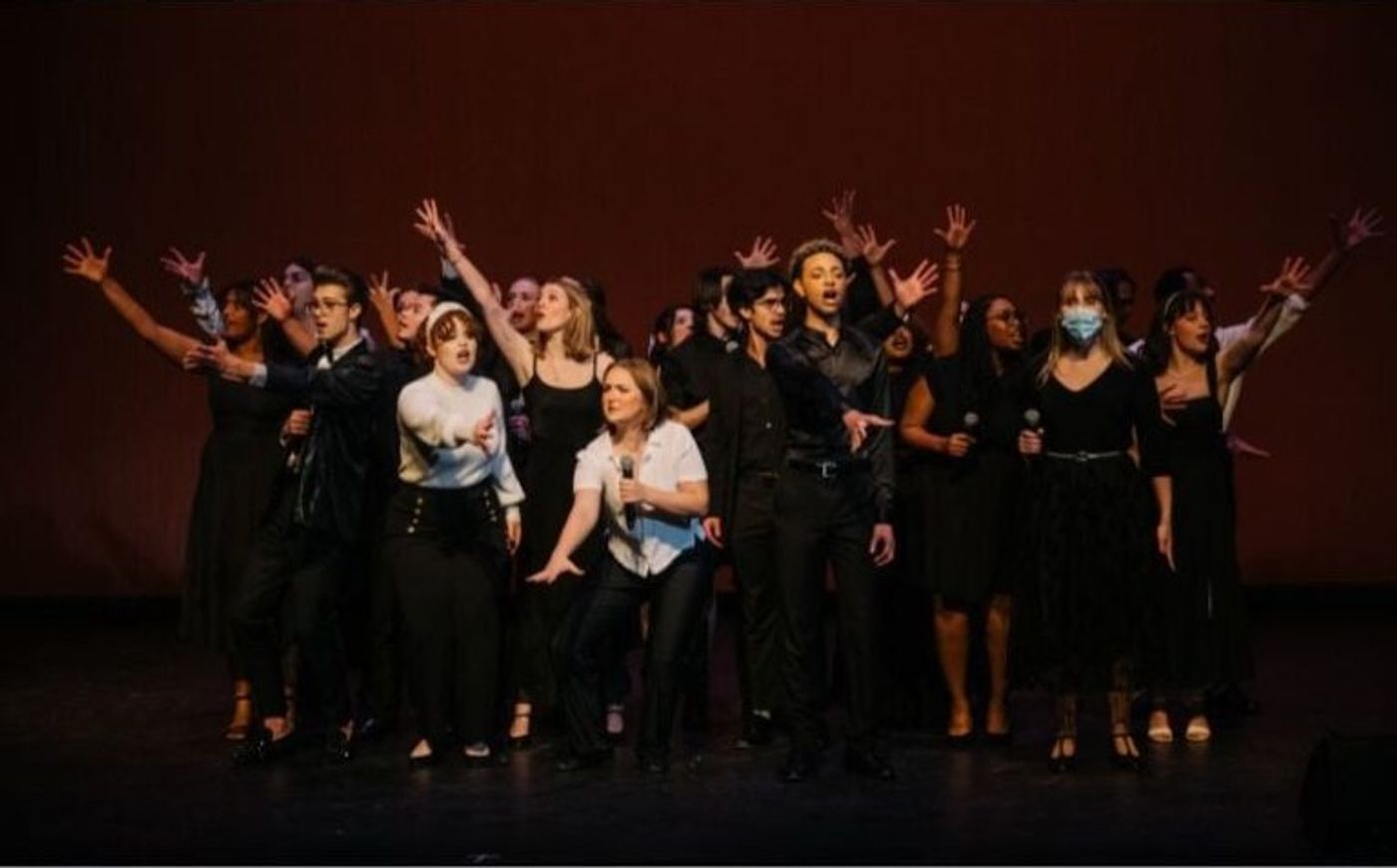
Broadway's Prince: The Musicals of Hal Prince.
Photo by Cameron Whitman Photography.
James- Can you please take us through the rehearsal process for Mason Cabaret? How much time is there from first rehearsal to first performance?
Mason Cabaret is a very fast process. We have 9 rehearsals before they perform for an audience. We’ve always talked about adding time to the process, but one of the things I love about Mason Cabaret is that it forces the students to work fast. To move away from being overly precious with the material and to come into the first rehearsal off book and ready to do the work. That sense of urgency is not accidental. It reflects the reality of the industry. When students graduate and choose to pursue this professionally, there is no one holding their hand. They have to be adaptable and ready to make strong choices fast.
James - Can you please give us a little idea of what audiences will hear when they attend this edition of Mason Cabaret?
Erin and I have been diving deep into William Finn’s catalog, and it has been genuinely exciting to rediscover pieces and uncover material we were not as familiar with. Audiences will hear songs from Falsettos, A New Brain, Elegies, The 25th Annual Putnam County Spelling Bee, Romance in Hard Times, The Royal Family of Broadway, along with a number of standalone songs and lesser-known gems. It will be a mix of big ensemble numbers, solos and small group numbers. We hope it captures the variety of William Finn’s remarkable body of work.
Erin- Besides Mason Cabaret performing on GMU’s Campus, the show also has an outreach performance at a local retirement home plus one at the Hylton Performing Arts Center. Can you please tell us how the outreach element came to be?
As I mentioned, Mason Cabaret was originally intended to serve as an ambassador for the School of Theater. Because of the way it is staged and its use of piano-only accompaniment, it is easily able to travel. The goal was to showcase our emerging musical theater program and the talent of Mason students, while also increasing awareness of the school.
The Hylton Performing Arts Center is another exceptional George Mason performance venue, so bringing Mason Cabaret there was a natural choice. It allowed us to expand the reach of both our students and our audience, while also strengthening the connection between the two campuses.
Our relationship with Ashby Ponds came through Charles Duggan, a donor and long-time supporter of Mason’s School of Theater. As a resident who helps plan events at Ashby Ponds, he reached out to us about bringing Mason Cabaret to their facilities.
What do you find the most rewarding about putting together Mason Cabaret with a group of up-and-coming performers as well as teaching musical theatre in general?
James - This is my 14th year working on Mason Cabaret. I wouldn’t have done this for over a decade if I didn’t find it deeply rewarding. I love musical theater and I love introducing a new generation of artists to the giants who helped to define this incredible art form.
Erin: Ditto AND the pedagogical rewards of Mason Cabaret are vast. Students learn to pick up music across a wide range of musical theater styles quickly, make material performance-ready in a short window of time, and develop the flexibility required to move between venues and “gig” in a variety of spaces for different audiences. These skills are especially invaluable, as the industry expects performers to be flexible in performance while also possessing confidence in fast-paced, abbreviated rehearsal processes.
Videos

|
Once NextStop Theatre (5/21-6/21) |

|
The Motion Arena Stage (5/06-6/14) |

|
Loot Gunston Arts Center (6/05-6/28) |

|
Wendell Pierce in Othello Shakespeare Theatre Company (5/19-6/28) |
|
OR Atlas Performing Arts Center (5/15-6/07) |

|
A Festival of Favorites and Firsts Theater J (5/30-6/06) |

|
Natural History Mosaic Theater Company (1/21-2/07) |

|
Tosca Wolf Trap (8/07-8/07) |
|
ArmEvents presents: An Evening of Elegance & Virtuosity Live Concert F. Scott Fitzgerald Theatre (9/12-9/12) |

|
BAD KREYÒL Mosaic Theater Company (5/20-6/13) |
| VIEW ALL SHOWS ADD A SHOW | |