Broadway at the Kennedy Center: Senator John Hickenlooper on Pride and the Power of the Arts
The evening, a revue chronicling the evolution of LGBTQ+ liberation, featured appearances from Tony Kushner, Brandon Uranowitz, John Cameron Mitchell, Beth Malone & more.
 Click for Tickets
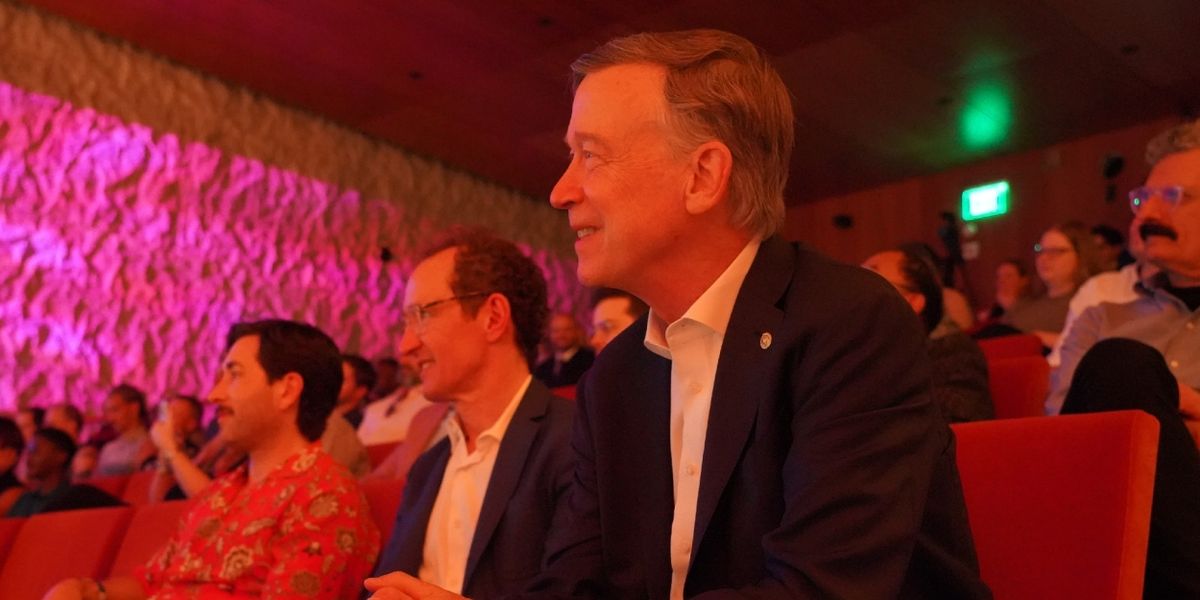
In response to a sweeping and controversial leadership shakeup at the Kennedy Center, U.S. Senator John Hickenlooper (D-CO) turned to the arts as a form of action. What began as a phone call to powerhouse producer Jeffrey Seller (Hamilton) soon evolved into Love is Love, a celebratory Pride concert at the Kennedy Center’s Justice Forum, created in collaboration with Senators Tammy Baldwin, Elizabeth Warren, Jacky Rosen, and Brian Schatz.
The evening, a revue chronicling the evolution of LGBTQ+ liberation, featured performances by composer Andrew Lippa, Tony Award-winners Brandon Uranowitz and John Cameron Mitchell, Jelani Remy, Beth Malone, Brandi Massey, Kathryn Gallagher, Javier Muñoz, Alexis Michelle, and Dylan Toms, along with powerful monologues by playwrights Moisés Kaufman, Tony Kushner, James Ijames, and Harvey Fierstein. The DC Gay Men’s Chorus, led by Thea Kano, also took the stage, with the full company coming together for a Pride-themed finale.
With the Trump administration defunding arts programs and stripping the Kennedy Center’s leadership of its long-standing progressive identity, the event served not only as a joyful celebration of Pride, but also as an urgent act of creative resistance. At the event, Senator Hickenlooper told the crowd, “In our darkest hours, we must continue to seek out the light. Tonight, we honor the role that the freedom of expression and the theatrical arts play in continuing to expand LGBTQ rights in America.”
In this conversation, Senator Hickenlooper reflects on the inspiration behind the concert and why protecting the arts is essential to the preservation of American democracy.
Let’s start at the beginning. What inspired you to organize a Pride concert at the Kennedy Center, and how did the idea evolve?
So, I was struck by the fact that the Kennedy Center board had been fired. There was a musical called Finn that had been selling out and was scheduled to go on the road, and it got discontinued even though there was no budget savings from it. That bugged me. And so I started looking around and looking at the Kennedy Center. One of my staff said, hey, they’ve got these small rehearsal theaters, they’re not really rehearsal, but they’ll seat 240 or 275 people, and senators and congresspeople can rent them. I thought, well, that’s interesting.
Then I got thinking about the amazing transformation that this country has gone through in taking gay rights from something that was hardly discussed and barely tolerated into something where, in most parts of America, same-sex marriage is now accepted. It’s not the gigantic obstacle that it was 20 years ago. As I thought about it, I recognized that Broadway musicals and Hollywood films were a huge part of that transformation. And it happened with our creative arts in every form. The Kennedy Center as a long-term outpost of equality, is where we should have something like that. I felt we should do something to celebrate that transformation, that arc of progress.
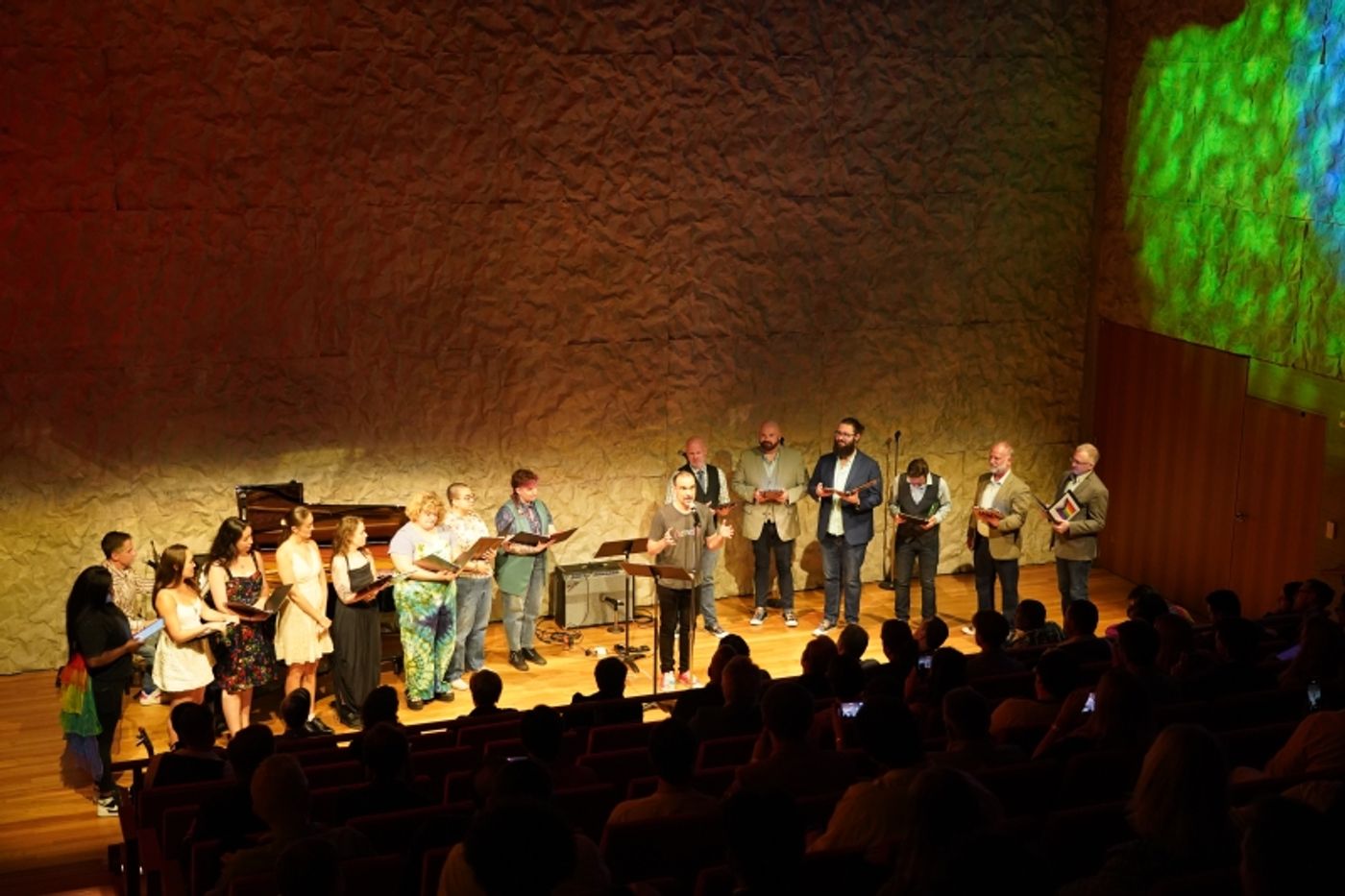
Was this your first time ever working on any kind of live performing arts event? Had you ever been part of a process like that before?
I knew Jeffrey Seller from years ago and I still had his number. So I called him up out of the blue and just said, here’s my idea. I described to him what I just described to you, and I only got about halfway through and he said, "I’m in. You need me to put together a program to cover these key songs in the evolution of gay liberation and to find some actors on Broadway that would be willing to take the train down and do a performance at the Kennedy Center?" I said yes, and it literally took all of seven minutes to come to a meeting of minds and start working on it.
The process was really Jeffrey, and then more in the hands of the artists. Seth Rudetsky and James Wesley did such a great job of laying out what the arc would look like and then making sure we had the right talent. Obviously they worked with Jeffrey, who had his finger on the pulse every bit of the way. But to have some of these people, like Javier Muñoz and Beth Malone and all these different incredible actors in our little baby theater, right in the house, 250 people, it was one of those once-in-a-lifetime events. It’s something that I will never forget.
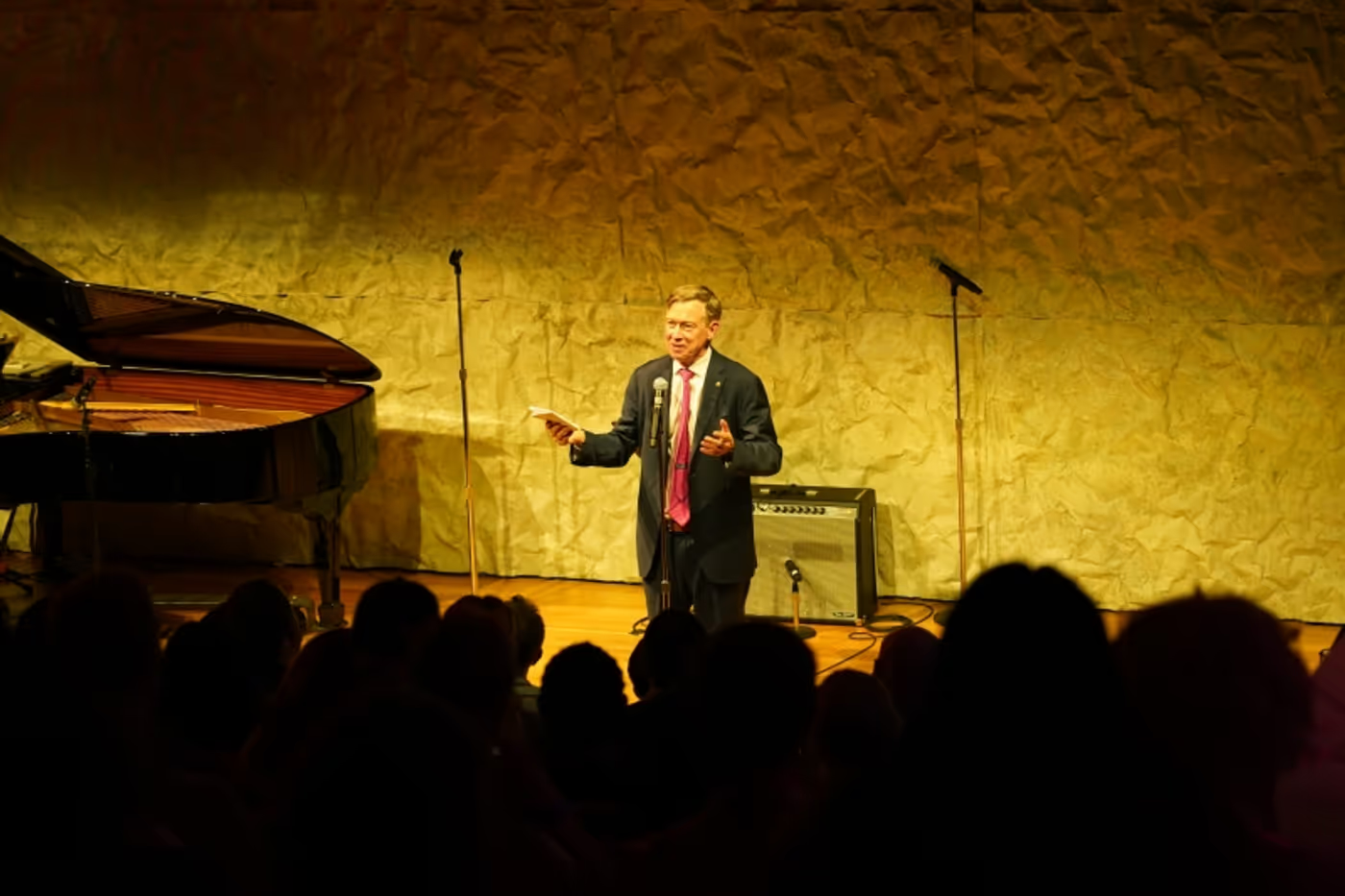
In times like these, which can be so trying, it must’ve been just nice to be in a room with like-minded people doing something joyful and positive.
Well, what’s interesting is that all these actors, most of them knew each other, they certainly knew each other’s work, for them to all be hanging around with each other, practicing in a revue like this, where they got to know and appreciate each other’s talent in a different way than perhaps they’d done before, that was kind of exciting just to be around. We had a big dinner afterward. What was originally supposed to be 15 or 20 people for dinner turned out to be about 45 people for dinner. It was a little more expensive than what I planned, [laughs] but I was happy to pay, just because the energy and joy that the actors brought to the room and to the event was something that the Kennedy Center needs. And Lord knows the U.S. Congress needs that kind of energy.
You’ve spoken about the danger of defunding the National Endowment for the Arts and other organizations like it. Can you elaborate on what’s at stake for communities- not just in artistic hubs like D.C., New York, or L.A.- but across the country if we let attacks like these go unchecked?
Yes, and that’s a great question. I believe that civilization is like pushing a boulder up a mountain. It’s work to create progress, because we all have biases and tribal beliefs that affect people in different ways. And yet the arts go so far to help us recognize our common values and our commonalities. What is it that makes us human? What is it that makes us Americans?
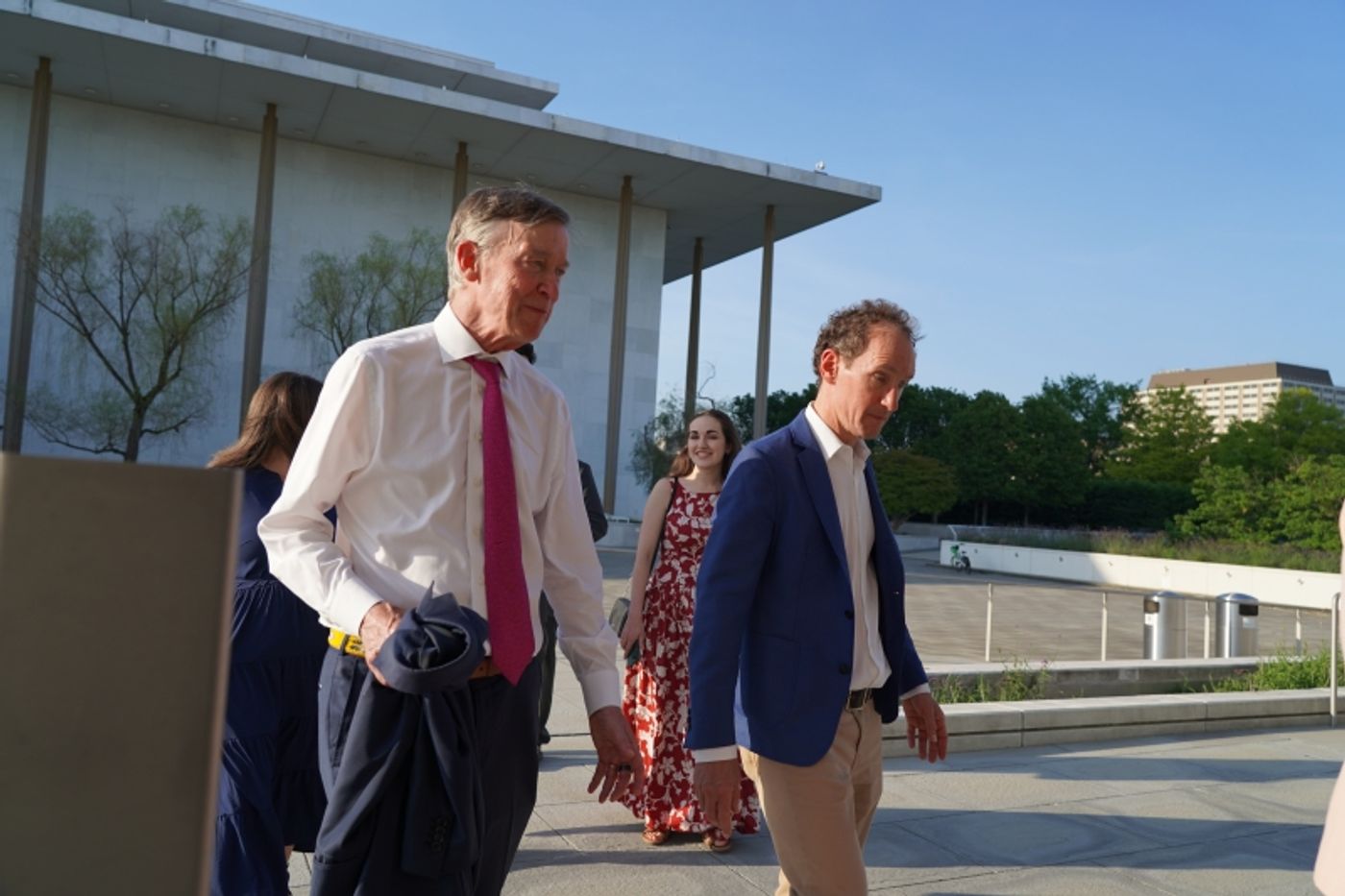
When you cut back the funding for the arts, you’re sort of condemning us to go back into our isolated corners and hang around in our own little neighborhoods. What we need to do is recognize that the diversity around us in this country is of unbelievable value. It makes us much stronger than it makes us vulnerable. That’s what the arts can do. If we lose funding all across this country and view the funding for arts as something extraneous or easily cut, it’s missing the point. The creative arts are part of the muscle that gives us strength as a nation.
Many Broadway fans see the stage as a space for joy and escapism. But as the concert showed, theatre is also an act of resistance in many ways. What do you want theatre fans and Americans in general to take away from this event? What message did you wish to send?
The creative arts, whether it’s theater or music or visual arts, it takes you to a different world. But it’s often, not always, but often blended with this sense of mission: that we’re here on earth for a purpose, and that there are certain values we need to recognize, and have the ability to, in each other, discover who we really are.
When I go to a play with a friend, or even sit in a movie theater, people react differently. And then you talk about it after the performance. That time to reflect on how you experienced the art is very powerful. That’s part of what allows us to change and evolve and improve ourselves. And in improving ourselves, we improve our country.