


BWW Q&A: Tyler Tafolla Talks DEAD MOOSE at Oceanside Theatre Company
On stage January 23rd through February 1st, 2026.
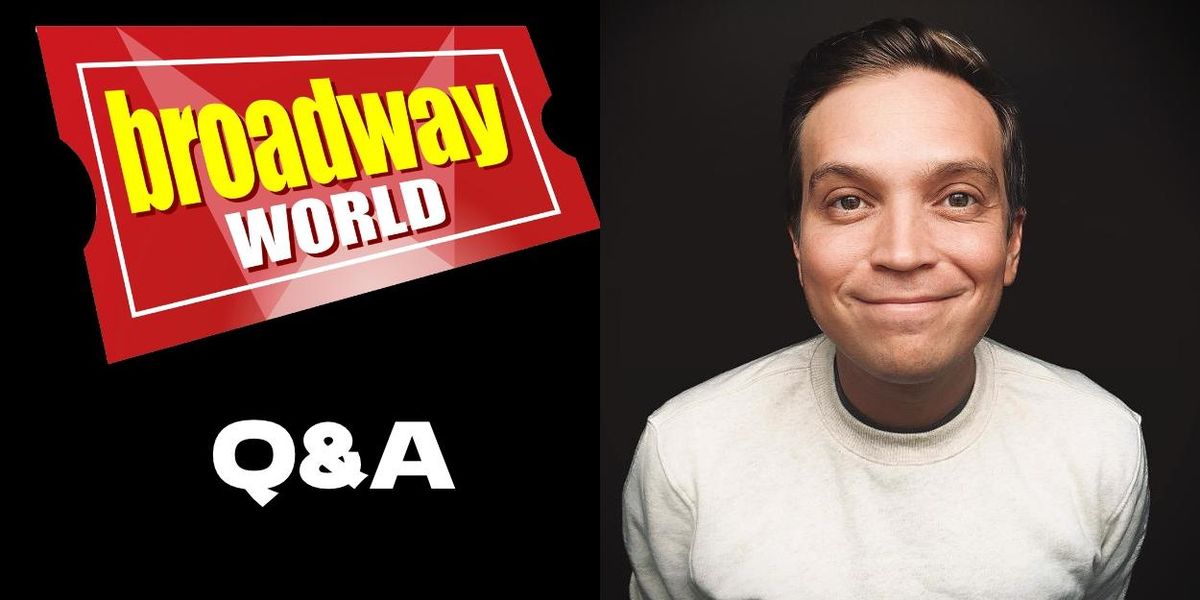
Dead Moose tells the story of Job, an eighteen-year-old who miraculously survives a car accident with a moose. Returning home from the hospital, he begins to reassess his life in a series of non-linear vignettes - grappling with questions of death, fate, and religion. All the while, the nagging voice of the dead moose lingers in his head, pushing and provoking him at every turn.
Originally conceived by writer/composer Tyler Tafolla while attending AMDA Los Angeles, Dead Moose first introduced audiences to its songs in 2018 at Republic of Pie in Los Angeles. A concert reading was later staged in January 2025 at the City Heights Performance Annex in San Diego, directed by Tafolla and produced by Kevin “Blax” Burroughs.
Content Disclaimer: Dead Moose is not recommended for audiences under the age of 14. Content includes themes of suicide, abuse, death, religious trauma, body shaming, homophobia and racism. This production contains flashing lights and projections, haze and loud music.
Theatre Information:Oceanside Theatre Company (OTC), the resident company of the historic Sunshine Brooks Theater in downtown Oceanside, is a cornerstone of the Oceanside California Cultural District. OTC presents professional theatre, live music, and visual arts, along with year-round educational programs and youth outreach initiatives. Learn more at oceansidetheatre.org.
Tyler Tafolla is a Southern California-based composer, playwright, performer puppeteer, director & producer. Tyler is a songwriter and puppeteer for The Aquarium of the Pacific's "The Pacific Pals" and has also worked in puppetry, voiceover and production for companies like The Jim Henson Company, Swazzle, Legoland California Resort and Sesame Place San Diego. Writing Credits; Seasons: A New Musical Song-Cycle (Album Streaming courtesy of Broadway Records), Scott Robbins and the Traveling Show (NY Summerfest), DanceLand (2023 San Diego Premiere), and Dead Moose (2026 Oceanside Theatre Company).
Dead Moose has been nearly a decade in the making. Can you take us back to how the piece began and what kept pulling you back to it over the years?
I came up with the initial idea of "Dead Moose" while attending AMDA College and Conservatory for the Performing Arts in Los Angeles. It started out as a simple writing project for me while in between classes. I was very interested in the idea of someone surviving a near death experience and wondering if it was part of some higher plan or destiny or if it was just a random occurrence. I also thought the idea of this creature they had this accident with taking on a voice of their own and commenting on the situation was a surreal and fun, theatrical element to play with. This was an concept I would shelve and come back to on and off over the years. I was very intrigued by the concept but couldn't fully land on what I wanted to say with this piece until I came to this notion; "When you're that close to death, how much do you really know about life?"
The show centers around a powerful question — “When you’re that close to death, how much do you really know about life?” Why was it important for you to explore that idea without offering a clear answer?
Death plays a huge part of our lives and our decision making as humans whether we realize it or not. Its one of those inevitable things that we have no control over in a world that can already feel very out of control. The goal for this pieces is to try and take a deeper look into some of those bigger aspects of religion and family structures and deconstruct why we do certain things as humans. I wanted to take a deeper look at how death plays that larger role in our decision making, whether we realize it or not.
Dead Moose blends dark humor with deeply vulnerable subject matter. As the piece took its final shape for the stage, how did you find the balance between comedy and emotional honesty?
There are always going to be things we do as humans that when we look at them on a big picture scale are inherently funny. I have a religious background myself, having grown up in a private Christian school. Looking back at my time there, there is this balancing now of recognizing many things that we did that were inherently funny and then other things that were inherently hurtful, whether I was aware of it or not. I wanted to create a piece that could hold all those kinds of experiences in one hand and recognize the good and the bad in it all. This is a coming-of-age piece, and I think part of coming-of-age is acknowledging the good and the bad in your life and deciding what things you want to leave behind and lessons or things you want to continue to take with you into adulthood.
This marks the world premiere of Dead Moose. What does it mean to you to debut this piece at the Sunshine Brooks Theater with Oceanside Theatre Company?
I have written four musicals up to this point and it has been a ten year journey of cold calls and emails, reaching out to theaters, applying to workshops and grants, rejections letters and emails, saving up my own money, putting on my own productions, lugging costume and props across busy streets to get to a venue, knocking on doors, slamming on doors, doors slamming in my face, just not even hearing anyone come to the door, hitting dead ends and just trying to get someone to take notice of what I've been trying to do and the show's i've been trying to create. This has been a ten year journey to get here and there will still be people who read this who hear my name for the first time. That is the nature of this business as it currently stands. So for Kevin Blax Burroughs (OTC Artistic Director) to take notice of what I was doing, believed in what I was trying to accomplish and used their position and resources to support myself and this new work is invaluable. To create theatre, especially a new work, will always be a financial and creative risk. And the fact that believes in me enough to make this a reality is so incredibly rare and something I do not take for granted.
You’ve taken on multiple roles in this production — not only as the writer and director, but also shaping the visual world of the show. How has that hands-on approach influenced the way the story is told?
I think it has been beneficial getting to talk directly to the cast and other creatives on the team about your vision for a piece that up until now has only existed in your head. To combination of different artists in one room helps create the best version of this show, because together you can share opinions, discover where your ideas for certain scenes or songs intersect and you can come to a clear understanding together on where you want this story to go. This being a new work means that this is uncharted territory and you can go so many ways with it. It's fun when a cast or creative team member asks questions about things not inherent in the script, whether it's a character's backstory or something like that, and you can collaborate and come to an idea or a solution together. It's teamwork and it's one of my favorite parts of this process.
What do you hope audiences feel — or find themselves talking about — after they leave the theater?
When we had our first reading of this piece in 2025, an audience member told me afterwards that "this is the kind of show you wanna leave, go get dinner afterwards and have a long talk about what you just saw and really dive in and discuss your feelings about it." That is exactly the kind of reaction I want an audience to have after seeing this piece. Writing this show initially provided a safe space for me to come to terms with a lot of things I had been feeling about many of the subjects in this show. It allowed me to ask those bigger questions in a way I wasn't able to before and helped me come to many of those bigger conclusions for myself. I hope this show can be that same safe space for those who may not have had that before.
How has audience response to earlier readings shaped the evolution of Dead Moose leading up to this production?
I thoroughly enjoy the process of seeing what works and what doesn't work in a new piece of theatre. Not only the response of an audience but from the cast members themselves. I've really enjoyed having those deeper conversations while working on the reading and working on this productions. Being able to ask questions and really define things in a piece is vital to the creative process and necessary for a piece to find its most honest form. Getting to crack open a script and analyze any and all aspect of it is one of those most fun parts of the process for me. It's a blast. Everyone has been so passionate about what they are doing and I know that will be felt on opening night!
Sign up for all the news on the Fall season, discounts & more...


|
BEGIN AGAIN The Old Globe (9/06-10/11) |
|
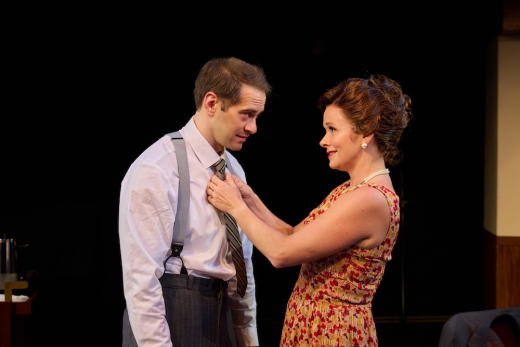
Good Night, Oscar North Coast Repertory (9/16-10/18) |
|
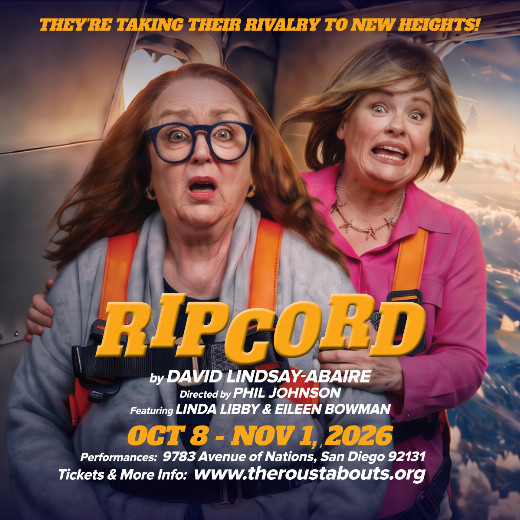
Ripcord The Roustabouts Theatre Co. (10/08-11/01) |
|
The Cottage North Coast Repertory (10/28-11/22) |
|
Next to Normal 3Peace Studios & Point Loma Playhouse (9/25-10/11) |
|
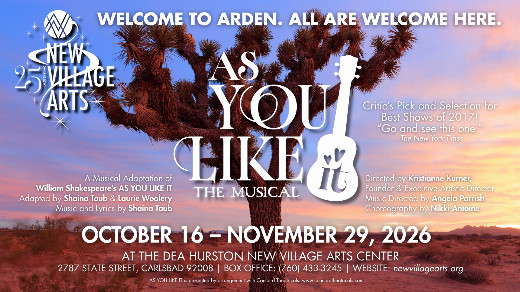
As You Like It New Village Arts (10/16-11/29) |
|
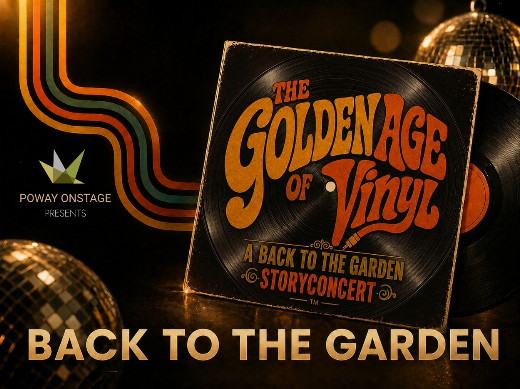
Back To The Garden The Golden Age of Vinyl Poway Center for The Performing Arts (5/15-5/16) |
|
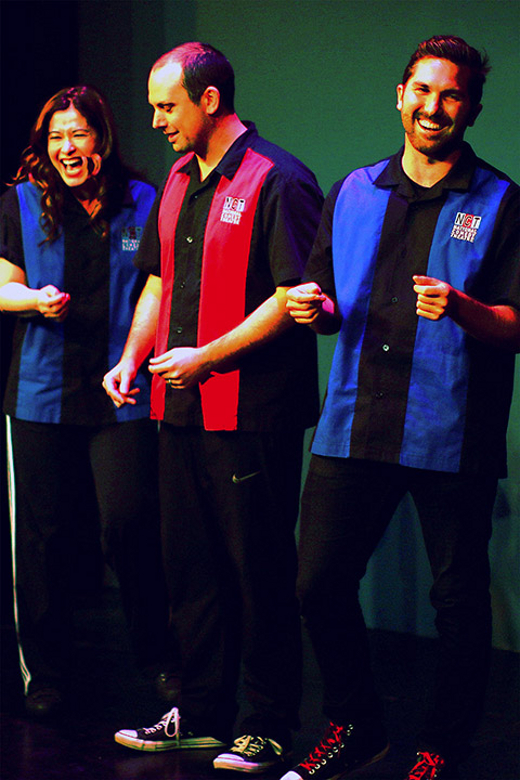
National Comedy Theatre National Comedy Theatre (5/02-12/28) |
|
Ted Talks and Talks North Coast Repertory Theatre (11/16-11/17) |

|
Jake Shimabukuro Holidays In Hawaii Poway Center for The Performing Arts (11/21-11/21) |
