


Review: WODEHOUSE IN WONDERLAND, Theatre at the Tabard
Robert Daws conjures the great writer to tell us tales of his life and works
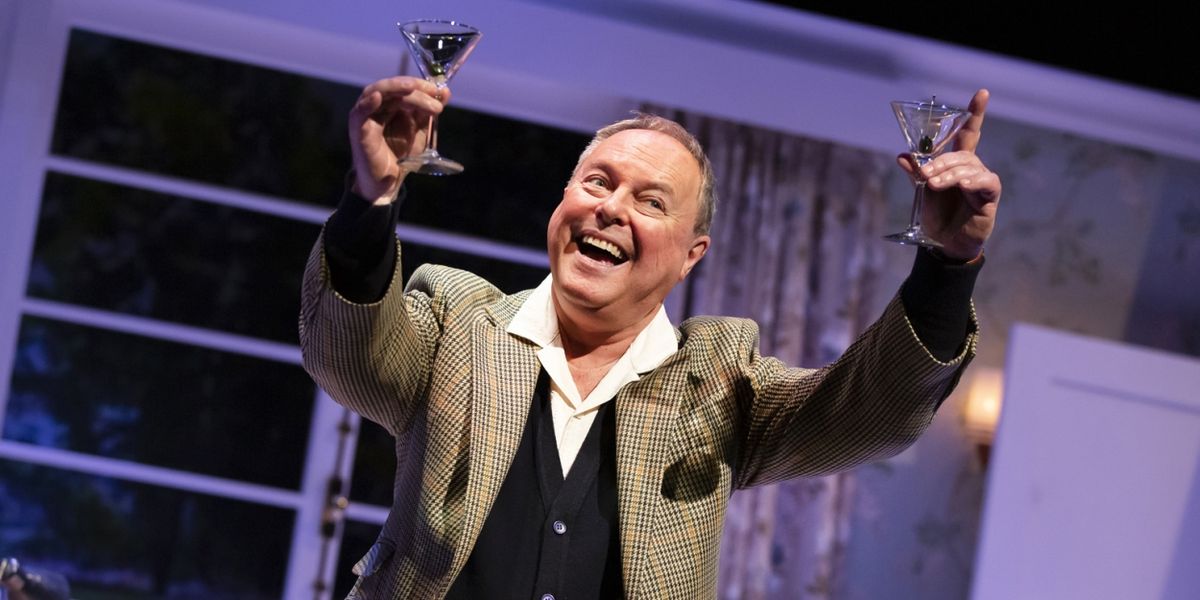
 The problem with Wodehouse adaptations is that the words sit so perfectly on the page, unimprovable line after unimprovable line. Us believers know Bertie and his gentleman’s gentleman, Jeeves, we know Lord Emsworth, Psmith and so many more like we know old friends. One sentence and we're pulling up a metaphorical chair, easing out of the loafers and clinking the cold hard stuff in the Martini.
But they’re never quite fully there in real life, diminished off the page. They're too ephemeral, too thin, too short of the complexities that make life difficult - or, to non-believers, make life interesting. They tell us little about how life should be lived in the future - but they tell us a lot about how it should be lived now. Because that future might never come...
Wisely, writer, the late William Humble, decides largely against recreating characters on stage, though Jeeves offers the odd word of disdain-dripping advice to Bertie. Instead, he opts for framing his one-man play as a series of letters and reflections beautifully delivered by Robert Daws, who lacks Plum’s hulking frame but captures the man’s physical awkwardness and shy obsession with privacy well. He also punctuates the tales with some of Wodehouse’s songs, his work as a lyricist in musical theatre largely forgotten these days. As is the case with his novels and short stories, there’s far more than ever you would expect, the product of a long working life and an almost manic desire to write.

If you’ve read some of the books or read Robert McCrum’s biography or maybe read Performing Flea (especially the edition with transcripts of the Berlin Broadcasts as an appendix), the show contains few revelations. But that criticism is missing the point. The delight of Wodehouse is seldom found in intricate storytelling - his regular anxieties about finding plots appear in the show and his decidedly lowbrow tastes in literature and film/television reveal his unwillingness to explore situations or character in any insightful depth.
What we want is what we get - the sentences and paragraphs, spoken with just the right level of elderly curmudgeon by Daws, whom director, Robin Herford, keeps on a tight leash so we never have the chance to wonder if Plum would, these days, be something of a grumpy old man. Surely that wouldn't be so for the man for whom, "“The snail was on the wing and the lark on the thorn - or, rather, the other way around - and God was in His heaven and all right with the world."
But gives us plenty of the shade that blighted Plum’s life - the loss of his beloved stepdaughter, Leonora, and the ostracising and ultimate exile from England after the infamous wartime radio addresses. We hear too of his horrific childhood, one not uncommon amongst middle class families with Empire links, but likely to attract the eye of social services these day.
For all that (some might say, because of all that) in his Edwardian world, fixed in time through more than 70 years writing, problems are schoolboy scrapes, solutions arise almost miraculously from Jeeves or plain chance, and we’re soon transported back to the best of all possible worlds, aunts vanquished, money to pay off gambling debts acquired and The Bench placated.
It’s a fine selection for just 70 minutes running time, though some will be disappointed that Roderick Spode did not make an appearance. Then again, we have our own, paler, version these days - who even attended the same school as PGW himself…
Wodehouse in Wonderland is at Theatre at the Tabard 22 July and 27 - 30 August
Photo images: Pamela Raith






Reader Reviews
To post a comment, you must register and login.