


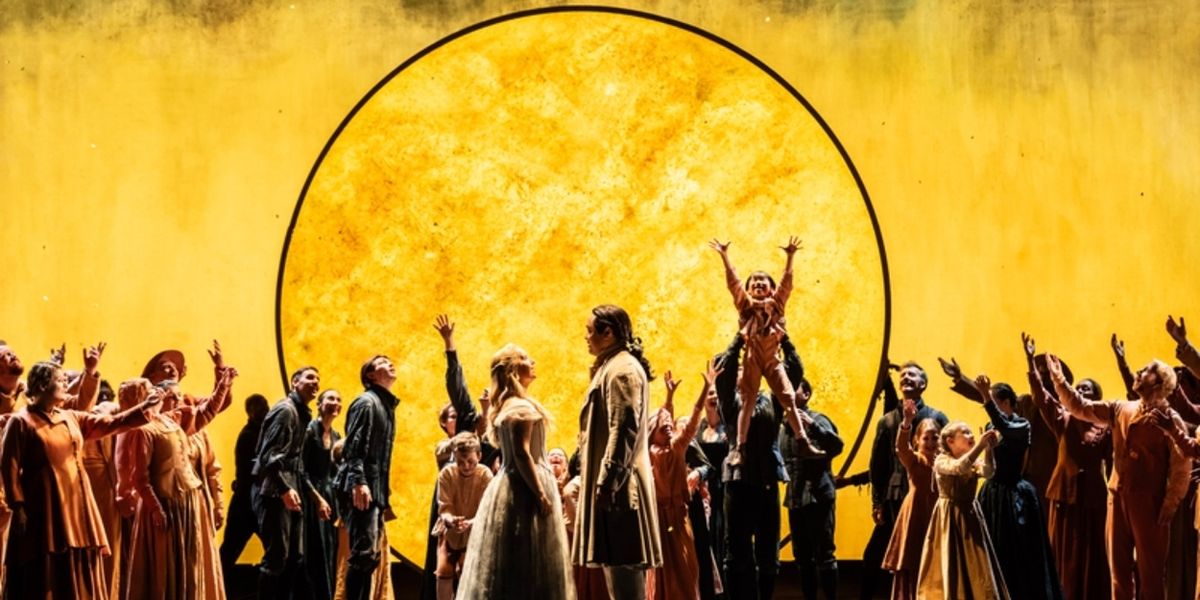
 A trip to The Royal Opera House is always an opportunity to reflect on the passage of time. There’s been a theatre on the Covent Garden site since 1732, Mozart premiered The Magic Flute a little later in 1791 in Vienna and David McVicar’s production itself is almost as old as our century and been revived more often than Christopher Lee on a Hammer Film set. Roll in a toting up of the decades of experience - hell, the training alone - amongst the cast and creatives, and what we see is the tip of an operatic iceberg, years and years in the making.
That presents a challenge to revival director, Ruth Knight. Is the house turning up to sail very close to a monument of the canon, admire its scale and magnificence and go home having seen a masterly performance of a masterpiece? Or are they there to court the danger of disaster, to seek the thrill of a new vision, to risk sinking in order to soar?
Tortured metaphors aside, I suspect most punters will say they’re looking for the former - after all, the operatic world is not short of festivals and venues that give free rein to whatever a new generation of iconoclasts are proclaiming to be the next new thing. Knight (a good name for this show!) delivers a flawless technical extravaganza, that, with one exception, feels ever so slightly cold, an exhibition match with some of the best players in the world rather than a blood and guts semi-final with everything on the line.
But who wouldn’t enjoy Mozart’s music, the superb orchestra under Marie Jacquot’s baton and these world class singers? And, because it’s great art, it will always turn a new face to its viewer, perhaps with a glint in its eye, perhaps with a touch of menace.
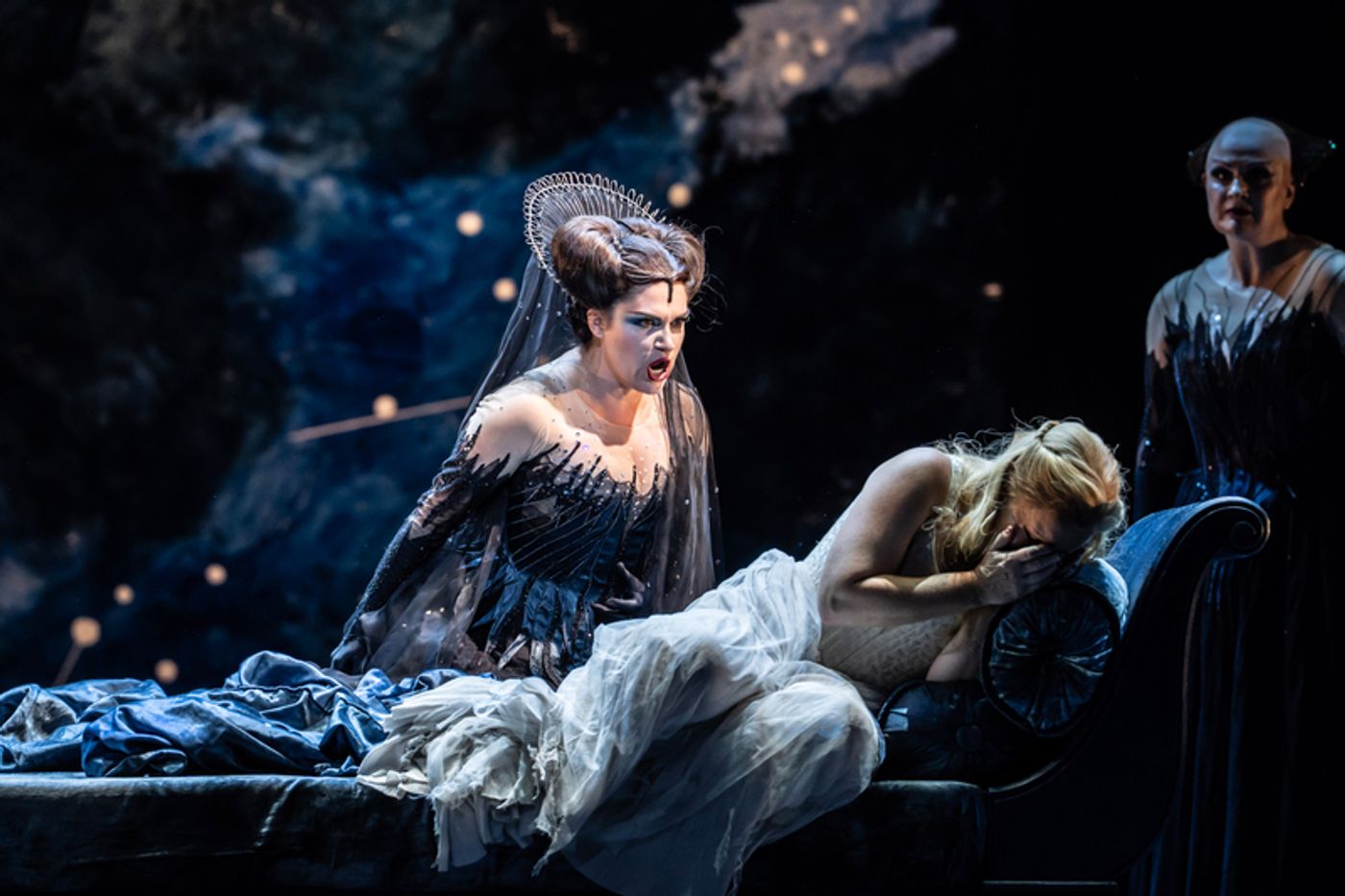
Speaking of which, The Queen of the Night, the villainous (well, mainly, she does give our heroes a couple of Get-Out-Of-Jail-Free cards) ruler of Narnia the darkened world, packs plenty of venom into her brief appearances. Kathryn Lewek blazes visually and vocally, especially with the crowdpleasing "Der Hölle Rache kocht in meinem Herzen" - if you ever wondered what coloratura soprano singing is, well, it’s that.
If she claims the high point (in every sense) of the musical evening, the best acting is delivered by Huw Montague Rendell as Papageno, loyal sidekick to his Prince. He is a familiar character found in any number of fairytales and myths, but Montague Rendell finds new humour and warmth in the role, connecting us to this world of serpents and furies. Of course, his singing is at the level you would expect, but there’s charisma and pathos to burn too, particularly in his love won, love lost and love won again scenes with Papagena (Marianna Hovanisyan, also very winning).
Where the opera sags a little, at least in our more secular times, is in the quest and ideas around it. Lucy Crowe and Amitai Pati have lovely voices, but their Pamina and Tamino are always declaring their love and then risking everything in his trials (think Harry Potter and the Goblet of Fire) but there’s very little chemistry on show. Now that may be an inevitable consequence of a vast, dark stage with John MacFarlane’s set a convincing interior of a temple, but it feels an oddly passive affair for those more used to Puccini’s passions or musical theatre’s carefree lovers.
Of course, it is written a bit that way, Mozart having become very interested in Freemasonry, its ideology and symbolism rather flattening the second act until its glorious, golden denouement. For all that heavyhandedness, it does give a chance to Soloman Howard to don Sarastro’s spectacular priestly robes and roll out a bass that is as impressive speaking as it is singing. I suspect my seat in the stalls is still vibrating now!
If this were a movie, there would be a clamour for a sequel telling the tale of the two little birds who found love at last rather than more about the victorious prince and his pure-hearted lover. But, back in 1791, Europe was an even more dangerous and unpredictable place than it is now, France in revolution, the still newly minted United States of America too. People wanted to see good triumph over evil, the sun shining after the dark, the craze for science moderated by older, maybe gentler and certainly simpler, ideas of spirituality.
Mozart instinctively knew this and communicated it through his genius for music. He is still doing that today.
The Magic Flute at The Royal Ballet and Opera until 3 November
Photo images: Johan Persson





Reader Reviews
To post a comment, you must register and login.