


Review: FILMS IN CONCERT: INTERSTELLAR LIVE, Royal Albert Hall
Backed by the world-famous 9999-pipe Grand Organ, Christopher Nolan's masterpiece is lifted to dizzying heights.
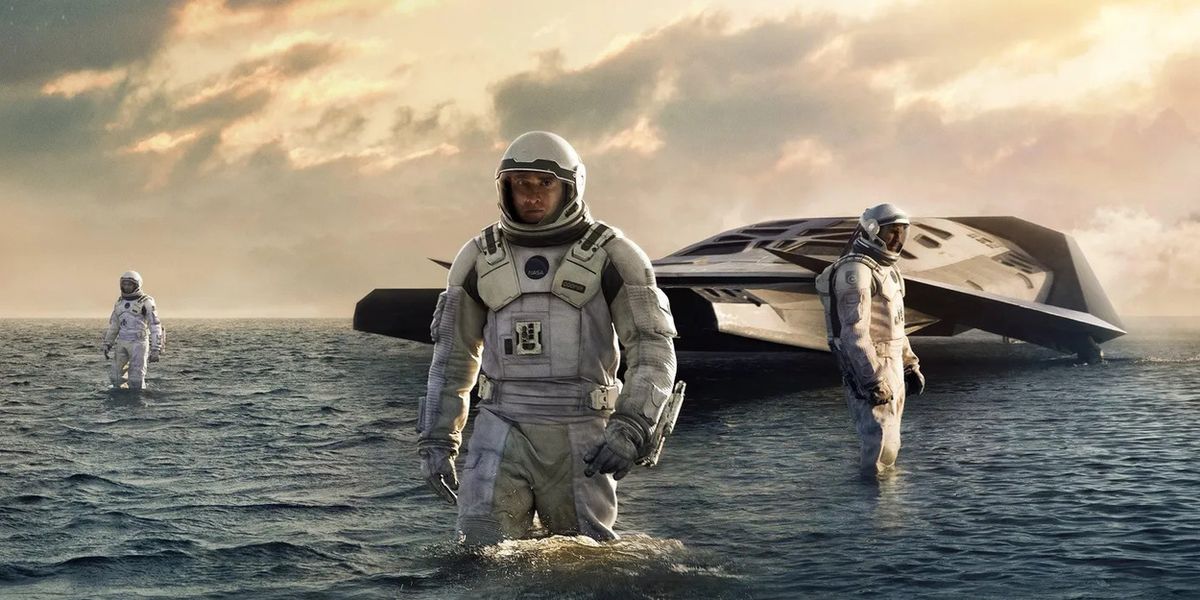
 Given only the slightest of insights into what director Christopher Nolan intended, Hans Zimmer set about creating a score for Interstellar that he would later call the best work of his career. Hearing it live accompanied by a screening of the film is a sensational experience.
Returning to the Royal Albert Hall, Interstellar Live offered a monumental cinematic experience, featuring the Royal Philharmonic Concert Orchestra and the venue’s thunderous 9,999-pipe Henry Willis Organ. Part of the Hall’s celebrated "Films in Concert" series, this production - produced by Tommy Pearson and Pirmin Zängerle for Cutting Edge Music Services - elevates Nolan’s sci-fi epic into a visceral, live symphonic event.
Released in 2014, Interstellar is a profound five-dimensional meditation on time, love, and human survival wrapped up in a ghost story. Set in a dystopian near-future where a global crop blight and massive dust storms are slowly suffocating Earth, the story follows Joseph Cooper (Matthew McConaughey), a former NASA pilot turned farmer. Cooper is recruited by Professor Brand (Michael Caine) for a desperate mission: to lead a crew through a newly discovered wormhole near Saturn in search of a habitable home for humanity.
The crew, including Dr Amelia Brand (Anne Hathaway), Romilly (David Gyasi), and Doyle (Wes Bentley), alongside the witty tactical robots TARS and CASE (voiced by Bill Irwin and Josh Stewart), must navigate the crushing physical and emotional tolls of relativity. Back on Earth, Cooper’s young daughter Murph (played at different ages by Mackenzie Foy and Jessica Chastain) and son (Timothee Chalamet in his last sci-fi role before taking on Dune and Casey Affleck) respectively grow into a brilliant scientist struggling to solve the gravity equation that would allow the rest of humanity to evacuate the dying planet and a bitter farmer unwilling to accept Earth’s fate.
Directed by Nolan and co-written with his brother Jonathan, the film is a masterclass in "hard" science fiction, grounded by the expert consultancy of Nobel laureate physicist Kip Thorne. It remains one of the most visually and philosophically ambitious films of the 21st century.
While Interstellar is a spectacle for the eyes, it is the score that provides its pulse. At the Royal Albert Hall, the presence of a live orchestra transforms the film from a passive viewing experience into an immersive sonic assault. Hans Zimmer’s score famously broke his own "wall of sound" traditions, opting instead for a palette dominated by woodwinds, strings, and most crucially, the organ. And this is where this venue’s internationally renowned instrument lifts the film to dizzying heights.
Having a live orchestra in the room adds a layer of "human breath" to the vacuum of space. The woodwinds represent the fragility of the human crew, while the strings provide the soaring hope of the mission. Most importantly, the use of the Royal Albert Hall’s Grand Organ is transformative. The instrument was personally selected by Zimmer for the original soundtrack originally recorded by Roger Sayer. In a live setting, the low-frequency vibrations of the organ pipes literally shake the floorboards and the chests of the audience, mimicking the physical pressure of a rocket launch or the gravitational pull of a black hole in a way no home cinema system ever could.
Early in the film, Cooper drives his children through a cornfield to intercept a stray Indian surveillance drone. The track "Cornfield Chase" begins with a light, rhythmic ticking and a repeating piano motif. In the Hall, as the orchestra builds, the music mirrors the exhilaration of the chase but also the underlying tragedy—that these remnants of a high-tech past are being hunted in a world that has given up on science.
When the team get to the first planet, where one hour equals seven years on Earth, the music features a prominent, persistent "tick" every 1.25 seconds. Each tick represents a full day passing for Murph back home. When the "mountains" on the horizon are revealed to be colossal tidal waves, the music swells into a frantic, percussive roar. The live brass section and the organ’s rising volume heighten the life-and-death stakes, making the audience feel the terrifying weight of every second lost.
The most epic marriage of sound and image in modern cinema occurs when Cooper must dock the Endurance with a spinning, damaged station. As the station rotates at a dizzying speed, the track "Coward" erupts. The organ becomes a character itself, screaming with a religious, cathedral-like intensity that frames the sequence as a moment of divine willpower. The sheer volume of the live performance during this scene is legendary, perfectly capturing the desperate, high-velocity gamble of the characters.
Interstellar Live at the Royal Albert Hall is more than a film screening; it is a celebration of the "heart of the story" Zimmer first discovered in a small piano piece about a father and his child. In this iconic venue, the music reaches its final frontier.
Image Credit: Warner Bros Entertainment
Prefer BroadwayWorld in Google Search?
Add us as a preferred source so our stories show up more often in Top Stories and Google’s AI answers — for you.
Sign up for all the news on the Fall season, discounts & more...
.jpg?format=auto&width=300)






Reader Reviews
To post a comment, you must register and login.