EDINBURGH 2025: Simon Kane Guest Blog
Jonah Non Grata runs at Edfringe from 31 July - 24 August
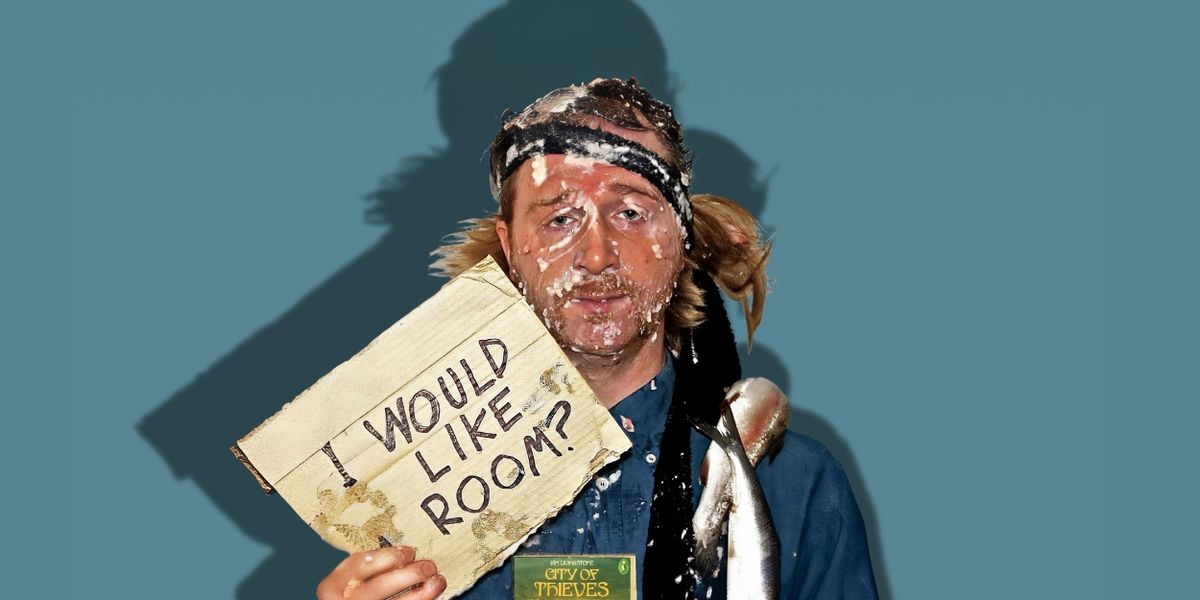
Simon Kane guest blogs for BWW ahead of bringing Jonah Non Grata to the 2025 Edinburgh Festival Fringe.
Back when Shunt – the theatre collective of which I’m an associate artist – started, we didn’t call it “immersive theatre”, we called it “site-specific” because we took what we were given. One of the reasons for choosing the Gunpowder Plot as an inspiration for DANCE BEAR DANCE back in 2001 was that our venue was a railway arch. No rumbling of a train overhead needed to be ignored now. All attention was rewarded. As the collective grew, and designer Lizzie Clachan could afford to create strange new spaces within found spaces, acknowledgment of every detail of our environment remained crucial. The site was the text.
Twenty years after first performing the thing most resembling the shape it’s now in, I’m taking my solo show JONAH NON GRATA to Edinburgh. I consider it very much a personal sequel to that work with Shunt but, not wishing to give too much away, the logistics of the piece are those of most other solo shows: me on a stage, and the audience in their seats. Nevertheless, I still think of it as immersive, and here’s a brief, cherry-picked history of what I think immersiveness is, to explain why.
We could start with the Ancient Greeks. While I’ve not seen the dramas of Sophocles described as immersive (and of course back then, you could easily differentiate actors from spectators because, in a kind of reverse Punchdrunk, the former wore masks) when Oedipus first steps onstage to demand of his subjects through the hole in his face – at some length – if any know who’s responsible for the curse fallen upon his city, every citizen watching would already have known the story of Oedipus, and known it’s him. Their silence wasn’t simply that of an engaged audience; there was that added tension. They were complicit.
Permission to be complicit is a staple of immersive work. The Mediaeval Mysteries are probably the earliest play-texts in (sort-of) English: short, open-air adaptations of biblical incidents staged by Professional Guilds. In one York Pageant, local “pinners and painters” are seen hunched over a particularly slippery assignment, and it’s only when the job is finished and erected, that the audience can see they were roping and nailing Christ to the Cross. The author of this piece is known simply as “the York realist”. Realism is also a staple.
Then there’s the Elizabethans. I’m old enough to have learnt – by which I mean, old enough to have been wrongly taught – that Shakespeare’s actors originally were rubbish, and crudely bellowed their lines because the Globe was an open-air space, with no special lighting to tell you who to look at. “Wrongly” of course, because once Sam Wanamaker had the thing rebuilt, its first actor manager was Mark Rylance, stammering and standing like Stan Laurel wondering what he’d done with his keys, captivating audience after audience with his brilliantly studied vulnerability because, in the open air, they could see he could see them back. It wasn’t just soliloquies that were played out to the audience now. Everything had to be, thought and speech balloons alike. Numerous mob scenes, which had proven such a headache in beautifully lit black boxes regardless of their dimensions, were now a piece of piss at the Globe where the audience was the mob, happy to be whipped up by whatever demagogue stepped up. We didn’t call it “immersive” when the Globe reopened either; that was still a word to be used in opposition to the idea of “traditional” theatre. But the Globe Experiment proved Shakespeare’s plays had been both.
Then theatre went indoors, and theatrical spaces stopped basing themselves on the courtyards of inns. It became too expensive to light an audience for the duration, and the relationship between performer and spectator couldn’t help but be affected. Over two hundred years later, in Chekhov’s THE SEAGULL, the young Konstantin’s awkward rebelliousness is exemplified by his attempt to stage his work in front of a real lake beneath a real moon. Not a realist piece, but a hugely ambitious, abstract poem about the beginning and end of all things, it’s still immersive, albeit fictionally – it’s an attempt to recontextualize his audience’s experience of their environment, like the rumbling of the trains in DANCE BEAR DANCE, or the fleeing green figure in the EXIT sign my reluctant prophet of doom can’t take his eyes off in JONAH NON GRATA.
If your environment – audience included – is visible, and acknowledged, a show cannot help but be “immersive”. And if it’s not, you might be better off putting whatever you’re doing online, and giving yourself the evening off. “Come and ignore where you are” is still the default tradition when going to see a play. “Or don’t” is all “immersive” really means.
Jonah Non Grata will be at the Edinburgh Fringe Festival this August. For tickets and more information, visit:: https://assemblyfestival.com/whats-on/1076-jonah-non-grata