


BWW Q&A: Jacob Ming-Trent on MERRY WIVES at Shakespeare Theatre Company
Merry Wives plays STC’s Harman Hall through October 5, 2025.
 Click for Tickets
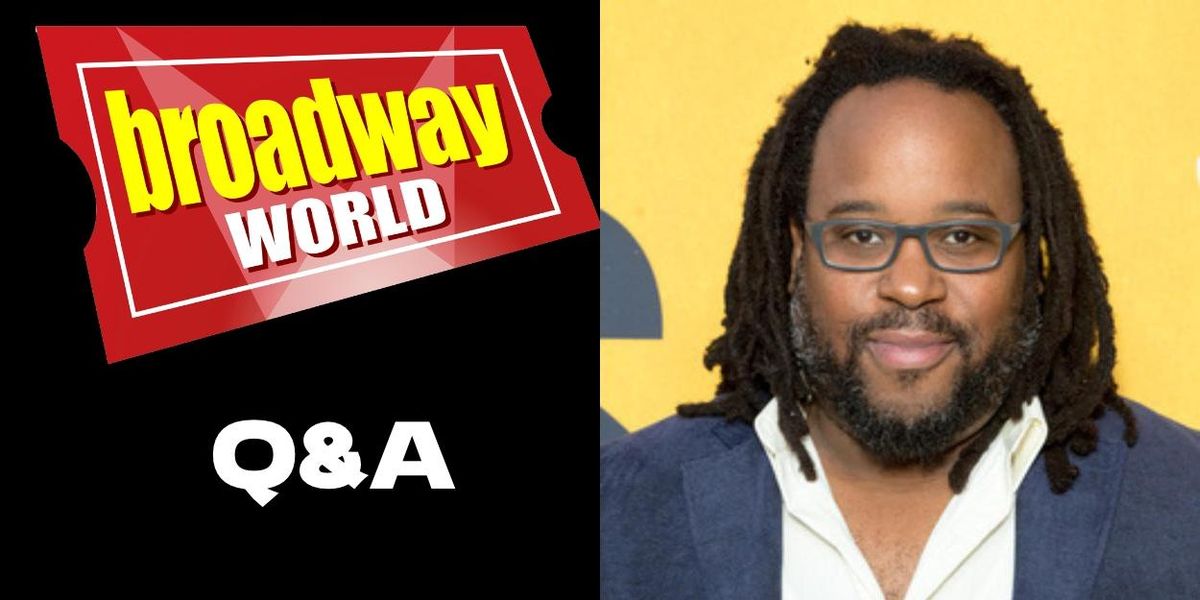
Shakespeare Theatre Company is currently presenting Merry Wives, and we spoke to Jacob Ming-Trent (Falstaff) about the production. The first show of STC’s forthcoming 40th Anniversary Season, Merry Wives is adapted by Jocelyn Bioh and directed by Taylor Reynolds (Studio Theatre’s Fat Ham).
In Merry Wives, William Shakespeare’s farce gets a joyful spin from playwright Bioh (Jaja’s African Hair Braiding), dropping the debaucherous Falstaff into the melting pot of modern Harlem. Short on cash, Falstaff pursues the purses of two sharp-witted West African wives. As their proud husbands’ suspicions rise, the wives cook up a scheme to shame the would-be homewrecker and prove that “wives may be merry, and yet honest too” in this celebration of community and Black joy.
Can you share about your experience playing Falstaff in Merry Wives and how it relates to your broader career?
I think it is the culmination of a lot of work; the work being how to integrate Shakespeare and also my upbringing, my background, and how to meld those two things. Merry Wives was really a godsend in that it provided the opportunity to meld those two things together. In that way, it has been very exciting and very rewarding. It feels like a culmination of something, or maybe the beginning of something.
What drew you to the role of Falstaff in this particular adaptation of Merry Wives?
I was drawn to this landscape where all these different communities, all these different types of folks, come together to form this community. Falstaff is kind of on the outside, but through the process of the play, he's brought inside that community. I think that's great. It's a great story, especially for today.
How does playing Falstaff in Merry Wives challenge you as an actor?
As in most Shakespeare plays, the ability to speak a lot of language quickly and be clear, that's always a challenge. And then Shakespeare is always a physical challenge as well. So, it's a full-body experience in that way. Every night is a little bit of a workout, while being specific with that language at such a pace. I think that’s always something that keeps me on my toes. It keeps me engaged, fully engaged, because your mind has to be sharp. I enjoy it for those reasons.
How has your interpretation of Falstaff evolved since you first played the role in the world premiere of this adaptation in NY's Shakespeare in the Park in 2021?
I think I had my mind made up about who Falstaff was the first time. You know, I did a ton of research on the character, the history, and who the character was based on all that stuff. This time around, I'm not judging him as much. I'm judging him less, and therefore I think the audience at the end is able to empathize with him a little more. In that final moment when he's on that park bench and he's shamed and he's hurt and he's scared. You know, every night the audience really goes silent and they're wondering, well, what's going to happen to him? And I think that's a great question. That's a great question because that means that as zany as the play is, the audience is involved in the stakes of the show and in the human beings that are on the stage, and I think that's great.
How did your past experience with Shakespeare's work help you in preparing for the role of Falstaff in Merry Wives?
Well, I've been working with this writer since I was 12 years old. I talk a lot about this in my one-man show, How Shakespeare Saved My Life [at the Folger in 2026]. And then my time at the Shakespeare Lab and at The Public Theater, my time at Stella Adler in New York, my time at ACT in San Francisco at their MFA program, touring the country doing Merchant of Venice or doing Two Gentlemen of Verona… You know, your experiences bring you to this place. Not only that, but my experiences growing up and moving through the world from different landscape to landscape and understanding what it is to be an outsider. You know, Falstaff in this, in this production, is an outsider. So, it all comes together, but in a beautiful way. You know, it gives you the nuance, it gives you the open-mindedness to be able to play every night in a fearless way in front of 400 or 500 or 700 strangers. It's always a celebration to get up there one more time with all those experiences, everything you've been through, the good, the bad, the ugly, and bare your soul one more time in the hopes that it might help someone.
How do you think the modern Harlem setting affects the interpretation of Falstaff's character in Merry Wives?
I think what's unique about this adaptation is that it takes us deeper into a community. You know, Shakespeare's work was based in a community of players. They were a very tight group. A lot of marriages and divorces, and sometimes marrying each other's ex-wives. They were a very tight community, and I think they understood community. In this piece, I think Jocelyn felt that in the piece, and has enhanced that.
How do you hope audiences will react to your portrayal of Falstaff in Merry Wives?
I hope people find how radical it is to have joy under difficult circumstances. I hope they understand. I would love for them to understand that the human spirit is powerful and is strong. That community is important and essential, and there's always the opportunity to bring someone back into the family or back into the fold. It's never too late.
Why must audiences come and see the show?
I want, and the company wants, people to laugh. I think the great thing about a good piece of theatre is this. You can come to Merry Wives and just laugh and enjoy. If you want something deeper, it's there for you. If you want a richer experience, it's baked in; it's there for you. So, you know, there's something there for everyone, and I think a great piece of theatre tends to do that.

|
Misery Aldie Mill Historic Park (8/20-8/30) |

|
Body Language The Allan Lefcowitz Theater at The Writer's Center (9/25-9/27) PHOTOS |
|
The Jersey Four A Tribute to Frankie Valli and The 4 Seasons, featuring original member Gerry Polci F. Scott Fitzgerald Theatre (9/13-9/13) |

|
Brontë Sister House Party Van Ness Main Street (8/14-9/12) |
|
The 25th Annual Putnam County Spelling Bee Ford's Theatre (3/12-5/15) |
|
Hamlet Folger Shakespeare Library (3/02-4/11) |
|
Gershwin, Bernstein & American Mosaic Wolf Trap (8/15-8/15) |
|
The Dinner Detective Murder Mystery Dinner Show The Dinner Detective Washington DC (9/12-9/12) |
|
Victorian Lyric Opera Company presents "The Merry Widow" F. Scott Fitzgerald Theatre (2/26-3/07) |
|
Step Afrika!'s Magical Musical Holiday Step Show Arena Stage at the Mead Center for American Theater (12/04-12/23) |