


Review: SHIRLEY VALENTINE is full of heart at Katonah Classic Stage
Andrus Nichols wows audiences in one-hander by Willy Russell
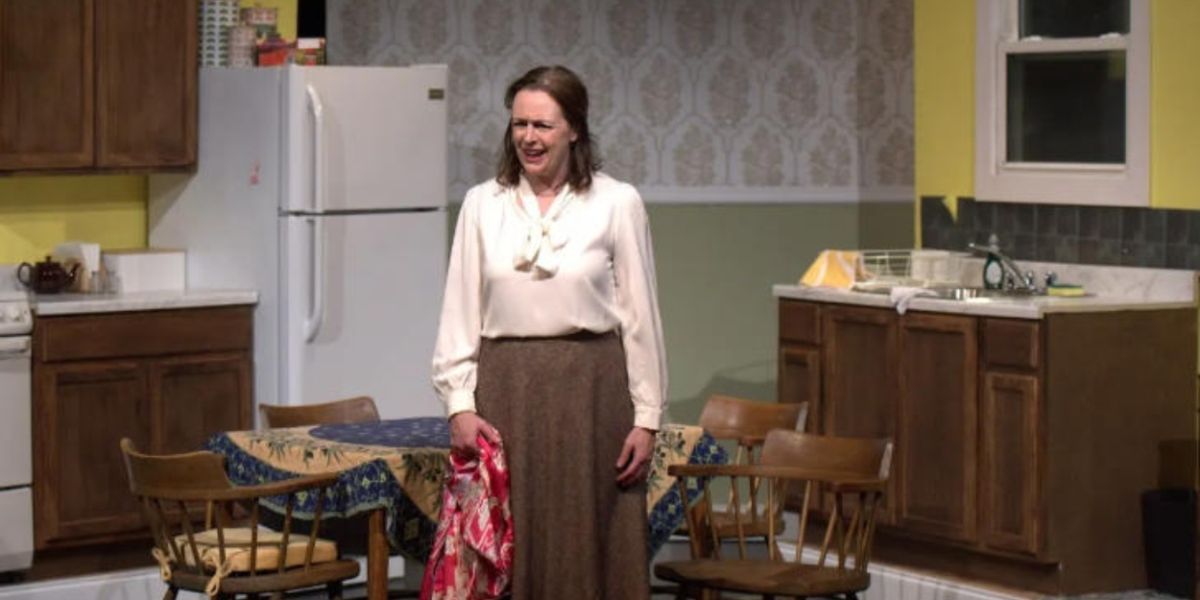
She had me at “Y’know,” the first word she speaks on stage. I’m speaking of one Shirley Valentine, in the person of one Andrus Nichols, the marvelous actor who is single-handedly rhapsodizing and moving audiences in the thoroughly charming and heart-warming one-hander titled “Shirley Valentine,” through Sunday, May 4, at Katonah Classic Stage (katonahclassicstage.com), Whippoorwill Theatre at North Castle Library,, Armonk, N.Y.).
From the moment she takes center stage in this wry and poignant solo play by Willy Russell, Ms. Nichols owns the place and owns the audience, just as Shirley owns her lot in life… until she decides it (and her hubby Joe) own her more, and she proceeds to do something about it, shedding the fatalism that’s been holding her back her whole life (epitomized by a headmistress who told student Shirley she'd never amount to anything. That we are witness to Shirley's metamorphosis is what binds the audience to her and Ms. Nichols. As the play progresses, we are progressively invested in her plight. Ms. Nichols makes it so.
Who is Shirley Valentine? A 42-year-old housewife and mother of two in working-class Liverpool, England, who regales us for nearly two engrossing hours about everything from psychics to wine to her suffocating hubby Joe (“I’m not saying he’s bad, he’s just no bleedin’ good”) to her kids (hipster Millandra and daydreaming Brian) to her feminist boon buddy Jane (“the only one who keeps me sane”), about whom – and about whose imminent trip to Greece – Shirley is obsessed with throughout our time together. It’s Jane who imbues Shirley with the agency that is both the heart and the life lesson of this masterly written, multi-layered entertainment.
The year is 1986 (“when you had to get up to change the TV, it was a simple time”). Shirley is embarking on a journey of self-discovery right before our eyes, and Ms. Nichols takes us on a journey of theatrical alchemy. Her supple way with Mr. Russell’s effusive, artfully constructed dialogue makes what is an actor’s Everest (alone on stage for nearly two hours with nobody to lean on or play against) appear deceptively effortless. Rest assured it is anything but. The actor’s preparation for a role as formidable as this is pushing a boulder uphill. The actor’s performance is holding the boulder aloft in sweet, hard-won triumph.
Adding to Ms. Nichols’ sure-handed command of the entire proceedings, she repeatedly looks straight into the eyes of the audience. Ms. Andrus told me at the opening reception that making that visual connection feeds her energy, and that focused energy is the fuel that empowers her performance, just as Shirley becomes steadily and palpably empowered during the narrative arc of her story. It is tempting (and subtly sexist) to say Shirley’s emergent emancipation is inspirational for women. Heck, it’s inspiring for anyone with a pulse!
What also was apparent speaking to the actor after her opening night turn is that the native New Yorker in fact doesn’t sound Liverpudlian when she’s not Shirley. Who knew! (lol) Her convincing simulation of that lilting dialect is a credit to Ms. Nichols' considerable craft as well as to her dialect coach Amanda Quaid (whose father happens to be actor Randy Quaid).
The actor makes us feel she’s a friend having a conversation with us, with herself, and, oh yes, with the wall in her kitchen. She talks to it, just as Joe, she informs us, fulminates directly at the frigidaire.
The experience is akin to having a well-meaning if insecure friend-slash-raconteur talking to you in what amounts to a seamlessly threaded series of anecdotes that includes her offering snippets of characters that enter her world along the way. Among the anecdotes is a precious story of when her grade school son played Joseph in a nativity play and subverted the whole plot, to hilarious effect.
Even as she tells stories about others, Ms. Nichols wisely avoids the performative trick of fully impersonating characters in Shirley’s life. She stays Shirley, a humble everywoman with the gift of gab who is ingratiatingly simple and direct in her manner. That choice also is a testament to savvy director Trent Dawson, whose firm guidance helps shape the play’s musculature and sure-footed pacing. It would be easy to jazz up Shirley as exceedingly eccentric. Easy, and wrong.
Virtually a character unto itself is the kitchen set, splendidly authentic in its creation by Mr. Dawson and Katonah Classic Stage executive director Sharron Kearney.. Ms. Nichols even prepares a meal of eggs and chips (and, enhancing the organic feel, on opening night she went about swabbing the stage floor of an accidentally dropped egg).
Other than noting the kitchen is gone for Act II, I won’t spoil the fun of how Act II differs from Act I, other than to say it effectively leads to a most satisfying resolution for Shirley and her reclaimed personhood.
“Most of us die before we’re dead,” concludes Shirley, uttering playwright Russell’s elegantly pithy warning to us all about the perils of a life left unexamined.
Shirley Valentine, then, is the author’s rapturous valentine to lives both examined and emancipated.
And the tour de force of nature that is Andrus Nichols’ performance is Katonah Classic Stage’s valentine to their patrons.
Return curtain calls are exceedingly rare in today’s theater – whether it’s Broadway or a byway – but this theater-goer wasn’t the least bit surprised when an appreciative and duly impressed opening night Katonah Classic Stage audience sustained its applause enough to beckon Ms. Nichols back to the proscenium for an encore bow, which, after all, rhymes with “Wow!”
Other credits: Elizabeth Cavanaugh is stage manager; Riley Cavanaugh is lighting designer; Graydon Gund is sound designer; Caty Koehl is Costume Designer; Heather Sandler is assistant stage manager.
Photo by Sophie Lemmerman

|
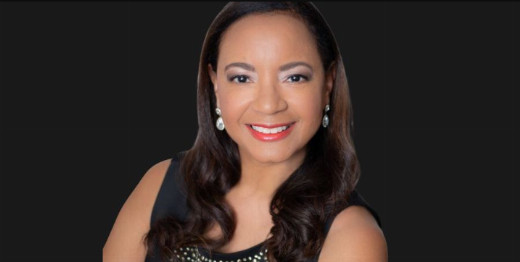
The Keith Chasin Trio Jazz On Main (11/12-11/12) |
|
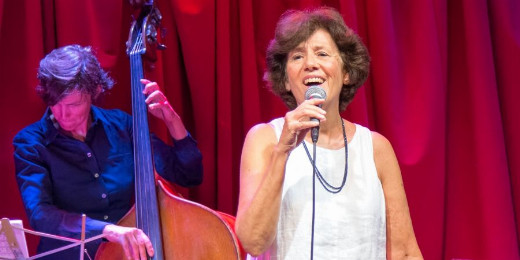
Keeley Mitchell & The Burr Johnson Band Jazz On Main (10/10-10/10) |
|
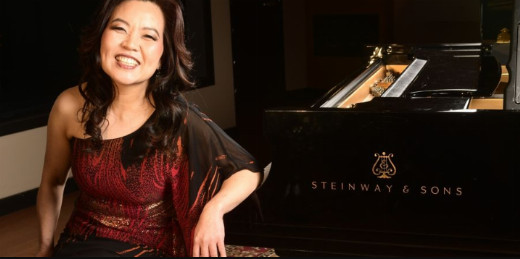
MJ Territo Quartet Jazz On Main (8/29-8/29) |
|
Hey Rim Jeon & Friends Jazz On Main (10/17-10/17) |
|
Sunday brunch with Bees Deluxe Jazz On Main (8/23-8/23) |

|
Sunday brunch with Peter Janson Jazz On Main (8/30-8/30) |
|
Miss Maybell and the Jazz Age Artistes Jazz On Main (8/21-8/21) |
|
Sunday Brunch with Maya Shaw Jazz On Main (10/11-10/11) |

|
Sherma Andrews presents The Legendary Lady Singers Jazz On Main (7/17-8/14) |
|
Pete Rodriguez Quartet Jazz On Main (9/26-9/26) |
Reader Reviews
To post a comment, you must register and login.