


Review: LOOKING OVER THE PRESIDENT'S SHOULDER at The Phoenix Theatre Company
The production runs through December 14th at The Phoenix Theatre Company’s Judith Hardes Theatre.
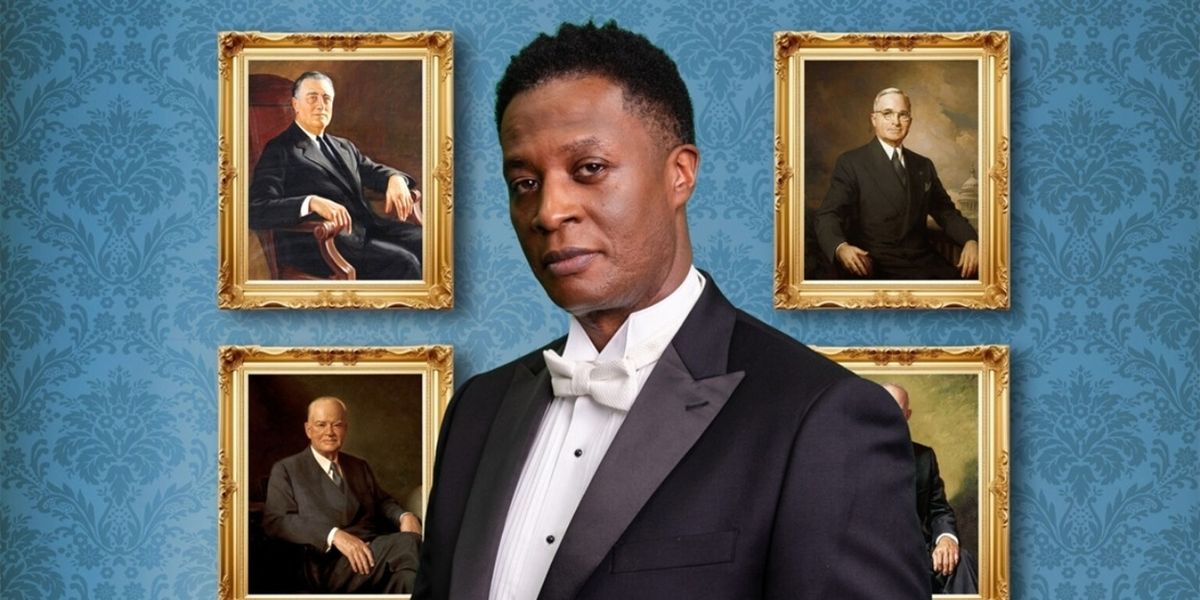
There are stories that shout history, and there are stories that whisper it. James Still’s LOOKING OVER THE PRESIDENTS SHOULDER, now at The Phoenix Theatre Company through December 14th under Chanel Bragg’s sure-handed direction, belongs firmly to the latter. In this one-man play, history unfolds through the recollections of Alonzo Fields. For more than two decades, he stood deferential yet dignified, serving four U.S. presidents as chief butler and witnessing history from its margins.
Fields’s story, drawn from his memoir My 21 Years in the White House, gains added dimension when viewed alongside Lee Daniels’s 2013 film The Butler, inspired by Eugene Allen, whom Fields personally selected as his successor. Both men were African American butlers who experienced America’s racial evolution from within the White House, but their experiences and what they reveal about their respective eras couldn’t be more different.
Fields arrived in 1931, in the depths of the Great Depression, when the country remained rigidly segregated and Black advancement was constrained by the color line. He was forced to surrender his dream of becoming an opera singer to take work as a domestic servant. That tension, the ache of what might have been, becomes the play’s quiet heartbreak.
Allen, by contrast, began his White House service in 1952 and remained until 1986, a period encompassing the Civil Rights Movement, the Vietnam War, and Barack Obama’s election. His rise from pantry worker to maître d’ mirrors the nation’s uneven progress toward racial equality.
Where Fields’s emotional core is introspective (“the ache of an artist rendered unseen”), Allen’s story, dramatized through the character Cecil Gaines in The Butler, embodies the civil rights struggle in its most intimate form: as a conflict between father and son, patience and protest, survival and revolution. The film contrasts Cecil’s quiet endurance within the halls of power with his son’s defiance in the streets, setting the private rituals of service against the public demands for justice. Through their strained relationship, history becomes personal – the nation’s moral awakening refracted through a family’s divided heart.
Together, these two men form a unique portrait of the Black experience in 20th century America. If The Butler charts how far America came, LOOKING OVER THE PRESIDENTS SHOULDER reminds us what it cost to get there.
And, for Fields, getting there required sacrifice. Born in a Black farming settlement in Indiana, he dreamed not of service, but of teaching and performing opera. When the Depression cut short his studies at Boston’s New England Conservatory, he supported himself by working for MIT president Samuel Stratton, whose household introduced him to dignitaries from Thomas Edison to John D. Rockefeller and, fatefully, to First Lady Lou Henry Hoover. When Stratton died in 1931, Fields lost his patron, but fate intervened when Mrs. Hoover invited him to the White House for a temporary job that would become a 21-year calling. In trading the concert hall for the state dining room, Fields discovered another kind of artistry: one of precision, grace, and quiet mastery performed daily in the dining rooms of power.
It is this remarkable journey, this transformation, that Kelcey Watson traces in a performance that ripples with energy and conviction. He captures the man’s humility, the ache of disappointment, and the pride of a life lived in disciplined service. His portrayal is less impersonation than reflective storytelling. Each pause and modulation of voice, each subtle shift in posture, evokes years of dreams deferred and quiet determination. Fleeting gestures – a glinting smile, a gaze lingering on a presidential portrait – reveal Fields’s reverence for his station and the artistry he brought to it. Through Watson’s performance, Fields’s daily labor emerges as something sacred: an act of self-respect and creative integrity in a world that too rarely acknowledged either.
That reverence finds its most touching expression in one particular memory. One of Fields’s most affecting recollections is his invitation to sing in the East Room during the White House Christmas Eve party of 1932. Watson’s retelling is a highlight of the production, infused with authenticity and vivid emotion.
Elsewhere, Fields’s recollections open into broader vistas, where the intimacy of service meets the sweep of history. Watson transports us to memories of when the raiment of official position was dropped and the quirks of the great were exposed: Churchill bathing in the nude, Eleanor Roosevelt always on the move and in command, FDR settling in a chair and setting aside his crutches, and the kindnesses of First Lady Hoover. The actor moves fluidly through these scenes, keeping book on the sweeping tides of history.
Bragg’s direction wisely resists embellishment, letting the monologue unfold like a slowly opened letter, trusting both the eloquence of the text and the warmth of Watson’s performance.
One of the production’s great strengths lies in its visual storytelling. Douglas Clarke’s video projections – archival portraits and glimpses of historic events – are artfully integrated, and his minimalist set gives the performance room to breathe. Nathaniel White’s sharp luminous lighting places Fields squarely at the center of the stage, amplifying both the elegance and solemnity of the White House.
By the time Fields whispers his farewell to the White House, his dignity intact and his private dreams unfulfilled, the audience is left in a hush that feels both reverent and unsettled. Though modest in scale, Bragg’s and Watson’s production achieves gravitas, a testament to a life fully lived in history’s shadows. They have turned Still’s monologue into a reminder that history is shaped not only by those in power but also by those who carried the trays, polished the silver, and stood just behind them.
LOOKING OVER THE PRESIDENTS SHOULDER honors a man who lived with purpose in the shadow of history, and in doing so, illuminates the humanity of all who served unseen.
LOOKING OVER THE PRESIDENTS SHOULDER runs through December 14th at:
The Phoenix Theatre Company’s Judith Hardes Theatre -- www.phoenixtheatre.com -- 1825 N Central Avenue, Phoenix, AZ -- 602-254-2151
Photo credit to Brennen Russell: Kelcey Watson
|
Peking Acrobats Chandler Center for the Arts (1/24-1/24) |
|
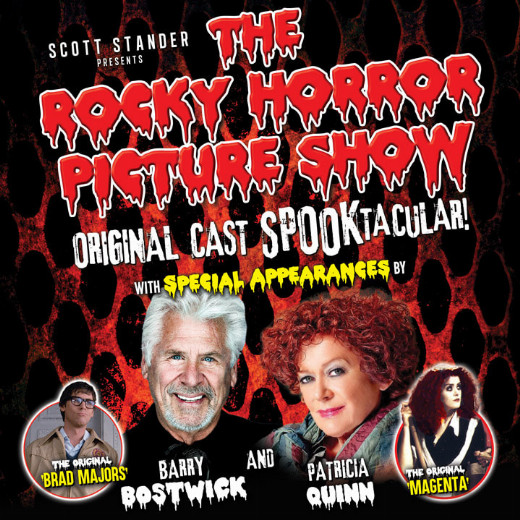
Rocky Horror Picture Show Original Cast Spooktacular Tour with Barry Bostwick and Patricia Quinn ASU Gammage Theatre (10/09-10/09) |

|
Staged Reading of Las Nuevas Tamaleras By Alicia Mena Live Theatre Workshop (9/05-9/06) |

|
24/7 Play Festival The Scoundrel and Scamp Theatre (8/15-8/15) |

|
Staged Reading of Las Nuevas Tamaleras By Alicia Mena Live Theatre Workshop (9/05-9/06) |

|
Arizona Improv Shows - TEMPE S D Acting Studio (8/22-8/22) |

|
Coffee Mixed with Cream Fountain Hills Theater (8/21-8/30) |

|
80’s New Wave Tribute: The Police, The Cars, Talking Heads and Elvis Costello and More Hale Centre Theatre (9/11-9/26) |
|
Drunk Pirates The Rose Theatre (6/10-9/01) |

|
A Tribute to Woodstock 1969: The Music of Janis Joplin, Joe Cocker, The Band, Jefferson Airplane and more Hale Centre Theatre (8/14-8/29) |
Reader Reviews
To post a comment, you must register and login.