


Interview: Patrick Cassidy on Studio Tenn's Upcoming Season
Patrick Cassidy has long stood out as a star in his own right.
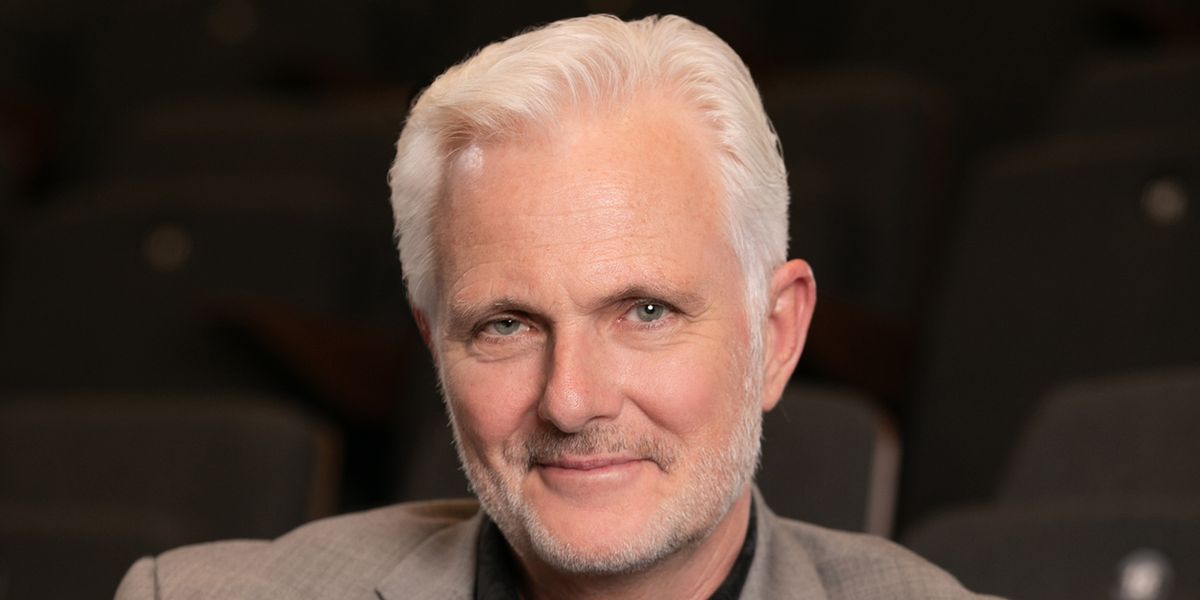
Born into one of Hollywood’s most beloved musical dynasties, with mother Shirley Jones, father Jack Cassidy, and brothers David and Shaun, Patrick Cassidy has long stood out as a star in his own right. For the past six years, the accomplished television, stage, and screen performer has been channeling that legacy into leadership as the Artistic Director of Studio Tenn in Franklin, Tennessee. In this exclusive interview, Cassidy reveals what inspired his move to Music City, how his storied family shaped his artistic vision, and what audiences can expect from Studio Tenn’s upcoming season.
*A Life in Many Acts
BWW: You’ve worn many hats as an actor, singer, and director. Which of those roles most influences the trajectory of how you lead Studio Tenn today?
Patrick: Great question, simply because it’s never been asked. I think ultimately, it’s all of the experiences that I had as a performer from the time I was 18, doing it professionally. All those years, I learned so much about the business itself, as well as the craft of acting and performing. When I started making the transition from performer to producer to director, both sort of simultaneously, so all of that experience served me. I still had so much to learn, and I believe I’m still learning every day. The whole administration side was something that I was taking in, regarding budget, unions, and contracts, which I thank gosh I don’t have to do every day. I’m aware of it, I can weigh in on it, but our Managing Director, Todd Morgan, does an amazing job of that. I just remember sitting in theaters where I was performing and taking in the lighting and the sets and seeing how they moved, the colors and textures. I have observed how all the different departments, from hair to costumes to sound, have served me. I’ve now been an artistic director, directing and producing, I can’t believe it, for just over seven years. At Studio Tenn, it will be six years in November, and 18 months at my first job AD job at Five Star Theatricals in Thousand Oaks, California. Before that, producing on the road. I ran the two big shows at the Wynn Hotel as the Resident Director. It’s amazing to me, I feel like I've had this wonderful time in “college” and being paid to be in college to learn about the craft of running a theater company. I’m very blessed.
*Unexpected Crossroads
BWW: Was there a single turning point when you realized you wanted to shift from performing on Broadway to guiding a theater company?
Patrick: It was when I stopped getting as many auditions. You know, when you hit that certain age, I saw my auditions in film and television becoming few and far between in my late 40s. I thought to myself, I’m still doing a lot of theater, and I thought, what else can I do? This was also a transitional time for me age-wise, in terms of what I “wanted” to do. At this point, I was so blessed to be a performer for over 40 years. But the focus is always on you, and you give of yourself. The commodity you sell is you. My thought was, I love teaching, I love coaching sports, and working with my kids, and I thought, why can’t I give back and pass my industry knowledge on? I started Hollywood Stage Academy for kids interested in theater. The one thing about acting, even if you don’t make it a profession, is that it teaches you to be in front of people and be comfortable speaking. I really enjoyed teaching, and that led to directing. It started with me going to colleges and teaching as a guest for a semester. There is something far more gratifying at my age when I started preparing for this than when I started as an actor. Giving actors’ jobs is much more exciting for me than when I got a job.
*Family Legacy vs. Individual Voice
BWW: Growing up in a famously musical family, how did you carve out your own artistic identity?
Patrick: When I turned 18 I started a band, played drums, and obviously saw the examples of both of my brothers in what they went through as teen idols. David was the Beatles from 1970-1974, Shaun was like Justin Bieber from 1977-1980. I saw the pitfalls in that and have been talking about this since I became an actor. I had so many record companies and managers interested in handling me and signing me, simply because my last name was Cassidy. They didn’t even know if I could sing. But I had a very smart manager. When I got out of high school, I hired a manager. He said, “You could make $1 million but you’re rolling the dice on it happening a third time, with the public buying another Cassidy fitting into the teen idol role”. Frankly, I wanted to be taken more seriously in the craft I could learn, which was the path my father took. My mother was a movie star and not from the theatre. At 18 years old, she made it in the movies, in Oklahoma. My father actually worked his way up the ranks in the theater, learning his craft and everything about the stage. I thought if I could do it that way, that would be the better move for me. It was the greatest choice I ever made. I never went to college. I went to New York, and my “college” was classes at HB Studios. Larry Moss became my acting mentor and teacher. I was taking classes in the daytime while I was on stage on Broadway in Pirates of Penzance and learning from Kevin Klein, Estelle Parsons, and all these amazing, trained people. It was the greatest education. I never started in the chorus as most do. I started with an audition for Pirates of Penzance and got the starring role as Fredric, which was one of the largest parts Gilbert & Sullivan had ever written. I was right for the part. I was very naïve and had a pop voice and all that, and for that year and a half on Broadway, it taught me that I want to do this, and I want to learn how to do this. That set me off on my theater career.
*Studio Tenn & Franklin, Tennessee
BWW: What drew you specifically to Franklin and Studio Tenn? Was it the company’s mission, the community, or something more personal?
Patrick: I had been running Five Star Theatricals as the AD there. My wife and I wanted to get out of California for a long time. My older son had graduated from college, and my younger son had gotten a record deal and a publishing deal in Nashville. I had never been to Tennessee, nor had my wife. For some reason, in three gigantic national tours in which I traipsed across the country, two productions of Joseph and the Amazing Technicolor Dreamcoat with my wife in the show, and then the national production of Aida, Elton John's Aida, I played everywhere. I somehow or another avoided Tennessee. And a lot of times it was, you know, if the tour was in the first year, you'd play other markets. And then maybe the second year, we would get to Nashville or we'd get to Memphis. I just missed it. I'd never been here. When I drove my son out here for him to live here, I looked around and I thought, "Wow, this is a beautiful state". I visited Franklin and thought this is beautiful. Main Street reminded me of the back lot of Warner Brothers Studios! While I went back to California, my wife came to Franklin to get my son set up. And she called me from the Frothy Monkey, and she had looked at her latte, and there was a little heart in the middle of her mug. She said, “I could move to Tennessee”. I agreed. When I asked her what I was going to do for work, she said that my son Jack's best friend's mother was a volunteer usher for an equity theater company called Studio Tenn. They had listed on their website that they were looking for an artistic director. So, when I say this was a divine experience, it truly was God or whatever higher power you believe. All I did was make one phone call and spoke to an intern on her first day. I introduced myself and asked if I could catch a show to see Studio Tenn’s latest production of Mamma Mia. I got an email a few days later from Todd Morgan. When my wife and I pulled up at the parking lot at The Factory a few days later, we walked in, and I was blown away. The industrial architecture, I thought it was so amazing. I took Todd to lunch the next day and told him I’d like to put my name in the hat for artistic director. Todd very quietly looked at me with a dead look. I don’t know what he was thinking to this day. I got an email three days later when I was back in California, which started a four-month conversation and background check of my experience. The motivating factor wasn’t necessarily running Studio Tenn. The motivating factor was, first and foremost, we wanted to get out of California. As I started to uncover things about Franklin and Studio Tenn, it became much more inviting to me. Obviously, the cost of living was much better here than in California. Franklin checked every box for me and my wife, and my family. I really didn’t like what happened to California from the time I was born and raised there. Melissa and I were going through a difficult time in our marriage. We just wanted somewhere else to go. So that was a personal thing that was going on at the time. We arrived in Franklin two months before the pandemic. I was about to produce my first show, but what does an artistic director do when you can’t perform in front of a live audience? No disrespect to anyone who had Covid, I had Covid and was quite ill, but this was actually the best time for me and the theatre to rethink and re-strategize about moving forward. Obviously, the government helped out tremendously by funding the arts. But during this time, I was paid to be in “school” and learn about Studio Tenn, learn about our board, and learn about Franklin and Williamson County. I met with other theatrical executives who were asking each other, “What do we do”? I was able to step outside the box and create something virtual that really opened up our brand. I created a talk show called Studio Tenn Talks. On that show for over two years, I had Stephen Sondheim, Chita Rivera, Patti LuPone, Kristin Chenoweth, Audra McDonald, one of my best friends, Norm Lewis, and everybody else in the theater that you can imagine. Keep in mind, at this time, very few of us were working in the theater so they had time to do my talk show and cared about preserving the theater. By the time Covid was over, I was working on a deal with Jennifer Turner from TPAC to have a cabaret-style show similar to 54 Below in New York. We put the audience on the stage, and they would sit at cabaret tables. The audience would be looking out at all the seats in the audience. It was a great intimate cabaret setting with a bar on each side. I brought in Norm Lewis, Kristin Chenoweth, Shoshana Bean, and others. And that brought our audience back to our theaters. We ran it for four years. In fact, our upcoming cabaret fundraiser, Pink Goes Good With Green, which I presented at TPAC first, I’m now bringing it to Studio Tenn on November 8, 2025. (https://www.studiotenn.com/pink-goes-good-with-green-2025
*Community Connection
BWW: How do you balance Broadway-caliber productions with local talent?
Patrick: My first thing is to hire everybody from here, and that includes performers, choreographers, directors, crew, etc. Usually, that’s what happens here at Studio Tenn because the local talent is exceptional. It really is as good as anywhere. It’s just that the pool is smaller. It’s not as big a pool as you would have in Los Angeles or New York. It really depends on who comes in the door. I want to hire everybody here, but if I can’t find the right person for a part, then I will have to look elsewhere. I also like to open our doors to new people coming to Studio Tenn. We have a very unique thing going on here at The Factory. In all the years I’ve been in the business, I’ve never seen anything like it. We have a venue that has unbelievable shops, wonderful places to eat, and that industrial, cool-looking vibe going on throughout the building. And the history of the factory is also so amazing. You can come to The Factory, park for free, have a first-class quality meal, a cocktail at the huge focal point bar, and then come to a Broadway caliber production all in the same venue. If you told me, this LA New York guy, that of all the places I was going to move to, would be Tennessee, I would have told you Tennessee would have been in the bottom five. Who knew! I still drive around and say I am so grateful every day. I go back to LA to visit my mom and family, but I will always say, “This is a nice place, but I don’t want to live here”.
*Artistic Vision
Defining a Signature – If an audience member left a Studio Tenn production saying, “That’s unmistakably Patrick Cassidy’s touch,” what would they mean by that?
Patrick: That’s a very unique question, and I haven’t thought about this. I would hope something that I produced would be known for its quality. My job is to oversee everything creatively and artistically. I'm involved in marketing development and graphics and have a team that manages that. I love casting and directing a production, but when I’m doing that, I’m not doing my job as an artistic director. I guess I would say my hand is in everything. I hope that my touch, if you will, would be constantly keeping the quality of every production. I do that by working very closely with all the directors. I know that not every show is going to appeal to every patron, but I try to, when I lay out the season, look for broad appeal. And it’s an agonizing process. There are so many variables. We only have a 319-seat theater, only so much room on the stage, and some shows are just too big to produce, like Disney is out! It’s all good. It’s all artistic. It’s all challenging, and it makes you think of many ways to tackle a production. I try to bring to our stage what everyone, or almost everyone, can enjoy.
*Broader Insights
Mentorship & Legacy – Who were your mentors?
Patrick: I think growing up with my family, mentorship was all around me. Sports for me was the biggest outlet that gave me normalcy. I thought the way I grew up was normal because for me, that’s the way it was. I do a show called Just Another Family Tree. It’s about a family where every single person around the dinner table is a star. I grew up with a tremendous amount of love, a tremendous amount of support, and a tremendous amount of mentorship. In terms of show business being the backdrop of our lives, I learned from seeing my older siblings go through it, getting advice from actors, directors, producers, studio executives, and from my mother and my father, who died when I was 14. I grew up with a lot of famous people’s kids. And of course, I learned a lot on my own in my own journey.
Creative Fuel – Outside of theater, what unexpected passions keep your heart pumping and creativity alive?
Patrick: Sports is number one. I was a quarterback in high school. After the first two seasons, I was leading the nation in passing, but in the third season, I broke my collarbone. I thought my college and NFL career was over, but during the interim of healing, I found out that our drama department was doing The Music Man. I was so naïve, I thought what the heck, my mother played Marion the librarian. So my mother calls her friend Dick Van Dyke, who was in the national tour of The Music Man at the time. I go up to Dick Van Dyke’s house, and Dick teaches me the song Trouble. Then he tells me, “Patrick, you’re going to be great. Be confident”. So I go to audition with a hat and a cane, and I sing my heart out. And I get the part of salesman number five! Number Five! And that changed the whole trajectory of my career. I got bit by the theater bug. Since then, I have acted in this how, produced the show, and directed this show. It’s the reason I became a performer. The biggest influence in my life was Music Man. Here’s a funny side story. I was conceived during the filming of Music Man starring my mother and Robert Preston. My mom found out three or four months into filming that she was pregnant, and the director told her she couldn’t tell anyone, fearing Warner Brothers might fire her. So, the wardrobe department hid me by adding more bustle and fringe and blousy stuff to my mother’s clothes and cinched in her corset really tight, which explains the configuration of my head! In the famous scene, when my mother and Robert Preston were singing Till There Was You, and they went in for the big Hollywood kiss, underneath my mom’s petticoat, Robert Preston felt a couple of thumps from me. He then stepped back and yelled, “Cut!” to stop the filming, and said, “What the heck was that?”. And mom replied, “That’s Patrick Cassidy”. The addendum to this story is that 20 years later, I was in New York doing Night of 100 Stars, and Robert Preston was in it as well. Before rehearsal began, I went straight to his dressing room. I said, “Mr. Preston, I have to introduce myself. My name is Patrick Cassidy”. Mr. Preston took a step back, smiled, and said, “Thank you, we’ve already met.”
*Off-Beat & Personal
BWW: Role You’d Revisit – If you could reprise one of your past stage roles tomorrow, which would it be and how would you change it up?
Patrick: Harold Hill from Music Man, I don’t know what that says about me, that role being a con man! I played Robert in Company. This role changed my career after 10 years because it gave me such credibility, originating a Sondheim show. After that, I did five more Sondheim shows. I originated the role of Balladeer in Assassins. There are a couple of shows I never got to do that I would’ve loved to have done, like George in Summer in the Park. I was offered Danny Zuko in Grease, the musical, but I never got to do it. I think I would’ve done well in that part. I was offered Curly in Oklahoma, but I never got to do that or Billy in Carousel.
BWW: Soundtrack of Your Life – What song always puts you back in a creative mindset?
Patrick: I have many songs that emotionally move me. Being Alive from Company moves me, and show anthems move me. I have eclectic tastes in music; I’m a Led Zeppelin fan, a Billy Joel fan, and a jazz fan. I used to run on the treadmill to Oklahoma. Musical scores from shows put me in a creative place.
BWW: Franklin Favorites – Any hidden local spots—cafés, trails, or music venues—that have become part of your life in Franklin?
Patrick: Hattie B’s! I love hot chicken. And I hang out here a lot at The Factory. I don’t go downtown to Broadway unless I have friends visiting. Downtown is just not my scene. It may have been my scene when I was 20, but not now. I have really great friends here. That’s another two steps up from LA. It’s the people. People are incredibly kind here. Everybody says hello to you on the street or good morning. People take an interest in you here, and that was a beautiful blessing when we moved here. So many of my friends that I have here are so genuine. And I really appreciate that.
BWW: Risk & Reward – What’s the boldest artistic risk you’d love Studio Tenn to take in the next few seasons?
Patrick: Great question, and it’s a hard question. This is something I anguish over. My whole reason for getting into theater was that the stage was a place for stories to be told that might not normally get told. And a place where other generations (his is part of our mission statement) can get educated by what theater brings to a community. It’s why I fell in love with theater. It is also a complete place of acceptance, which I have such deep respect for. When I came to the south, I realized there are certain shows that will work here that would not work in LA. For example, a staging of Steel Magnolias in LA, I’m not certain, would do that well. But here, it’s a southern story. It’s about incredibly strong women. And a beautifully told and written story. This is true on the flipside as well. When I did Cabaret, I wasn’t sure how the Williamson County audience would feel. It turned out, they embraced it. Of course, we always send out disclaimers so the audience is aware of anything they may be sensitive to. My mission is to bring to our stage something that informs, educates, and maybe even brings about a new way of thinking. If it just creates a conversation with friends and loved ones afterwards, to me, we have done our job. It doesn’t mean everybody’s going to like every production. That being said, there are many shows I would like to introduce to our audience, but that is one step at a time. The beauty of theater is that we are also getting a more eclectic audience who want to see a wider variety of productions.
BWW: Is there a question I haven’t asked that you would like to address?
Patrick: I definitely want BroadwayWorld to know what is going on in regional theater now. Regional theater across the country is suffering in a big way. Regional theater survives by two means. One is revenue generated by ticket sales. The other is contributions and donations. Many, many, many regional theaters and many of my friends in much bigger theaters than ours are suffering dramatically. It is so important that people recognize the importance of theater within their communities. And the theater to the arts itself is so vital. I want people to know that we thank the Lord that Studio Tenn’s ticket sales are good so far, but we are still challenged with what it takes to run a theater company. Ticket sales are only about 50% of what it takes to keep the lights on. Contributions and donations are vital to the life of the theatre. We started an educational arm to teach the next generation not only the importance of theater, but also how great theater is. What it does for businesses here at The Factory is very inclusive. A nonprofit needs to survive by people taking an invested interest, not just as a season ticket holder, but to help us be a part of our community.
Studio Tenn has experienced remarkable growth in the past 16 years, establishing itself as Williamson County’s sole professional nonprofit theater company, based in the Turner Theater at the Factory in Franklin. The new 2025-2026 season offers a dynamic mix of styles from the chilling horror of Dracula to the heartwarming nostalgia of White Christmas, the cunning suspense of Deathtrap, the breezy, door-slamming comedy of Boeing Boeing, and the electrifying passion of Jesus Christ Superstar. This local regional theater has curated a season that truly cannot be missed, filled with imaginative productions, powerful plays, and show-stopping musicals, all brought to life by an extraordinary team of performers, creatives, and production staff. For more information on Studio Tenn, visit www.studiotenn.com.
I’ll see you there.
~carolan
Sign up for all the news on the Fall season, discounts & more...
|
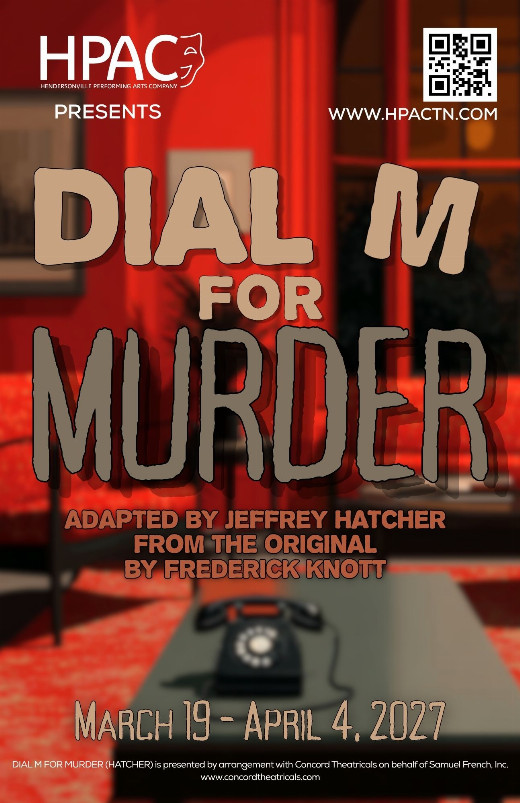
Dial M for Murder Hendersonville Performing Arts Company (3/19-4/04) |
|
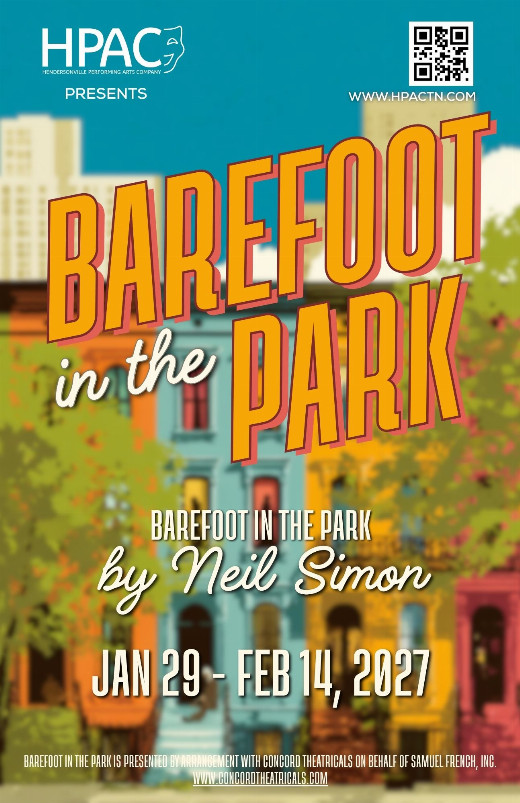
Barefoot in the Park Hendersonville Performing Arts Company (1/29-2/14) |
|
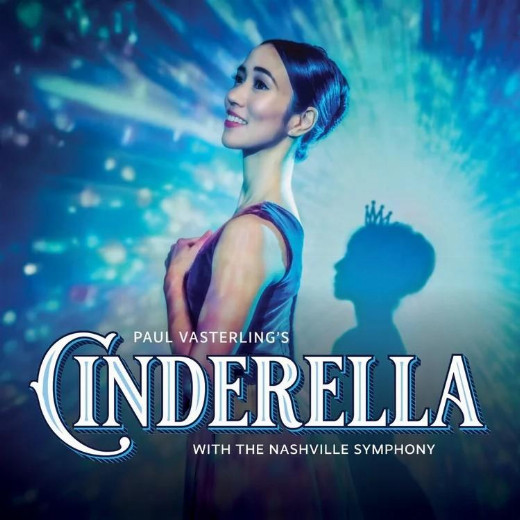
Cinderella Tennessee Performing Arts Center (2/26-2/28) |
|
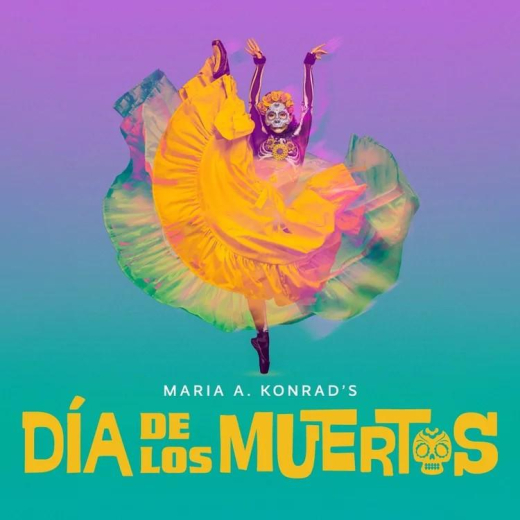
Dia de los Mourtes Nashville Ballet at The Martin Center (9/28-11/01) PHOTOS |
|
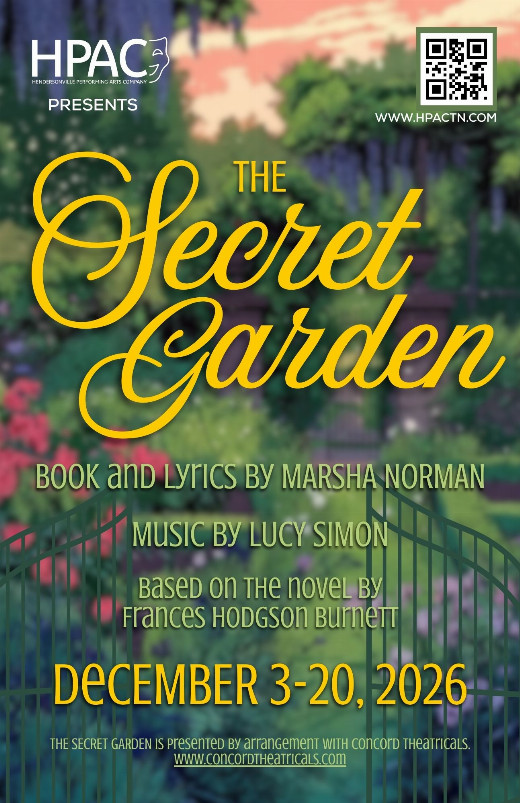
The Secret Garden Hendersonville Performing Arts Company (12/03-12/20) |
|
Misery Ramsey Theatre Company (3/19-3/20) |
|
Leanne Morgan Bridgestone Arena (12/11-12/11) |
|
C.S. Lewis On Stage: Further Up & Further In The Fisher Center at Belmont University (10/17-10/17) |
|
The Shark is Broken The Circuit Playhouse (5/07-5/30) |
|
Disney's The Little Mermaid Ramsey Theatre Company (6/26-6/27) |
