


Review: MENCARI GURU BANGSA as an Experiment in Life and Theater
On September 9th, the team from Broadwayworld attended Teater Keliling’s Mencari Guru Bangsa, an experimental theater in celebration of Rudolf Puspa's 78th birthday, staged at Bentara Budaya Jakarta.
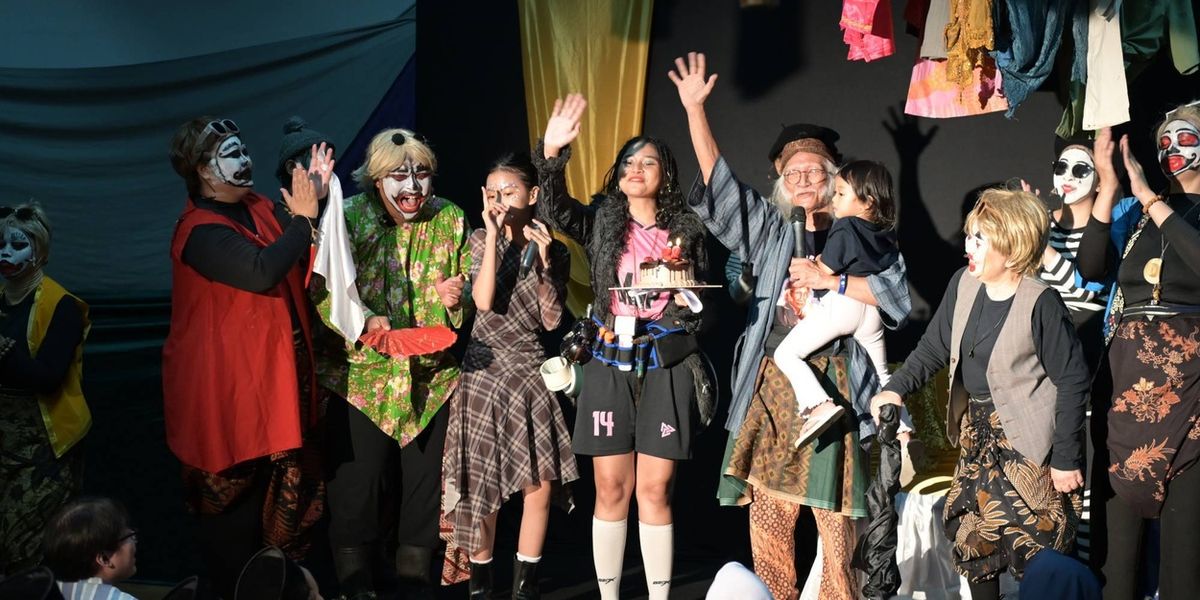
Review by Zahira, editing by Rakaputra Paputungan.
On September 9th, the team from Broadwayworld attended Teater Keliling’s Mencari Guru Bangsa, an experimental theater in celebration of Rudolf Puspa's 78th birthday, staged at Bentara Budaya Jakarta.
The evening began unconventionally, starting not from the stage but at the front hallway leading to the venue. Audiences were told to wear blue and were drawn into a highly interactive and humorous opening. Rudolf Puspa himself dominated this section, accompanied by the figure of Semar, a character that symbolises wisdom, humility, and humbleness in Javanese wayang. The 45-minute prologue filled with witty political commentary had successfully set the satirical tone.
The performance was unapologetically experimental. There was no elevated stage and the set design consisted of traditional costumes hanging above the space, creating a suspended cultural backdrop. Actors were spread across different points of the hall—two on the right, one center, two on the left—without really “using” the set as props, emphasizing instead the spoken banter. The production relied heavily on political jokes and wordplay, poking fun at the Indonesian government’s many inconsistencies, history revisionism, and ever-shifting public policies. To its credit, the humor landed clever, sharp, and never stale.
But after an hour, the cracks started to show. I was getting lost trying to follow the confusing plot. While I could identify some distinctions between the various Semars, much of the narrative blurred together. The supposed story is something about a conflict between Semar and his father, leading to a reconciliation. It was unclear and overshadowed by improvisational banter.
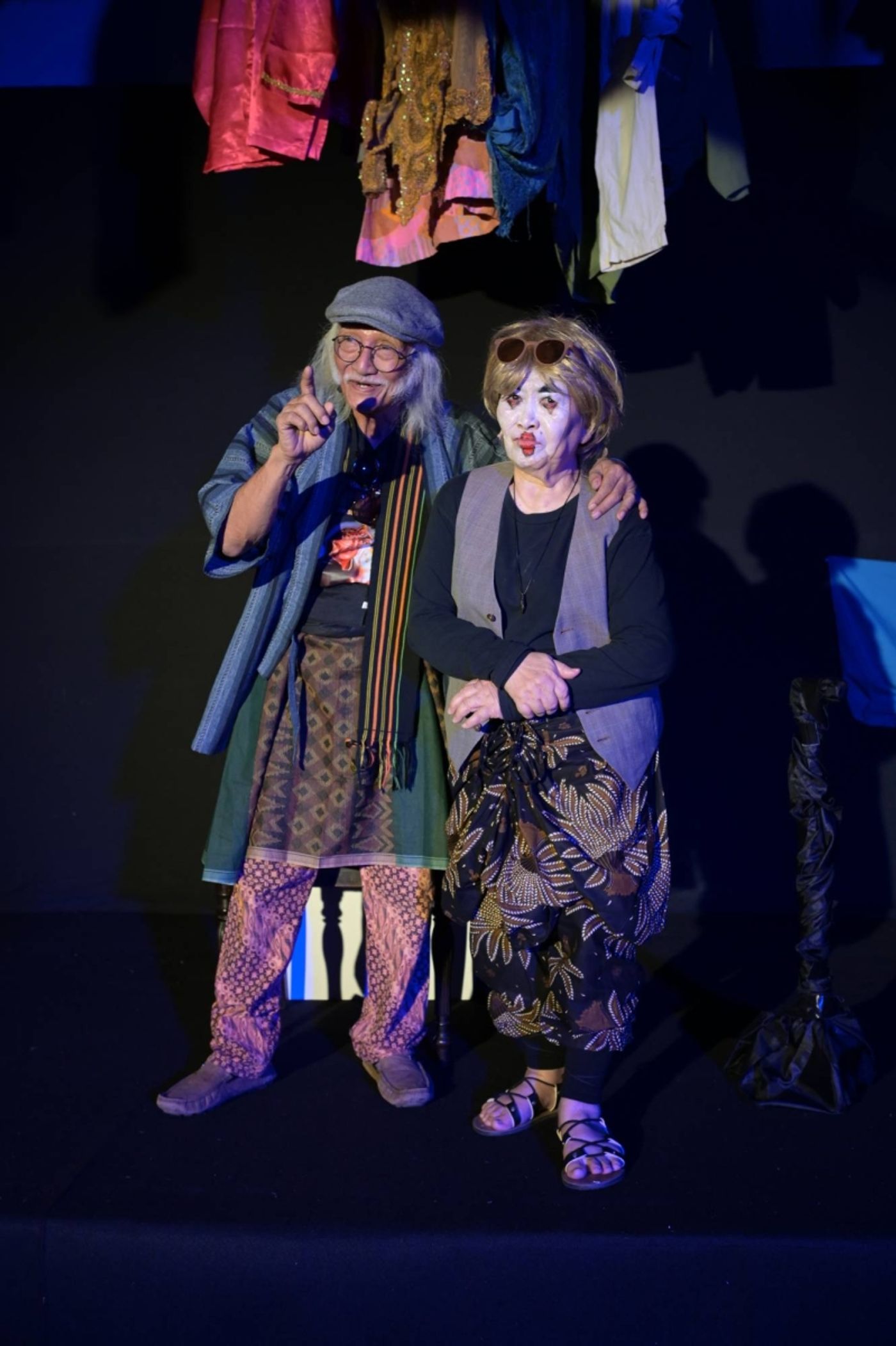
I genuinely enjoyed the witty jokes, the absurd staging, and above all, the warmth of seeing Rudolf Puspa’s family perform alongside him—his granddaughter’s small comedic role was particularly endearing. I also appreciated the energy of the senior cast, with actors in their seventies projecting powerfully and engaging the audience without the barrier of a stage. Still, much of the play left me adrift; the message never quite landed, and the story often felt muddled. Living your life through art, acting, and theater is a form of resilience as much as it is passion. Watching them pour themselves into the stage, not as a farewell but as a continuation of what they love, made me feel both inspired and emotional. It was less about the play itself, and more about witnessing a celebration of life through theater.
Mencari Guru Bangsa’s presentation as a birthday celebration rather than a traditional play justified its existence as a piece of experimental theater. The theatrical risks, the outdoor opening, the improvisational structure, the absurdist banter, were not only necessary but also refreshing! And new! This is what made the show memorable, even if the central “message” remained lost. Ultimately, the clearest takeaway was not political critique, but rather the celebration of Rudolf’s life, his family, and his enduring commitment to theater. And that, in its own way, was heartwarming.
Broadwayworld Indonesia is a media partner of Mencari Guru Bangsa.
Reader Reviews
To post a comment, you must register and login.