


Review: RASHOMON at Rangshila Theatre
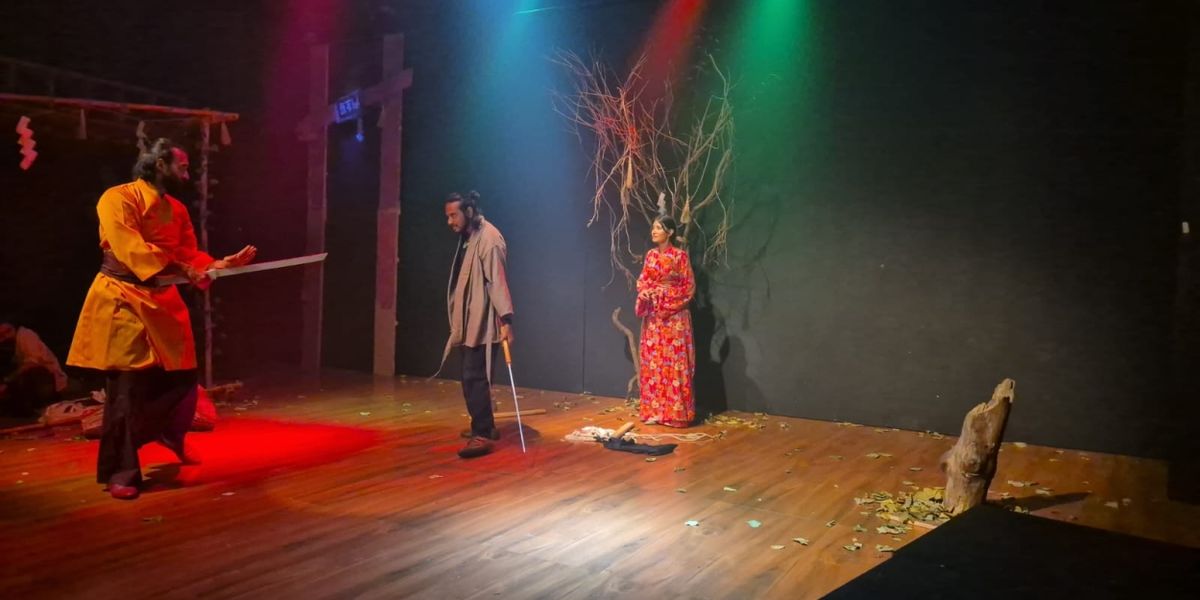
After a long spell of corporate monotony, I found myself in a small theatre space in the by lanes of Versova on Independence Day eve. The coming day meant not a sausage to any of us here, it was just another late night play before a holiday, a lullaby before a warm empty day to laze and never attempt to remember the play we watched, nor remember any of its provocations.
I surprisingly was delighted to have the time to gestate the ideas displayed in Darakht Theatre Group’s theatrical adaptation of the Kurusowa classic, Rashomon. I have willingly refrained from watching the movie all my life (for some that could be a long time of being weary of something), for I feared I would never understand it because of how people talked about it. A few minutes into this production set in ‘Kyoto Nagar’, I found myself jolted right out of the seriousness of Rashomon.
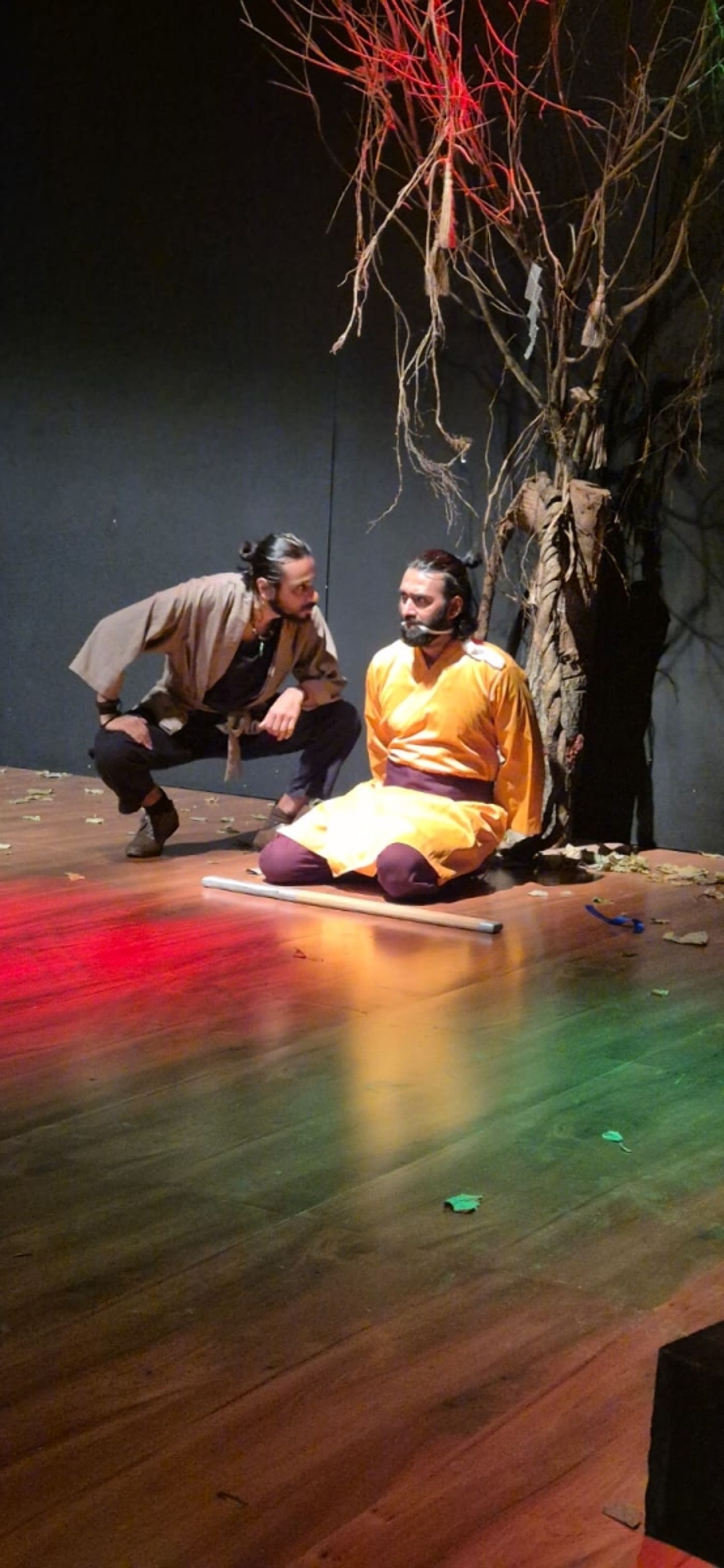
“The film opens in torrential rain, and five shots move from long shot to closeup to reveal two men sitting in the shelter of Kyoto’s Rashomon Gate. The rain will be a useful device, unmistakably setting apart the present from the past. The two men are a priest and a woodcutter, and when a commoner runs in out of the rain and engages them in conversation, he learns that a samurai has been murdered and his wife raped and a local bandit is suspected. In the course of telling the commoner what they know, the woodcutter and the priest will introduce flashbacks in which the bandit, the wife and the woodcutter say what they saw, or think they saw–and then a medium turns up to channel the ghost of the dead samurai. Although the stories are in radical disagreement, it is unlikely any of the original participants are lying for their own advantage, since each claims to be the murderer.”
- Summary of the movie by Roger Ebert for rogerebert.com
For the unfamiliar, Rashomon is a popular classic, one of the few great films of the world to comfortably straddle between popular and esoteric, directed by the Japanese auteur Akira Kurosawa. The Darakht production did not stray away from the movie; not in story, aesthetic or moral intrigue. The movie shows narrators of a story and the various ways in which they retell their story to the world and to themselves - a shocking post-truth reality that we are all eerily aware of in 2025.
“Many films that use a flashback only to fill in information are lazy,” Ebert rightfully says in his review of the film, reminding us that Rashomon plays with plot/reality just like memory does. The theatrical production was true to this, however, it took the slapstick route - where the different narrations just became ‘funny’ to the audience, far from the reflective piece it is considered.
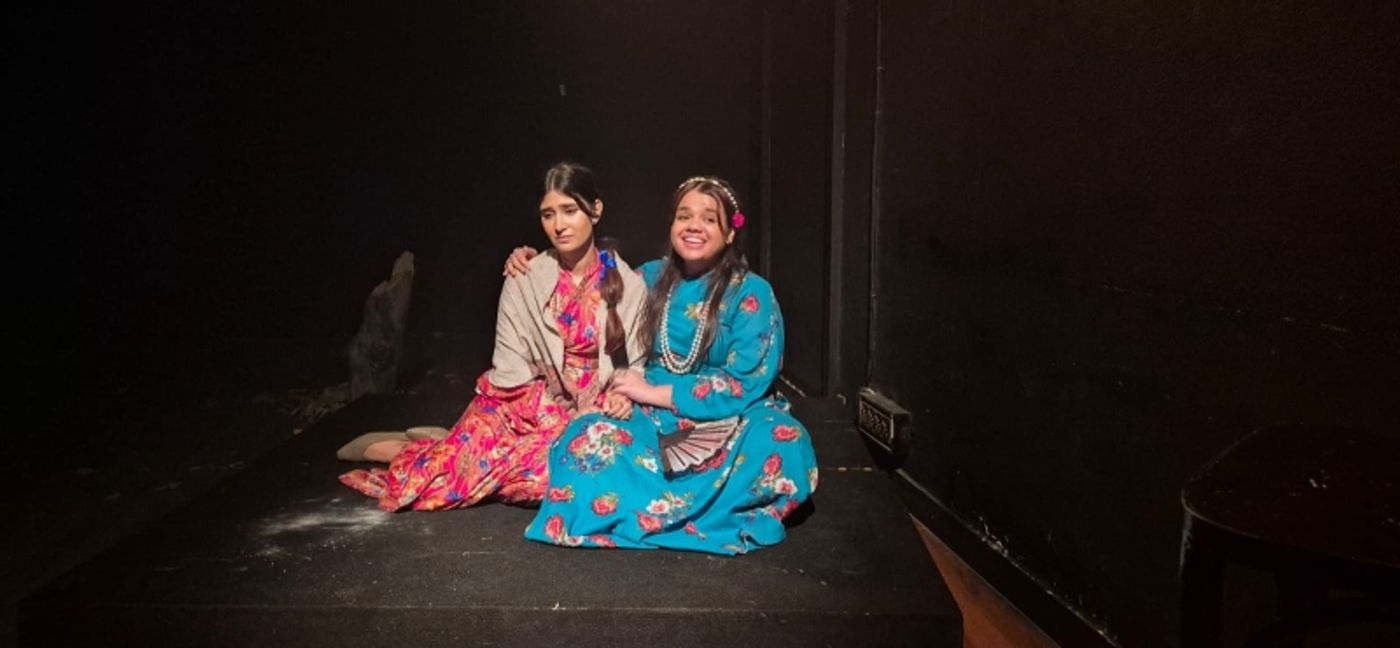
This production was a theatrical adaptation of Kurursawa’s Rashomon in Hindi, translated by Ramesh Chandra Shah and directed by Tariq Rehman Khan for an audience in Mumbai that would in most probability have already watched the movie before. I’d go to the extent of saying that most people in the audience alongside me would not really be watching the play – they would know what follows and instead be most focused on the stagecraft – no longer in harmony with the jaded monk seeking a better world and escaping into the moral dilemmas of the story. For the better part of the play, I could not suspend my disbelief, largely augmented by my friend beside me who was unimpressed from the first scene, unable to give the play a real shot (an exception being the enthralling Manal Gaur as Kinomi during her narration of the story as a victim of assault). Even then, extended action sequences (with plastic swords that could not have felt more farcical), hot and cold dialogue deliveries and literal translations of the Japanese setting were repeated obstructions in the viewing of the play.
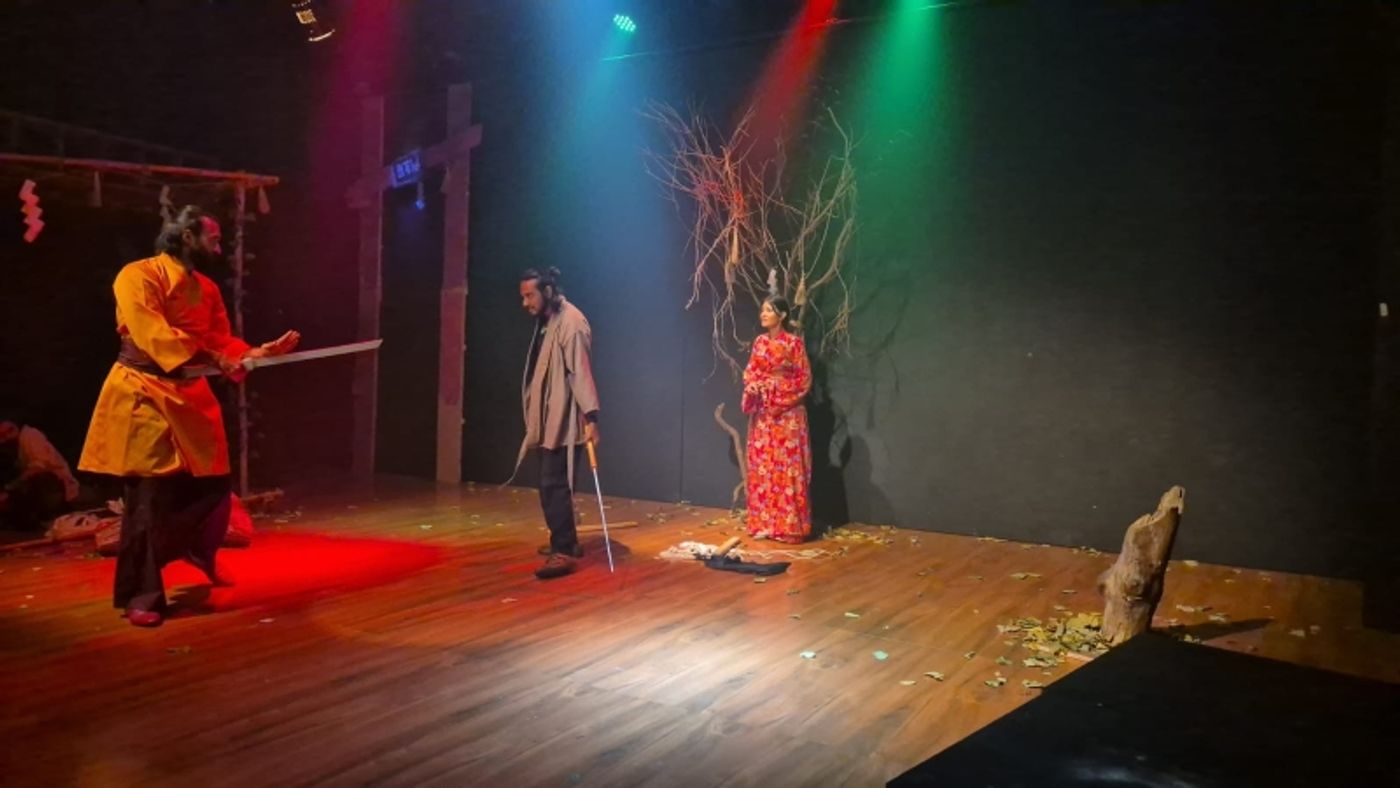
I kept wondering of the play’s potential as a more Indianised adaptation - for we have all that it takes – monks, socially conforming maniacs who would happily distort the facts of a murder to more politically palatable mistruths, and women - considered divine and conniving in the same breath. Furthermore, the distressing scene of sexual assault from Kinomi’s narration of the story reminded me of the very few times I have seen our stories depict sexual violence, and the grief one has to live with post the horror. We might have developed some vigilante stories, built careers of avenging heroes, but what of the survivors?
If you will allow me a moment of self-indulgence, maybe I can describe my current theatre experiences as a metaphor to you. Witnessing some plays in the past few years has evoked the image of a family mourning a father after already having lost their mother—a moment when the community gathers, not only to grieve but to wonder whether sorrow will divide the children or bind them closer. In many ways, I feel theatre itself is orphaned, with audiences often showing up out of ritual, as though attending the funerals of fading forms. Despite a somewhat subdued portrayal of the monk, the play left me reflecting on this weariness, even as I caught myself bursting into laughter more than once.
This production could have benefited with a more sincere monk - his passive voice was dull when compared to the exaggerated yet enjoyable performances of Asif Khan and Tariq Rehman Khan as the wood cutter and the unscrupulous commoner (who made wigs out of the buried dead). Lokesh as Tajimaro was hilarious and the key to the play - his energy and stage presence was delightful. Right when dark metaphors began crawling into my head I started anticipating an interval that never came, followed by a longer than anticipated run of the show. It makes me wonder—am I so caught up in the world of anticipatory popcorn that I can’t sit through a three-hour play? Or will the creators eventually trim the show themselves? I suppose I’ll only find out in the next production—hopefully soon, sharper, and brimming with the promise it already holds.
Director: Tariq Rehman Khan
Translation: Ramesh Chandra Shah (Hindi)
Adapted from: Rashomon (movie) by Akira Kurosawa
Cast:
Manal Gaur as Kinomi
Shadab Sheikh as Samant Takehiko
Lokesh Varma as Tajomaru
Vijay Chavhan as Deputy
Asif Khan as Lakhadhara
Darshan Jain as Pujari
Tariq Rehman Khan as Wigmaker
Meghna Dutt as Tantrik
Gaurangi mehrishi as Zakura (kinomi mother)
Mukund Thakur & Harsh as horses

|
taptoexplore taptoexplore (4/23-4/23) |

|
BLR Emergency Care blr (5/21-10/10) |

|
gohealthypro gohealthypro (5/23-5/24) |
Reader Reviews
To post a comment, you must register and login.