


Interview: Kara Greenberg of LEOPOLDSTADT at Main Street Theater
Greenberg steps into Stoppard’s rich and precise language while navigating the emotional weight of a story rooted in real historical trauma.
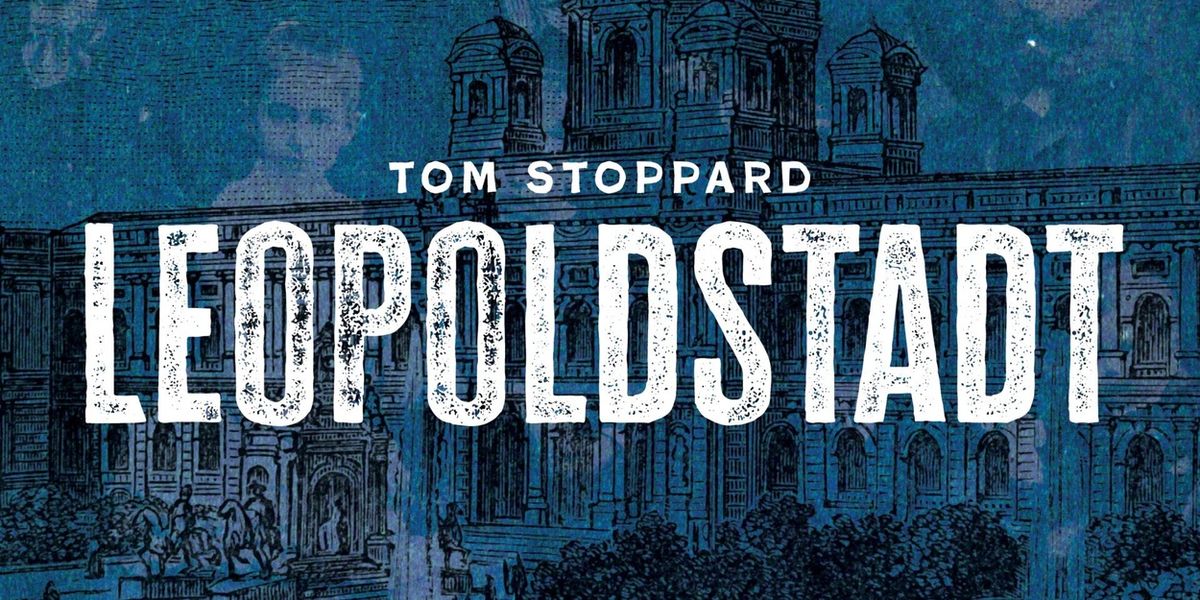
In Main Street Theater’s production of Leopoldstadt, Tom Stoppard traces the lives of a Jewish family in Vienna across more than half a century, capturing the joys of family life alongside the devastating impact of rising antisemitism and the Holocaust. The play, widely considered one of Stoppard’s most personal works, blends intimate family relationships with sweeping historical events, asking audiences to confront how memory, identity, and history shape who we are.
Actress Kara Greenberg joins the cast as Rosa Kloster, a character whose journey spans decades and reflects the profound changes experienced by an entire generation. As Rebecca Udden and the company mark Main Street Theater’s 50th anniversary season with this landmark production, Greenberg steps into Stoppard’s rich and precise language while navigating the emotional weight of a story rooted in real historical trauma.
In this conversation, Greenberg discusses what it was like seeing Leopoldstadt on Broadway before joining the production herself, the challenge of portraying Rosa across different stages of her life, and why she believes this story carries urgent relevance for audiences today. She also reflects on the responsibility artists bear when bringing historical narratives to the stage, and on the hope that theater can inspire deeper understanding and empathy long after the curtain falls.
What first drew you to being part of Leopoldstadt, and what was your reaction when you read the script?
I was lucky enough to see Leopoldstadt on Broadway. I was frozen in my seat at the end of the show along with everyone else around me. None of us got up when it was over. It was a profound theatrical experience. Main Street Theater secured the rights well over a year ago and Artistic Director, Rebecca Udden, decided to save it for the 50th anniversary of the theater. I knew I wanted to be a part of it and I am so fortunate that she cast me.
Tom Stoppard’s work is known for its intellectual depth and precision. What has it been like stepping into his language?
I love Tom Stoppard’s language. There’s nothing that he has written that doesn’t have some obscure nuance or reference to something historical or something profound in a way that only he knows how to do. I love the language and it’s a privilege to have the opportunity to say these words.
How do you personally prepare for a role that exists within such a large, multi-generational story?
There are a lot of people in this cast, and you are constantly looking back at the family tree to see how everyone connects! I find that it’s best to know who everyone is in relation to me and my character. Who are my parents and my grandparents and my nephews and my cousins? It didn’t take long to absorb once I put it in my head in that fashion.
Can you share insights into your character and where they fit within the family’s timeline?
I play Rosa Kloster. The play is about my parents, my aunts and uncles and my cousins and how The Holocaust personally affected each person.
What has been the most challenging aspect of portraying your character’s journey across shifting historical moments?
The play spans 56 years. I play my character when she is 31 and then again when she is 62. I know everything that has happened in between that time historically in my family and the most difficult part for me is changing my vocalization and my physicality so that the age jump is believable to the audience.
How do you balance intimate family dynamics with the vast historical forces at play in the story?
Stoppard gives you everything you need in the lines and in between the lines about the
dynamics between each family member and their history. If you delve into the text into the history of the play all of your questions will be answered, I find.
What has the rehearsal process been like working with the cast and creative team on such a layered piece?
We are at the beginning of the rehearsal process, but so far so good! I think when you’re doing such an important piece of art that is historical and surrounds true events that happened in real life, it is an opportunity for everyone in the room to learn about people’s place in history and what they’ve been through.
Are there particular scenes that have surprised you in rehearsal or taken on new meaning?
There's surprisingly a lot of humor during the big family scenes, which I guess shouldn’t be surprising in that family dynamics are funny, and real and relatable.
Leopoldstadt explores memory, identity, and the lasting impact of history. ‘
How have these themes resonated with you personally?
I don’t think there is a Jewish person on this earth who has not experienced some sort of anti-semitism. Being true to your identity and knowing who you are, and where you came from completely shapes the person that you are in every aspect of your life. The history of the Jewish people and their oppression and the antisemitism that has existed against them since the beginning of time and has never stopped. It is vital that people understand that the sentence “this could never happen again”, is questionable today considering the world filled with hatred that we live in today. The falsehoods and lies that live on social media platforms heavily contribute to the Jewish hatred that exists on every continent today.
How do you hope audiences will feel when they leave the theater after seeing this production?
I hope the audience walks away, having learned something that they didn’t know before, that they are curious to learn more and dive into the history about what they saw, and perhaps see other movies, documentaries, and plays on this subject and spread the words so that people never forget.
Why do you think Leopoldstadt is an important story to tell right now? What conversations do you hope this play sparks among audiences in Houston?
It is frightening that Leoplodstadt is extremely relevant today. When I saw this three years ago on Broadway, I felt that same emotion, but it is magnified extraordinarily now. Things are much
worse than they were three years ago and we need to keep telling stories like this. I am doing this show in memory of Eva Schloss, the last Auschwitz Concentration Camp survivor, who died on March 2, 2006, as well as the other 6 million Jews who were murdered by the Nazis.
What has this experience taught you as an artist?
I love doing historical dramas because they are so important. As an artist, part of your job is to tell stories fictionalized or stories based on historical events ( Wolf Hall and Bring Up The Bodies) , or non-fiction plays (The Laramie Project) and to allow the audiences to experience them through the knowledge, or lack thereof that they have had so far in their lives. My hope is for people to be curious and empathetic about people’s plights throughout history and strive to be more understanding and less judgmental as they walk through this world.
Sign up for all the news on the Fall season, discounts & more...

|
The Carpenters Songbook: A Live Celebration Lutcher Theater (11/07-11/07) |

|
Waitress Lutcher Theater (10/24-10/24) |
|
One Flew Over the Cuckoo's Nest Baytown Little Theater (10/09-10/18) |

|
Serial Killers: The Crucifixion of the Black Man in America Nikki El Films & Theatre (10/17-10/17) |
|
GUnhild Carling at Brazosport College The Clarion (11/20-11/20) |
|
And Then There Were None Alvin College Theatre (10/10-10/17) |

|
Edward Albee’s Who’s Afraid of Virginia Woolf? The Alley Theatre (5/28-6/13) |

|
Ed Sheeran at AT&T Stadium AT&T Stadium (10/24-10/24) |

|
Richard O'Brien's THE ROCKY HORROR SHOW Art Factory (10/16-10/31) |

|
10-Minute Play Festival Jose Quintero Theater (11/13-11/15) |
