


Interview: Christa Forster of KNOW THE PLACE FOR THE FIRST TIME at MATCH
A solo performance about falling back in love with your life!
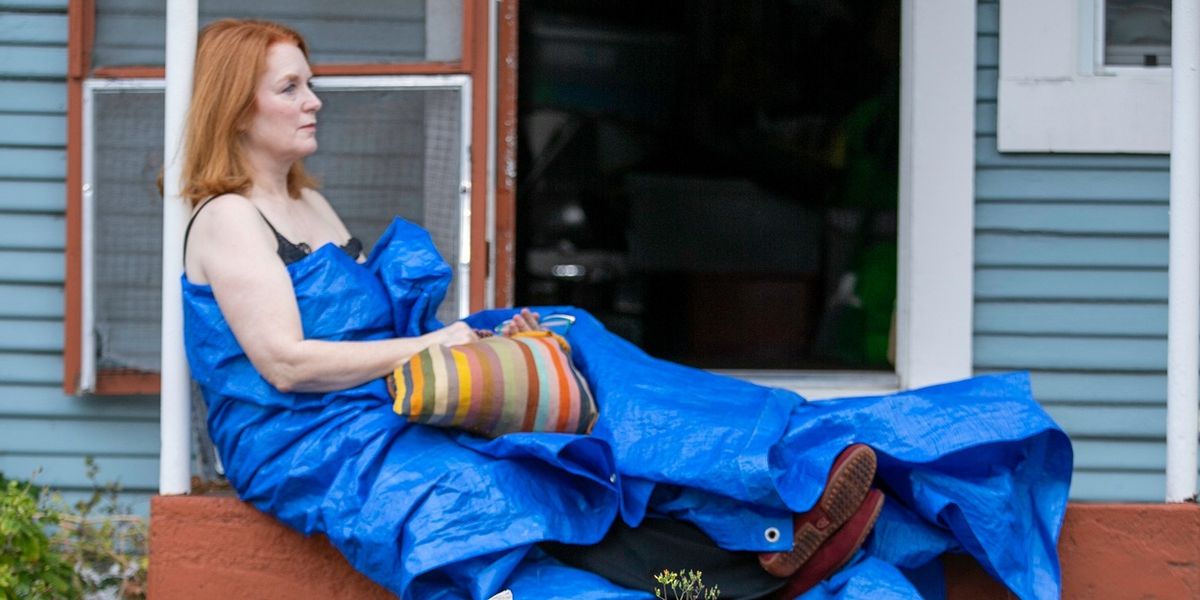
KNOW THE PLACE FOR THE FIRST TIME is a live participatory solo performance by writer and performer Christa M. Forster. It invites audiences to return to their bodies, their breath, their imagination, and to the question, “How do we fall back in love with our lives, even when they feel broken?” It is running at the Match for one weekend only, from January 23rd through the 25th. BROADWAY WORLD writer Brett Cullum got a chance to talk with Christa and find out more about this unique piece.
Brett Cullum: Tell me a little bit about what this is about. I've heard through the grapevine that you're a great performer, and all of these wonderful accolades about you, but I've never seen you, and I don't know what to expect from this.
Christa Forster: Well, thanks to that grapevine, first of all, and KNOW THE PLACE FOR THE FIRST TIME is a show that was born out of disaster, catastrophe, and a feeling of being at a place where I couldn't go on the way that I had been going on, and let me explain. In 2024, there were two storms that everybody in Houston experienced back-to-back, and one of them was the derecho in May. And the other one was Beryl, the hurricane. My particular house in Houston got a one-two punch. The derecho took a significant part of our roof off, and it rained inside our home, all over the belongings of my oldest son. And, he was literally about to leave for school. We were gonna take him back to college. His boxes were on his bed because we were about to load them in the car, and the roof blew off. That was shocking. That derecho hit without very much warning at all, and it literally tore through our property. And we live in the Heights, and so the Heights was the hardest place hit. After that, as if that wasn't hard enough, it was right at the end of school. I'm a high school English teacher, and the end of the school year is a particularly challenging time to handle all the tasks. I also had to manage insurance and contractors, and get the roof dried in, because it took one year for that roof to get re-roofed, and by that point, it was Hurricane season again. While it was still dried in, Beryl was on its way, and I wasn't worried about Beryl. I was just probably gonna stay a tropical storm, that's what they're saying. Oh, no, it didn't. And what happened is, Beryl came and lasted for a long time, it seemed to me. Six hours or something, it was blowing at my house. The point is, I had literally just had all the trees trimmed so that they would survive hurricane season, which I hadn't had done in ten years. They all fell. I am a tree lover. And it was like losing a dog or something that you just love so much, and I was so attached to these trees, as was my family. And so, to be blunt, I hated Houston at that point.
I'm a Houston transplant, meaning I moved here a while ago to attend the University of Houston's creative writing program in poetry. Coming from Southern California, it was a shock to move to Houston. It took me 18 months, but after that time, I loved Houston. Houston is the revolutionary city! This is the city for me! And I loved it so much. I felt like anything was possible here. It was a city, it was very idiosyncratic, because I guess, of the no zoning. Where I grew up, it's zoned to the teeth out there in Southern California. I felt like it was the right city for me to be in, and I stayed for a long time. I've been here a long time. And this was the first time in my experience of living in Houston that I thought, 'I hate this city, and I cannot get out of it fast enough.' And yet, I couldn't leave, because this is where my community has been built. My oldest son is at Rice University. My younger son was starting at U of H. I have a great job, I love my colleagues, I love my friends, and I love my family. We have family literally a couple of blocks away. So it was an impossible situation.
As an artist and a teacher, I always have to figure out ways to make sure that I don't give up on my creative projects because I can't. If I did, I would feel lost, to put it nicely, and dead inside, to be dramatic. What I do is I usually apply for grants. The Houston Arts Alliance had a grant for individual artists. I've been interested in the past many years in place-based work. My last solo show was a show about California. I wanted to keep working on stories that are based and rooted in specific places. That was how I came up with this idea of, if I try to figure out how I can know Houston again for the first time, like I did when I first moved here, then I know I can fall in love with it again. I was pretty sure it would work, and then I got the grant, so I had to do it. This work is funded in part by the City of Houston through the Houston Arts Alliance. Thank you. They have really been a great support for me over the years, so I'm really appreciative of them.
Brett Cullum: They've supported a lot of artistic endeavors, and I really admire all the work that they do, and it really is wonderful, and it's definitely one of the things to love about Houston. When you talk about falling in love with Houston for the first time, they are definitely a part of that. Now, you've got a background in poetry? You're doing this as a one-woman show. How much does the poet side of you influence that? I'm sure it's gotta creep in there.
Christa Forster: It's huge, actually. So the title itself is an allusion to T.S. Eliot's poem, “Little Gidding” which is part of his four quartets. And “know the place for the first time,” that was a line, and it comes from a section of the poem that's pretty famous. As a young poet, I had heard it; it was quoted. “We shall not cease from exploration. And the end of our exploring will be to arrive where we started, and know the place for the first time.” Elliot was my first favorite poet in high school. That line has been a touchstone for me. Again, it's quoted a lot by other poets. It just comes up in poetry and works about poetry. Elliot actually was hugely inspirational to this work.
I also, as a teacher, teach Homer's ODYSSEY. There are some epic-like conventions in this work. The epic similes do something incredible that I really wanted to try to do with my work, which is they take two entirely separate worlds and show them to one another. [These works] help people from the maritime communities see the agricultural community, and they help the agricultural community relate to something that they may never have seen before. It connects two cultures that would maybe not know one another. And to me, that felt like a very American need at the time. How could poetry and this epic simile help communities? It might be physical, but that also might be ideological. I loved the challenge of that. The journey to do that has made this piece so poetry, everywhere. And I quote from Elliot in it, I quote from Tennyson, whom I don't really love, but he's in there because he's got a poem called “Ulysses,” which plays a role. And then I also quote from C.P. Kavafi, the modern Greek poet who wrote this beautiful poem called “Ithaca.” [It] is about the process, the journey of making A life.
Brett Cullum: Oh my gosh! We are all so divided now, and I feel like we need to look at things with fresh eyes, or maybe old Homerian ones. Now, this is only playing one weekend, right? It's January 23rd through the 25th at the MATCH. And the 25th, you're actually doing a talkback. It's the matinee on Sunday. So that Sunday at 2:30 pm, and then the other ones are 7:30 pm.
Brett Cullum: So, how did you get into performing? I mean, obviously, you've got all of these literary roots, you're an English teacher, you've got an MFA in writing and poetry, and how did this performance thing come about?
Christa Forster: It came about for a couple of reasons. I have been performing since I was ten, but not on stages, not in the theater. I was a musician and sang in choirs for a long time, from the age of 10 until I was about 22. Singing is a really important thing for me. To sing with other voices is ethereal. So performance has always been a part of my history.
One of the things I didn't like about poetry when I was younger; it felt very static. The page was dominant at the time. Spoken word had not yet really taken off. There was some spoken word in Houston. Now there's spoken word all over Houston. Houston has one of the best spoken word teams that performs nationally and wins national competitions. But not for me. It was the page, and it just wasn't enough. I really felt like the body was being left out, and that's around the time I met Jason Nodler, Tamarie Cooper, and my director, Charlie Scott. He’s one of my best friends in Houston, and we were in the writing program together, he's a poet as well. He also teaches at the same school where I teach. He was involved in theater. We were so, such close friends, and so that's how I went to my first Infernal Bridegroom show. And it was a great time. And then I performed in shows with IBP. I did 5 or 6 shows with IBP. In 2003, I performed my first solo show. I just knew poetry wasn't enough. With my musical background, performance background, and love of words, I had a better chance of landing with people when I embodied it. Showing it, playing it. I just got better feedback, I got better audiences, responses from performing, and I love it. I love performing.
The other thing that I love about performance is that it's ephemeral, right? The ephemerality of it, the here and then not here. That, to me, is very moving and very special. And I love being a part of that tradition.
It is only one weekend in part because the grant really only allows it to be for one weekend. But my hope is that KNOW THE PLACE FOR THE FIRST TIME is actually part of a larger system of work that I have committed to, and I say kind of, but really, like, it depends on the funding for it called HOME[R]LAND, because I am obsessed with Homer. The R in the middle of Homerland is in brackets, so that it can read Homeland, Home, Our Land, with a play on words, like 'our land,' and then Homerland.
Brett Cullum: So, you go from January 23rd to the 25th, you see this at the MATCH, and then we come back later when another grant appears. The lightning strikes, and we get it back. I'm very excited about this!

Sign up for all the news on the Summer season, discounts & more...
|
Rhinoceros The Catastrophic Theatre (9/18-10/10) |
|
Ed Sheeran at AT&T Stadium AT&T Stadium (10/24-10/24) |

|
The Shark is Broken Alley Theatre (3/05-3/21) |

|
Anarkali Reimagined Luxtrium (10/22-10/25) PHOTOS |
|
Don't Say Murder by Carl Williams Theatre Suburbia (2/26-3/27) |
|
To The Bone Theatre Southwest (5/28-6/19) |

|
Agatha Christie’s Death on The Nile Alley Theatre (4/09-4/25) |
|
Atwood & Comeaux In Concert Ovations Night Club (11/21-11/21) |
|
Hänsel & Gretel Moores Opera House (2/04-2/07) |
|
Rocky Horror Picture Show House of Blues Houston (10/23-10/23) |
