


Review: THE LITTLE MERMAID at Musicals at Richter
It is truly a blessing to see a local theater production loaded with talent that far outshines that of Broadway!
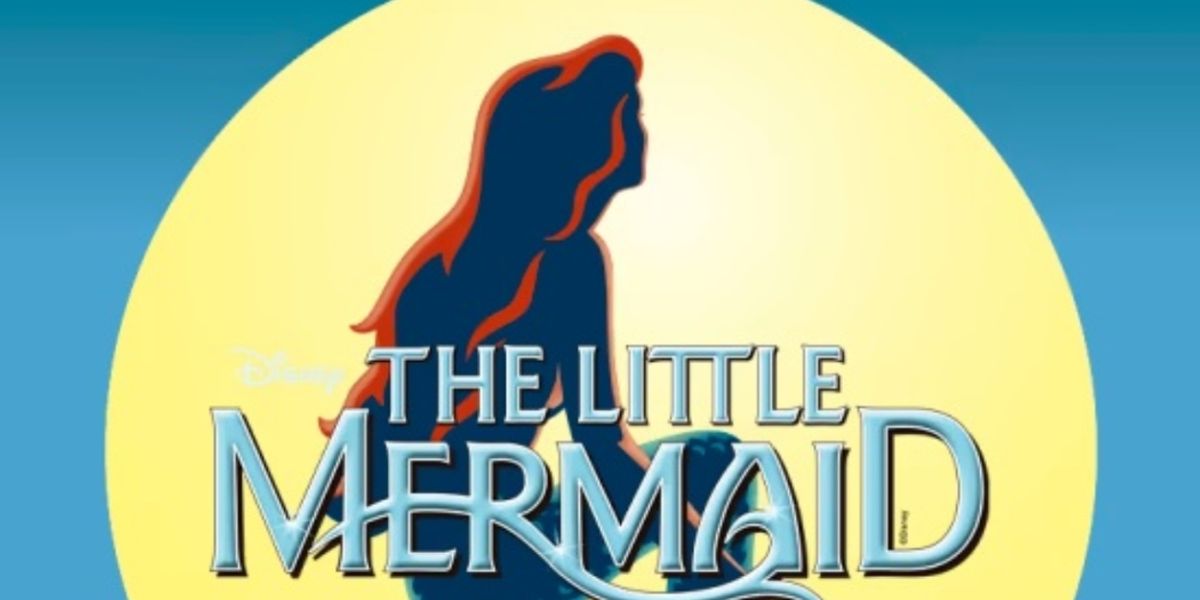
It is truly a blessing to see a local theater production loaded with talent that far outshines that of Broadway! On Friday, July 25th, I had the pleasure of seeing yet another phenomenal show put on by Musicals at Richter, outdoors in Danbury, CT. THE LITTLE MERMAID, the musical, is based on the classic Hans Christian Andersen story and Disney animated movie, the stage adaptation including book by Doug Wright, music by Alan Menken, and lyrics by Howard Ashman and Glenn Slater. Director David Halliwell combines his talents with musical director Fiona Bryson and choreographer Melissa Arizzi to bring out the best in this stellar cast! This was an under the sea adventure under the stars, one that you don’t want to miss! Musicals at Richter is the ultimate outdoor summer venue for musicals and has a way of always landing the perfect cast for whatever show they perform!
Lauren Dattilo stars as Ariel with a sensational singing voice that is ideal for this role! “Part of Your World” has never sounded better! I’m not sure whether Lauren is deliberately altering her voice to sound like Jodi Benson or whether Lauren is singing with her natural voice, but either way, she is spot-on with every note! She shines with her first-rate singing, dancing, acting, facial expressions, and conveying of emotion. In terms of talent, she has already reached stardom! I’d recommend everyone see her now, while you still can for local theater prices!
Speaking of talent, Mensah Robinson excels as Sebastian, complete with the accent and mannerisms, both during the serious and comical moments! “Kiss the Girl” and “Under the Sea” remain two of the best songs in this musical. Mensah Robinson nails them both with tone, feeling, and emotion!
Ashley McLeod is wonderful as Ursula. She brings strong vocals and conviction to “Poor Unfortunate Souls,” another musical highlight of this show.
The six actresses who perform Ariel’s Mersisters were particularly impressive, each as individuals, and together as a group with amazing stage chemistry and harmonies. They include Amanda Higley as Aquata, Em Lubbers as Allana, Grace Lynch as Atina, Jessica Pescosolido as Arista, Lauren Garafano as Adella, and Daisy Stott as Adrina. Combined with talented young actor Jack Ranieri who is convincing as Flounder, they perform one of the pleasant musical surprises, “She’s in Love,” an excellent song unique to the stage adaptation, one that has an early 1960s vibe.
Speaking of tap-dancing seagulls, Robert Bria is amusing as Scuttle. Another great comical role is delivered by Rob Mayette as Chef Louie.
Patrick Spaulding commands the stage as King Triton, bringing feeling and power to the role!
Other stand-out performances include Robert Halliwell as Prince Eric, Ted Schwartz as Grimsby, Chris Neville as Pilot, Izzy Porter as Jetsam, Kylie Block as Flotsam, Christian Eklund as Leeward, and Nicholas Eklund as Windward.
The cast is also wonderfully supplemented by the highly talented adult ensemble and youth ensemble. The adult ensemble includes John Paul Akter, Sonya Alexander, Dolly Conner, Pedro Couy, Lucia Eklund, Betsy Grover, Sierra Mayhew, Katie Paniccia, Julie Hoff, Walter Ruszczyk, and Ailis Tyra. The youth ensemble includes Josh Tejada, Vivian Quintero, Noelle Neville, Charlotte Neville, and Jerry Norton.
The talented live orchestra conducted by Fiona Bryson who is also on keyboard is under a tent in the front of house left. Other members of the orchestra include Dawson Dynes (keyboard), Max Abarientos (keyboard), James Morcaldi (keyboard), Robin Rockwell (reeds), Don Hutta (bass), and Michael Spanedda (percussion).
I furthermore applaud Musicals at Richter on the grounds that the costumes are elegant and modest. With such high talent among the young actresses, it is wonderful that they can truly be appreciated for their performances and genuine abilities as singers, dancers, and actresses, without the distraction of immodest attire. So, this show is safe to bring your young children to without fear of your sons being inappropriately mesmerized or your daughters being negatively influenced to imitate immodesty. I feel the need to mention this, as I am sure some people are curious, given the arguably scandalous way the young mermaids were presented in the animated film.
Ariel is a teenage mermaid who disobediently likes to spend time above the sea, due to her intrigue with what she perceives as the world above. Her father, King Triton, does not want her venturing above the sea, near humans, due to the possible dangers. Ariel tries to plead her case to her father by arguing that not all humans are bad or dangerous. I side with King Triton all the way on this issue. Why? To view the issue in reverse, from a human perspective, say there was a beautiful beach, but the waters were shark infested. Would you allow your daughter to swim there if her argument was that not all the fish in those waters are deadly? Me neither.
Ariel’s fascination with the land above the sea grows tremendously when she decides she is in love with a human (Prince Eric), and furthermore saves him from drowning. Prince Eric had felt as if there was no one who was romantically right for him, but then suddenly wakes up from a near-death experience with who he perceives as his ideal girl (Ariel) singing over him. Prince Eric doesn’t realize during this moment of grogginess that Ariel is a mermaid. She soon slips away, which leaves Prince Eric longing to see her and hear her voice again.
Ursulla, meanwhile, in the stage adaptation, is the banished older sister of King Triton. She seeks revenge on King Triton for his taking over of ruling the sea, and decides that Ariel should be the bait to gain King Triton’s power. Flotsam and Jetsam are eels who are Ursulla’s minions. They help with Ursulla’s plot to deceive Ariel.
When King Triton gets word of Ariel’s further disobedience and alleged love for a human, King Triton destroys Ariel’s self-proclaimed treasures from above the sea. This leads Ariel into feelings of hatred for her father. Sebastian tries to explain to Ariel that King Triton is acting in love towards her, but Ariel’s strong emotions cloud her ability to see the bigger picture. Ariel’s immature outlook prevents her from the open-minded realization that the proactive refusal to affirm harmful choices often is an act of love. Many adults never reach that level of maturity, either.
Ariel believes that she needs to be a human for her desired relationship with Prince Eric to work. Flotsam and Jetsam bring Ariel to Ursulla. Ariel had been warned by King Triton about Ursulla, but Ursulla knows just how to manipulate young naïve Ariel. Ursulla is willing to offer Ariel a deal, an evil one.
Ursulla plays upon Ariel’s feelings and emotions. Ursulla uses the classic methodology that the devil used towards Eve in the Garden of Eden. She presents Ariel with an opportunity that sounds pleasing to her and gets Ariel not to trust the one who truly does love her and desires what is best for her, who in Ariel’s case is King Triton. Whenever America’s diabolically predatory mainstream media strives to manipulate the young and naïve into affirming, embracing, and amplifying evil, the same method is essentially used. Tempting bait, even in the form of popularity is presented, while any loving authority figure who dares oppose the evil gets discredited by being labeled some kind of bigot by those looking to profit from the evil. Hook, line, and sinker, Ariel falls right into this trap. She is willing to make a deal with evil (Ursula) in order to become who she believes she needs to be (human) in order to be loved by the guy (Prince Eric) who she is convinced she is in love with. There are strings attached to the deal, of course, as is always the case when one deals with evil. Ariel has to sacrifice her voice and furthermore has to get Prince Eric to kiss her within a three-day time period, or else Ursulla will take Ariel’s soul. This is a foolish deal for Ariel to agree to. There is no Earthly pleasure worth sacrificing eternity for. No metaphorical fiddle made of gold is worth the risk of losing one’s soul. Ariel was willing to risk sacrificing her family, her home, her voice, and even her soul, just for the chance (not the guarantee) of winning the love of a guy she has a crush on. That is sadly the story of many teenage girls who chose poorly.
The fictional specifics of this mermaid becoming human scenario are an excellent light-hearted way to address a very realistic and serious mindset that has led to the ruin of many young people in search of love, the willingness to become someone who they are not, believing that such a compromise is required for their desires of infatuation towards someone they barely know to be reciprocated towards them. Making personal changes can be a good thing when people are inspired to take better care of their physical health or to genuinely become a better person, by God’s standards, in order to attract someone who radiates decency and goodness. Making personal changes, however, becomes a horrific thing when people make moral compromises or receive unnecessary cosmetic surgery under the impression that such things would increase their attractiveness.
In Ariel’s case, she is essentially guilty on both counts. The moral compromise comes in rebellion against her father which leads to her making a deal with evil. Youth often perceive restrictions, consequences, and punishments as unjust acts of hatred against them, failing to see that such things can be for their own good. While Ariel’s physical change from mermaid to human is a result of black magic, not cosmetic surgery, the mindset of paying to be physically different, for reasons that are not health related, is very similar. A big part of Ariel’s charm, especially from the perspective of Prince Eric, is her voice. She gave that up in order to become someone she is not. It is a cautionary tale to realize and appreciate all our blessings, never to squander them in pursuit of something we are not designed to acquire.
If you have only read the original story or seen the animated movie, you likely don’t know how the stage adaptation ends. Does Prince Eric marry someone else, someone less naive, maybe someone who would sacrifice herself to save her father, rather than vice versa, like Belle of Beauty and the Beast who has essentially the opposite attitude and actions of Ariel? Is Ariel forever doomed, because she made a foolish deal? Does Ariel eventually realize the errors of her ways and repent? Does an unlikely hero emerge from a pineapple under the sea? Does Ariel get Prince Eric to kiss her by whipping out a writing utensil and writing Prince Eric a note that explains the situation? Is the deal between Ariel and Ursulla broken, on the grounds that Ariel’s signature was never notarized? Does Ariel lose the deal, but then Ursulla offers King Triton the option to free Ariel if King Triton takes her place? If so, will King Triton respond by skewering Ursulla with his trident, giving Flotsam and Jetsam the trident treatment, too, and then bringing Ariel home and grounding her for a month, which ruins her chance to audition for The Voice? Will Ariel’s feet ironically lead to her slipping on a banana peel and dying, leaving us with a “be careful what you wish for” moral? Oh, the possibilities! What really happens? Come to the show and find out!
I highly recommend THE LITTLE MERMAID which is scheduled to continue to run through August 9, 2025. For times and tickets, please go to Tickets.

|
Charlie & The Chocolate Factory Kweskin Theatre (8/06-8/15) |

|
Jim Henson's Labyrinth: In Concert Palace Theatre Stamford (9/19-9/19) |

|
Golden Girls The Laughs Continue Ridgefield Playhouse (11/27-11/27) |

|
Moon Over Buffalo Goshen Players (10/10-10/25) |
|
The Revlon Girl Drama Works Theatre (8/14-8/23) |

|
PAT METHENY: Side-Eye III+ Jorgensen Center (9/25-9/25) |

|
Steamroller: A Tribute Concert to the music of James Taylor The Little Theatre of Manchester (9/04-9/04) |

|
Sunday Broadway Concert Series with John McDaniel, starring Adrianna Hicks Legacy Theatre (8/30-8/30) |

|
Hocus Pocus Live! an all-new parody musical Jorgensen center for performing arts (10/18-10/18) |

|
Hocus Pocus Live! an all-new parody musical Warner Theatre (9/26-9/27) |
Reader Reviews
To post a comment, you must register and login.