


Review: ORIGINAL PRODUCTION THEATRE'S BACK TALK at Abbey Theater Of Dublin
Inner voices compete for control in a romantic comedy
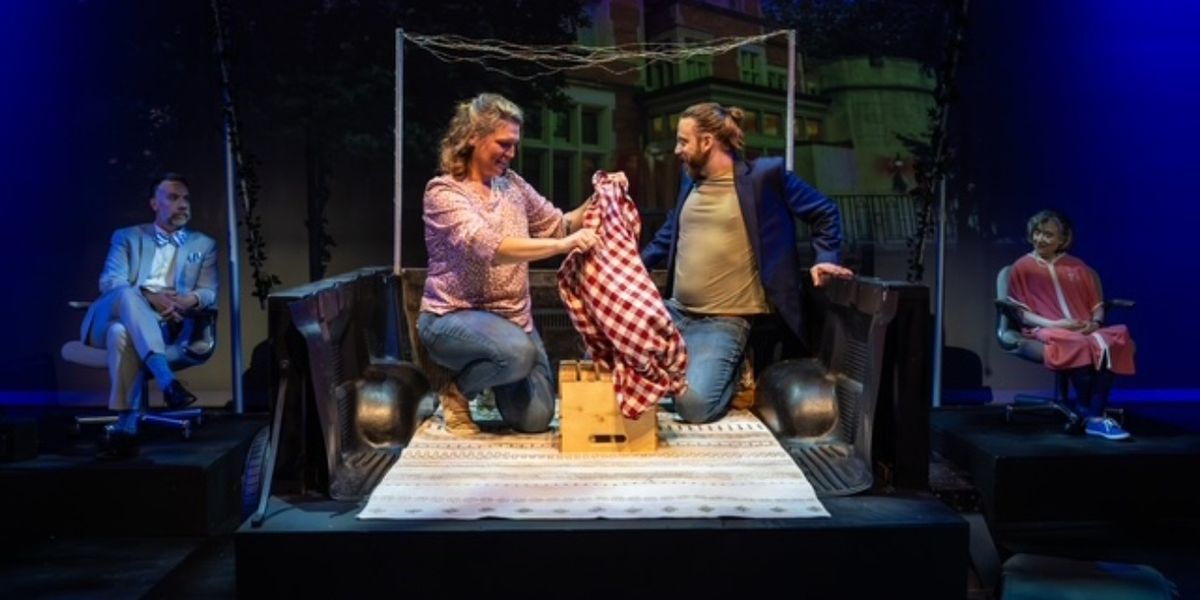
Inside every person’s head, there is that still, small, voice … waiting to erode one’s self-esteem. In Rob Ackerman’s BackTalk, the inner voices of an unlikely couple battle for control as they try to find a healthy, happy relationship. The romantic comedy, a first for Original Productions Theatre, runs Oct. 2-5 and Oct. 9-12 at the Abbey Theater of Dublin (located at 5600 Post Road in Dublin).
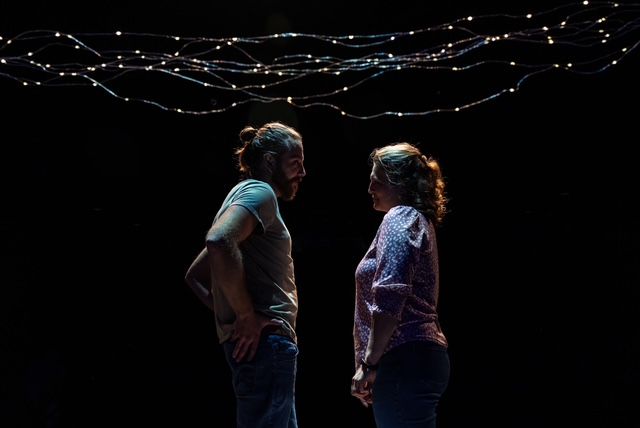
In this quirky script, Rachel (Alyssa Ryan) is a high calibrated real estate developer in Columbus. While unwinding after work at a bar, she meets an unlikely companion in Bob (Erik Bobbitt), a plumber with a warm, compassionate heart.
Herman (Jed Hudson) is the voice inside Rachel’s head, determined to protect her from the emotional trauma she suffered as a youth and a series of bad relationships. Bob has emotional suitcases of his own as well as a newly discovered voice inside his head (Mindy, played by Leslie Robinson). Bob was crushed by the breakup of his last relationship but is willing to try to find love again.
Herman, a bowtie wearing gay man, admits that Bob is good looking at first, but slips into panic mode when the plumber wakes up on Rachel’s couch. When Herman reminds Rachel of past failed relationships, the developer quickly turns her inner voice into her scapegoat. “I am totally blaming you,” Rachel says. “That’s the whole point of having you. It’s blaming you.”
Mindy, a grandmotherly woman in Bob’s head, tries to keep him from self-sabotaging this relationship. As Bob goes through his closet looking for an outfit, she dismisses his choices. After she shakes her head no to a red, lumberjack-like flannel shirt, Bob tells her, “It was my dad’s and he used to wear it all the time.” Mindy wisecracks, “On the label of a Log Cabin syrup bottle?”
Ackerman, a former Bexley resident who was a Prop Master for the Saturday Night Live Film Unit for over 25 years, clearly picked up a knack for sharp retorts and snarling comebacks. Mindy’s description of Rachel’s relationship with Bob garnered some big laughs: “She kind of likes you, though … like the way a tourist likes a water buffalo on a safari. She’s not gonna let you live in her backyard, okay?”
Even Al Franken’s character Stuart Smalley, SNL’s caring nurturer who is a member of several 12-step programs, but not a licensed therapist, gets a loving nod. When Bob is asked to give himself some credit, Mindy chimes into a mirror, “I’m good enough, I’m smart enough and doggone it, people like me.”
The laughs are balanced out with truly poignant moments and bits of insight on the nature of relationships, be they romantic or parental. Ryan’s telling of Rachel’s backstory serves as an emotional gut punch but it really develops the way her character acts.
OPT found a small but powerful quartet of actors to bring Ackerman’s script to life. There is a great chemistry between Bobbitt and Ryan as they play off each other. After building up an impressive resume of dramatic roles, Bobbitt is magnificent as Bob, hitting the character’s laid back personality as well as his displays of fiery anger. Ryan paints Rachel as having a fragile heart hidden behind an armor-coated exterior.
Acting for the first time, Hudson has a compelling stage presence as Herman with an excellent delivery of many of Ackerman’s funniest and most serious lines. Hopefully Columbus gets to see him in more of these types of roles. A stage veteran, Robinson makes Mindy the grandma everyone wishes they had. She is sassy and wise, but she can be acid tongued when she needs to motivate Bob or confront Herman. One of the show’s highlights is an argument between Bob and Rachel where Mindy changes sides to agree with whoever is speaking.
The universal truth in Ackerman’s work is very similar to that moment. Having voices in your head is fine, but it depends on what they are saying and why they are saying it. Those voices can shelter you while simultaneously they can keep you from living. At one point, Herman defends his actions, saying “I’m protecting her.” Mindy counters, “And that’s wrong.”
“Inner voices cause us to doubt ourselves so much,” Ackerman said in an interview. “Our parents love us, care about us, and try to protect us. What they really do is make us afraid of things.”
Photos: Jerri Shafer


|
MTP Presents: Sister Act John, James and Clara Knight Stage (7/31-8/16) |

|
Dirty Talk Shadowbox Lice (4/12-8/15) |

|
The Fab Four: The Ultimate Tribute LIVE in Concert in Columbus, OH Hollywood Casino Columbus (8/21-8/21) |

|
Screamers: A Nightmare-Fueled Sketch Comedy and Music Experience Shadowbox Live (9/20-11/14) |
|
The Lightning Thief - The Percy Jackson Musical Abbey Theater of Dublin (8/07-8/16) |

|
La Cage Aux Folles Hilliard Civic and Cultural Arts Center (11/06-11/15) |

|
Speak of the Devil: Shadows and Sounds of Ozzy and Black Sabbath Shadowbox Live (9/10-11/15) |
|
The Dinner Detective Murder Mystery Dinner Show The Dinner Detective Columbus (8/22-8/22) |
|
The Dinner Detective Murder Mystery Dinner Show The Dinner Detective Columbus (9/12-9/12) |
|
Beetlejuice Ohio Theatre (4/16-4/18) |
Reader Reviews
To post a comment, you must register and login.