


Interview: Jerry Harrison of STOP MAKING SENSE at Southern Theatre
Popularity of Talking Head's concert film is ageless
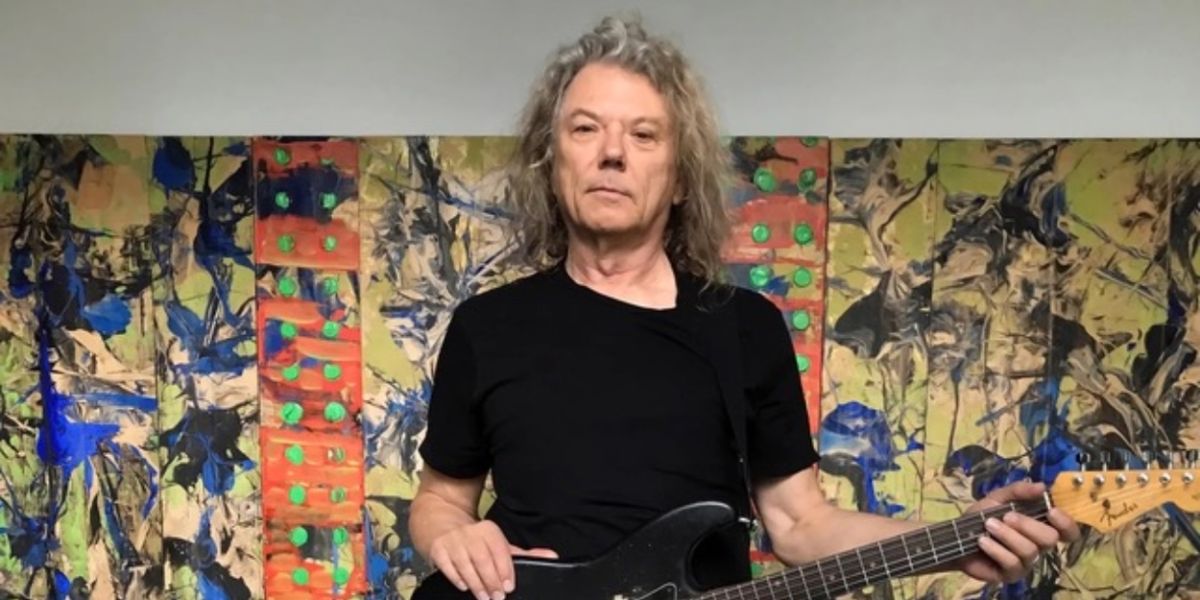
For the Talking Heads, there is no mystery why the popularity of the band’s 1984 landmark concert film, STOP MAKING SENSE remains the “same as it ever was.”
Harrison will be in Columbus as part of the 40th anniversary celebration of the film 7 p.m. May 4 at the Southern Theatre (21 East Main Street in downtown Columbus).
When asked why the interest remains so high in this film, Harrison chuckled.
“Well, I think the first thing is it's just fun … to be simplistic about it,” said Harrison in a telephone interview from his home in San Francisco. “The music has not worn out its welcome.
“(With) the new mix, the new 4K scan, and the new color balancing, we were able to go back to the original negative and clean it up before scanning it. That has made a difference.”
The film, directed by Jonathan Demme (a five-time Academy Award winner for such films as SILENCE OF THE LAMBS), captures the Talking Heads at the height of their stardom in a four-day concert at the Pantages Theatre in Hollywood during their 1983 Speaking in Tongues tour. Harrison, enigmatic frontman David Byrne, drummer Chris Frantz and bassist Tina Weymouth navigate a dream landscape of songs like “Psycho Killer,” “Burning Down The House,” “Making Flippy Floppy,” and “Life During Wartime.” At the May 4 showing, Harrison will introduce the film, make post screening comments, and field questions from the audience.
Noted reviewer Leonard Maltin gave STOP MAKING SENSE four out of four stars and called it one of the best concert films. The staging was ambitious: set pieces float in and out of the frame while screens project random images and words behind the band. Byrne, who unveiled the iconic oversized suit during “Girlfriend is Better,” starts the show with a solo version of “Psycho Killer” and then one by one the other members of the band are added into the mix. “Burning Down the House” is the first time all four share the stage at the same time in the film.
The sheer joy of the concert was short lived. In 1991, the members of the Talking Heads found themselves in different spaces, not just on the stage but as a band. According to a People magazine article, Weymouth and Frantz learned of the band’s break up from a Los Angeles Times article on Byrne.
Years later, Byrne told People magazine he regretted how he ended things with his bandmates: “We have a cordial relationship now. We’re sort of in touch, but we don’t hang out together.”
While Byrne went off on a solo career, Frantz, Harrison, and Weymouth also moved on. The trio produced the 1996 album “No Talking, Just Head” with a revolving door of vocalists including CGBG alumni Debbie Harry and Richard Hell, Concrete Blonde’s Johnette Napolitano, XTC’s Andy Partridge, and Live’s Edward Kowalczyk.
Harrison has made a name for himself as a multi-genre record producer, working with everyone from Live (rock), General Public (SKA), Kenny Wayne Shepherd (blues), the Violent Femmes (folk punk), the Crash Test Dummies (alternative rock) and No Doubt (pop rock).
As far as Talking Heads reunions go, there have been only two. Weymouth, Frantz, Byrne, and Harrison reformed when they were inducted into the Rock and Roll Hall of Fame 2002 and reunited for the 40th anniversary of STOP MAKING SENSE, Sept. 11, 2023, at the Toronto Film Festival. Harrison has continued to present the film at various locations throughout 2025.
One might think, given the seemingly acrimonious breakup of the band, seeing the footage might be akin to a divorced couple watching their wedding video on an endless loop. Harrison disagreed.
“Whatever friction there’s been in the band, I think every one of us is proud of STOP MAKING SENSE,” Harrison said. “Most people don’t get the chance to go back and study their own work years later. But this gave us a reason to do it.
“Everyone knows what a tight band we were. It was just sort of nice for all of us to be working together again.”
Harrison grew up in Milwaukee, Wis. surrounded by art. His mother was a painter who taught at the Art Institute of Chicago and his father was an advertising executive who played saxophone for jazz bands.
Being around two creative parents growing up left an impression on Harrison.
“One of the things it taught me was that one could have a career in the arts,” he said. "It was not something you did as a hobby but it was something you took very seriously.
“(When I was young), I remember I would draw and paint with my mother. My father’s side took over when I got older, but later, my mother’s side came roaring back.”
Harrison’s first exposure to playing in a band came when he was in high school. His band, the Walkers, featured an impressive roster of musicians. Outside of Harrison, the band’s guitarist Bob Metzger became the touring guitarist for Leonard Cohen (Hall of Fame, 2008); one of the singers, Fred Bliffert, recorded an album with Al Kooper (Hall of Fame, 2008); and bassist Jon Paris went on to work with former Rolling Stones guitarist Mick Taylor (Hall of Fame, 1989 with the Stones) and Johnny Winter (who should be in the Hall of Fame but isn’t).
“Fred was also in a band with Amy Madigan (a future actress who starred in FIELD OF DREAMS) called Jelly,” Harrison said. “And the Zucker brothers (David and Jerry Zucker, the filmmakers who made AIRPLANE! and the NAKED GUN movies) were in bands around us.”
Asked if he could see how talented the Walkers were when they were starting out, Harrison quipped, “I certainly wasn't that good back then. I got better as I got older. But there was a commitment to exploring new things.”
That desire to try new things stuck with Harrison. The keyboardist did not harbor any fantasies of rock stardom back then. Instead, he enrolled at Harvard and graduated Magna Cum Laude in Visual and Environmental Studies in 1972.
“I didn’t think I was going to be a musician when I went off to college,” Harrison said. “I was taking the pre-punk position that you had to be quite a technician (musically to make it). Music was becoming increasingly more complicated in the 60s culminating in Prog Rock.”
That viewpoint changed while Harrison was at Harvard. He and classmate Ernie Brooks teamed up with front man Jonathan Richman and drummer David Robinson to create the Modern Lovers, which were signed by Warner Brothers, but broke up before they could record a proper studio album. However, its 1972 demo tape was released in 1976 as “The Modern Lovers” by Warner Brothers.
“It came out at the right time to be very influential in the burgeoning (punk) movement,” Harrison said. “Would that have happened if it had come out earlier? I don’t think so. We could have just come and gone.”
Harrison credits Richman with helping him discover his creative voice. While most bands were trying to emulate the sounds of the Beatles and the Stones, Richman was keen on “deliberately being contrary to what was popular at the time,” Harrison said.
However, the timing of the breakup, especially when it came so close to a breakthrough, was devastating.
“One of the biggest things I’ve had to overcome was the disappointment when the Modern Lovers fell out,” he said. “People considered us to be a unique, important band.
“And then it just fell apart and I had to go back to being broke. I had to go back and figure out what am I going to do with my life now?”
After leaving the Modern Lovers, Harrison briefly teamed up with Elliott Murphy, the singer tagged to be the next Bob Dylan by Rolling Stone and Creem magazines. (Instead, that role went to Bruce Springsteen).
Harrison focused on his studies and completed his degree. At the same time, the Talking Heads were developing a following with their live shows, but felt the band needed a keyboardist to fill out their sound.
Someone recommended Harrison and Weymouth invited the Harvard student down to NYC for a tryout. Harrison initially declined the offer, saying he had no way to get there. Brooks, his former Modern Lovers bandmate, still owned the band’s van which he used to help people move.
Brooks had a client who was relocating to New York City and said if Harrison were willing to help him with the client’s move, he would take him to the tryout.
One problem arose. Harrison was supposed to take his keyboards but the van was too full and he had to leave it in his apartment.
When Harrison showed up for the audition sans keyboard, Weymouth reiterated they were looking for a keyboard player but he convinced them to let him play with the band.
“About two in the morning, we just started playing and we sounded great together immediately,” Harrison said. “Other people who had tried out were always trying to show off their technique and everything they could do. I just tried to listen to what Tina and David were playing and enhanced it.”
The foursome emerged at a perfect time to be in a band in New York City. They were part of nightclub CBGB’s talented roster of bands including future Hall of Famers Blondie, The Ramones and Patti Smith.
“We had a lot of mutual affection for each other,” he said. “Of course, we were competitive with each other and were trying to outdo each other, but it was a friendly competition.”
Asked why he thought the Talking Heads were successful, Harrison paused.
“Everyone was very smart and worked hard,” he said. “We also never allowed ourselves to get in debt to the record company so we had an independence from them.
“Obviously, without David songs, we would have been a totally different band. There was just a sparkle between us. Every one of us was an essential component of it.”
Harrison hopes the audience will see a flicker of that sparkle when the lights dim at the Southern Theatre.
“I’m looking forward to this little run with STOP MAKING SENSE,” he said. “I know the audience is going to love it.”
Photo Courtesy of Red Light Management
|
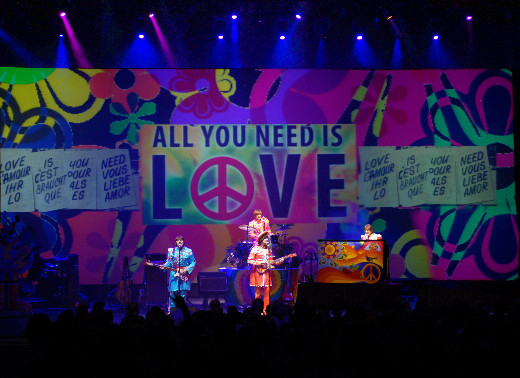
Liverpool Legends "The Complete Beatles Experience!" Marathon Center for The Performing Arts (8/15-8/15) |
|
The Dinner Detective Murder Mystery Dinner Show The Dinner Detective Columbus (8/22-8/22) |
|
Wicked Ohio Theatre (7/28-8/15) |
|
MTP Presents: Sister Act John, James and Clara Knight Stage (7/31-8/16) |
|
The Fab Four: The Ultimate Tribute LIVE in Concert in Columbus, OH Hollywood Casino Columbus (8/21-8/21) |

|
Screamers: A Nightmare-Fueled Sketch Comedy and Music Experience Shadowbox Live (9/20-11/14) |
|
Sombr Nationwide Arena (11/08-11/08) |
|
The Lightning Thief - The Percy Jackson Musical Abbey Theater of Dublin (8/07-8/16) |
|
Caamp Value City Arena at The Schottenstein Center (8/29-8/29) |
|
Dirty Talk Shadowbox Lice (4/12-8/15) |