


Interview: Director Victoria Bussert Re-Awakened SPRING AWAKENING in Recent Run at The Beck Center
The production wrapped on March 1st, 2026.
I checked in with director Victoria Bussert, for a conversation about her run of Spring Awakening which wrapped March 1st at The Beck Center for the Arts in Lakewood, OH. The show was presented in collaboration with the Oberlin College department of Music Theater, in Oberlin, OH, where Bussert is a longtime instructor.
Congratulations on finishing up this run of Spring Awakening!
Thank you.
You've hopefully had some time now to come down off that adrenaline high and sleep a bit, eat dinner at home, at a human hour.
I wish, haha. I don't know whose life you're describing, but it sounds fabulous!
What led you to the decision to double cast this particular production of Spring Awakening? Did you double cast the times you've directed it previously? And what advantages or disadvantages did you find with double casting this show?
I think double casting with students is really a critical part of the training that we offer. One of the things that I think it's really important when you're developing young artists is for people to understand that there is no one right way to portray a role. And I think, you know, this is my 29th year teaching, my 39th year as a professional director, and when I first started out, people were not looking at bootlegs for performances. And as that has become, unfortunately, so much the norm. One of the things I try to encourage my students to do is read scripts. Don't watch productions, read scripts so that it allows your imagination the ability to form its own visual images as opposed to being imprinted with other performances that you can't really kind of erase once you’ve seen them. And I want them to develop themselves as artists. So one thing that's really helpful is everybody is getting the same direction in the room. However, you know, the lens with which you view the world is going to influence the tools you have to create a character. And by double casting, you really see that side by side, and you see it in your own age group. And I find that really empowering to my students and really helpful for them as they develop themselves as individual artists... We alternate casts every night. A lot of people like to come and see both casts because it's a different experience. And I think in a live art form. It's the best teaching tool out there.
Were some of these students already—had they already seen the show live? I would assume it's a show that's popular with young people. So had they seen, if not a bootleg, than an actual performance of it?
You know what's funny, Kerry? A lot of them had no exposure to it, which shocked me. I thought...it was such a seminal piece of musical theater. I was really surprised and how many people had had no exposure to it previously.
Especially because it's a perfect show for a college group...I don't want to say the only way it could be performed, but we would be hard pressed, at least in my area, to find a community theater that would be able to properly cast, a show with that many young people, and also willing to take it on because of the subject matter.
Agreed.
So I would picture college students being amped and ready to go and just dying to do this show.
Yeah...it's the perfectly-placed age group. It's not the kind of show that I would want to cast 25-year-olds to play 18. The authenticity is so critical, I think, in the storytelling, and...for me, when Roe v. Wade was overturned, within an hour, I said to myself, time to do Spring Awakening again, because we forget, and we need to tell these stories. And what was wonderful about having these two casts is how invested the students were in telling these stories because of what is going on in their world today. I will say—this is the 3rd time I've directed it--and it has never been more visceral or more raw as it was in this production. And I feel like that is because what we did in rehearsal, we would have a poster board laid out every day that said, what is totally fucked, and you could write, and then we had all these markers. You could write anything...
That better be a big poster board!
Oh yeah! Well, we would put them up every day in the rehearsal room so that our rehearsal room was covered with these by the end of the rehearsal period. And you can write anything you want, without judgment. And for them to have a vehicle, for them to put what is going on for them in their lives right now, what they're experiencing onto the stage was really important. And such an interesting thing--I would stand in the back—and the Beck center is a 450-seat house—watching groups of teenagers, watching groups of parents, watching grandparents and then watching people in their 80s and above with walkers. And I would say the teenagers and the people in their 80s had a very similar response. Maybe the people in their 80s, not as vocal. But they'd seen it. They'd lived it and they recognized it. Whereas sort of that middle ground audience would become more uncomfortable with it, knowing that yeah, this is what these kids are experiencing today. And of course the teenage crowd is just screaming because they see themselves on that stage.
Yeah, it makes me wonder if the folks in the middle—which would be me, basically. I'm 49—maybe see ourselves more as the perpetrators than the victim.
Interesting.
I mean maybe we're currently parents, we have teenagers, we have college students that we might think, oh no, did we do enough?
Yeah, absolutely. And I would say...what I have seen is the mothers seem to recognize that. The fathers may be more tense, but I loved that. You know, this is what live theater does. It, it, proposes these questions, and I'm hopeful that there a lot of really great conversations happened after this. One of my students who's just a freshman who played Melchior came to my office yesterday just ecstatic of the conversations he had had with his grandparents who flew in from Madison, Wisconsin to see the show and loved it and loved the story that was being told and he had been really concerned about what—
Had he prepared them for what it was—
No! But they had prepared themselves. There is a wonderful coming together of generations through this piece that's important. I was shocked how relevant it was again, if not even more so than 25 years ago.
That’s leading to me to one of my questions. This is one of those shows—like Ragtime, like Parade—that keep coming up, not just because they're fantastic shows, but because they are constantly socio-politically relevant.
Correct.
And so what difference have you seen between the different times you’ve directed the show? How have their connections to the characters changed over time? You mentioned Roe v. Wade, like maybe that was maybe an issue that the current cast—
That in itself, yeah, I mean I was alive when Roe V. Wade went into law. So, I haven't directed Spring Awakening since it, was overturned, and that to me was, that was really important because abortion doesn't go away. What goes away is safety for women's lives, and I thought that was an important story to bring up. You know, screens have changed so many relationships between parents and children. On both sides of the spectrum. We actually had—the two adults in our production at Beck Center are both theater teachers at Oberlin. And it was interesting—they already have that generational gap from their students. But they had a desk on either side of the stage, which they were allowed to fill with whatever they want, including a Keurig and their own phones, an iPad. So that they had their own set of contemporary distractions as well. And that became a very interesting image. While things are going on with the younger cast on stage, and to see the woman, the female adult character, scrolling on her phone. So I'd say there are images that hit a lot harder today that would not have had the same impact in 2012.
Yeah, and I suspect if someone tried to make Spring Awakening for the first time on Broadway now, I don't know that they'd get away with it.
Hmm.
As far as the age...those kids were fourteen, fifteen when they started workshopping—the original cast.
Sure.
So what, if anything has changed from a production standpoint, from the first time you directed the show to now. Is there more attention to an intimacy director, a therapist on set, resources for the kids to handle the weight of this show.
Yeah, so we have one, our acting specialist is a certified intimacy director. So she handled all the intimacy. And it is the first time I've done Spring Awakening with an intimacy director. And I think, one of the great assets about an intimacy director is the intimacy is handled in a very safe way, and the students who engaged with her felt extremely protected. And therefore, I would say, freer on stage.
Yeah, that's lovely. Can you talk a bit about the collaboration between Oberlin's Music Theater program and the Beck Center for the Arts? Bringing students out into the greater community. I think of the line from Fun Home where Middle Allison says, “it's not the world—it’s Oberlin College.” I mean, the students might be sort of isolated on campus and like you said, feeling safe, performing in venues on campus with their peers and with their teachers. But coming out into a performance space in the community with such a vulnerable show. What were the reactions of your cast to that venue?
Well, this is something I've incorporated into my teaching for a very long time because I'll tell you, there's something—I'll use the word magical that happens in that 25-minute drive from campus to the theater, where, students are no longer students. They're young professionals. And it changes the behavior. You are working under professional circumstances. You're working with equity actors, and an equity stage manager, and I think it is a wonderful step. Yes, I think any college campus is a safe environment for young artists. I think taking that step away from campus, you see yourself differently and you can conduct yourself differently. You're no longer looking at yourself as a student. And I think it is an incredible opportunity, for these young artists to take the next step toward the career that they're going to have. I think it is a critical part of the development—going from student to professional artist—and it's something I'm really grateful for with Beck Center. Because Beck Center is located in Lakewood, OH, and Oberlin is in Oberlin, OH, and they are different vibes in terms of communities. And the Beck Center has their own audience that is not an audience that would make the trip out to Oberlin. So it's a very different, and probably far more realistic audience that is at the Back Center, and that's also great for the students. The cast would come out into the lobby every night and would have all sorts of interactions with audience members, not only their friends, but people they didn't know, and have conversations, which is great as a young artist, to understand the impact that this art form can have on our world.
Mm-hmm. And the sense of while you're performing, having less control, less of a preconceived notion of who's out there watching.
Absolutely.
On campus, you know, it's going to be a lot of young people. It's going to be family and friends, instructors, people you’ve had relationships with. But in the community, it could be anybody out there.
Exactly. Anybody. And then I would say anybody in both directions. So, a very young, enthusiastic vocal audience, and then—Beck Center, because it is such a well-regarded institute of the arts, does have a very wide age range, and I love that. I love seeing people come to the theater because live theater has been part of their lives for their entire life. It’s something young people aren't necessarily exposed to. So I love seeing those 70-year-olds and 80-year-olds who think it's important to attend live theater. I think that's a whole other experience for students.
And something that can be instilled in them—to be citizens of the arts, not just as performers, but patrons, to be in the audience, and how important that is to continue to learn by being in an audience throughout their careers.
Absolutely.
So do you foresee yourself directing Spring Awakening again? Are you done with it?
Oh boy, haha, I never say I'm done with anything. You know, this is maybe a strange answer—I hope I don't have to. Only in that I feel that this art form—I'm very committed to musical theater because I know the wide reach it has in our society in terms of—a lot of people won't go to opera. A lot of people won't go to Shakespeare, but they'll go to musicals. And I feel a real responsibility in programming bringing up uncomfortable subjects. So I wonder, in ten years, if we're going to need to look at it again. I know it's been a tremendous experience for this age group. But, there are other things out there—like Hair—and I'm sure we will continue to program things that will spark conversations. Because that's another real commitment I have to my students in this art form.
Yes, leads me into what I was going to ask next. What is your thought process as you're choosing shows to direct, either on campus or for projects that are outside? What shows are you drawn to? To what extent do you concern yourself with what that audience reception might be? What excites and inspires you when you're choosing what to do next?
Well, I know that my students will have lots of experience in summer stock theaters, performing in lighter sorts of material. Um, so I try to program things that—I want the students to understand the value of this art form and the impact they can have in society. I feel like the more conversations happen online, without looking in somebody's eyes, we fail to develop our empathy. We lose our humanity. And I feel that this art form really serves us as a society in terms of—let's get back to live actors, live audience, experiencing something live together and not on the screen, and...how that develops our emotional life in a way that is more challenging to do these days. That's something I've learned dramatically as a teacher over 29 years.
It's easy, I think, online to create a little bubble for yourself, a little microcosm of curated things that you want to see and have spit back at you.
That’s right.
Whereas even if you choose a show to go see purposefully, you still don't necessarily know exactly what You're getting into, and how you'll be affected by that live performance as it actually happens in front of you. So, it's a little adventure.
Yeah, and so when we see people leaving in tears or, people having such a visceral reaction to Moritz's suicide, these are moments that then generate conversations, and this is how we grow.
Well, folks who will be reading this have already, unfortunately, missed Spring Awakening. Well, unless they saw it, but we can't plug it now. It's in the past. So what's next?
Yeah, which is also really important, isn't it? I mean, I also think that's important. These things are moments in time. And yes, I'm sure there will be bootlegs, but that's not the same experience. And that's where live theater is so critical.
If I'm watching a...video I much prefer watching something that I have seen live, and I’m watching it again. Then I can sort of relive that moment of what it was like to have been in that audience as—
Yes.
as opposed to this being my first exposure to it. It just doesn't mean the same.
Totally agree.
So what is next for you?
We are exploring something a little lighter. We're doing the academic premiere of Stranger Sings which is the Stranger Things musical that was done off Broadway a couple of years ago. And Stranger Things is very popular among our population and this is sort of a fun way to end our season. We opened with Great Comet, then Spring Awakening. We did the John Kander Review, World Goes ‘Round because John Kander is an Oberlin grad. Then we are about to open Jonathan Larson's. Tick, Tick...Boom! next week. And then we're closing with Stranger Sings
Have you seen Stranger Things—the series?
I am not a series fan. I have seen a couple episodes, but our director of that production knows it intimately and loves it and they started the first rehearsal by playing Dungeons and Dragons, so it sounds fantastic. I can't wait to experience it!
.jpg?format=auto&width=800)
Keep abreast of programming at The Beck Center for the Arts here:
https://beckcenter.my.salesforce-sites.com/ticket/#/events/expanded
and at Oberlin College, here:
https://www.oberlin.edu/artsguide/music-theater
Photo Credit 1: Yevhen Gulenko
Photo Credit 2: Roger Mastroianni


|
Disney's Frozen Renaissance Theatre (11/21-11/29) |
|
Dracula: A Horror Story Renaissance Theatre (10/02-10/18) |
|
Golden Girls The Laughs Continue Canton Palace Theatre (10/01-10/01) VIDEOS |
|
Dinner Detective Cleveland Hilton Garden Inn Cleveland Downtown (9/19-9/19) |

|
Disney Frozen, the Broadway Musical Beck Center for the Arts (7/16-8/15) |
|
Come From Away Renaissance Theatre (3/12-3/21) |
|
Dinner Detective Cleveland Hilton Garden Inn Cleveland Downtown (11/14-11/14) |

|
A SHERLOCK CAROL Dobama Theatre (12/03-1/03) |
|
Poor Clare by Chiara Atik Kalberer Theatre at Maltz Performing Arts Center (10/02-10/11) |
|
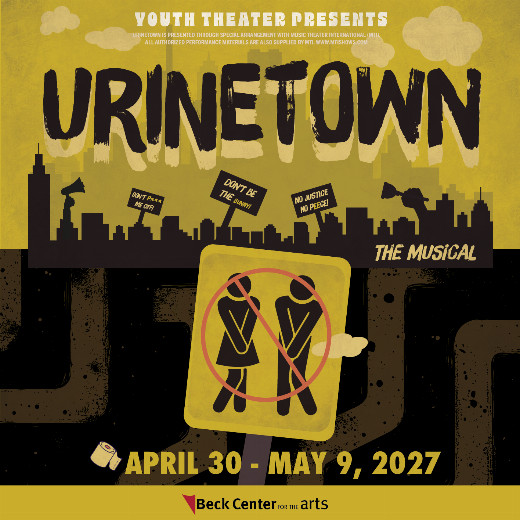
Urinetown Beck Center for the Arts (4/30-5/09) |
