


Interview: Argentinean Star Bruno Giraldi Brings LOVE OR DEATH to Don’t Tell Mama
Bruno Giraldi explores life’s biggest questions through music and philosophy in his new cabaret show at Don't Tell Mama on April 19
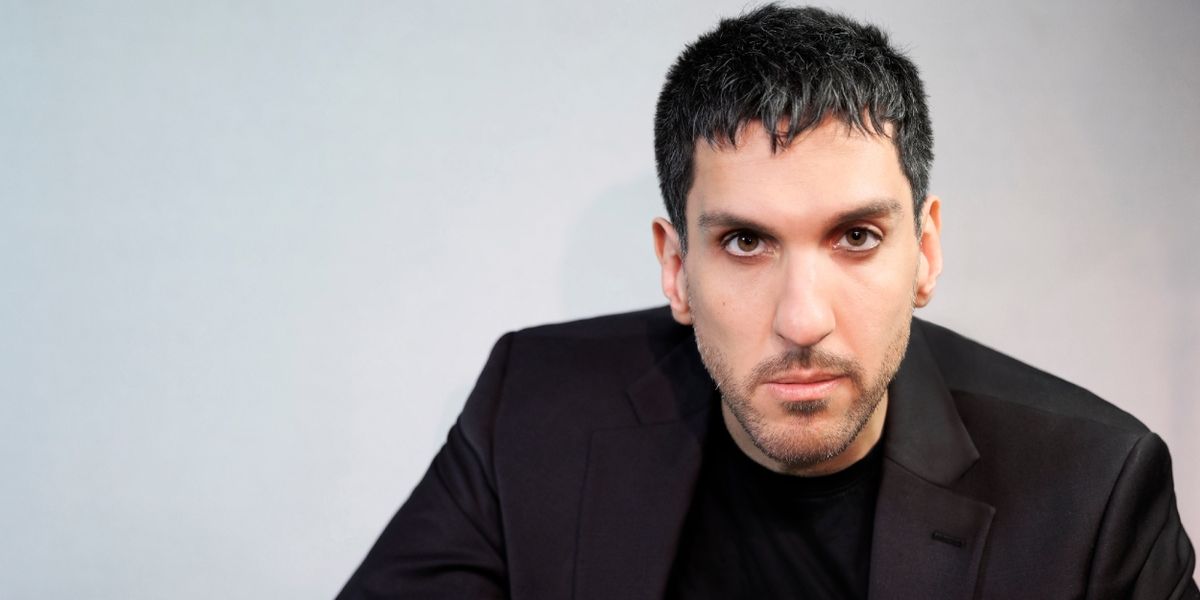
Bruno Giraldi returns to the New York cabaret scene with his newest show, Love or Death?, accompanied by acclaimed pianist John Bowen. Featuring philosophical reflections, theatrical storytelling, and a wide-ranging musical repertoire. The performance invites audiences to explore the tension between two of life’s greatest forces - love and death - through the words of thinkers such as Nietzsche, Plato, Freud, and Borges.
This 65-minute experience includes powerful renditions of songs like “The Rose,” “Cabaret,” “Somebody to Love,” and “My Heart Will Go On,” among others. Giraldi encourages audiences to arrive with no expectations other than to engage in an evening of thoughtful entertainment and timeless music.
The show is Saturday, April 19th at Don't Tell mama. Seating begins at 6:15 PM. Tickets are $10 with a $20 minimum (including two drinks), cash only. A food menu is available.
Can you tell us more about your upcoming show "Love or Death?"
When I see performers, writers, musicians and so forth answer that question, what I feel is that they all fail. They say things like “this is the story of a woman who fell in love with…” etc., “this is a show with showtunes,” “this is a novel about a guy who commits suicide because the love of his life left him.” When I listen to this, I turn off whatever device I am using. And it is because they all sound the same and are all statements that cannot grasp what the piece of art they are part of is truly about. I think the reason for that is that we do not know what it is about until that piece of art is completed by the other necessary party in the artistic event that is the audience, like Barcelonian thinker Jorge Wagensberg used to say.
In short, if I try to define this piece of art, I will also fail. Hence, I prefer people to come so that they can let me know what it is about.
And for those who are willing to come, I would say, try to come without any expectations other than experiencing a pleasurable time in which we will be quoting some thoughts posed by many thinkers and good music. Not good music because I will sing, but because all the songs sung in this show are songs that have been present in our lives and a good excuse to share a nice time together.
How has your training with notable figures like Norman Briski and Betiana Blum shaped your career?
You mention two teachers. For education to exist, there must be teachers. It is worth questioning ourselves, as Nietzsche did, what the teachers’ role is because this is a moment in which they are defunding public education in Argentina and dismantling the Department of Education in the U.S. (I mention these two countries because Briski and Blum are Argentinean teachers and the U.S. because it is where I live.)
I agree on what Nietzsche states about it, which is that the role of a teacher is to put someone in doubt in regards to what that person has learnt up to the moment in which they met that teacher. This is not profitable for those who want to rule us because they determine what should be taught and what, not. And this is how Norman and Betiana UNshaped my career, that is, they had me shed mandates, moral, copying other actors, hysteria, among many other things to be or not to be.
Norman fiercely introduced truth to my life. It was not an easy task on his end because I am a complex person and at that time, I was not a recommendable one. On the other hand, his method was painful for me. To acquire his method, you either live or die, but if you get to live, you will inhabit a new life.
In the middle of that process, I recall how loud I could start listening to my thoughts, sensations and feelings. Once I got that, all I had to do was to relax and be.
However, at some point, Briski’s teaching got me too much in my mind. It was then when Betiana helped me relax even more in that sense.
Both, Betiana and Norman, teach Stanislavski’s method and since I had already acquired said method with Briski, Betiana guided me to play more.
I chose them as teachers because I admired them and wanted to be like them, which I think is what has to happen between a teacher and a student, but like aforementioned, they taught me I should not admire anyone and be my own self.
Can you talk about the influence of your coaches Suzanne Sheperd, Rob McCaskill, and Jane Ives on your approach to acting and performing?
Coaching is different from teaching. Teaching provides you with the foundation of knowledge and once you have that, you go to coaches to keep polishing your craft. In general, the purpose is to prepare for auditions or if you get cast, to make yourself questions in order to deepen your work, which is what Suzanne, Rob and Jane, among others, have helped me with.
You've taken on a variety of roles, from Richard III to Vladimir in "Waiting for Godot." How do you prepare for such diverse characters?
They are different human beings, so they require different preparations. Every role lived in a different socio-economic context, was instilled different values, wanted and needed different things, wore different clothes, had different points of view, etc.
I enjoy the fact that it is never the same. I enjoy the preparation more than the result. I feel the same, when I read a book. I like reading a book more than having read a book.
I enjoy that experience because I am fascinated by human conduct. How a person can be a million persons in different contexts or depending on who is in front of them.
What inspired you to create your own cabaret shows like "This is Bruno", "#getmeouttahere", and "Encadenado"?
Seeing performers at “Don’t Tell Mama” that sang songs I enjoy singing inspired me. But better than that, realizing that there is an audience in Manhattan for those songs propelled me to go for it. Again, because it’s the audience that completes the piece of art.
The idea of just singing songs that may be from musicals but not having to sing them in a musical also entertained me.
There is something each of those shows had that inspired me.
When it came to “This is Bruno”, what inspired me to do it was to introduce myself to the cabaret world in New York City.
I was inspired to do “#getmeouttahere” because I wanted to work again with a group of performers I had worked with before.
“Endadenado”, which took place in Argentina, was the first cabaret show I ever did. What inspired me to do it was that I am mainly trained in the Stanislavski’s method, so I wanted to feel the fourth wall surrounding the public and I, instead of separating us by having me live a scene with another actor on the stage. It was brutal at the beginning, but once I understood my scene partner was the public and that I had to bond with them, I started enjoying it.
The show "Love or Death?" features the philosophies of several influential thinkers. How do these philosophies inform the narrative of the show?
By being the trigger points to get closer to the truth of what love and death are in order to cut through those narratives on those two subjects that have been manipulating us all our lives.
Can you talk about the process of selecting songs by artists like Bette Midler and Freddie Mercury for "Love or Death?"
Some say that a singer is the repertoire they sing. Identity is narrative. Songs are narratives.
It’s difficult to realize what songs we feel identified with as opposed to what songs we like and want to sing because someone else sounds great, when they sing them, but are not a good fit for us.
For me, the way to create my repertoire is by singing all the songs I like, even though I think it is a bad idea to sing them.
I would love to be able to sing all Bette Midler’s repertoire because she is the reason for arousing the passion I feel for singing and acting and I love everything she sings, but I must ask myself who I am to know which songs are for me and which are not.
There is also the point of relevance. There were songs that were a good fit for me but were irrelevant for the show. However, choosing a song is the same as choosing someone to love on Tinder, there are so many options that there is no chance for you will cry for not being able to sing one, because you know there will be other ones you will be able to sing.
What can the audience expect from the show on at Don't Tell Mama?
Come with a narrow mind, low expectations and go with the flow.

|
The Beat Goes On Don't Tell Mama (10/08-10/08) |
|
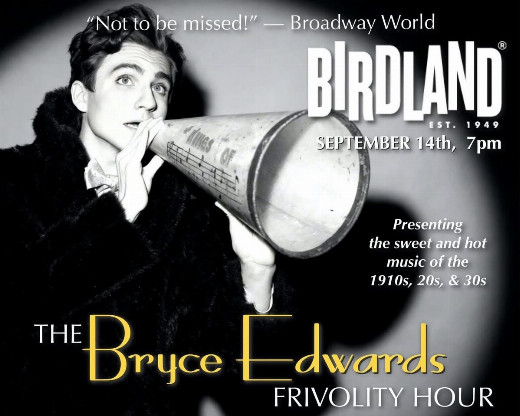
The Bryce Edwards Frivolity Hour BIRDLAND (9/14-9/14) |
|
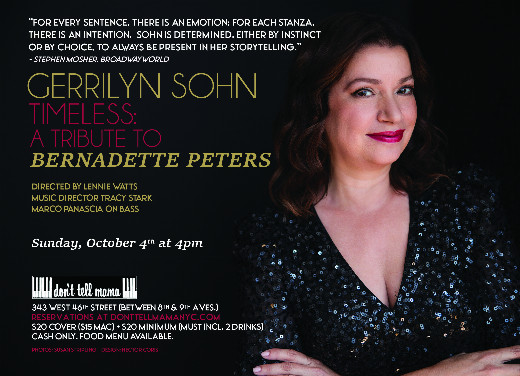
Timeless: A Tribute to Bernadette Peters Don't Tell Mama (10/04-10/04) |
|
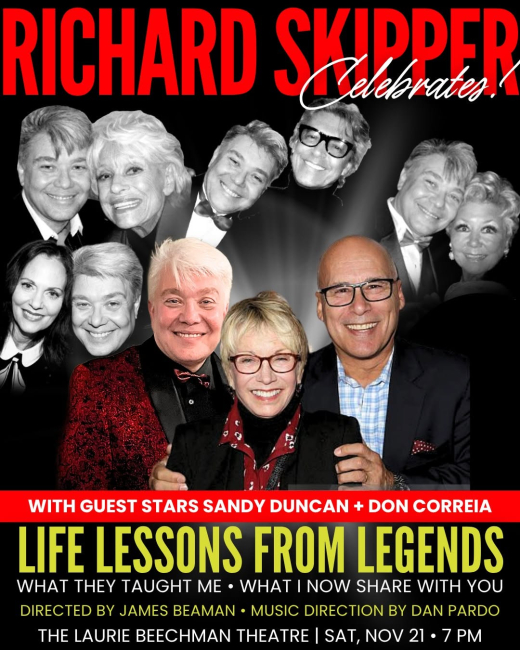
Richard Skipper Celebrates! LIFE LESSONS FROM LEGENDS Laurie Beechman Theatre (11/21-11/21) |
|
The Anti-Album Release Concert 54 Below (11/29-11/29) |
|
The 11th Annual Harvard-Yale Cantata 54 Below (9/24-9/24) |
|
54 Sings Lin-Manuel Miranda: Volume 4 54 Below (9/07-9/07) |

|
Tradition! The Jewish Voices of Broadway - Part 2 54 Below (12/05-12/05) |
|
Rogê: Curyman II Joe's Pub (9/23-9/23) |
|
Lucibela presented in partnership with WMI Joe's Pub (10/22-10/22) |