


Review: LE NOZZE DI FIGARO, Glyndebourne Festival
A love letter to Mozart's score
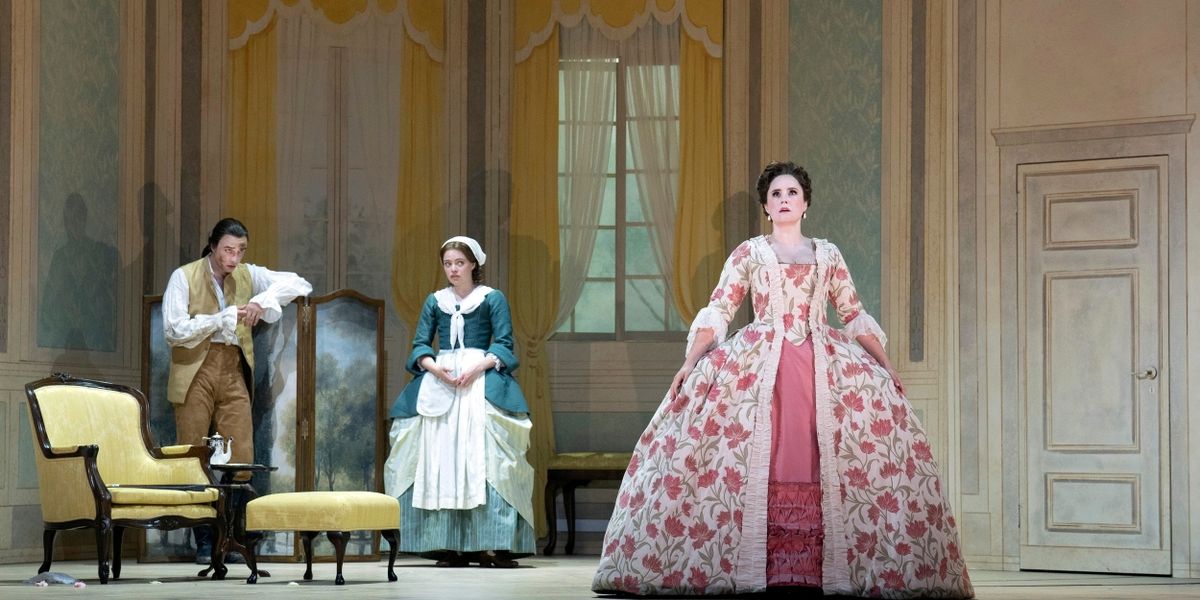
 You could be forgiven for thinking that there isn’t much more to be said about Le nozze di Figaro, the most performed opera in Glyndebourne’s history. However, Mozart’s classic role subversion comedy is deceptive in its simplicity: beneath the farce and improbable plot twists is a complex web of power dynamics and social cues upended, and above all a libretto full of dry humour that’s striking in its timelessness.
Director Mariame Clément innately understands Lorenzo Da Ponte’s libretto as containing more than meets the eye, and her approach to the text is not to lay anything on too heavy-handed, but to pare it back, and let the cast and the words they sing speak for themselves. Often, the staging is kept minimal and static, and there’s a sense of performative artifice that reflects how the plucky servant characters manipulate their prescribed roles in order to ridicule the villainous Count – after all, Figaro knows all along that he is “playing in a comedy”.
The result is a Figaro rooted in the tradition of sitcom, in its brazen physical comedy but also in its astutely observed interactions. Michael Nagl’s Figaro embraces buffoonery wholeheartedly (especially with his ambitious tempo variations on the famous “Non più andrai”), but it’s his would-be bride harassed by her aristocratic master, Johanna Wallroth’s Susanna, who’s really the heart of this production: Wallroth’s acting skills are on full display, moving swiftly between goofy physicality, gossipy playfulness, and quiet stoicism as she forms the lynchpin of the plot against the Count.
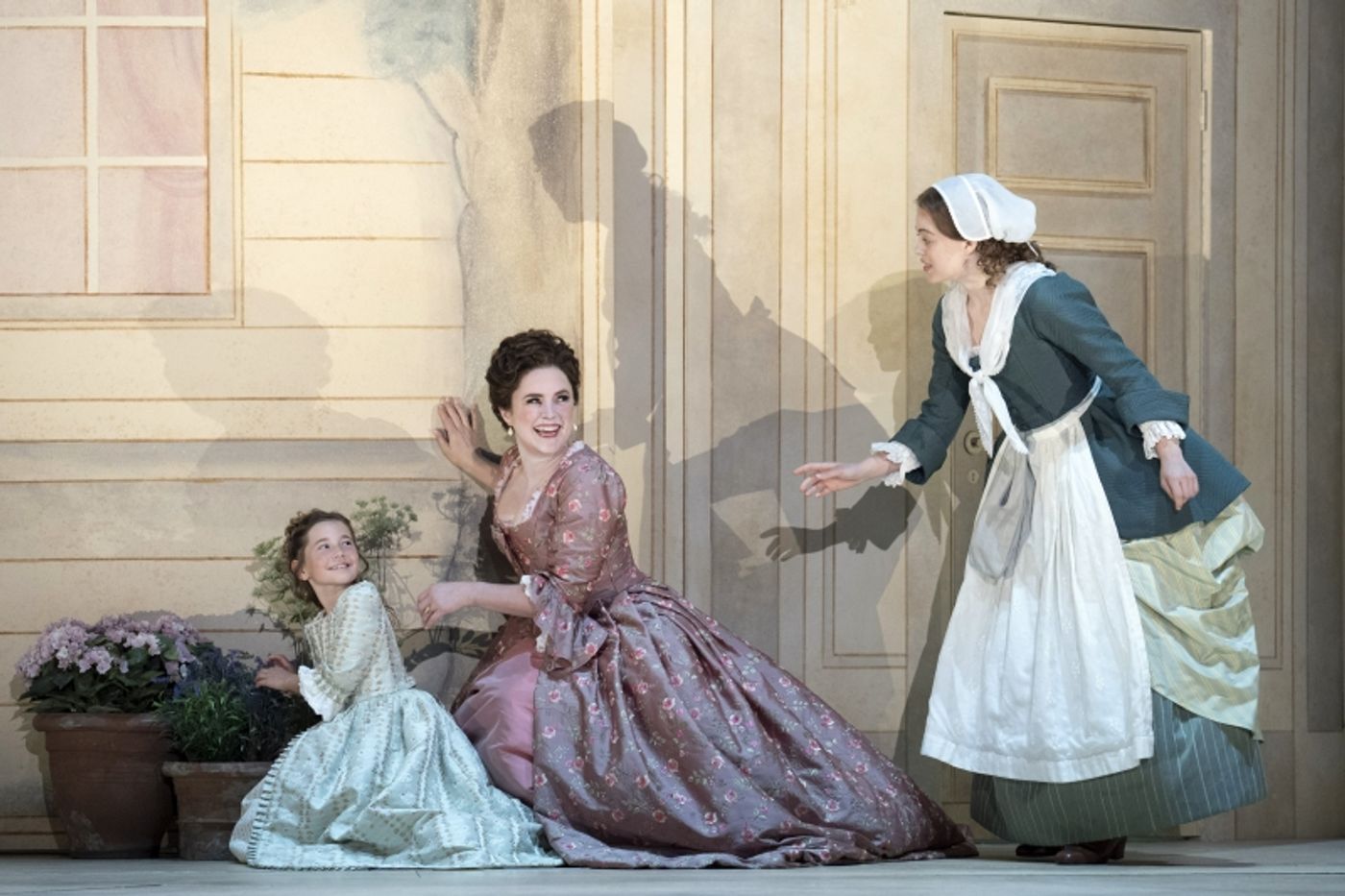
© Glyndebourne Productions Ltd. Photography by Richard Hubert Smith
The theme of deceptive simplicity also extends to Julia Hansen’s design. Initially, this seems like an unthreatening 18th-century tableau, all bucolic landscape frescoes and pastel Rococo mouldings. Moving forward, though, a seemingly infinite set of revolving backdrops (this is a piece with many instances of people running in and out of doors and peering through windows) masterfully conjures the expansiveness of the exterior world and the paranoid seclusion of the interior, domestic one. Conductor Riccardo Minasi responds in kind, with a subtle, fluid approach to Mozart’s music, his overture a soft, gradual intrusion into our opening picture-perfect vision of domesticity.
The sense of domestic claustrophobia also lends a jarring, but significant, brutality to the scenes of domestic violence committed by the Count (Huw Montague Rendall, a relatively young and effective casting choice) against his neglected Countess wife (Louise Alder), themes at the very core of the text that thankfully aren’t lost amidst the relentless slapstick.
Nowhere are these ideas displayed more effectively than in the Countess’ eleventh-hour “Dove sono i bei momenti” aria, sung by Alder with heartbreaking self-restraint. Our setting for this paean to a happy marriage long gone is a manicured garden on the threshold of the outside world, where the Countess is supposedly on the cusp of freedom but feels more trapped than ever, where a gilded cage is still a cage.
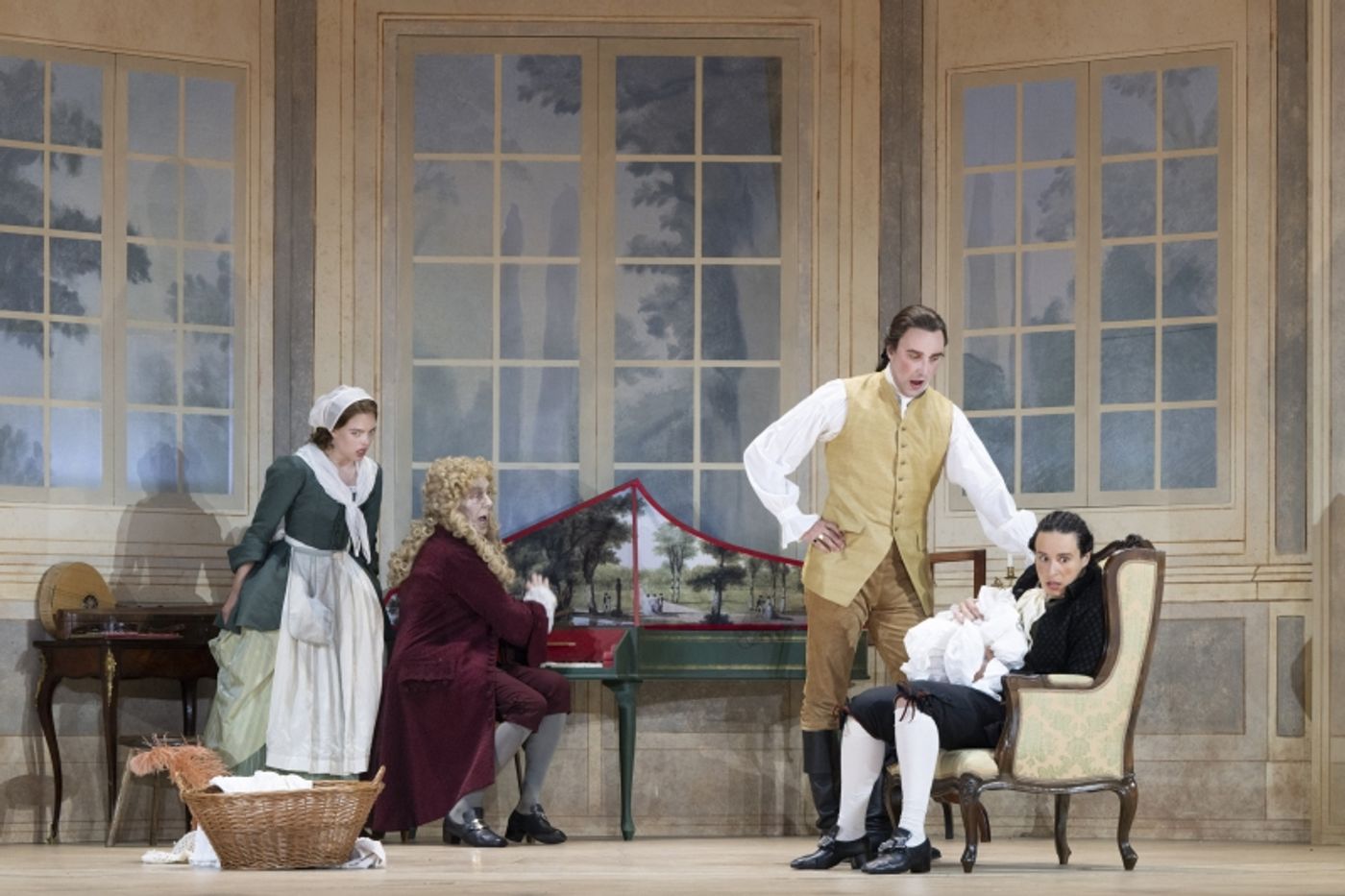
© Glyndebourne Productions Ltd. Photography by Richard Hubert Smith
There are limitations to Clément and Hansen’s approaches – in some of the larger Chorus numbers, the staging becomes so static and subtle that it loses momentum and feels overcrowded. While the climactic scene where the various pairs of lovers confront each other in the garden is an important moment of uncharacteristic vulnerability for several characters, an overblown staging involving a swing, gazebo, and several statues rather distracts the eye from the cast.
When Clément and her cast and crew do manage to find the complex amidst the simple, though, this is a love letter to Mozart’s score and Da Ponte’s text. It’s a deft balancing act to not let psychological complexity overwhelm comedy, or vice versa, but it’s a tightrope this Figaro has managed to walk.
Read our guest blog with Director Mariame Clément here.
Le nozze di Figaro plays at Glyndebourne until 21 August
Phtot Credits: © Glyndebourne Productions Ltd. Photography by Richard Hubert Smith
Photography by Richard Hubert Smith, © Glyndebourne Productions Ltd.






Reader Reviews
To post a comment, you must register and login.