


Review: SOUNDS AND SWELLS at The Conrad
Classical Quartets and Surfing Videos Are Paired With Startling Success
By: Ron Bierman Jan. 18, 2026

Art of Elan launched the Sounds and Swells series several years ago. Artistic Director Eric Starr describes its unusual programs as “a curated pairing of surfing footage and classical music.” The music and footage vary from one performance to another, but always include one or more California composers and surfing meccas.
Surfing and classical music? How’s that work? Surprisingly well it turns out. In this performance at La Jollas’s Conrad, Jimmy Wilson and Kyle McCracken’s videos displayed the successes and failures of surfers challenging the ocean. More often than not, the ocean won while the Hausmann String Quartet’s sonorous sounds matched the rhythms and moods of the giant, foaming waves.
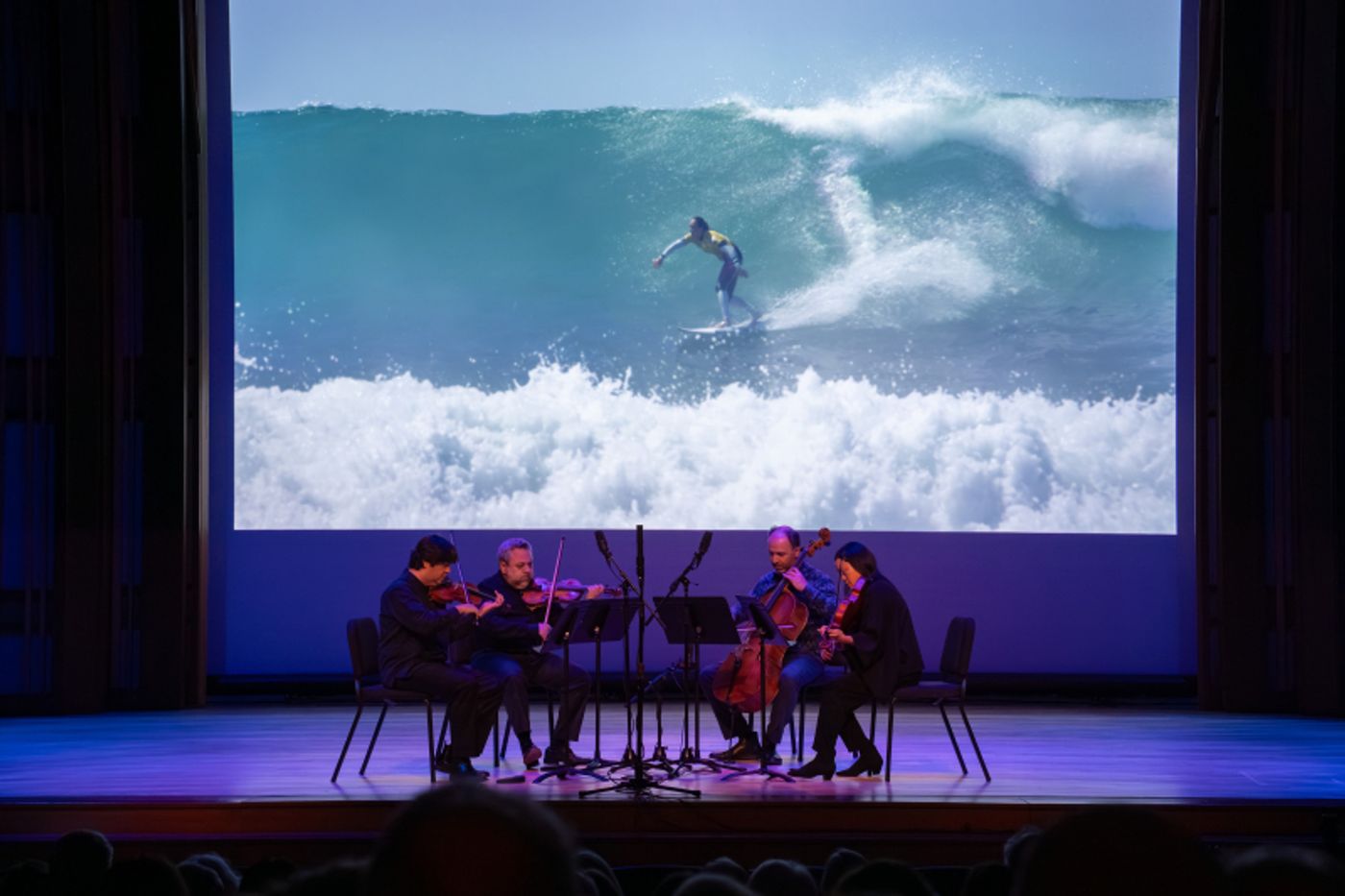
The many surfers in the audience appreciated and sympathized with the wipeout victims. They’d been there. They laughed when the large screen at the back of The Conrad’s stage displayed embarrassing mistakes that caused harmless dunkings, oohed and groaned as flying boards and out-of-control surfers risked serious injury in 50-foot waves.
Non-surfers like me had similar reactions, but less appreciation for how the thrill of sliding precariously on a fifty-foot wave at up to 50 miles an hour more than compensates for the danger. Not on my bucket list, along with Everest and sky diving, though I admire the skills and bravado of daring pros.
The dual-media concert began with a video taken at Trestles on the California coast where the 2028 Olympics surfing competition will be held. The Hausmann quartet accompanied with Terry Riley’s Cadenza on the Night Plain. It was the best musical match of the concert.
Riley, the only California-born composer on the program, is still composing at 90. He was a pioneer in the early days of minimalism, a school of classical composition based on repetition with only subtle changes rather than more pronounced varieties of melody, harmony, rhythm and texture. The equally repetitious video showed dozens of contestants, one after another, as they attempted an “aerial” in a World Surfing League Championship competition.
Almost all reached the top of a wave then launched into the air and, with minor variations, attempted to complete a judge-pleasing full turn before continuing their ride. Complete success was rare, and several leaps resulted in an ignominious descent into or under the curling wave, with or without board.
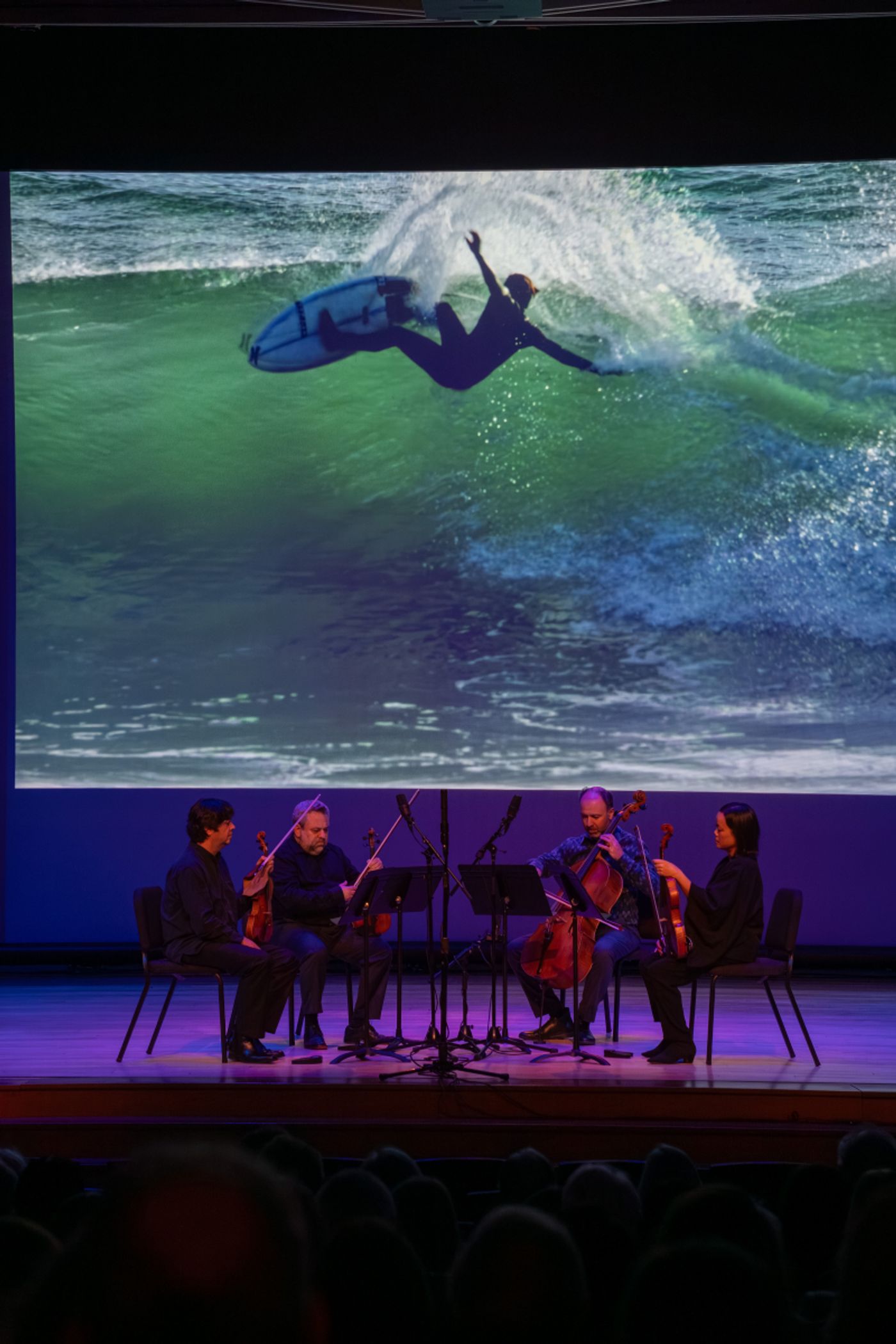
The vid had a false start that turned to a blank screen a short time in while the Hausmann, backs to the screen, carried on before the second violin got an unexpected tap on the shoulder and the startled performers were asked if they would mind starting over.
Repetition being Terry Riley’s thing, I briefly wondered if the request was ironic staging, but no, it was a technical glitch in the projection booth.
The quartet did begin anew, and this time all went well musically in an accurate and sonorous performance. To my inexperienced eye, only one surfer completed the turn move with seemingly effortless control throughout. The others were soon under a massive wave, lost their balance or made only a partial turn.
The repetition of failures matched the beautifully performed repetitions of Riley’s work but went on a bit too long for non-surfers and anyone who isn’t into minimalism, which I’ve always thought best serves those who fall easily into a trance.
Three subsequent clips also featured the California coast. The gorgeous lento from Korngold’s intensely romantic second quartet was the appropriate match for high waves off downtown San Diego’s shoreline, not far from The Conrad. The Hausmann’s lush sound matched the beauty of the music and La Jolla’s honeymoon-destination reputation.
A single equally romantic movement from Ravel’s only quartet paired with Mavericks, Half Moon Bay, and a jaunty one from Haydn’s 29th quartet with Pipeline in Oahu.
We Bear Witness, a quartet by contemporary Syrian composer Kinan Azmeh, was a world premiere commissioned by the Hausmann and, intentionally this time, performed sans video. Azmeh is best known as a clarinetist because of his concerts with other well-known fellow musicians and before major orchestras.
The quartet reminds us that he is also a composer and an advocate for distressed innocent victims of religious and political conflicts in Syria and around the world.
The roughly 12-minute piece, largely tonal, is divided into four sections. The first features an aggressive, driving rhythm with limited melodic content, the second’s touching mournful theme for violin is seems a reaction to the helpless agony of victims. The third returns to the fierce opening before gradually combining it with the theme of the second, which soon takes command in the finale’s surrender to despair.
The work is effective. The composer is new to me, and I will be searching Spotify for his orchestral works.
Two brief movements from Beethoven’s upbeat and optimistic fourth quartet combined with the surf at Newport, California to bring the concert to an end and the audience to its feet for an enthusiastic ovation.
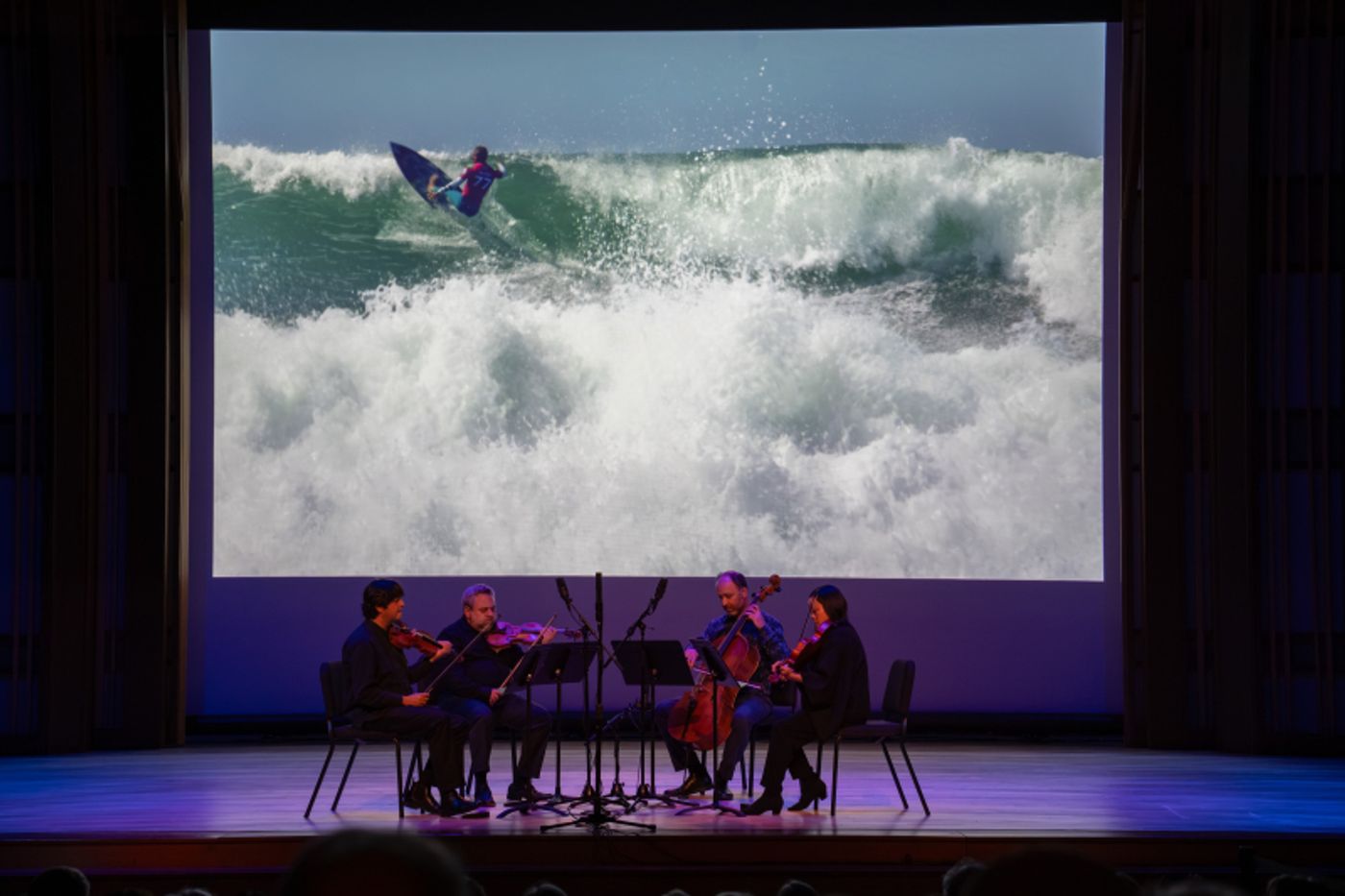
The Hausmann Quartet and the Art of Elan are exceptional advocates for contemporary music and meaningful interactions with the community. The Hausmann, part of the Art of Elan's family of performers, is also the resident quartet at San Diego State University. The Sounds and Swells series and other numerous appearances have demonstrated its mastery of both traditional and contemporary works. Both the Quartet and Art of Elan are invaluable San Diego assets.
Photo credits Todd A, Davidson Photography
Reader Reviews
Videos