


Review: OPERA À LA CARTE'S ORPHEUS IN THE UNDERWORLD at St. Peter's Episcopal Church in Del Mar
A Young San Diego Opera Opera Company Fulfills a Promise
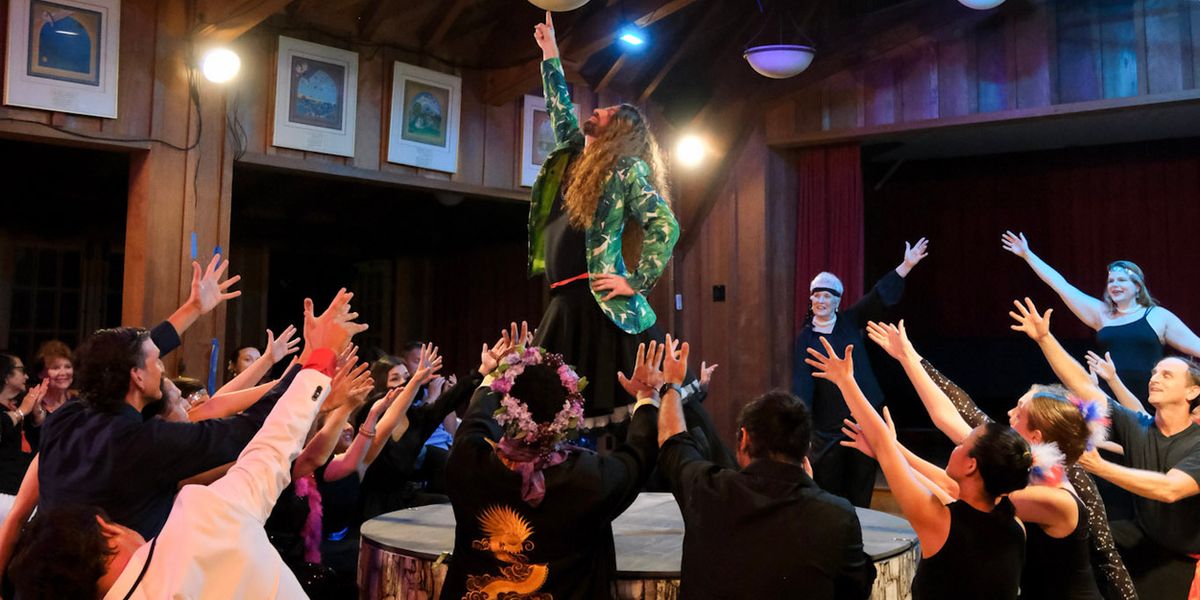
With even large companies struggling to survive, why did soprano and voice teacher Abla Hamza decide to found Opera À La Carte?
Her goals were laudable. As national opportunities continued to shrink, she wanted to provide new ones to local professional opera singers and attract San Diegoans new to opera with lower cost tickets and less intimidating venues.
But could she succeed during such a difficult period? Opera À La Carte began with vocal recitals at small venues, and last year graduated to its first full opera.
As I reported in my review, although the downtown hall was less than ideal for opera, the result was a thoroughly satisfying version of La bohème produced with a minimal budget and an effective cast of local operatic singing and acting talent.
The company has now followed through on a promise of once-a-year full productions with Orpheus in the Underworld, a comic operetta by Jacques Offenbach and librettists Hector Crémieux and Ludovic Halévy. This time the performance was in the parish hall of St. Peter's Episcopal Church of Del Mar, again an unusual space for opera.
The hall does accommodate theater-in-the- round for a cozier feel, the acoustics are excellent, and audience members are close to the stage, so no need for opera glasses.
But the hall lacks tiered seating, space for musicians is limited, and there is no practical way to project captions. Although the libretto was translated to English, lyrics are often more difficult to understand when sung rather than spoken.
To allow rows further back a better view, director Zane Alcorn kept the bulk of the action well in front of the hall’s small stage and the key singers in each scene were usually on a round, slightly elevated platform close to the audience.
The company based the production on Offenbach’s original two-act four-scene operetta of 1858. Both it and his much longer four-act opera of 1874 are used in contemporary productions.
The story of Orpheus and Eurydice dates back to Greek mythology. Orpheus, a son of Apollo, is a musician who can charm all living things and even stones. (Unfortunately, he never got a recording contract.) He falls for Eurydice, and they wed, but soon after she tragically dies of a snake bite. Stricken with grief, Orpheus descends into the Underworld to bring her back.
His best tunes soften the hearts of Hades and Persephone, rulers of the dead, and they allow Eurydice to return to life on the condition that Orpheus not look back for her until they’ve emerged from the darkness. Nearly at the surface, overcome with doubt and longing, he does, and Eurydice slips away forever.
The tale’s flight from ancient Greece to Del Mar was far from how the crow flies. I’ll skip over a few thousand years of variations on the story to the earliest operatic versions still in the repertoire.
Claudio Monteverdi’s L’Orfeo of 1607 is often called the first truly great opera. In its main deviation from the myth, the couple are saved by Apollo who tells Orfeo he will “recognize Eurydice's likeness in the stars.” (The god Apollo may have been influenced by his knowledge of future Hallmark Movie endings.)
Christoph Willibald Gluck penned the next successful version. He stuck with the happy ending that transformed the Greek tragedy into a drama.
Offenbach’s version is the one most often performed today, 13 times in September alone according to the Operabase site. It turns the tale from drama to satiric parody of the gods on Olympus, and boldly, the court of Napoleon III.
Unsurprisingly, Opera À La Carte began with librettos revised for contemporary tastes since a parody of Napoleon III’s court is unlikely to get many laughs.
In the first scene, Orpheus and his wife Eurydice run into each other while they both await assignations with lovers. A thorny discussion follows. Orpheus (tenor Adam Coughey) rather than a son of Apollo, is a music teacher and attempts to placate Eurydice with his violin, but she hates his music.
In most productions, Orpheus holds a violin and mimes the playing of a pro off stage. In this one, Orpheus saws a red plastic rod across a white string pattern on the arm of his shirt, and gets the first big, mood-setting laugh.

The change from drama to satire is complete when we realize that Orpheus wants to be rid of his wife, and Eurydice doesn’t protest when abducted to Hades by Pluto, god of the underworld. In mortal form he has been her earthly lover.
Public Opinion (mezzo-soprano Sarah Nicole Carter), the guide for navigating morality, shames Orpheus into attempting Eurydice’s rescue.
When the gods enter the stage for the first time, they are returning from surfing, boards in hand, to loll on a beach instead of Mount Olympus. Director Zane Alcorn has shifted the plot from comedy to farce by updating the setting to the 1970s.
Anachronisms abound. Mercury (John Nettles) calls Jupiter “the big guy” and the funky slang of disco goers and flower children adds to the loose-jointed fun. Jupiter at one point says to Pluto, “You killed, kidnapped, and imprisoned without her consent! And you call yourself a feminist.”
The updated setting changes the feel of the story from a pointed satirical parody of the gods and an implied amoral ruling class to a sitcom-roasting gods turned surfers and disco dancers. No one would take it for a satirical depiction of the moral weaknesses of today’s equivalent of Napoleon III’s government. A chance missed amidst today’s political mayhem.
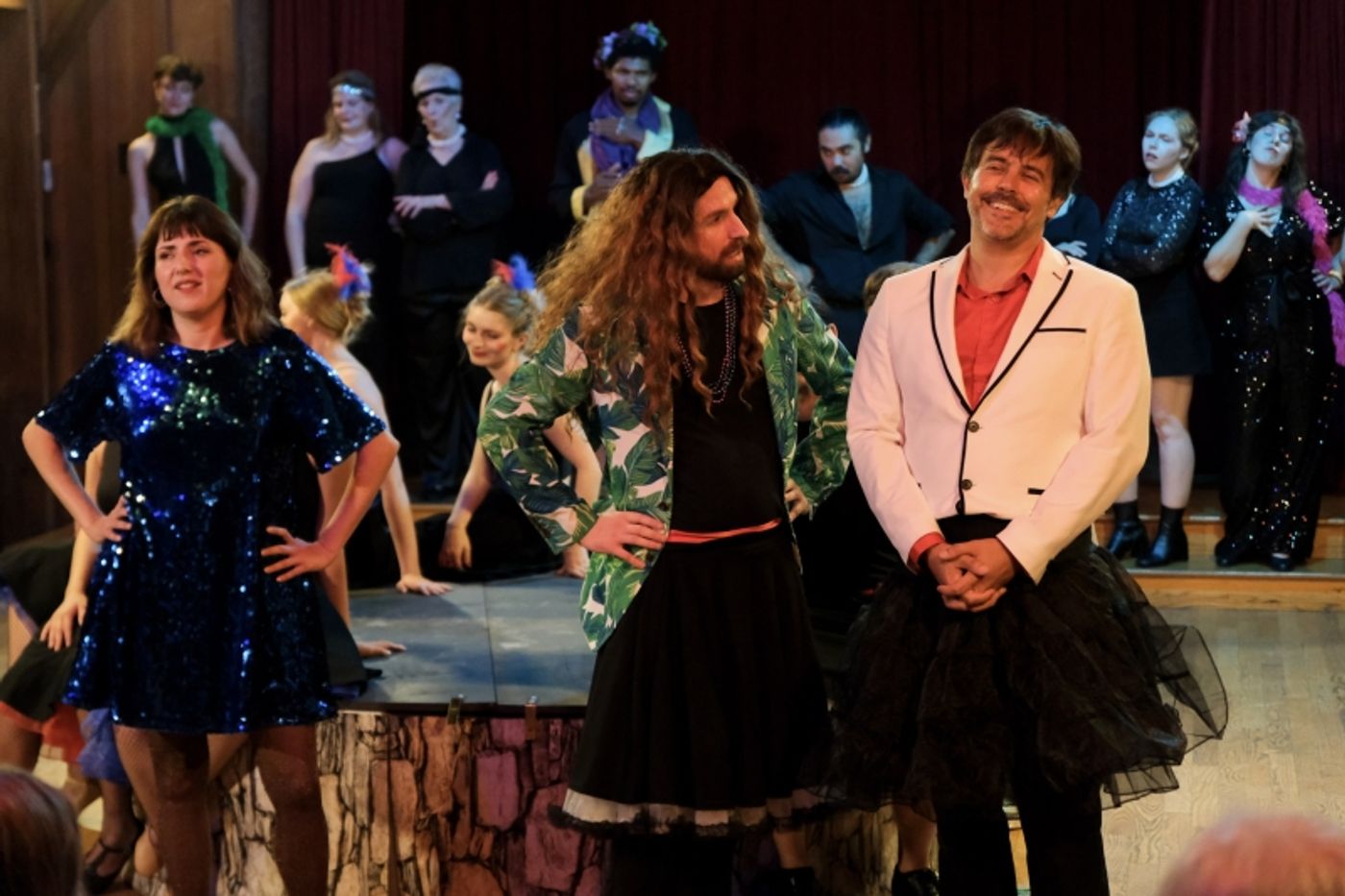
While making fun of the gods, baritone Michael O’Halloran (Jupiter) and tenor Frank Napolitano (Pluto) show off pleasing voices. O’Halloran’s power matched Jupiter’s occasional need to set the gods of lower rank in their place. Napolitano played Pluto with roguish charm, infectious energy and the laugh of a villain. Both singers blended well in duets with soprano Katie Polit.
In Polit’s main first act aria, she demonstrated a wide range of dynamics and tones, from girlish innocence to near Wagnerian strength that literally had parish rafters ringing.
The second act begins in Hades. Orpheus has successfully pleaded his case with support from Public Opinion. The rebellious gods, bored with earthly beaches and the limited unchanging diet provided by the big guy, demand they accompany him when he decides to see how Eurydice is faring in the underworld.
Turns out she’s bored and frustrated because her memory of life above ground was erased during the trip to Hades and Pluto, whom she still adores, has ignored her. It’s a perfect setup for the ever-philandering Jupiter.
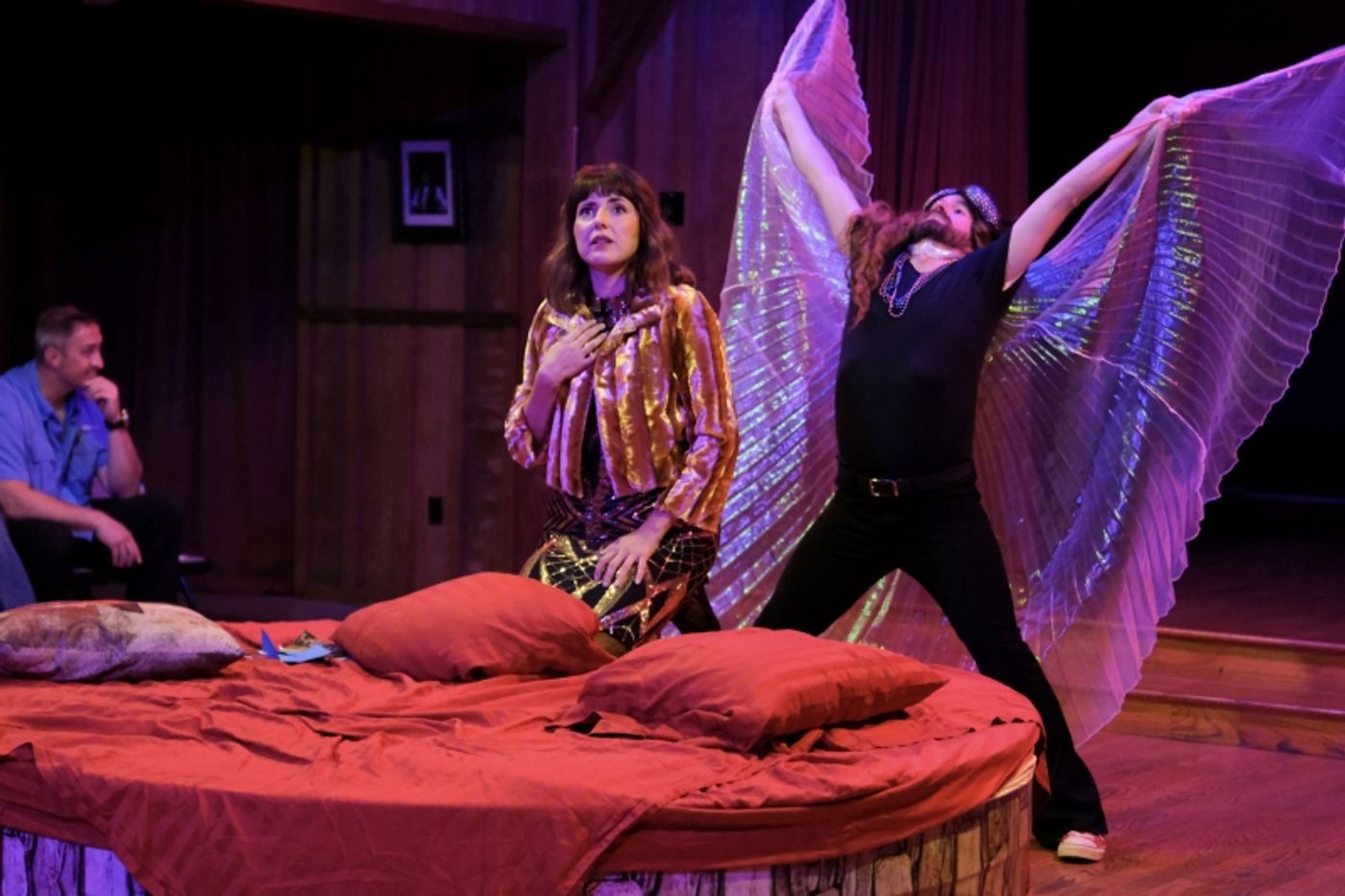
He buzzes to her in the guise of a fly and gets some of the evening’s biggest laughs as he envelops Eurydice in diaphanous wings while they circle in a hilarious swooping dance of mutual seduction and buzzing.
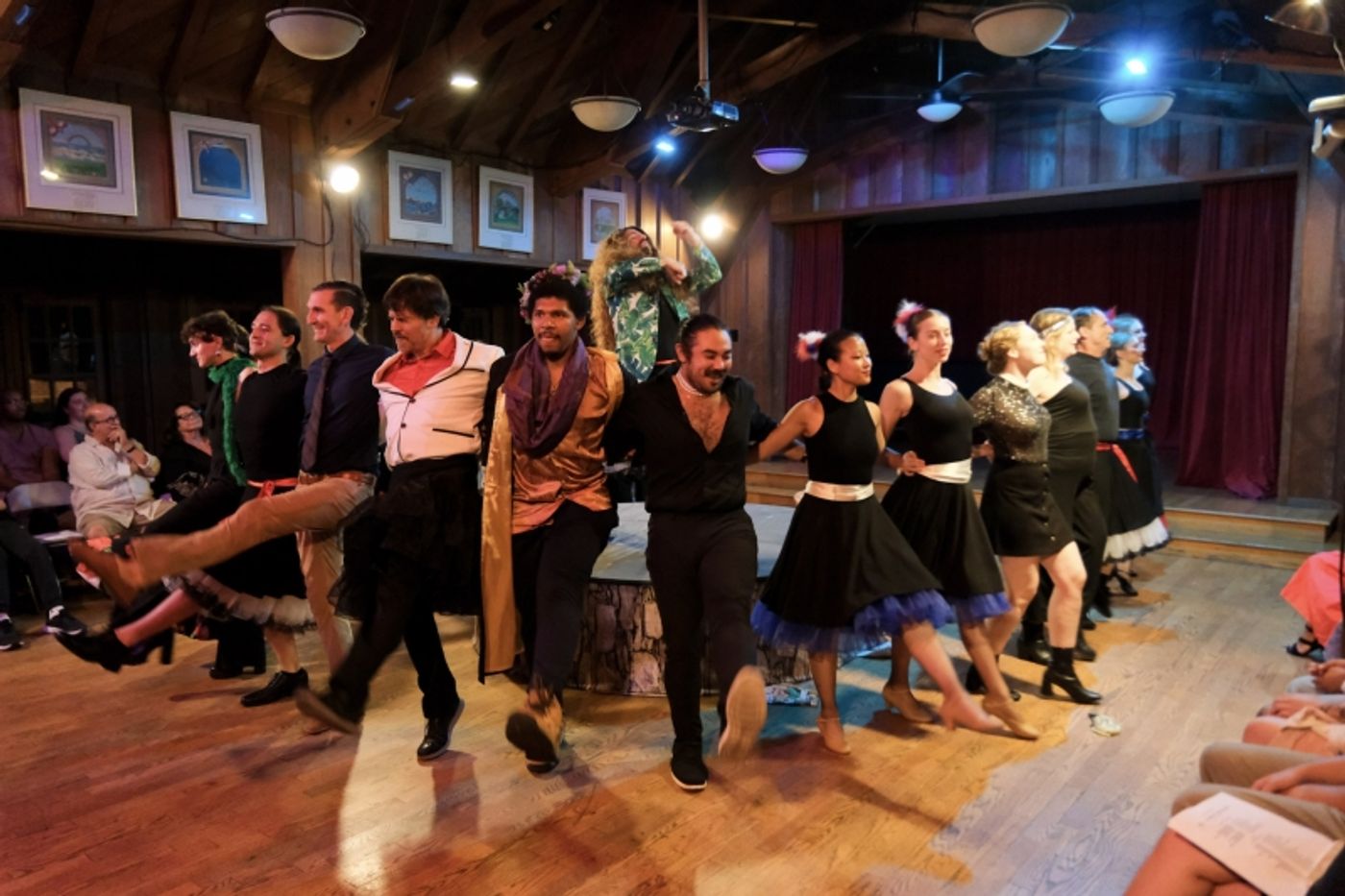
Offenbach’s finale keeps the happy ending and punctuates it with by far the composer’s best-known melody, the Galop infernal, known as the can-can thanks to its adoption by dancers at the Moulin Rouge and Folies Bergère.
Opera À La Carte’s cast of more than 20 danced it with riotous abandon, the scene includes the production’s most prominent campy comedians. Napolitano, all in, kicks as though auditioning for the Folies, but unfortunately lacking the high straight-leg kicks needed to compete successfully, not to mention the legs themselves. Behind the kick line O'Halloran sticks with disco.
Although I continue to miss a full orchestra in Opera À La Carte productions, violinist Clare Hatter’s lovely tone won me over as backup for Orpheus’s arm when she played a long-time favorite romantic melody of mine in the opening scene, and I seldom thought of a full orchestra thanks to the duo of Hatter and music director/pianist Bruce Stasyna.
Photos Esteban Marin
Reader Reviews
To post a comment, you must register and login.