


Interview: Loretta Greco Takes THE HILLS OF CALIFORNIA in a New Direction at The Huntington Theatre
Jez Butterworth play will be in Boston through October 12
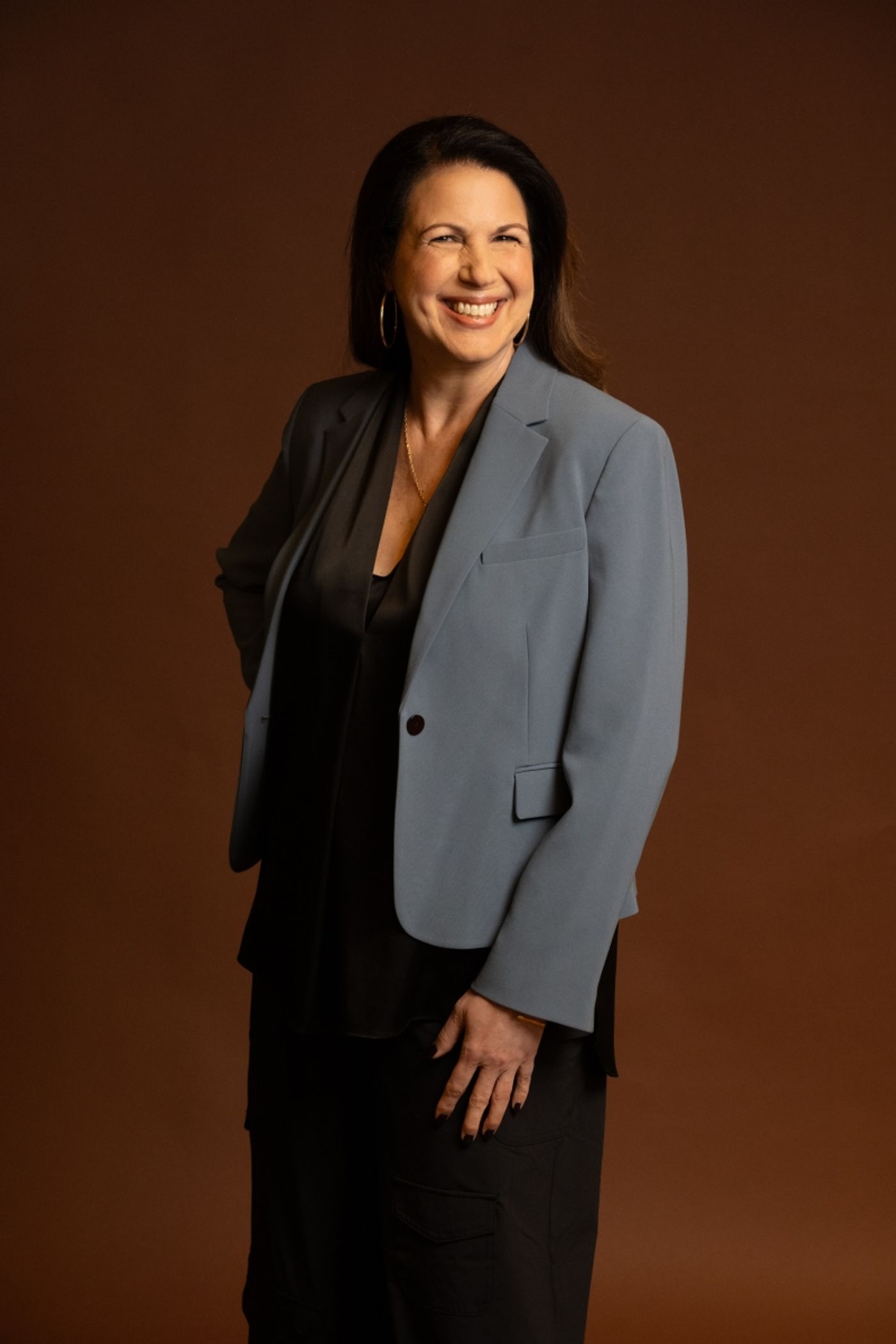
Since becoming artistic director of The Huntington in July 2022, Loretta Greco has earned a reputation for opening each new season with a splash.
She continues that tradition this year, directing the Olivier and Tony Award-nominated “The Hills of California” – at the Huntington Theatre through October 12 – by British playwright and Olivier and Tony Award winner Jez Butterworth (“Jerusalem,” “The Ferryman”), which had its premiere in London’s West End in 2023 and transferred to Broadway last season.
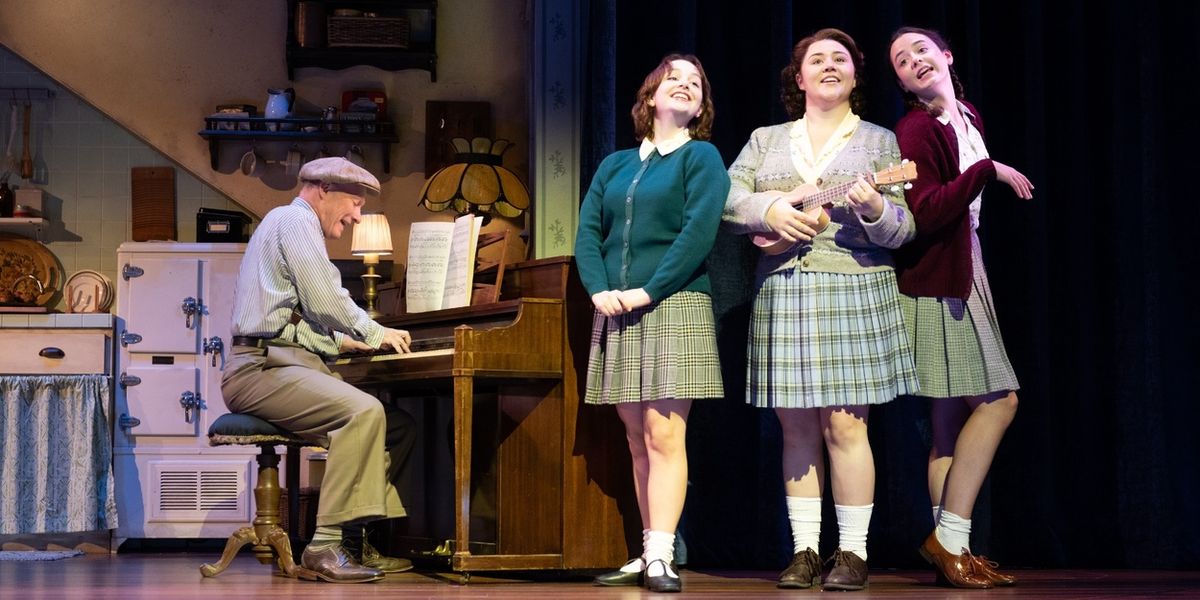
 Set in Blackpool, England, “The Hills of California” takes place in the seaside guesthouse of the Webb sisters’ family home – in 1955, when they were girls being trained for a career as a singing group like the Andrews Sisters, and later, in 1976, when they gather as adults at their ailing mother’s bedside and reconsider the choices she made for them.
Greco directs the production, which, following its Boston run, will travel to Berkeley Repertory Theatre, October 31 to December 10, where it is being presented in association with The Huntington. Northern California is familiar territory for Greco, who spent 12 years as artistic director of San Francisco’s Magic Theatre.
On Zoom recently from Boston, Greco spoke about the play and more.
When did you first become aware of “The Hills of California”?
I saw the play in London in the West End incarnation, and I was so surprised and blown away. I love Jez Butterworth’s work, but I was not expecting him to write something centered on five women in one family. And that really captured my imagination. I’m the eldest of five girls, so the sister of four, and this story of the four Webb sisters really drew me in.
When you discover something in the way that you just described, are you seeing it with the artistic director’s eye, wanting at some point to present it, or do you ever go just as an audience member?
It’s funny because there are two ways of answering this. One is that, as in this instance, we take a group of Huntington donors to London every year. So we were theatergoing, and I just love Jez so I was really excited about what this new work would be. But as a producer, as an artistic director, when I season-plan, I am always looking at, what do I want to see as an audience member? It’s not what do I want to direct, or what do I think would be great in the space, it’s always, what am I hungry for as a member of the audience?
What is it about this play that most appeals to you?
When it comes to Jez, I kneel at “Jerusalem” and “The Ferryman,” but for me this play interested me because I am not only the eldest of five girls and, of course, a daughter, but I’m also the mother of a child, a daughter, so I was really drawn to this piece on that level. And Jez deeply understands the women that he has blown into full form, and that I’ve tried to blow life into with this production.
Did you see the Broadway production? If so, what are the key differences between that version and the one in the West End?
When I saw it in New York, after London, there was a new third act, it really was, for me, like meeting the play in a new and different way. The original third act was surreal and fascinating, but I think it had the capacity to pull some people out of it. This third act is so cathartically satisfying, without pandering – I think he’s scraped another layer of depth emotionally. I mean, his writing has such emotional vulnerability. It’s rare treat to have somebody who has a gift, as Jez does. He’s a great storyteller and that’s different from being a playwright. He has the craft, and his ability to channel the emotional mess of this family is like a trifecta. Jez’s writing is so honest and so bleeping funny.
In August of the summer after I saw the show in the West End, my dad died, and then a couple of months later, I saw it again in New York. One of the things that really struck me was that Jez had completely rewritten the third act. I just thought, here’s this fancy-pants screenwriter, an Olivier and Tony Award winner who has this perfectly successful West End run, and yet he goes back and rewrites.
You have a reputation for opening each new season at The Huntington with something big. Is that a coincidence or a strategic move?
It’s super strategic, and it’s funny because the old way of thinking was that you open with a crowd pleaser – something that everybody will love. What we’re doing is that we’re trusting that the audience actually has higher aspirations for what they’re seeing. So I would say “Prayer for the French Republic” is a great piece of entertainment, but it is also a really chewy, meaty piece of work, which is the same for “The Lehman Trilogy,” “Leopoldstadt,” and now “The Hills of California.” Our audiences want something they can lean into and thoroughly enjoy – works that will challenge them and make them think, and that will also make them laugh. That’s what we’re looking for, something that has pathos, great humanity, and humor. And I think all of these pieces have that.
I understand that this play reminds you of one of your favorites?
Whenever you talk to people about what new writers in the UK are doing, they always say they’re, you know, re-dreaming Pinter and Beckett, and I thought, whether he knows it or not, Jez is subconsciously re-dreaming Sam Shepard’s “Buried Child.” There was so much of that homecoming here, and I’m a real Shepard fan, so I love it deeply and personally.
At three acts, was running time a factor when you were deciding whether or not to present this show?
I’m a fan of great writing, and of great storytelling, and I think that we did go through almost two decades where there were 70-, 80-, and 90-minute plays. I’m fond of having a drink after a show and a late dinner and it still not being too late an evening. With this play, however, I do not think there is an extra second on the page.
And we didn’t do the pause between the second and third acts, because I just don’t believe it’s needed. I feel that the story holds, and if anybody is looking at their watch, then we’ve failed. We decided this during rehearsal. I thought, “I don’t want to let the tension release. I want to roll right in.” So it’s a beat, and we move on. I’m really proud of that. I think the play is better for it.
What makes The Huntington the right place for plays like this one?
The great taste and sophistication of the Boston theatergoing audience. It’s sort of indicative of why there is such a strong regional theater movement here. We know that theater makes people better humans. We know that it teaches us more about ourselves, and ourselves in relationship to others. Everyone deserves great theater, and that’s what the regional theater is supposed to be about. So I feel very grateful and honored to be able to do these plays. Everybody deserves to see “The Hills of California,” “The Lehman Trilogy,” “Leopoldstadt,” and “Prayer for the French Public” – whether you go to London or New York, or you see them right here in Boston.
Photo caption: At top: Mike Masters, Nicole Mulready, Meghan Carey, and Chloé Kolbenheyer in The Huntington production of “The Hills of California,” directed by Loretta Greco. At left: head shot of Loretta Greco. Phoros courtesy of Liza Voll Photography.
|
Meet the Cartozians Boston Center for the Arts (2/18-3/21) |
|
School of Rock Firehouse Center for the Arts (8/21-9/06) |

|
Buena Vista Orchestra Emerson Colonial Theatre (10/08-10/08) |
|
Laura Benanti: Nobody Cares Boston Center for the Arts (10/22-10/25) |
|
CIVIL SPIES™ MIT Endicott House (9/17-9/17) |
|
|
The Sound of Music Boch Center Wang Theatre (11/17-11/22) |

|
Celebrating Jewish Plays Tina Packer Playhouse (10/09-10/11) |
|
The Rocky Horror Picture Show Spooktacular Tour with Patricia Quinn Emerson Colonial Theatre (10/27-10/27) |

|
Festival Finale! Cape Cod Chamber Music Festival (8/21-8/21) |
|
Harper Lee's To Kill a Mockingbird Huntington Theatre (10/08-11/08) |