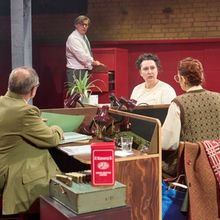
Review: QUARTET IN AUTUMN, Arcola Theatre
Despite her relative unpopularity within her lifetime, Barbara Pym always excelled at plumbing the depths in the lives of desperately ordinary people.


Despite her relative unpopularity within her lifetime, Barbara Pym always excelled at plumbing the depths in the lives of desperately ordinary people.
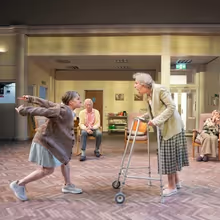
Rosanna Vize’s set for the world premiere of Care is sterile, harshly lit and unromantic.
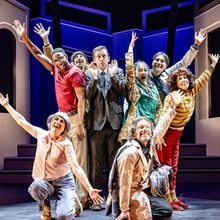
It’s clear before the curtain rises – before you’ve even set foot in the theatre – that The Guy Who Didn’t Like Musicals is about more than the sum of its parts.
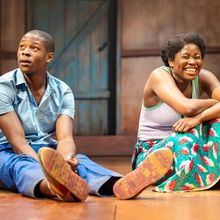
In many ways, @sohoplace is the perfect venue for The Boy Who Harnessed The Wind: the intimate thrust staging is perfect for elaborate ensemble choreography and carousing the audience.
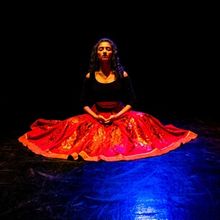
The Anti “Yogi” (heavy on the quotation marks) is one of those shows where the tagline tells you everything you need to know: “liberation, not Lululemon”.
Shakespeare veteran Dame Harriet Walter talks about the Bard in a reverent tone, but she doesn’t let him off the hook.
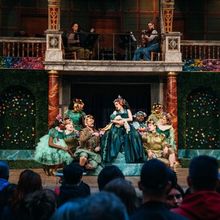
A few scenes into Emily Lim’s version of A Midsummer Night’s Dream, the Globe stage undergoes a transformation.
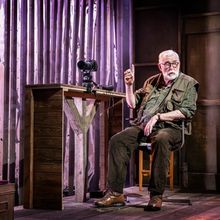
For a play ostensibly about wildlife photography, we don’t actually see too many photographs in Firewing.
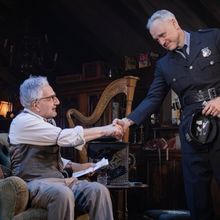
Much like All My Sons, the virtuosic Arthur Miller tragedy revived in the West End earlier this year, Miller’s lesser-known 1967 play The Price holds a mirror up to the American Dream and finds people varying degrees of broken by their desire to succeed.
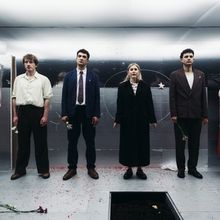
Virginia Woolf isn’t the easiest author to adapt for the stage, and her lesser-known 1931 experimental novel The Waves presents a particularly interesting dramaturgical challenge.
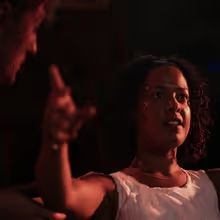
The set for This Is Not About Me initially resembles the bottom of a particularly untidy knitting drawer: strewn with red thread and abandoned crochet projects.
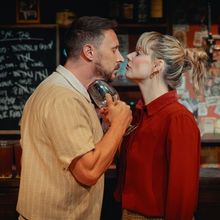
There is a moment in TWO where you could hear a pin drop: the affable 1980s soundtrack shuts off, and a glass shatters on the floor behind the bar.
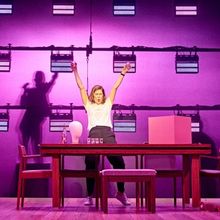
In Prima Facie, former lawyer and playwright Suzie Miller wrote about a lawyer whose faith in her profession is shaken by an experience of sexual assault.
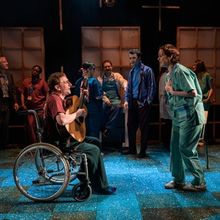
Lifeline is the kind of play that feels as though it was composed with the help of a mindmap with one word circled in the centre, around which all parts of the drama must orbit.
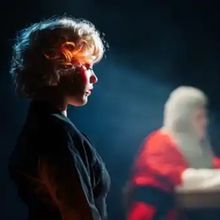
In a staging device that feels made for the cavernous Wilton’s Music Hall, Bibi Simpson as convicted murderer Ruth Ellis addresses the audience with aristocratic authority, a tiny figure within an isolated prison cell.
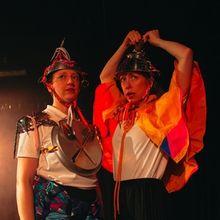
In the much-cited 2014 book The Body Keeps the Score, the Dutch psychotherapist Bessel van der Kolk wrote of how the human body can be undone and rewired by traumatic experiences.
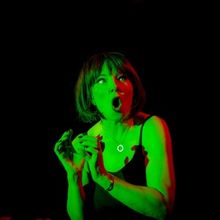
Sarah McGuinness is best known for her work producing whimsical indie documentaries about the standup comedian Eddie Izzard; in her one-woman show, though, there are only passing references to this.
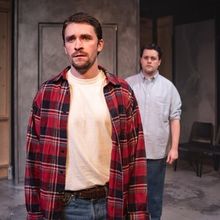
Park Theatre’s latest double bill presents two recent works from an emerging writer, both centring average queer London lives, and the lengths we’ll go to to present the versions of ourselves we want the world to see.
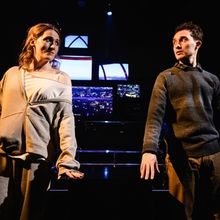
When it premiered at Soho Theatre in 2012, Blink was a whimsical oddity, an ode to two eccentric loners falling in love.
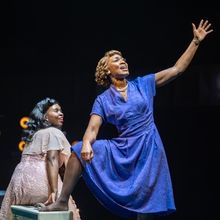
Her name may not be widely known today, but Sister Rosetta Tharpe’s musical legacy is felt down the decades.