


Interview: Marnie Near and Michael Cooper on GRAND HOTEL at Alchemy Theatre
We spoke with Michael and Marnie about their journey with GRAND HOTEL, the company’s evolution, and why this nearly-forgotten gem still resonates today.
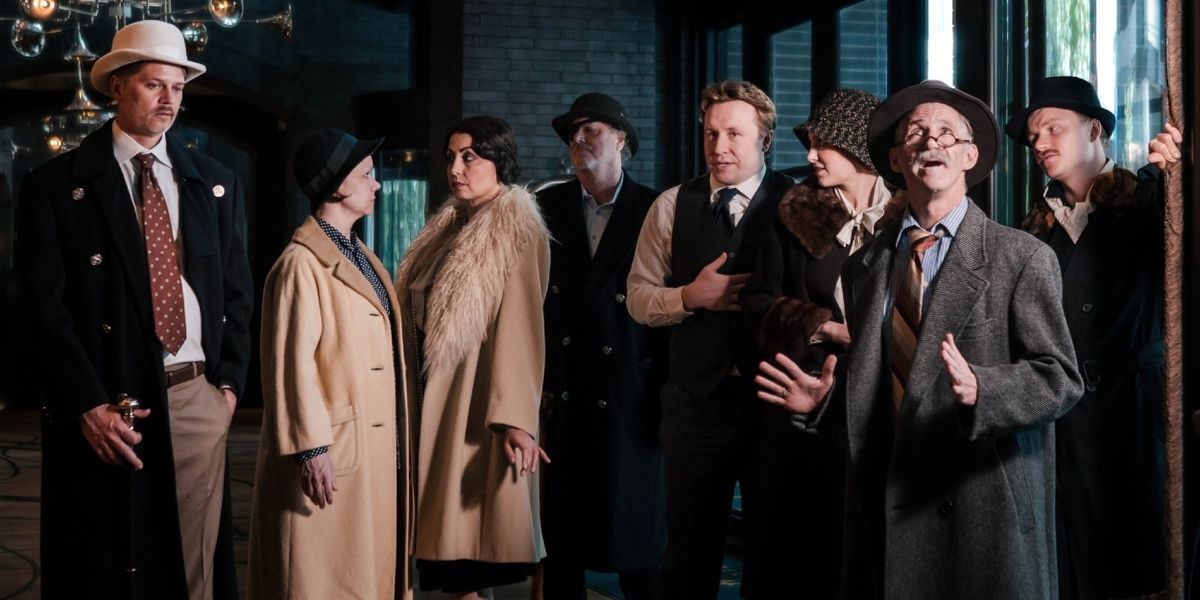
Step through the revolving door of 1928 Berlin and into a world of glamour, longing, and quiet desperation as Alchemy Theatre brings the rarely staged musical GRAND HOTEL to life at ZACH Theatre’s Whisenhunt Stage. Set in a lavish hotel during the final glittering days of the Weimar Republic, the show invites audiences to witness fleeting connections, whispered secrets, and intertwined fates, just before the world begins to unravel. Featuring a richly layered score and a sharply drawn ensemble of characters, GRAND HOTEL is directed by Michael Cooper who we interviewed alongside Alchemy Theatre’s Board President Marnie Near. Their artistic vision and deep theatrical experience have helped shape Alchemy Theatre into one of Austin’s most compelling companies. We spoke with Michael and Marnie about their journey with GRAND HOTEL, the company’s evolution, and why this nearly-forgotten gem still resonates today.
BWW: Tell us about Alchemy Theatre and why GRAND HOTEL
Marnie Near: Alchemy Theatre was founded in 2017 by Carol Hickey, who owns Carol Hickey Acting Studio. She was seeing such amazing work from her students in class and wanted to share that work with Austin. That’s how she came up with the idea.
It started that year with one show. Carol and Michael had been friends and had a theater company together in Los Angeles when they both lived there. She called Michael and said, “Hey, can you come help with this?” And he said yes and came to Austin. He’s been coming ever since to direct for Alchemy. Michael still lives part of the year in California and part of the year in Austin. He’s here about half the time directing.
We had our first full season in 2019. We were really getting up and going, and then, like everyone else, we lost steam with COVID. We paused for a bit and then jumped right back in. At the time, we were working out of a small black box theater in East Austin, where Carol taught classes. It was a great space, but we ended up losing it when she downsized.
Last year we did our first show in the Whisenhunt at ZACH. That was our transition to a bigger space. We went from a 40-seat theater to almost 100 seats. We were busting at the seams, and it was great to work with the team at ZACH. So we decided to come back this year with GRAND HOTEL. I’ll let Michael tell you more about that.
Michael Cooper: Part of Alchemy Theatre’s mission is to tell honest and true stories. We do both plays and musicals. The first musical we did was MACK & MABEL. It got cut off by COVID and delayed for two years. We were lucky enough to pick it back up later and produce it.
That launched us more into musicals, though we still do both. We look for stories where we can dig out the truth and the honesty, even within musicals. That’s what led us to GRAND HOTEL. We also gravitate toward musicals that are seldom produced or have been somewhat forgotten. Last year we did KING OF HEARTS. A lot of people only knew it from the film.
GRAND HOTEL was appealing because of the challenge it presented. That’s part of my personal ethos as artistic director. I try to do something more challenging each time. This show certainly fits that. It has a fascinating history. It started as a novel by Vicki Baum in 1929. Then it became a hugely successful 1932 film that won Best Picture. Most musicals are adapted from films, but what intrigued me is that the 1980s team that reinvented GRAND HOTEL went back to the novel instead. That’s what I did too. The novel is much deeper and richer, and the characters are more vivid.
The version we’re doing comes from that 1989 Broadway revival, the Tommy Tune version, which drew more from Baum’s original novel than the film or the 1958 flop AT THE GRAND. That earlier version was more traditionally based on the movie and didn’t succeed.
What I love is that we’ve brought our own reinvention to it. We’re doing it in the round, which is a very exciting way to stage a story. I grew up around in-the-round theaters in the Chicago area. Even though I lived in L.A. for a long time, that style stuck with me. It feels right for GRAND HOTEL, especially since our home at the Whisenhunt is such an intimate space. It lets the audience eavesdrop on the characters, which is essential to this story.
We’ve taken the original cast of 30 to 32 and pared it down to 16 actors plus our pianist. Several actors play multiple roles, which is another exciting storytelling element. The musical demands actors who can also sing and dance. Austin has incredible actors and singers, but we had to branch out a bit to find dancers for this one.
BWW: So tell me about the story. I'm curious about the story and how it's important today.
Michael Cooper: I keep going back to Vicki Baum’s novel. I even told the actors, don’t rent the movie. It’s great and glamorous—Joan Crawford, the Barrymores—but if you want to know the real story, read the novel. Many of the actors did, and they were floored by how detailed and emotionally rich it is.
You can’t really understand this story without the historical context. It’s set in 1928 Berlin, the height of the Weimar Republic, that brief period between World War I and World War II when Germany was experimenting with democracy. Berlin was a major cultural center.
During the Weimar years, Europe underwent massive changes—socially, politically, economically. Women were asserting more freedom and independence. Gay and lesbian bars were thriving. There was sexual liberation. It was a time of experimentation and growth.
But 1929 was right around the corner. The stock market crash, economic devastation, and eventually Hitler’s rise in 1933 were all coming. GRAND HOTEL examines this pivotal moment, right before it all falls apart. It shows both the glamorous, wealthy side and the struggling, desperate side. There’s constant talk about buying stocks, which we, the audience, know is a disaster waiting to happen.
BWW: I'm hearing an invitation to feel some feelings about how things are going today.
Michael Cooper: That’s exactly right, and a good point. But I’ll say this: that’s not why I chose the piece. I chose it as a work of art. The politics speak for themselves. I don’t believe in hitting audiences over the head with a message. I prefer to let them make those connections themselves. And they do, especially in a time like this.
Baum’s real interest was in eavesdropping on the characters. And through their lives, those deeper themes emerge—excess, fragility, inequality, change.
BWW: What themes did you want to highlight with all these characters? How did you weave them together?
Michael Cooper: GRAND HOTEL uses a unique and exciting storytelling style. In the 1989 revival, the creative team made it into an integrated musical, with music threaded throughout, even under dialogue scenes.
You get short, sharp scenes with different characters. At first, they seem like isolated stories, but then they knit together. The entire show takes place over two days and a morning, and by the time the guests leave, their arcs have played out.
It’s like life. Like a hotel lobby. Multiple things happening at once. That realism, that overlapping action, is something we embraced.
BWW: I'm thinking about the themes of connection—real human connection—that seem to be woven through the show. How do you think audiences relate to that?
Marnie Near: That’s one of the most powerful parts of the show. The human connection. Some characters already know each other, and we see their relationships evolve. Others meet for the first time. There’s the Baron and his empathy for Otto. And on the staff side, you have Erik at the front desk. He’s just had a baby, and we see his connection to this new life.
Those moments of connection—fleeting, deep, funny, tragic—they’re what makes the show resonate.
BWW: It strikes me that we don’t use public spaces this way anymore. Today, we’d go to our rooms, get on our phones, and connect with people we already know. But this was a time when people gathered. When human connection happened in public spaces. It feels… retro-revolutionary.
Michael Cooper: Exactly. They didn’t have smartphones. If you were in a hotel, the lobby was where everything happened. People met each other there.
Even the staff have their own interconnected stories. Baum was brilliant in how she wove them in.
You’re right. It is kind of a sad observation. Look how much richness there was in those interactions. And how much we’re missing now.
BWW: What is it you really want us to know about the show? And what do you want us to take away from it?
Michael Cooper: That’s a good question, because I really don’t think in those terms. I don’t really think about it that way. I mean, the themes are the themes. We have a responsibility to present those themes in a way that causes human connection, right? For me, that’s where it ends.
I’m one of those directors who believes that if an audience member is angered by what they see, good. That’s a feeling. That’s something. And if you want to talk about it, let’s talk about it. Because that’s what theater does. But I don’t set out to channel an audience’s thinking for them.
I want to put the art piece in front of them. Just like a painting, just like a sculpture, just like someone singing a song in a cabaret. Just do it and let the audience decide for themselves. And I think people respect that more than being told, “This is what you should walk away with.” That’s just how I work. I think if the piece is written well enough, and you’ve presented those characters as human beings well enough, the human factor takes over. People draw their own conclusions.
GRAND HOTEL, with book by Luther Davis, and music & lyrics by Robert Wright & George Forrest is based on Vicki Baum’s Grand Hotel. The show runs May 30 – June 15, 2025, at The Whisenhunt at ZACH Theatre. Tickets are available here.

|
ARCOS Presents: Creative Resistance Crashbox (9/04-9/12) |
|
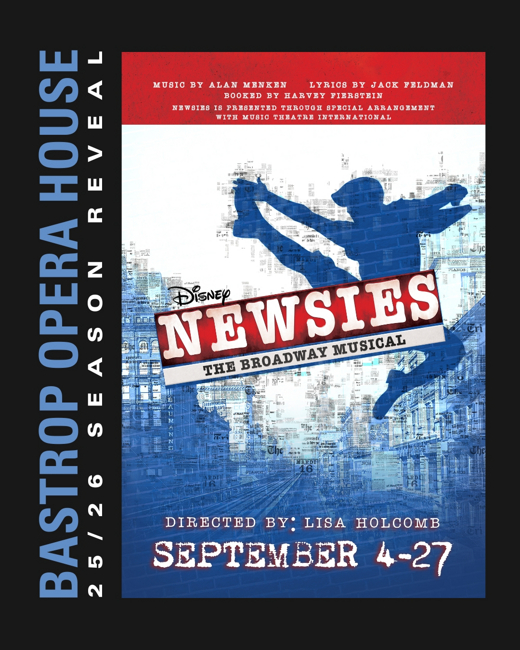
Disney’s Newsies Bastrop Opera House (9/04-9/27) |
|
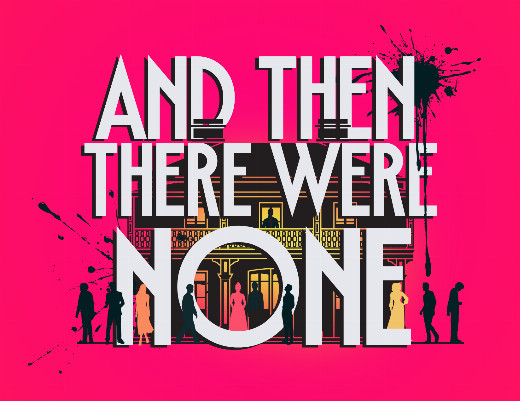
And Then There Were None Georgetown Palace Theatre (8/21-9/20) |
|
Jack Johnson at Germania Insurance Amphitheater Germania Insurance Amphitheater (8/29-8/29) |
|
9 to 5 BASTROP OPERA HOUSE (9/10-10/03) |
|
The Complete Works of William Shakespeare (Abridged) BASTROP OPERA HOUSE (10/09-10/25) |
|
Guns N’ Roses Globe Life Field (9/09-9/09) |
|
Austin City Limits Music Festival: Weekend One – 3 Day Pass Zilker Park (10/02-10/11) |

|
And She Was Loved - World Premiere Hyde Park Theatre (9/03-9/12) |
|
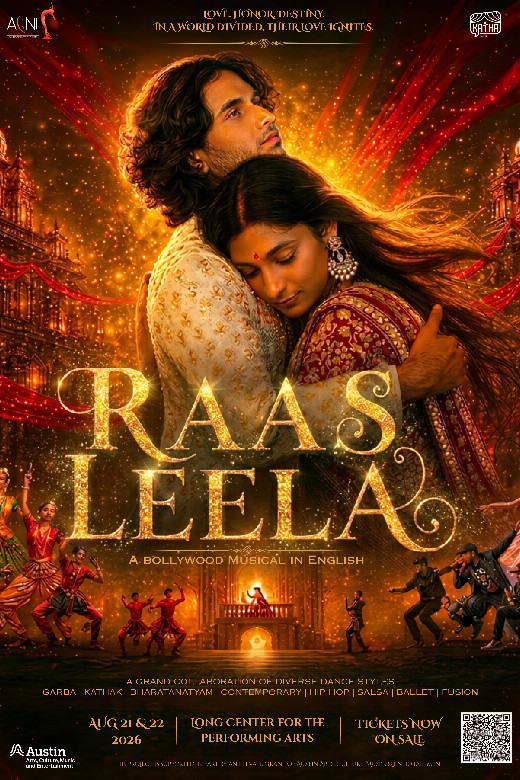
Raas Leela: An East Side Story The Long Center for the Performing Arts (8/22-8/22) |