


Review: TOSCA, Starring Anna Netrebko, Royal Ballet and Opera
Controversial casting pays dividends in an opera that gains more relevance every day
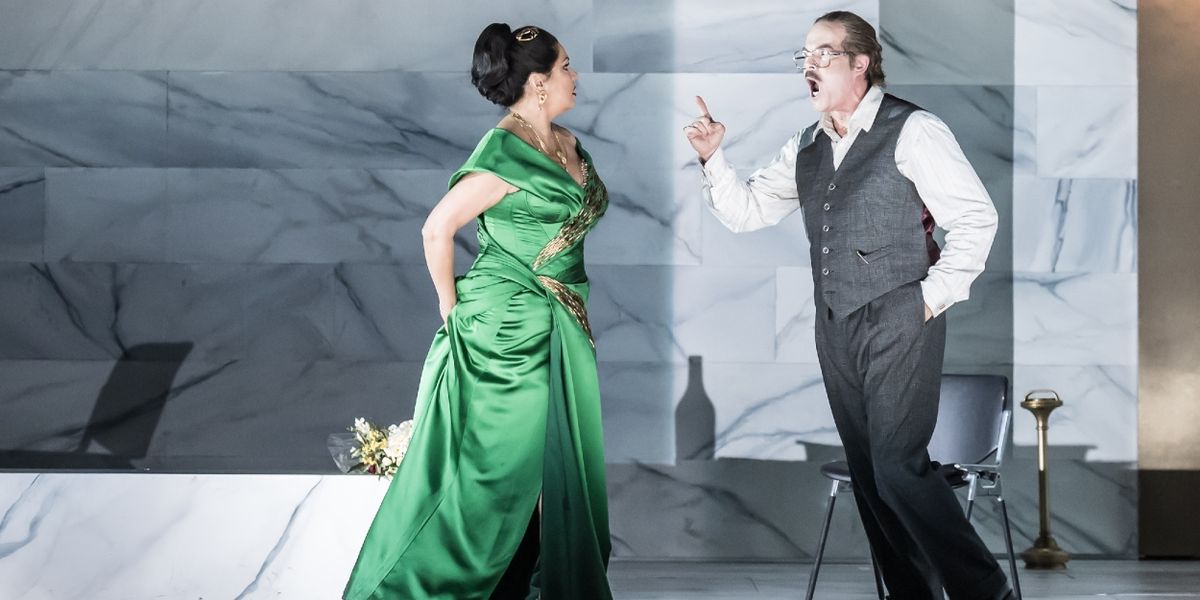
 If you come to opera via film musicals and, later, stage shows, Tosca is amongst the most accessible. The story of the lovers and the evil apparatchik is told at a furious pace, trauma after trauma piling up as the emotional heft becomes all but unbearable. There’s no standing about for twenty minutes while someone sings stage left, no mythical dwarves hiding gold, no magical toymaker. Nor, as early critics were quick to point out, is there a whole lot of poetry either in Luigi Illica and Giuseppe Giacosa adaptation of Victorien Sardou’s sensational play. However, there are compensations…
We open on a bombed church into which a fugitive, Angelotti, runs. He finds an old friend, the painter, Cavaradossi, who helps his old revolutionary friend but is cold towards the priest, who is disdainful in return. Enter, shimmering in a La Dolce Vitaish scarlet dress and shades, the singer Tosca, who plans an assignation with her lover, Cavaradossi at his villa that night. But plans go awry when police chief, Scarpia, and a retinue of goons arrive in search of Angelotti and the evil sadist sees a chance to claim Tosca for himself.
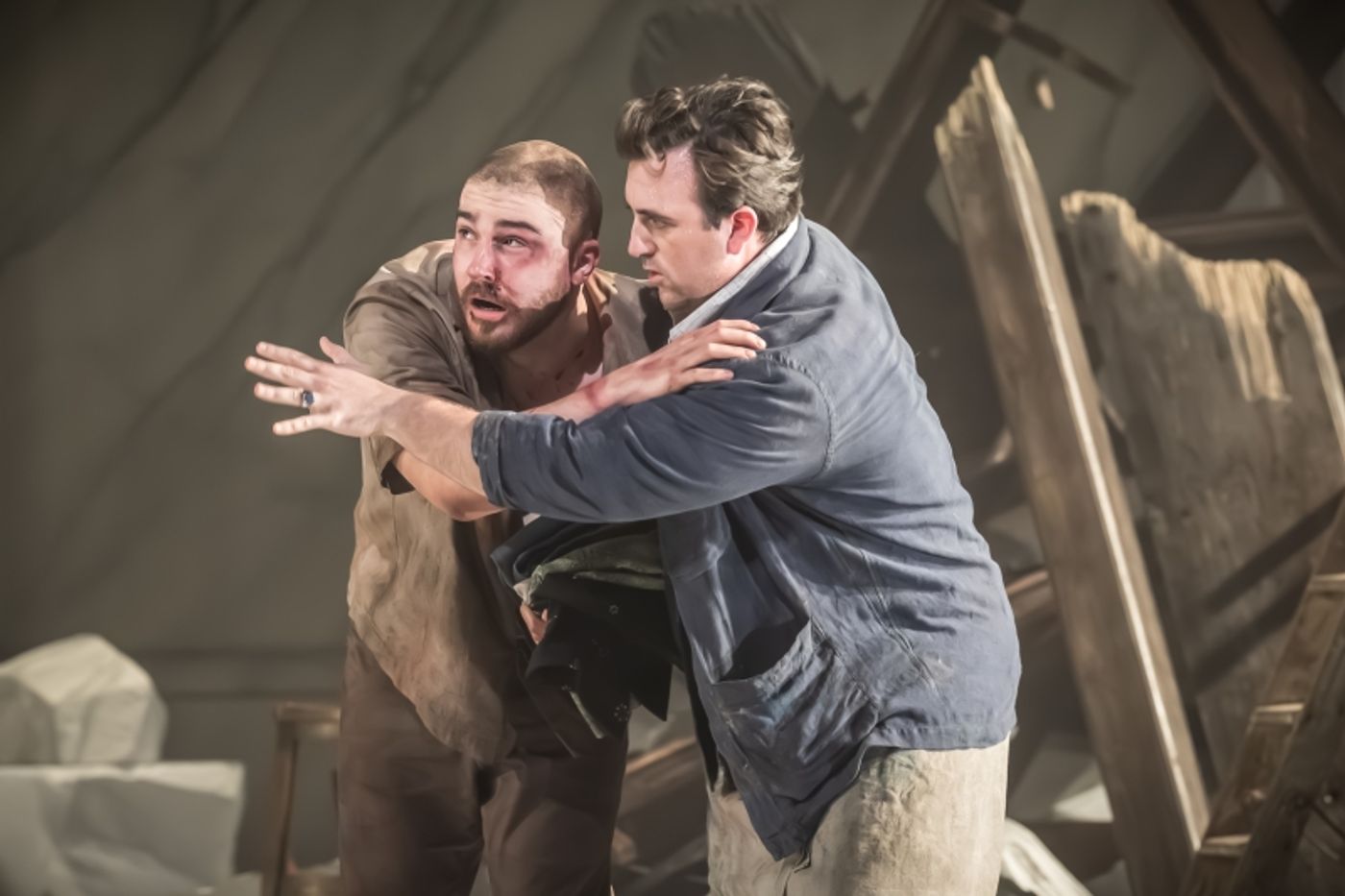
Simon Lima Holdsworth’s stark sets sometimes evoke the neorealism of Roberto Rossellini’s post-war Italian cinema, often give callbacks to Bernardo Bertolucci’s The Conformist, but also, with surveillance cameras, suggest the the turmoil in 1970s Italian politics culminating in the kidnapping and murder of former Prime Minister, Aldo Moro in 1978 and the Bologna railway station bombing of 1980. This shifting of timeframe references makes it very easy indeed to see present day counterparts for the characters, adding, were it needed, a contemporary resonance that digs into your ribs. Oliver Mears’ new staging is not a comfortable watch - nor should it be.
Perhaps more than any other of Giacomo Puccini’s works, Tosca’s cinematic quality demands not just great singing, but great acting too. If, two thirds into the opera, you’re wondering, as I was, if casting the Russian soprano, Anna Netrebko, was worth the trouble you can read about elsewhere, she answers the question emphatically with her showstopping aria, "Vissi d'arte", despairing of the fate of Cavaradossi, held in a torture chamber, and of her own corruption at the hands of Scarpia - but Tosca has agency of her own.
Netrebko’s presence, as much as her beautiful voice, dominates the stage as you feel, in real time, art swamping politics - as it must, from time to time, if we are to stay sane. Her performance will always be tainted in the eyes of some as, though I’m not sure quite how, lending comfort to Putin’s regime, but she is, in every moment of the evening, an artist making art. Which is what the Royal Opera House is for - God knows there are enough places for warmongers to make war right now.
Freddie De Tommaso brings pathos and dignity to the principled Cavaradossi, in love with the mythos of the good man in a bad world as much as he is in love with his Tosca - he would give his life for either. If we didn’t know before - and Puccini’s music, played wonderfully well by an orchestra on top form under Jakub Hrůša’s baton has been telling us from the start - De Tommaso’s bewitching delivery of "E lucevan le stelle" leaves us in no doubt at all. It’s not often one finds the adjective “understated” used in praise of a tenor (not sure Pavarotti was ever described so) but De Tommaso refuses to indulge, acting or singing, in excess and his everyman gains more sympathy as a result.
No such restraints apply to Gerald Finley’s ferocious portrayal of Scarpia! His second act opener, "Ha più forte sapore" in which he gives a full-throated defence of his toxic masculinity is at once magnificent and horrendous depending on whether you let the words pass you ears and enter your brain. It’s genuinely distressing to catch so many echoes of manosphere influencers in Scarpia’s attitude towards women and sex in the aria, something that simply did not come to mind reviewing Jonathan Kent’s 2019 production at this house, One fears for 2031.
For all the politics, macro, micro and gender, a night at this production brings, what you return home with is something much more elemental. Human voices at one with great music, an atavistic pleasure that began clapping hands round a fire outside a cave and reached an apogee in Puccini’s great works as moving today as they were 125 years or so in the past.
Tosca at The Royal Opera and Ballet until 7 October (later performances with Aleksandra Kurzak replacing Anna Netrebko)
Photo Credits: The Royal Opera © 2025 Marc Brenner




Reader Reviews
To post a comment, you must register and login.