


Review: THE TRUTH ABOUT BLAYDS, Finborough Theatre
AA Milne's comedy of manners returns to London for the first time since 1921
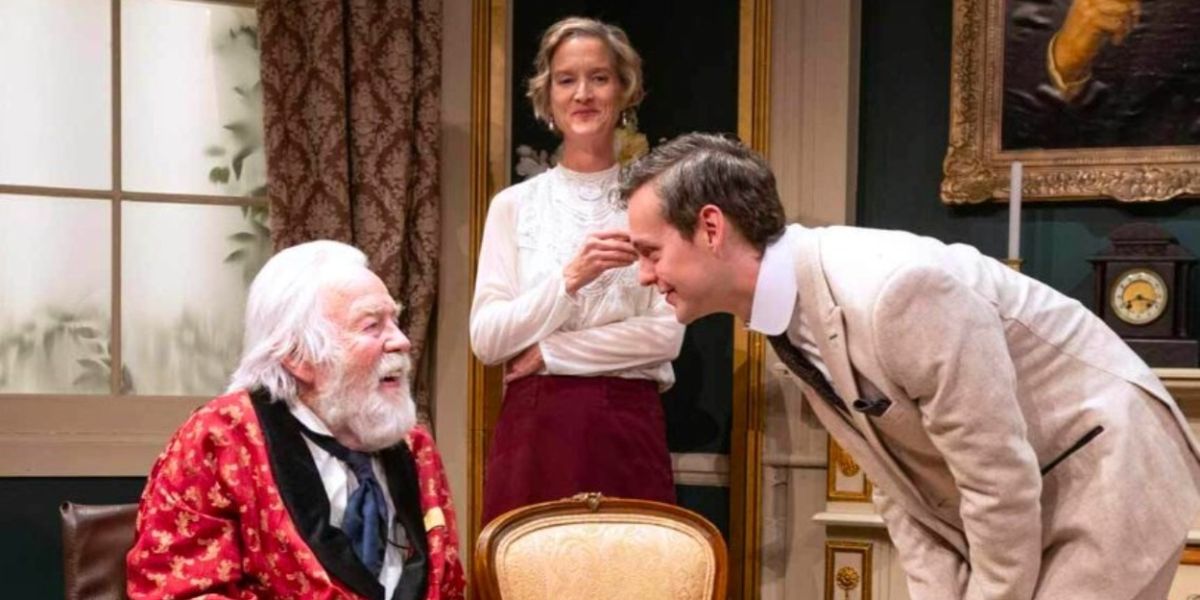
 Even though the Finborough has been transformed into a lush 1920s drawing room, with emerald green walls and an intricately stuccoed fireplace, cloyingly nostalgic period piece this is not. In fact, AA Milne’s rarely performed 1921 play The Truth About Blayds is refreshingly unsentimental about years gone by, preferring to totally deconstruct the idea that we ever had it better in the past. In Milne’s universe, revered Victorian heavyweights were not the ‘great men’ of history, but complex mortals, maybe even frauds.
The great man in question – “the last of the Victorians,” a character tells us early on – is 90-year-old celebrated poet Oliver Blayds, who makes a deathbed confession halfway through the play that the work which made him famous was actually stolen from another poet who died young, leaving the Blayds family to unscramble Oliver’s legacy both legally and morally.
Admittedly, RF Kuang’s Yellowface does jump to mind, the ever-potent tension between morality, creativity and literary ambition. But there’s also much that is specific to Milne’s own time, the aftermath of the First World War and the schism it brought between the young and the old.
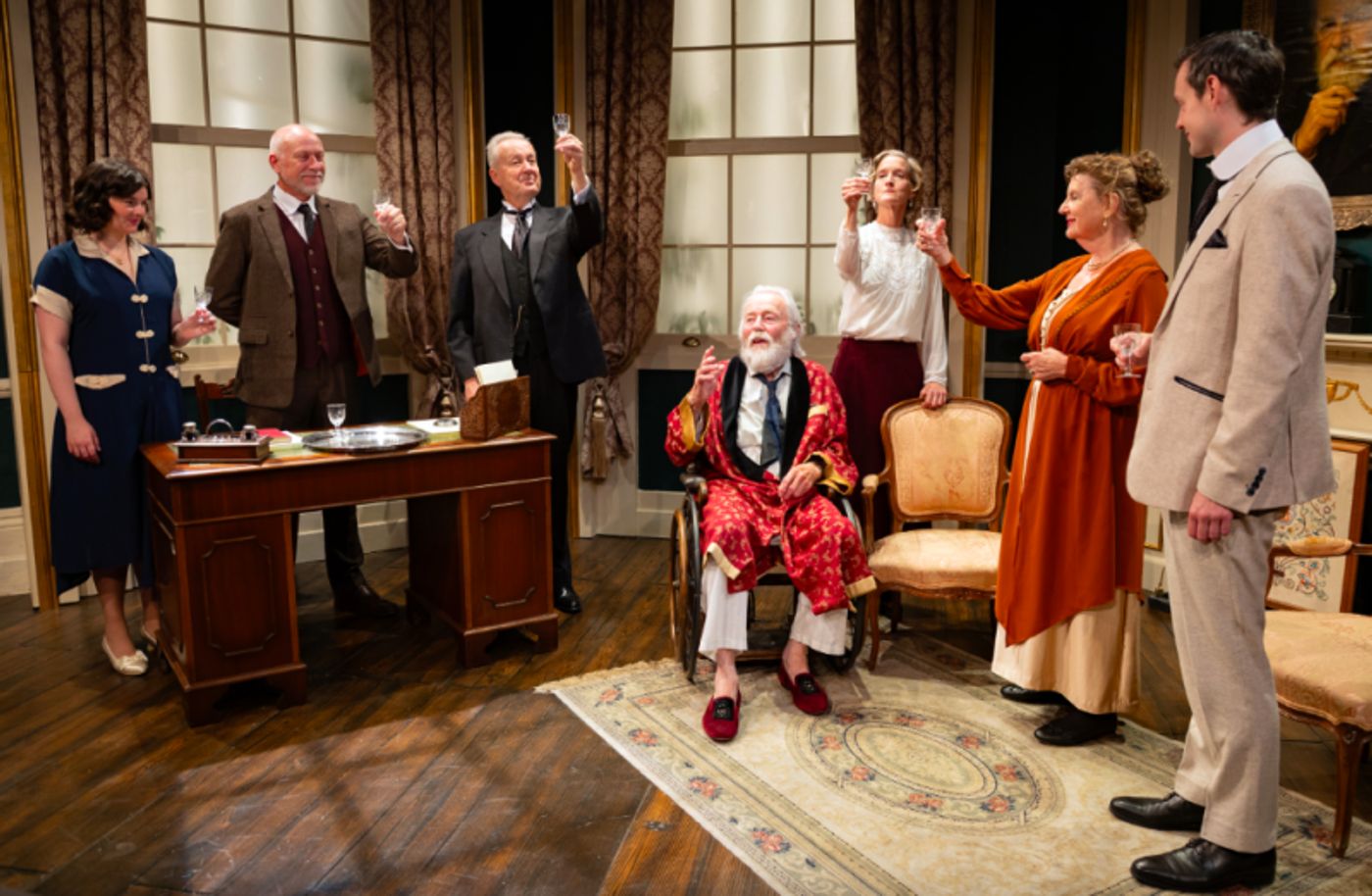
Photo credit: Carla Joy Evans
Blayds’s middle-aged daughter Marion and her husband William are obsequious and unquestioning of the poet’s greatness. Their children, on the other hand – their parliamentary assistant son Oliver Jr (played deliciously by George Rowlands as a foppish Wildean figure, but with an undercurrent of something decidedly more bitter and opportunistic) and daughter Septima, who longs to move out and make an independent living – take a more cynical view. All the while, a portrait of Blayds looms at the back of the set, menacing.
While this central message is a potent one, it fails to ever really build momentum after being hinted at early on. Early critics decried the decision to kill off Oliver Blayds at the end of the first of three acts, but while William Gaunt’s semi-lucid performance as the elderly poet does heighten the stakes of the youth-versus-experience conflict, I’m not sure keeping him alive would have solved the broader structural issues. The family resolve their ethical dilemma in a clumsy series of manipulations, deus ex machinas and panicked strategising sessions, and while the farce is capably handled by this cast, the thematic resolution still feels rushed in contrast.
The flaws in Milne’s script are not helped by some of director David Gilmore’s staging choices. If pulled off well, a drawing room set can suggest stifling domesticity or claustrophobia, but here too often it just makes the cast members seem static, inhabiting domestic archetypes rather than fully formed characters. The second-act revelation about the actual origins of Blayds’s work should feel like a punch to the gut, but the characters’ robotic reactions to it, as they stand in a neat semi-circle, make it feel more like a particularly well-organised school assembly.
One saving grace among all this is Catherine Cusack as Blayds’s younger daughter Isobel, who gave up a burgeoning romance to act as nurse (as well as some kind of literary assistant, it’s implied) to her father. Isobel’s life of sacrifice followed by betrayal gives Cusack slightly more to work with than the rest of the cast, and she renders her character’s emotional turmoil exquisitely, her face always contorted in a desperate attempt to distance herself from the reality of her situation.
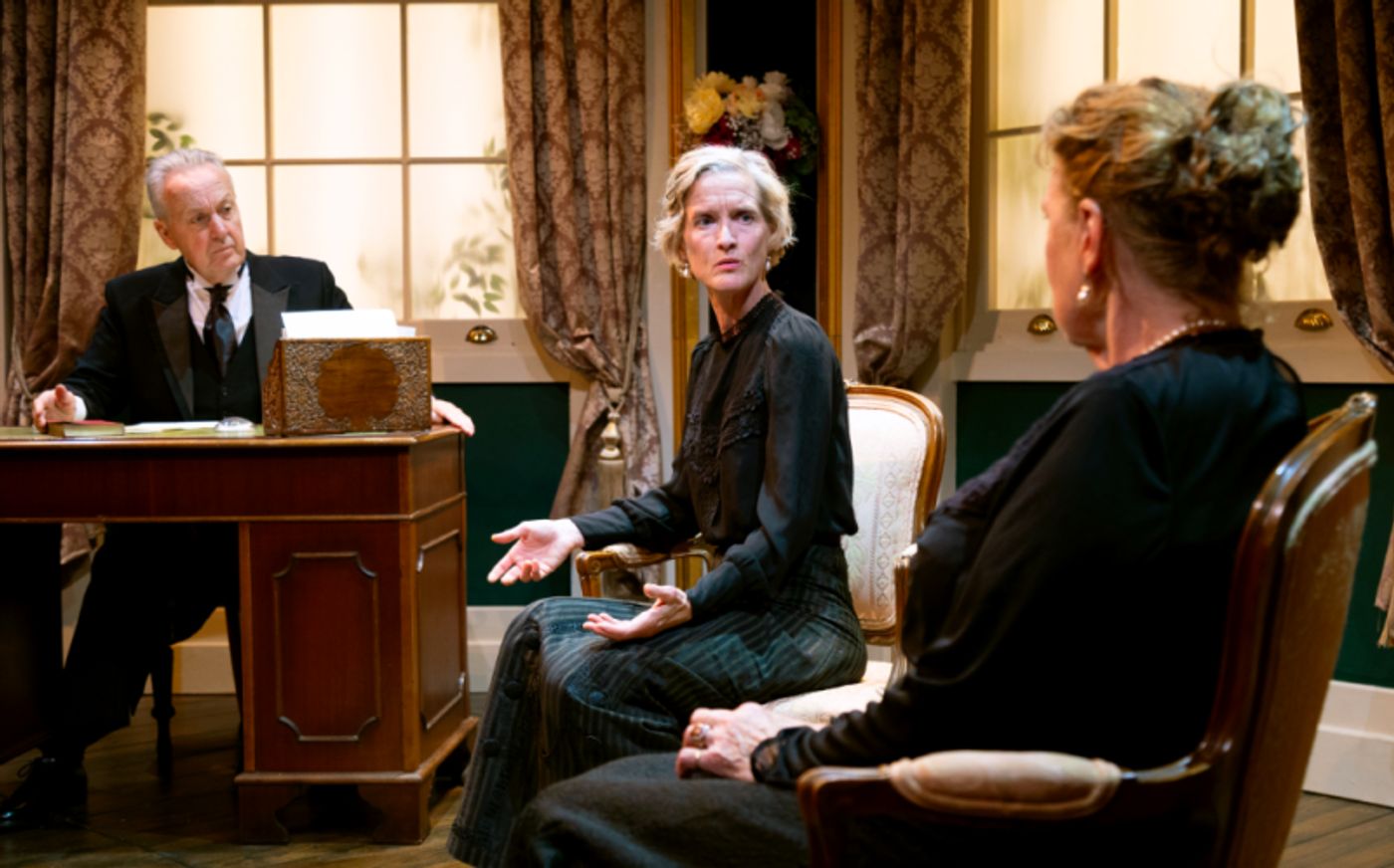
Photo credit: Carla Joy Evans
Meanwhile, Isobel’s encounters with her former lover, the critic Mr Royce (Rupert Wickham) are among the scenes which make Milne’s writing feel strikingly modern – here is a woman for whom marriage is a source of freedom rather than restriction – and are tenderly, understatedly performed by Wickham and Cusack.
It is, of course, interesting to see what AA Milne did outside of the Hundred Acre Wood, and much about this text – why we make art, and how we handle our legacies, and if those legacies are ever really in our control – feels decades ahead of its time. There’s some convoluted fluff to wade through before you get to that point, but when you do, the stops along the way and extra padding feel worth it.
The Truth About Blayds plays at the Finborough Theatre until 4 October
Photo credits: Carla Joy Evans





Reader Reviews
To post a comment, you must register and login.