


Review: THE IMPROVISED SHAKESPEARE COMPANY at The Kennedy Center
The Improvised Shakespeare Company has kicked off their 8th annual tour at the Kennedy Center, running through December 23.
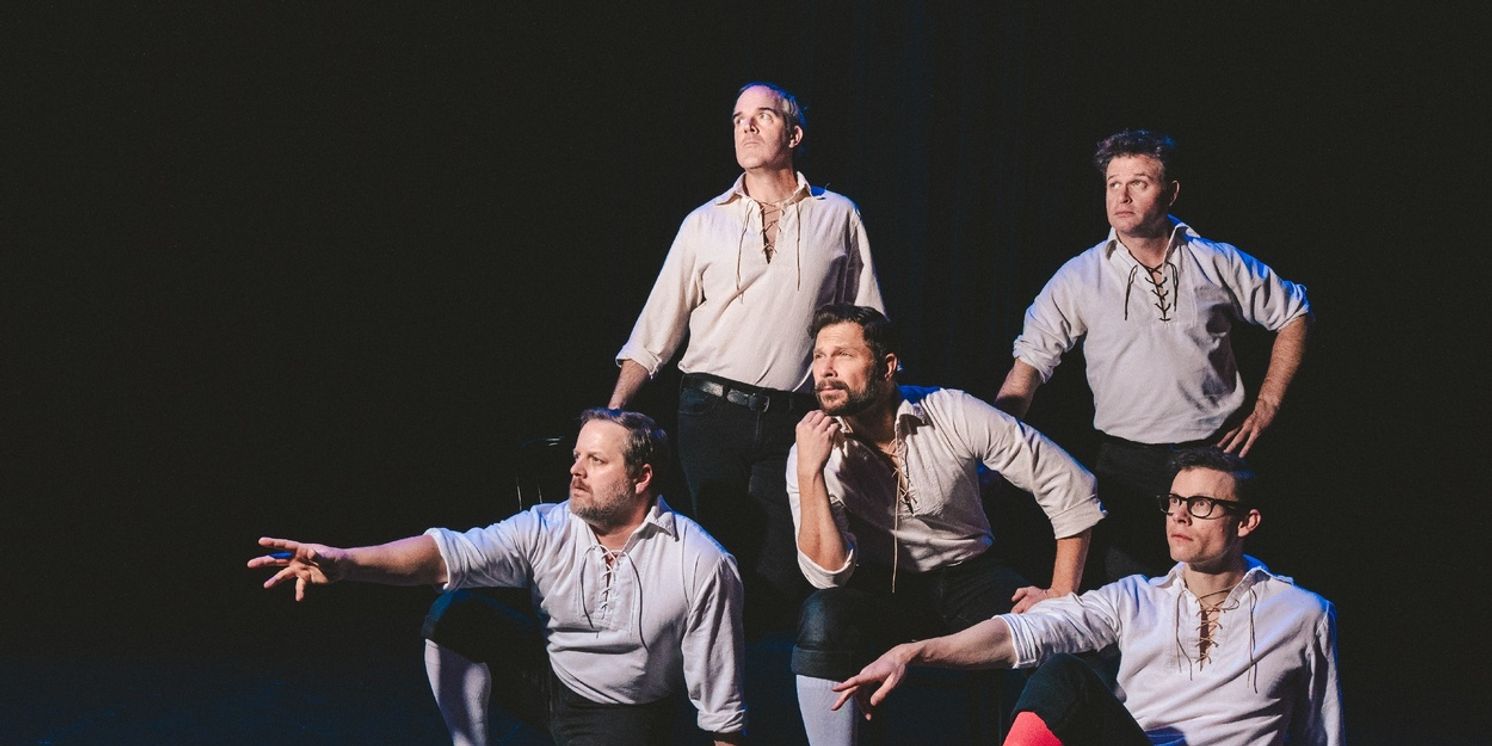

The Improvised Shakespeare Company has kicked off their 8th annual tour at the Kennedy Center, running through December 23. Stop by any night, or on all of them, to see a unique performance by theatrical elites.
Each night opens the same but ends entirely differently. To start, audience members shout out suggestions for a title. The only requirement is that it cannot be an existing play; it must be new. The cast then picks a title from the chaos and on the spot they improvise a 90-minute play in, as they put it, “the language and the style of the immortal Bard.” Here are five men who have so immersed themselves in Shakespeare they can monologue and dialogue at will, about whatever you will. Skeptical? I was. But I left the theater respectfully impressed.
On my visit the evening of December 2, the cast chose, for some reason, the audience suggestion How Fickle is My Pickle. This clearly premeditated offering was my second piece of evidence that there were regulars in the crowd. Raucous cheering the moment the intro music started was my first. The third came later when I looked up the Company and saw countless Instagram comments from people excited to attend their second, third, fourth, tenth show. The Company has clearly won themselves a loyal audience base across the country. I hope some of those loyalists offer them better titles.
Regardless, How Fickle is My Pickle, if you can believe it, was a show worth seeing. Thankfully, no one pretended to be a giant pickle as you might well see from an amateur improv troupe. Nor was the show filled with endless sexual function jokes. In contrast, the cast crafted a tale of love, adversity, and classically Shakespearean twists.
A lonely, bitter duke ruling over Milan, wallowing in his own pain and selfishness and professedly concerned about the virtue of his citizenry, enacts a law of chastity across the land. Love itself is banned until the Duke finds a bride. Through two sub-plots, different characters see what they can do to undermine this decree and get back to wooing their lovers which, in this Milan, traditionally includes offering the wooed: a pickle.
Improv, even when it’s fun, is often still cringy. While there were certainly low-hanging-fruit moments, the Improvised Shakespeare Company exercises a subtlety rarely seen. There are only five cast members: Joey Bland, Ross Bryant, Brendan Dowling, Randall Harr, and Blaine Swen, the founder and director of the Improvised Shakespeare Company. There is no set, no props, no sound design. There is only very basic lighting, neutral matching costumes, and three black chairs set against a thick black curtain. The entire show is pure make believe. But while they work from a blank canvas every night, the cast creates everything within a Shakespearean structure.
Many actors view Shakespeare as a challenge. The difficult language is an obstacle to overcome - how to stay in character, remember lines, and make the audience understand while you’re speaking in a long-dead dialect and following the complex rhythms and rhymes that, to most of us, are entirely unfamiliar. The Improvised Shakespeare Company flips that script. Shakespearean language and timing is the launch pad, the guardrails needed for productive creative freedom. By working within this steady pattern, they can keep filling in the next word and the next one. Like in a freestyle battle, the beat is what keeps the words coming.
And it’s not just the language that guides them. Shakespeare also provides plot guardrails. In any Shakespearean show, there will have to be some kind of love story, there will have to be both tragic and comic elements, and, helpfully for improv, something will need to not go as planned at least once. Ultimately you know that no matter what title you’re working with or where the plot goes, you’ll be presenting a story about virtue and vice. The humanity of the characters is what drives the action, so you don’t need to invent a convenient thunderstorm, sudden illness, or army invasion. Following Shakespeare’s great example, humans being humans is all you need.
The five actors on stage play off each other beautifully, working together within these guardrails to move their characters and their story along. But it’s the ways and times they deliberately don’t work together that makes it brilliant. They again go beyond the baseline expectations of improv and choose to think about it differently. Swen, the founder, in particular will not settle for and run with the first idea that arises. He seamlessly and stubbornly guides the cast to another one and another one and another one.
For example, near the end of How Fickle is My Pickle, Swen, playing the Duke, was offered at least three ways to redeem his character and conclude the story with a happy ending. But he batted these attempts away one after another. When someone fell in love with him, he refused their advances. When someone offered an impassioned speech about how he was clearly changing his ways, he insisted that he was not and would not. He refused these friendly attempts by the other cast members because he knew that, if Shakespeare was writing this play, that’s not how it would end. So ultimately, crying out and grabbing a knife that had not yet been struck into his own back, Swen killed the Duke and the rest of the cast rushed to catch up. Afterwards it was easy to see that any of the other endings would have been far less satisfying.
Swen founded the Improvised Shakespeare Company in 2005 in Chicago, where he also obtained his PhD in philosophy. I’m inclined to credit these studies for inspiring this unique idea and unique approach, one that many people, no doubt, insisted would not be possible. One that most people, after all, could not do. But Swen understands both the endless philosophical depth and the pure entertainment value of Shakespeare that has kept him relevant for hundreds of years. And now Swen’s cracked the code on combining these elements to create an always consistent but never predictable show that has kept audiences coming back for 20 years. Join them this year in DC and you’ll see why.
Reader Reviews

Videos