


Review: South Coast Repertory Presents GOD OF CARNAGE
Yasmina Reza's Tony Award-winning 2006 play gets a rousing new production directed by Marco Barricelli.
By: Michael Quintos Feb. 10, 2026
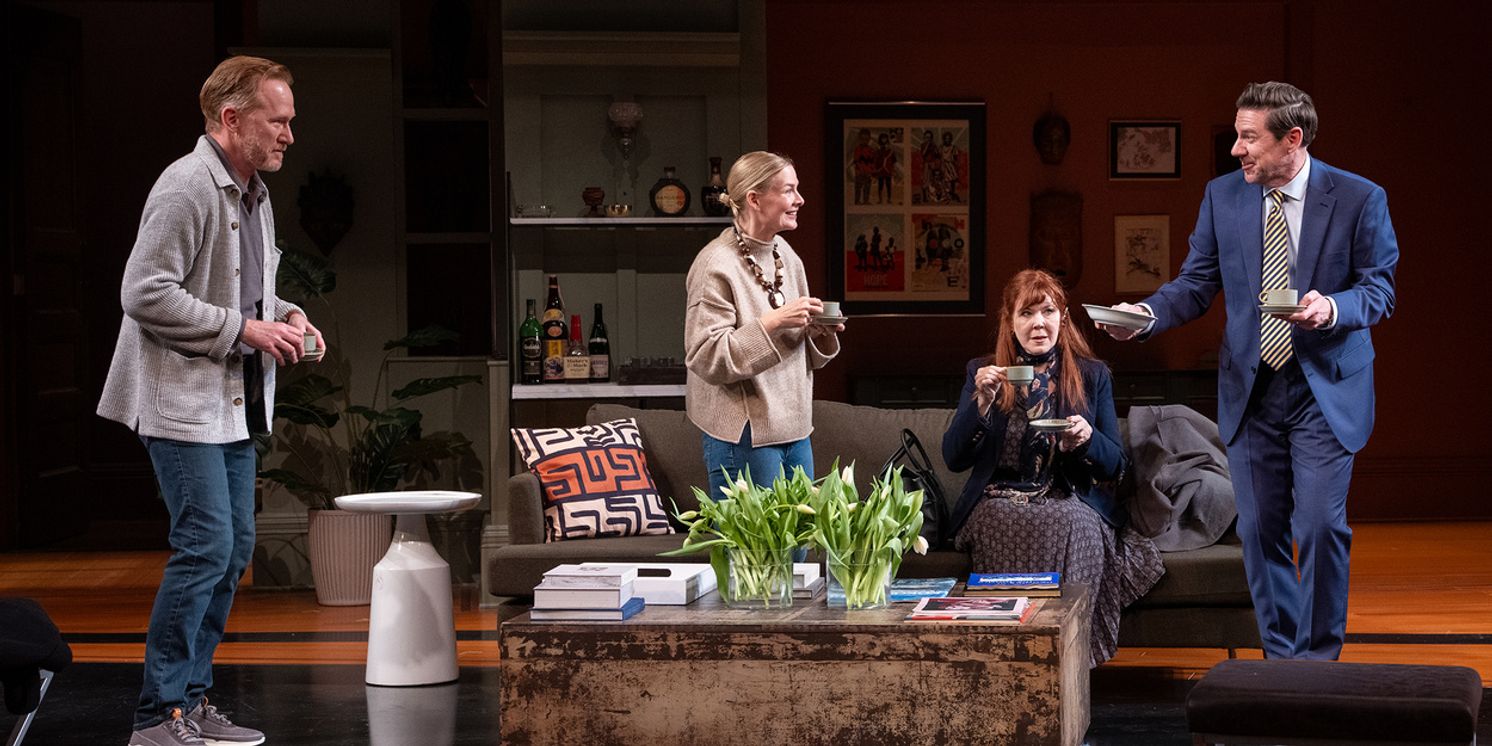

Truly living up to the definition of its name, South Coast Repertory—Orange County's Tony Award-winning theater company—has opened its season with a pair of concurrent Tony-winning plays performed in repertory, playing alternating evening and matinee performances that share the same set and stable of actors.
On some days, audiences can experience Edward Albee's classic 1962 play Who's Afraid of Virginia Woolf?, while on other days, they can watch Yasmina Reza's 2006 play Le Dieu du Carnage—better known as GOD OF CARNAGE as it's more widely referred to in its English-translated iteration by Christopher Hampton. Both groundbreaking plays continue alternating performances through March 21, 2026 in Costa Mesa.
While another colleague is evaluating Albee's play, I have been tasked with its 21st Century kindred spirit.
Wildly surprising and deliciously savage, Reza's machete-edged dark comedy—here directed with deft choreographed precision by Marco Barricelli—has to be one of the most ferocious dissections of modern-day performative civility ever to grace the stage—an 80-minute, intermission-less pressure cooker that gleefully burns away the polite veneer of bourgeois adulthood to reveal the petulant, immature children actually lurking just beneath.
The play opens in the well-appointed, meticulously curated Brooklyn living room of Veronica and Michael Novak (Melinda Page Hamilton and Dan Donohue), a seemingly cultured, socially-conscious couple who pride themselves on reasoned discourse and enlightened parenting.
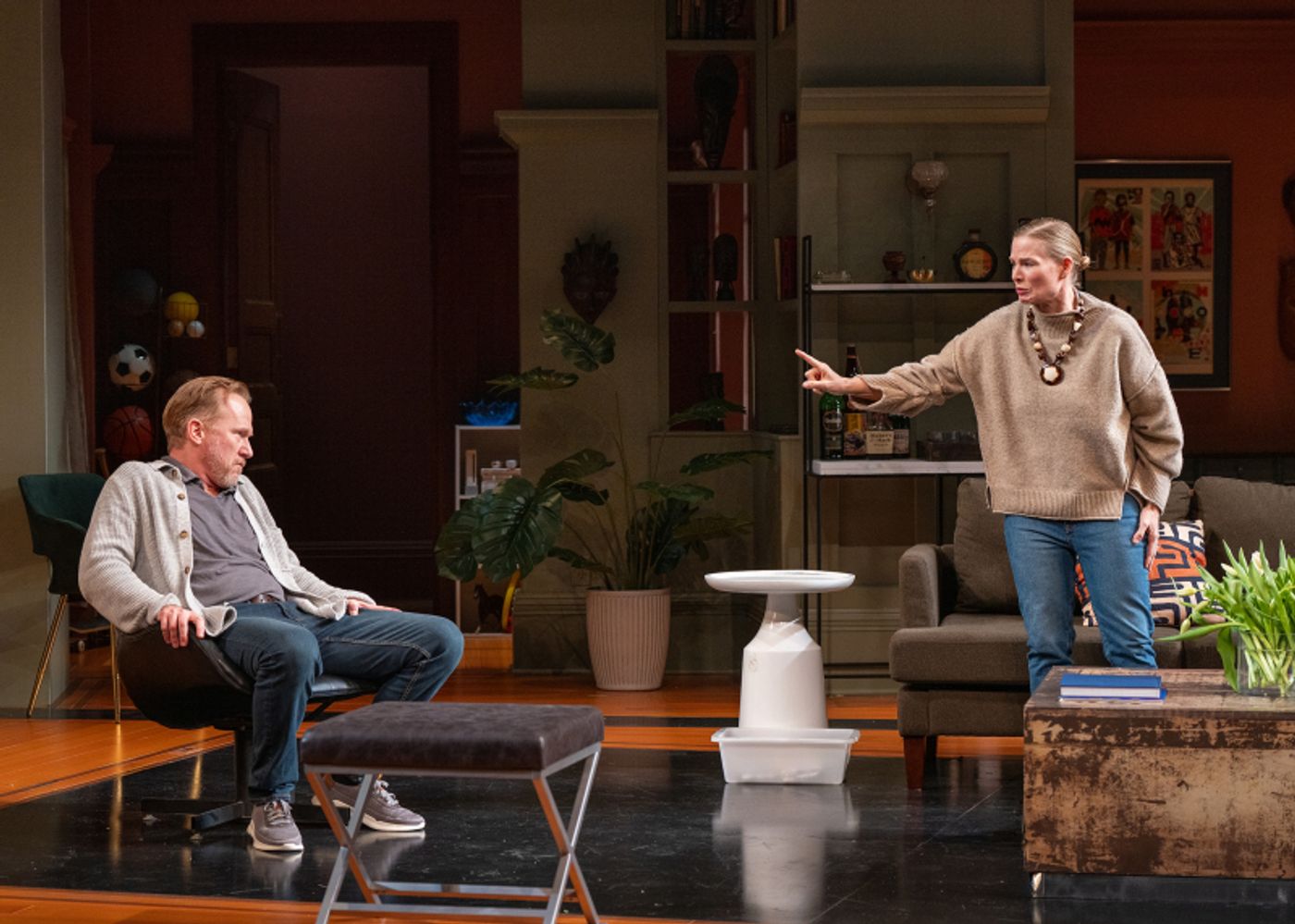
On this particular day, they have invited fellow parents Annette and Alan Raleigh (Kim Martin-Cotten and Brian Vaughn) over to their home to discuss the playground altercation that transpired between their respective 11-year-old sons: the Raleighs' kid Ben, we quickly learn, has struck the Novaks' kid Henry with a stick, resulting in Henry's loss of two teeth.
What starts off as a courteous attempt at conflict resolution rapidly devolves into a hilariously toxic battlefield of clashing egos, marital fissures, and philosophical hypocrisies. Little by little, their pretensions are shredded to a bitter pulp as judgments and insults explode (or, should I say, spray) like shrapnel.
Initially, both couples—cautiously mannered with each chosen word—perform the expected rituals of WASP-y upper-middle-class decorum: offering coffee and exotic hors d'oeuvres, exchanging light pleasantries, and drafting a mutually agreeable statement of apology.
Veronica, a writer deeply invested in moral righteousness, pushes for empathy and accountability regarding the incident. Michael, her husband, attempts affability on all sides but then also reveals a streak of casual insensitivity that, of course, irks his wife. Meanwhile, the tightly-wound Annette tries valiantly to maintain composure as her oily husband Alan—a corporate lawyer perpetually tethered to his mobile phone while openly discussing a PR-clean-up behind a dangerous prescription drug—dismisses the entire affair with smug, douche-y detachment.
As the meeting stretches on and, later, generous pours of rum continue to flow, civility disintegrates—to both the audience's delight… and horror.

What began as a mediation between two sets of parents trying to summon understanding mutates into an all-out verbal melee in which social niceties are gleefully eviscerated. Repressed resentments soon surface, alliances constantly shift with dizzying speed, and the couples turn against each other—and, eventually, even on their own respective spouses, punctuated with the kind of knife stabs that keeps twisting until literal guts spew out.
By evening's end, no one escapes unscathed: marriages are exposed as fragile facades, moral posturing crumbles, and the so-called "civilized" adults meant to work things out regress into behavior as ridiculously childish as the young boys they claim to want to discipline—and some might say these adults behave even worse than the children. Hmmm… wonder where these kids learn such behavior?
An "adult" "peace" summit filled with sublime barbs and slights as the show progresses, Reza's sharp, wit-laced script is a masterclass in controlled escalation that these assembled actors bring to life with gratifying proficiency and with perfect delivery.
With surgical precision, Reza's words orchestrate a series of conversational detonations that build from awkward pleasantries to feral hostility. Each line of dialogue lands with the weight of a carefully aimed axe-throw, revealing character through contradiction and exposing the absurdity of social conventions that barely contain their more primal impulses.
To be more blunt, each character presents flawed people that behave oh so badly, that we can only speculate that none of their traits would ever be similarly emulated by, um, us… right? In its own guilty-pleasure kind of way, seeing the play is almost like watching volatile reality TV spats that unravel in real time right in front of us in the flesh. The play, to a certain extent, is a safe way to watch unlikable people that make us feel better about ourselves.
Captivating in its wicked humor and in its shocking displays of detestable behavior, GOD OF CARNAGE is a mannered viewing of a slow-motion car crash—which as typical curious humans, intrigues us, the audience, to not so quickly turn away from it.
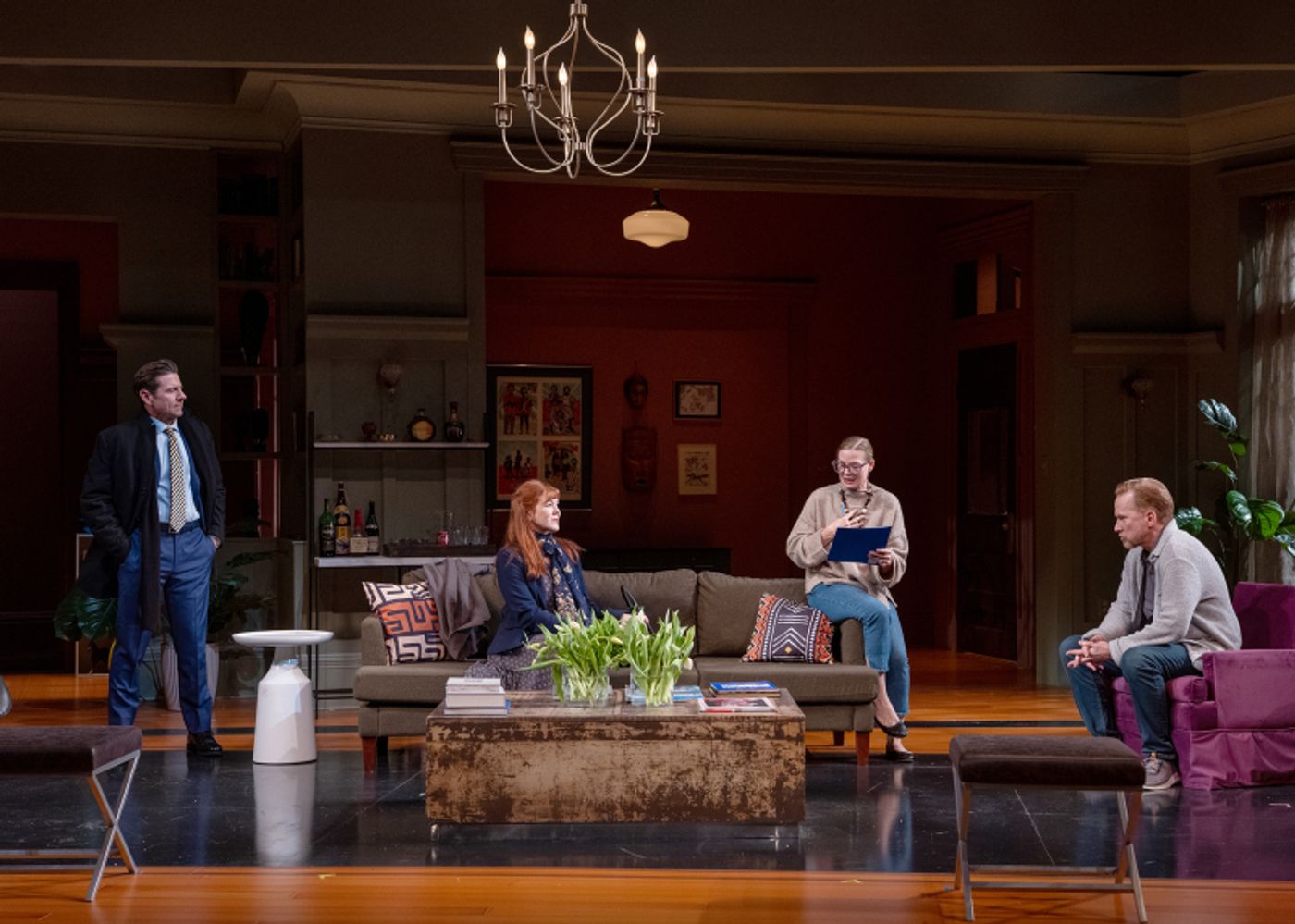
At its core, GOD OF CARNAGE is less about parenting than it is about the performative nature of feigned civility. Reza suggests that beneath people's carefully curated personas presented for public view lies a volatile blend of insecurity, competitiveness, and raw tribal instinct. The play's title (uttered by a character that becomes an aha! moment that flies by) serves as both a metaphor and a warning: strip away the rules of polite society, and chaos—petty, ridiculous, and deeply human—inevitably reigns supreme.
From a performance standpoint, the play offers actors a sumptuous, over-the-top feast to play in, and the quartet assembled for this OC production are all excellent in bringing their respective characters to authentic life. Each of the four roles demands impeccable comic timing, emotional dexterity, and a willingness to embrace the characters' increasingly undignified unraveling, which all four essayed vividly. Individually, each actor bathed their performances with a palpable realism, reminding us that such people—however seemingly exaggerated they are in the play—do exist in real life and, sometimes, we've even run into such people in our day to day at some point (heck, go on YouTube and you'll find thousands of videos that capture such people out in the wild).
Hamilton is quite excellent at showing Veronica's self-righteous idealism and bubbling Karen-esque tendencies. Michael's genial but crude pragmatism spills out with ease from Donohue. Martin-Cotten (who has an extra bit of, uh, something bursting out in the play) is incredible at showing Annette's brittle anxiety. And, finally, Vaughn is convincingly grating in his unapologetic cynicism as lawyer Alan. Of the four actors, Martin-Cotten and Vaughn also do double duty performing in Virginia Woolf? so it's remarkable to note how distinctive their performances here are.
All four together, they create a quartet of combustible personalities whose collisions fuel the play's relentless momentum. Throughout the play, this talented foursome seem to thrive on their collective ability to navigate rapid tonal shifts—from biting satire to near-farce—without sacrificing the emotional truth that hovers over such situations. Even their subtle facial tics are loaded with context.
Directorally, GOD OF CARNAGE is deceptively simple on the surface, but when you zoom out, you realize that it requires meticulous, distinctly choreographed orchestration, which Barricelli achieves handily for SCR's laudable production. The single-setting structure—occurring inside scenic designer Regina Garcia's convincingly chic modern surroundings—demands a keen sense of pacing and spatial dynamics to prevent stagnation, which is clearly evident here (even the act of plugging in a hair dryer seems like a monumental task). Barricelli's effective staging often emphasizes the gradual physical and emotional disarray of the environment, playing out with furniture shifts, props becoming weapons, and the pristine living room eventually devolving into a visual metaphor for the characters' unraveling composure. With 80 minutes to, uh, spew the action, the play has no time for dull moments.
Other aspects worth noting include Alex Jaeger's outfits for each character that appropriately reflect their privileged, well-to-do status living in an assumably gentrified neighborhood, Josh Epstein's lighting design, and Melanie Chen Cole's realistic sound design.
At its most effective core, what makes GOD OF CARNAGE endure as entertainingly voyeuristic is, I hate to admit, its unsettling relatability. Audiences may initially laugh at the exaggerated behavior of these four adults, but the humor lands with a sting of recognition—from both people who are them and/or are the people who have to deal with their kind. Reza holds up a mirror to people's own social performances—the polite smiles, the passive-aggressive barbs, the desperate need to appear reasonable—and dares us to confront the fragility of the systems we rely on to keep our baser instincts in check.
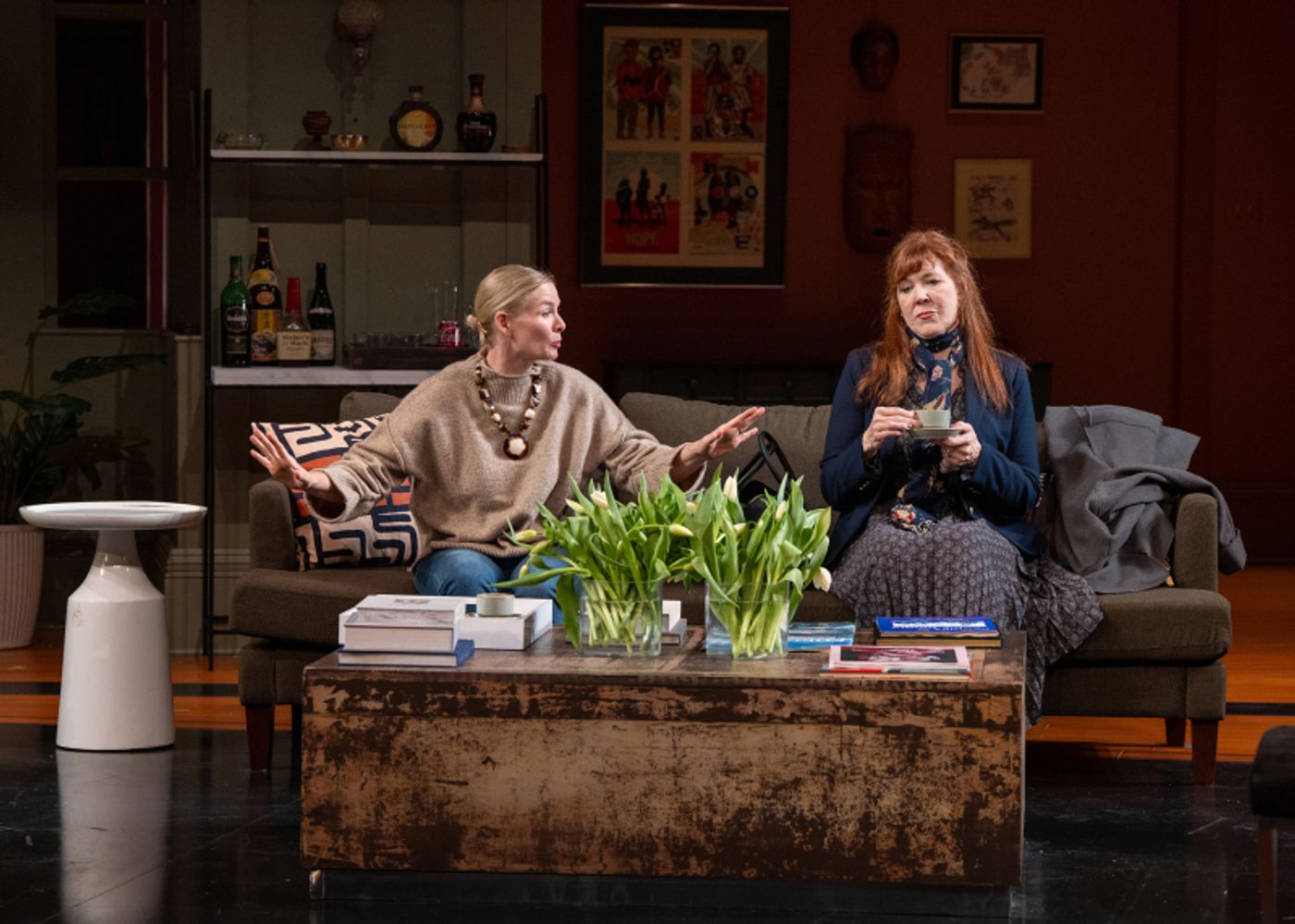
Ultimately, SCR's outstanding production of GOD OF CARNAGE is a brilliantly observed theatrical skirmish—equal parts comedy of manners and psychological boxing match with no clear winners or losers (or, maybe, they're all losers considering what happens). With its incisive dialogue, explosive character dynamics, and unflinching examination of human behavior, Reza's exciting play continues to prove that beneath the polished surface of contemporary life lurks a chaotic, gleefully uncivilized core just waiting for the right provocation to erupt.
If the other half of this double-feature is as good as this one, then SCR truly can proclaim these dual plays as a must-see theatrical event of their season.
** Follow this reviewer on Bluesky / Instagram / Twitter X / Threads: @cre8iveMLQ **
-----
Photos by Scott Smeltzer, courtesy of South Coast Repertory.
Performances of Yasmina Reza's GOD OF CARNAGE at South Coast Repertory continue through March 21, 2026. Tickets can be purchased online at www.scr.org, by phone at (714) 708-5555 or by visiting the box office at 655 Town Center Drive in Costa Mesa.
Reader Reviews
Videos