


Review: MBK & IKJ’s Musical PENGIN HIJRAH: A Spectacle Lost in Translation
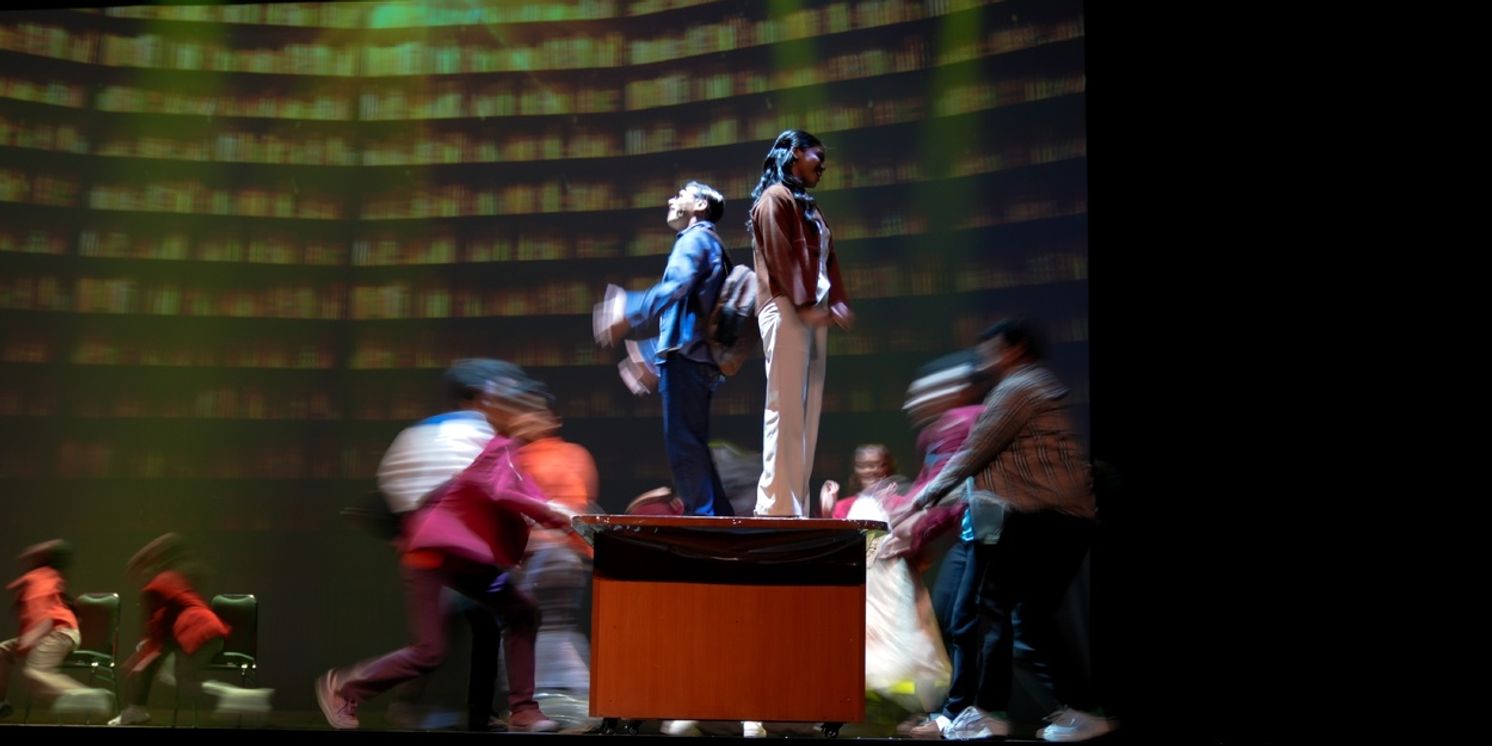
On August 23 & 24 of 2025, a musical adaptation of the then-upcoming movie Pengin Hijrah (Want to Hijra) took to the stage.
Review by Nabila “Hana” Hananti, co-written by Zahira. Editing by Rakaputra Paputungan.
On August 23 & 24 of 2025, a musical adaptation of the then-upcoming movie Pengin Hijrah (Want to Hijra) took to the stage. The movie itself was adapted from a novel of the same name.
The musical version of Pengin Hijrah was made through a collaboration between students, lecturers, and alumni of Institut Kesenian Jakarta (IKJ, also known as Jakarta’s Institute of Arts) with Multibuana Kreasindo. This show took place at Graha Bhakti Budaya and ran for a total of four shows. We, from Broadway World Indonesia, had the opportunity to watch their first show on the afternoon of the 23rd. Here’s our review.
This play follows the same storyline as the movie adaptation. Alina, a student at a religious campus, had her revealing pictures spread across social media by her boyfriend. This led to her scholarship being taken away and her receiving scrutiny from the public. We then follow Alina’s story afterwards, as she strives to be a better person past the incident. There, Alina sought the journey of hijra (to be closer to God) and fell in love in the process.
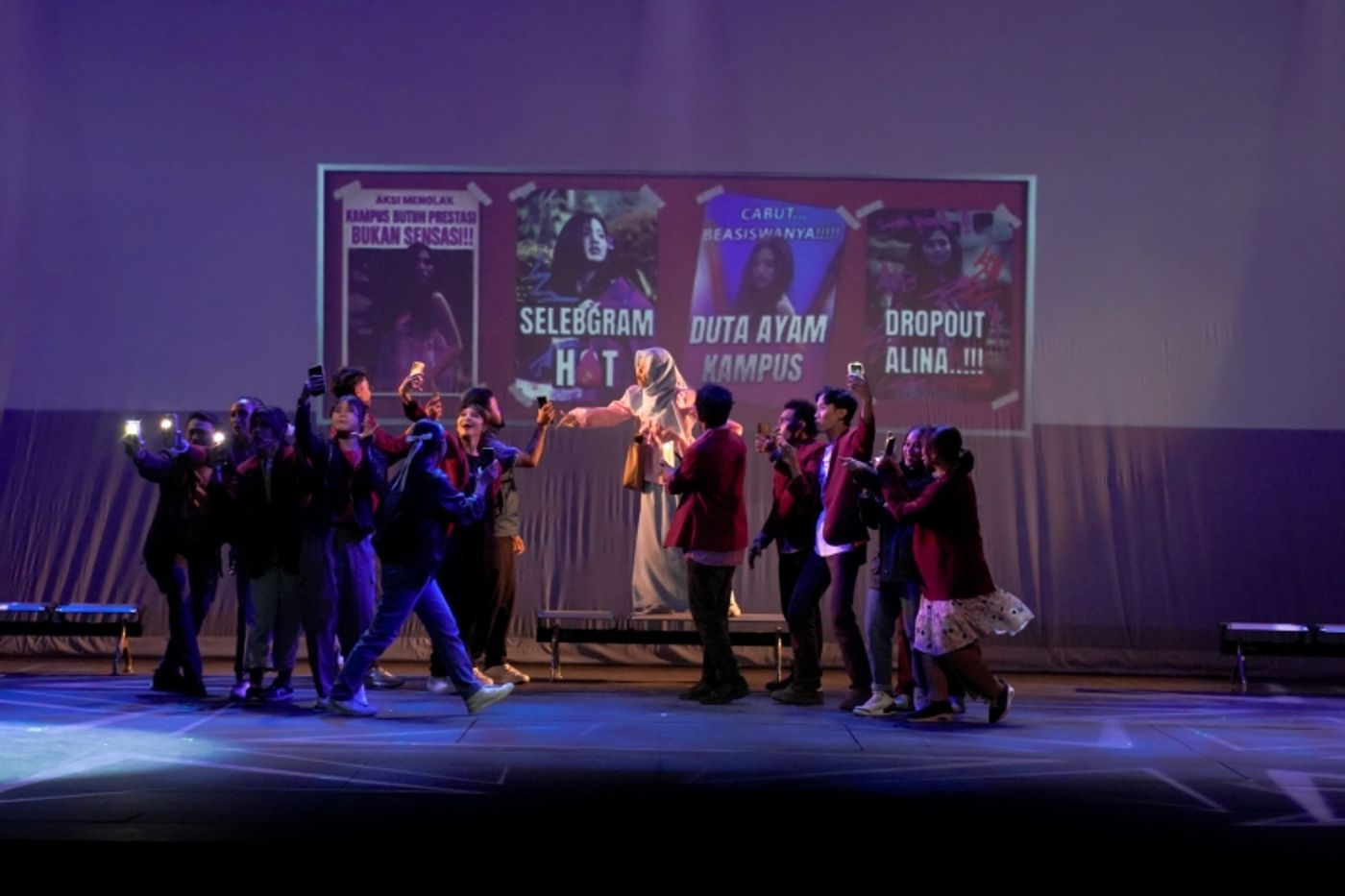
Pengin Hijrah was supposed to be an inspiring story that would make us, the audience, want to be a better person – to want to hijra. However, the production couldn’t quite deliver the intended message, despite its attempt.
The show they presented was a very fragmented piece of art. In the production team’s attempt to preserve the value of the story, little work was done to adapt the story for the medium of theatre. Adapting a film onto theatre does not simply mean taking the movie’s dialogue and performing it on stage. Ideally, it means creating a wholly new work – adapting the story for clarity, duration, and flow. Foregoing this process results in a storyline with little dramatic weight and a show that’s long and unfocused.
The underbaked script leads to a very muddled message. The story was purported to be about hijra, the desire to seek God and wanting to be a better person. However, one-third through the play, it took a harsh left turn and transformed into a soap opera. It became a love story, and one that’s lacking in chemistry and poise at that. The show also featured dedicated segments for comedians to be funny and make fun of the governments. Although they were, arguably, the most entertaining parts of the whole show, they had little to do with the story itself.
I was promised a strong premise about hijra, but all I got was a cheesy and fragmented story devoid of a clear message.
That is not to say that the storyline was the only problem with the play. A major issue with the directing was that this show was performed under the assumption that we, the audience, were familiar with the story. There was little to no introduction for the setting of the play, be it through the atmosphere or through any spoken dialogue. Within a theatre, when the curtain rises, it is a whole new world we will be seeing; but Pengin Hijrah puts no effort in crafting the world itself, creating a confusing watching experience while the play keeps unfolding.
Another factor I want to mention is the acting. On their own, the two main characters – Rahel Budiono (playing Alina) and Mahatva Zakie (playing Omar) – are great performers. However, they are supposed to portray two people falling in love, and yet there was an utter lack of chemistry between the two actors, making for a romance that was hardly believable. And while the two of them are great vocalists, it was unfortunate that the vocals within the play were very concert-like, focusing on the appeal to the ear as opposed to the appeal to the heart. I barely felt any emotion watching them interact.
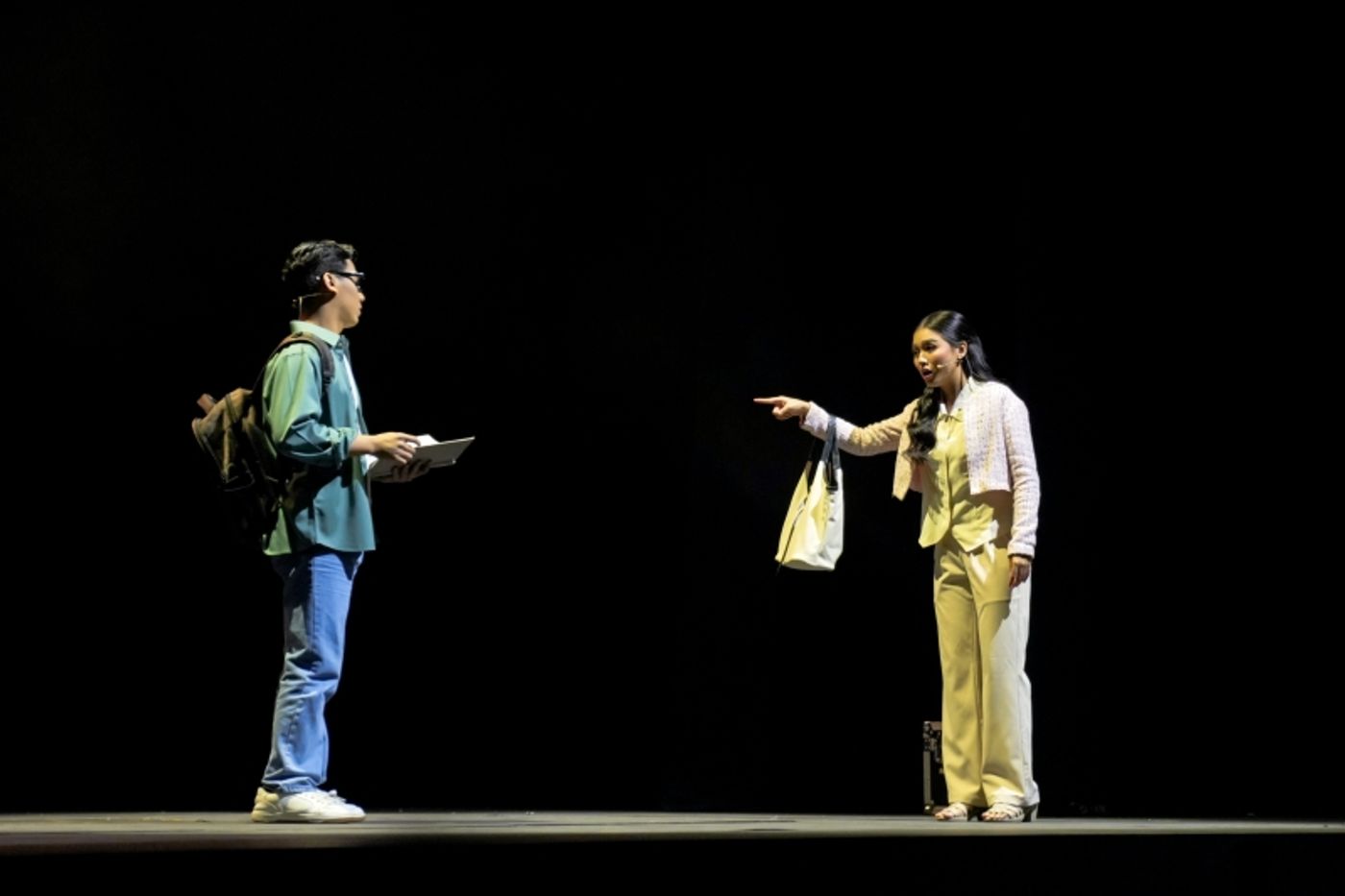
On the other hand, the debt collectors duo – played by Tomy Babap and Almanzo Konoralma – were effortlessly entertaining. They were making effortlessly funny political jokes. Whenever the two of them interacted on stage, they were definite scene-stealers. However, the scenes themselves seemed to have no point aside from being funny. I’d like to believe that the height of comedy is when it is incorporated into the story. However, there was none of that in Pengin Hijrah, leaving it to exist as a mere spectacle.
There was a standout performance here in Arnold Kurnia (playing Furqon). Even with his small stature, he dominated the stage when he performed the verses of Sapardi Djoko Damono. With his sharp and funny lines, as well as his considerable charisma, his performance was most memorable.
Outside of the acting, there was also a lack of characterization in the outfits that the cast was wearing. The wardrobe, while eye-catching and proportional, didn’t seem to fit into the storyline of Pengin Hijrah. This was unfortunate, as outfits played a huge factor to the plot–such as the attire that got Alina her modeling job, as well as the attire that made her scholarship taken from her. She got her scholarship taken away because her outfit was “too revealing”. However, from the audience’s perspective, the outfit Alina wore did not look immodest in the slightest; it didn’t even show any of her knees or shoulders. Talking to the actor after the show, I realized that Alina’s outfit actually showed her cleavage, but it wasn't visible from the audience’s point of view. And that is just one example of many.
There are several more other factors that contribute to my opinion of this show, such as the sparse stage and the mostly confusing direction. There were lots of squandered moments and unfulfilled potential, mostly in the dance numbers and choreography. While the dancer’s performances were a spectacular show of skill, they ultimately only served as ornamentations when they could’ve helped tell the story.

As with every collaborative work, there are a lot of creative inputs from different contributors. Thus it falls on the directorial team to balance and unify all these factors. This is where Pengin Hijrah ultimately falls short; the disparate elements didn’t come together into a coherent whole. The show was left without an identity.
At the end of the day, I realize that the people working on Pengin Hijrah are very capable. However, there seems to be a lack of understanding of the purpose of the story itself, creating fragmented pieces of a puzzle that don’t quite fit together. It is unfortunate, but it is intriguing to see if the movie is able to provide a different take on the story.
Broadwayworld Indonesia is a media partner for Pengin Hijrah.
Reader Reviews
Videos